
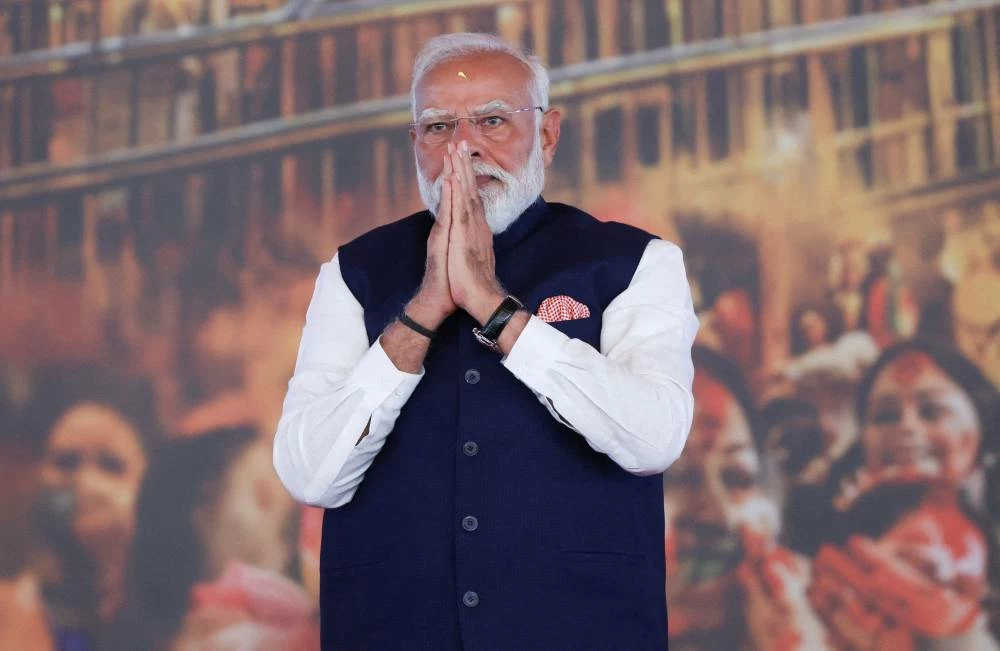
Modi forgive students India protest ,In a social media video posted late on Friday, Prime Minister Narendra Modi addressed the student protesters who had been shouting abusive slogans directed at him during the weeks of demonstrations that peaked in July, saying he wanted to forgive them and that society should accept that stance. The video marks a significant tonal shift from the initial government response to the protests, which involved tear gas, baton charges against crowds attempting to march on parliament in New Delhi, and the filing of criminal cases against hundreds of demonstrators.
"These are misled children. Showing them the right path is our duty. Punishing them, making them run around courts, or tormenting them in society will not change the situation. I want to forgive them. I hope society also accepts this stance of mine."
Prime Minister Narendra Modi, social media video, Friday
The language Modi chose is carefully calibrated. Calling the protesters "misled children" frames the movement as a product of manipulation rather than legitimate grievance, preserving the government's narrative that the protests were stirred by outside agitators rather than driven by genuine failure of the examination system that the government is now legislating to fix. At the same time, the explicit call for forgiveness and the direct address to society to accept that position represents a significant departure from the typical Modi government response to public dissent, which has more commonly involved sustained prosecution of protesters rather than public appeals for clemency.
What the Cockroach Janta Party achieved: a minister's resignation, exam reform, and a legislative response
The Cockroach Janta Party movement ended weeks of demonstrations after the government accepted all of its demands, a comprehensive concession that is unusual in the history of Modi's governments, which have generally been resistant to capitulating to street-level protest pressure. The resignation of Education Minister Dharmendra Pradhan was the movement's central and most symbolically important demand: he was directly responsible for the examination system that failed more than two million students when NEET papers were leaked, and his departure was framed by the movement as the minimum accountability the government owed to the families affected by the scandal.
The government's acceptance of examination system reforms represented the substantive policy demand that sits beneath the political symbolism of the minister's resignation. The NEET paper leak that triggered the protest was not an isolated incident but the most visible example of systematic weaknesses in how India's high-stakes national entrance examinations are designed, administered, and protected from interference. Two million students being forced to retest because of institutional failure is a specific, concrete harm that demands a systemic response, and the government's agreement to pursue reform in the examination system is the commitment that will ultimately determine whether the movement produced lasting change or simply a change of ministerial face.
The legislative response is the most concrete policy output of the protest movement. The Modi government has introduced a bill in parliament to amend the legislation governing public examinations, proposing longer prison terms and higher fines for those involved in exam paper leaks. That proposal directly addresses the criminal dimension of the NEET leak by increasing the deterrent for the individuals and networks that enable paper theft and sale. Whether longer sentences and higher fines are sufficient to deter what is a lucrative and well-organised criminal enterprise in India's examination economy will depend on the bill's specific provisions and on the capacity of investigation and prosecution agencies to identify and pursue those responsible.
The gap between government commitments and ground reality: hundreds still arrested despite case-dropping pledge
The Cockroach Janta Party's statement on Monday introduced a significant and unresolved tension into the government's narrative of concession and resolution. The movement said that "hundreds" of students remained arrested in various states, in what it described as a violation of the government's commitment to dropping police cases against protesters. That gap between a nationally announced policy commitment and its implementation at the state level is a recurring feature of Indian governance: the central government can announce policy directions, but their execution depends on state police forces and state governments that operate with considerable autonomy and do not always align their actions with central commitments.
The discrepancy matters for several reasons. First, it demonstrates that the movement's work is not complete simply because the government accepted its demands at the national level. The students still facing criminal proceedings in state courts are not experiencing the resolution that Modi's forgiveness video implies. Second, it creates a credibility problem for the government's stated commitment: if the government accepted dropping police cases as a condition for ending protests and students are still being arrested in states, the commitment has either not been communicated to state authorities effectively or is being ignored by them. Either explanation reflects poorly on the central government's ability to deliver on what it agreed.
The Cockroach Janta Party's decision to publicly document this gap, rather than accept the government's framing of a resolved situation, signals that the movement is maintaining pressure as a watchdog over implementation rather than dissolving into satisfaction at the government's verbal commitments. That posture is strategically astute: a movement that disperses once demands are nominally accepted loses all leverage over whether those demands are actually fulfilled. By continuing to document the gap between commitment and reality, particularly on the arrested students question, the CJP maintains the political pressure that produced the concessions in the first place.
From NEET paper leak to Modi's forgiveness video
May 2026
NEET paper leaked before the national medical entrance examination. More than two million students' results affected. Cancellation and retest forced. CJP and families allege at least 20 students died by suicide.
July 2026
Protest movement peaks. Cockroach Janta Party leads march on parliament in New Delhi. Police deploy tear gas and baton charges. Abhijeet Dipke, CJP founder, begins hunger strike after educator Sonam Wangchuk forcibly hospitalised. 180 injured in clashes.
After march
CJP says it will not march again to protect youth from police violence. Arrests continue across states. Seventy protesters detained in Delhi alone.
Government response
Education Minister Dharmendra Pradhan resigns. Government accepts all CJP demands including exam reforms and dropping of police cases. Protests formally ended.
Monday
CJP says hundreds remain arrested in various states in violation of government's case-dropping commitment.
Friday
Modi posts social media video calling protesters "misled children," saying punishment would not resolve the situation, and stating he wants to forgive them.
Parliament
Modi government introduces bill to amend examination legislation, proposing longer prison terms and higher fines for exam paper leaks.
What the protest outcome reveals about Modi's political vulnerabilities in his third term
The government's comprehensive capitulation to the Cockroach Janta Party's demands is the most significant political concession of Modi's third term, and it reveals something important about the changed political environment his government is now operating in. Previous mass movements that reached Modi's doorstep, including the farmers' protests of 2020 to 2021 that eventually forced the government to reverse three agricultural laws, took considerably longer to produce concessions and required sustained pressure over months. The NEET protest produced a minister's resignation, acceptance of all demands, and a prime ministerial forgiveness video within weeks of reaching its peak. That speed of concession suggests the government recognised a specific political vulnerability it needed to address quickly.
That vulnerability is the youth vote. Modi has built his electoral coalition on a combination of Hindu nationalism, development aspirations, and personal leadership appeal that has been particularly effective with young, aspirational voters in India's smaller cities and towns. The NEET paper leak struck directly at the educational and economic aspirations of exactly those voters. When young people who expected to use the competitive examination system as a ladder to opportunity discovered that the system itself was compromised by corruption and institutional failure, the political damage to a government that had positioned itself as the champion of aspiring India was acute and immediate. The protest's rapid resolution reflects a government that calculated, correctly, that prolonged conflict with two million affected students and their families was an electoral liability it could not afford.
Modi's "misled children" framing contains a political message beyond the forgiveness rhetoric. By characterising the protesters as having been led astray rather than acting on legitimate grievances, the prime minister preserves the narrative that the protest was politically motivated or externally manipulated rather than being a genuine popular uprising against government failure. That framing protects the BJP's political standing with its core base, which is uncomfortable with the idea that Modi's government produced the conditions for such a significant public crisis. Whether voters, particularly young voters, accept that framing or interpret it as the government accepting that it failed them without admitting it is a question that will be answered in state election results over the coming months.
The NEET scandal's cost to India's human capital pipeline
The economic dimension of the NEET paper leak extends well beyond the disruption to the two million students who were required to retest. India's competitive examination system functions as the primary mechanism through which the country attempts to allocate talent to its most demanding professional roles, including medicine, engineering, and civil administration. When that allocation mechanism is compromised by organised paper theft, the harm is not simply that some students gain an unfair advantage. It is that the credential the system produces loses credibility as a measure of genuine capability, with downstream consequences for how employers, patients, and the public assess the qualifications of those who hold it.
The government's proposed legislation, with longer prison terms and higher fines for paper leaks, addresses the criminal supply side of the problem. It does not directly address the demand side: the structural conditions that make buying leaked papers rational for families who have invested years of resources into examination preparation. As long as India's hyper-competitive examination system produces outcomes that determine life trajectories based on a single test, the financial incentive to cheat will remain powerful regardless of the penalties attached to it. Genuine reform of the examination system, as the CJP demanded, would need to address the structural concentration of outcomes in single high-stakes tests, which is a longer and more politically complex project than introducing higher penalties.
For India's broader economic development agenda, the human capital implications of a corrupted examination system are significant. India's economic growth projections depend substantially on converting its massive youth population into a productive workforce with the skills demanded by a growing and modernising economy. A medical examination system that cannot reliably identify the most capable medical students, or that is perceived as unreliable by the families and students who depend on it, undermines the credentialing infrastructure that the allocation of talent and trust in professional qualifications depends on. The Modi government's legislative response is a start, but the credibility of India's examination system will ultimately be rebuilt by consistent, clean administration over time rather than by any single legislative change.