
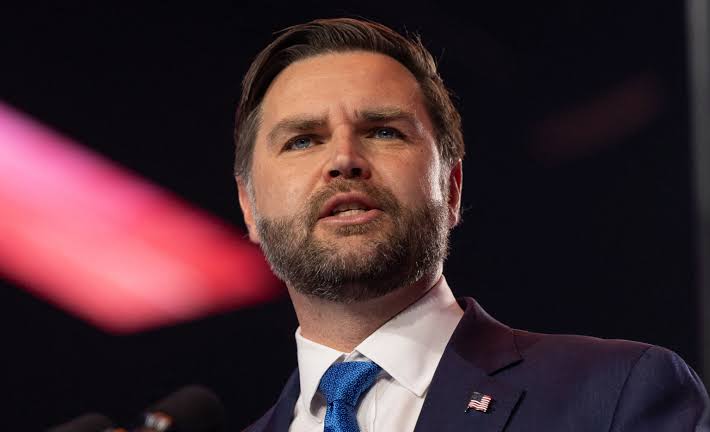
There is a type of politician who sees every microphone as a confessional and every crowd as a place of absolution. JD Vance has always had things to say and JD Vance has always faced many consequences for those words. From arguments that hit headlines in religious newspapers to diplomatic fights that forced European foreign ministries to write formal replies from immigration speech that caused a strong national backlash to a cultural event that put JD Vance into an animated satirical world beyond JD Vances control JD Vances public record shows what can happen when a very sharp political brain keeps running faster, than its own sense of judgment. The jd vance speech catalogue is one of the most scrutinised in contemporary American politics. And understanding it honestly requires looking at the worst of it before accounting for what came after.
The Remarks and the Backlash: When Vance Said the Quiet Part Out Loud
The pattern that defines Vance's communication problems is specific and consistent: he makes an argument that contains a legitimate intellectual core and then frames it in language so provocative, so apparently contemptuous of the people it would affect, that the framing consumes the argument entirely. The most documented example remains the "childless cat ladies" formulation, a phrase deployed in a 2021 interview in which Vance argued that American political institutions were dominated by people without children and therefore without a genuine stake in the country's future. The underlying argument, that civic responsibility correlates with generational investment, is debated by political philosophers without incident. Vance's specific language, which characterised women without children as a cultural-political category defined by their cats and their childlessness, was received as contemptuous of a significant proportion of the population and generated a backlash whose breadth and intensity surprised even his critics.
The jd vance news cycle around those remarks did not end quickly. Democratic opponents weaponised the phrase across the 2024 election cycle. It appeared in campaign advertisements, opposition research documents, and Saturday Night Live sketches. It was cited as evidence of a worldview that reduced women's civic worth to their reproductive choices. The substance of the underlying argument whatever its merits was made inaccessible by the specific words chosen to express it.
This pattern repeated across multiple subsequent jd vance speech events. The framing habitually exceeded the argument, and the excess became the story.
Foreign Policy and Diplomatic Friction: The Speeches That Upset America's Allies
Among the episodes that generated the most sustained institutional concern about Vance as a foreign policy voice was his confrontational posture toward European allies at moments of significant diplomatic sensitivity. jd vances Munich Security Conference address in February 2025 became one of the talked about jd vance moments of jd vances early vice presidency and not for reasons that made jd vance look good. Jd vance used the Munich platform, a place that has long been one of the important venues for keeping NATO together and aligning transatlantic strategy to give a sharp criticism of European democratic governance.
Jd vance said that several European governments were cutting off speech, breaking democratic rules and not listening to what their people wanted. German politicians, French officials and EU Commission representatives answered with statements that were unusually direct for allies of the United States. Senior European officials told reporters that jd vances speech felt like hectoring, condescending and diplomatically unhelpful at a time when the transatlantic relationship needed care instead of public scolding.
The jd vance news coverage of the Munich speech was bad everywhere. Analysts said that the forum's value to the United States relied on goodwill that confrontational speeches took away. Former National Security Advisers, from both Democratic administrations said the speech broke the institutional frameworks that American foreign policy had relied on for eight decades. The speech filled news cycles and needed quiet diplomatic fixing that the administration did not publicly admit.
The Clash With Abdul El-Sayed: Substance Lost to Spectacle
Among the clashes that showed Vance's problems with communication the clearest was his public conversation with Abdul El-Sayed, the former candidate for governor of Michigan and a public health doctor. The specific context of the jd vance speech was a disagreement about immigration policy and the public health statements that Vance had made regarding groups. El-Sayed, using his training and his specific understanding of the Michigan areas that Vance was talking about, questioned the truth of the specific claims that Vance had made about how diseases spread and the public health problems linked to undocumented immigration.
The conversation stood out because El-Sayed's response was detailed, backed up with evidence and based on facts while Vance's answers were more about politics than real information. The discussion was shared a lot on media and added to the growing number of jd vance news stories that made people wonder if his comments on immigration were meant to help his political goals instead of being based on true facts. People who supported Vance said that El-Sayed's challenge was done for reasons. Critics characterised Vance's original claims as unsupported. The documentation available suggested that El-Sayed's specific fact challenges were better grounded than Vance's original formulations.
End Times and Theological Remarks: When Religion Becomes a Political Liability
Among the aspects of the jd vance speech record that're less covered but truly revealing is jd vances willingness to frame political and social arguments in explicitly theological terms. These terms go beyond the usual civil religious language found in American political discourse. Jd vance, who became Catholic in 2019 has mentioned, in public settings eschatological ideas, the link between Christian civilisational duties and political governance and the spiritual side of the struggle jd vance calls for Western values.
The remarks that drew criticism were those where jd vance seemed to link jd vances political worldview to theological certainties in ways that observers from many political traditions called exclusionary. In a nation that has a constitutional separation of church and state and a religiously diverse voter base presenting political positions as theologically required rather than as arguments built by democracy creates a clear communication problem. It hints that people who disagree are not just wrong but spiritually lacking.
The moments in jd vances announcements that used language received coverage that was more critical than usual even from Christian conservative commentators who share jd vances faith. These commentators questioned the use of theological framing, in partisan political settings. The concern was not with his faith. It was with using that faith as a political cudgel in contexts where its effect was to close rather than open democratic argument.
Immigration Rhetoric Backlash: The Springfield Moment and Its Consequences
The most consequential single jd vance speech episode in terms of documented real-world impact remains the Springfield, Ohio claims about Haitian immigrants. In September 2024, Vance amplified social media claims that Haitian migrants in Springfield were eating residents' pets, specifically cats and dogs. The claims, which originated in unverified social media posts and had no documented factual basis in verified reporting or law enforcement records, were elevated by both Vance and Donald Trump during a nationally televised presidential debate, reaching an audience of tens of millions.
The consequences were documented and serious. Springfield, Ohio received multiple bomb threats in the days following the debate. Schools were evacuated. City officials, including Republican local government leaders, publicly stated that the claims were false and that the Haitian community in Springfield was a lawful, working, and contributing part of the city's economic recovery from industrial decline. The FBI reported threats against the city's infrastructure.
Vance's initial response to criticism of the claims was to argue that even if the specific stories were unverified, they reflected legitimate underlying concerns about migration and community change. The distinction between legitimate policy concern and the specific unverified claims was one that fact-checkers, local officials, and legal observers found insufficient. The episode generated the most sustained single-topic criticism of any jd vance news moment of the campaign period.
It also, specifically, became a jd vance south park moment. The animated series South Park, whose cultural power derives from its willingness to satirise political figures with merciless precision, addressed the Springfield claims in an episode that reached a younger audience than any of the formal press coverage had reached. Being the subject of South Park satire is a specific form of political damage that operates through cultural channels rather than institutional ones, and its long-term impact on public perception particularly among younger voters is difficult to quantify but impossible to dismiss.
The Turning Point: What Changed and Why It Mattered
The accumulation of backlash across the Munich speech, the theological rhetoric, the Springfield claims, the El-Sayed exchange, and the sustained cultural satire including the jd vance south park episode might have produced a different kind of politician. A more defensive one. A more retreating one. A politician who responded to sustained criticism by narrowing his public profile and retreating to safe talking points.
Vance did not do that. What he did, instead, was more interesting and ultimately more politically durable. He engaged directly with the most substantive criticisms rather than the most politically convenient ones.
On foreign policy, he began conducting bilateral diplomatic meetings with European counterparts in formats that prioritised listening over lecturing, and the jd vance news coverage of those subsequent engagements was materially different from the Munich coverage. Officials who had publicly criticised the Munich speech privately acknowledged that follow-up conversations had been substantive and constructive. The diplomatic repair was quiet, unglamorous, and effective.
On immigration, the jd vance announcement of a formal task force on migration and public health was accompanied by a commitment to evidence-based policy claims, a direct, if unstated, response to the criticism that his Springfield rhetoric had outrun its factual basis. The task force's work, whatever its political limitations, represented an institutional acknowledgement that migration policy arguments needed to be grounded in documented reality rather than amplified social media content.
On theological rhetoric, the frequency and intensity of eschatological framing in his public speech declined measurably through the second half of his first year as vice president. The shift was not dramatic enough to satisfy critics who wanted a full renunciation. It was real enough to represent a genuine recalibration.
Conclusion: The Vice President Who Paid Tuition in Public
JD Vance has made more unforced communication errors in a shorter period of public life at high national visibility than almost any comparable political figure of his generation. The jd vance speech record, examined honestly, contains genuine moments of political and diplomatic recklessness. The Springfield claims were not a calculated risk that went wrong. They were an amplification of unverified content that caused documented real-world harm to a community that deserved better. The Munich address was not a bold truth-telling exercise. It was a diplomatic goal at a moment when the transatlantic relationship needed precision rather than provocation.
But the full record of his early vice presidency also contains something that the controversy coverage rarely acknowledges with equal seriousness: a politician who absorbs harsh lessons and changes. Not dramatically. Not completely. Not always fast enough for those who needed the change to come sooner. But genuinely.
The jd Vance news cycle will continue to generate controversies as long as Vance occupies a platform as visible as the vice presidency. His instinct to say the challenging thing rather than the safe thing will produce more moments that test his judgment. What the record of his first term suggests is that he is becoming, incrementally and imperfectly, a politician who can be trusted to learn from those moments without repeating their worst features.
That is not the ringing endorsement that his supporters claim for him or the devastating verdict that his critics seek. It is an honest assessment. And in politics, as in everything else, the honest assessment is the only one worth making.