
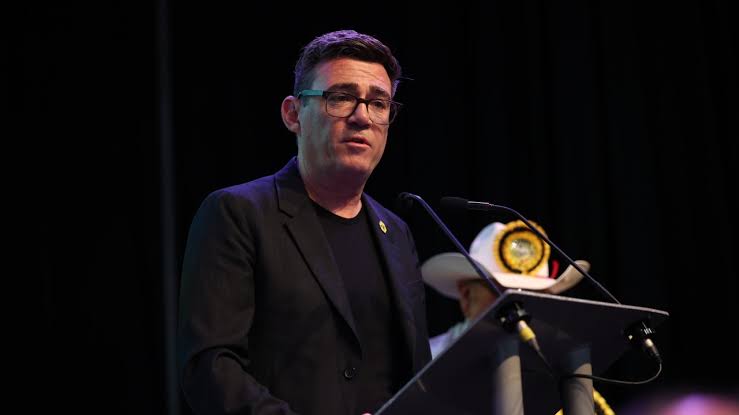
Andy Burnham Labour leadership challenge Starmer UK prime minister 2026 has moved from speculation to concrete possibility after the Greater Manchester mayor won a parliamentary seat on Friday, clearing the fundamental constitutional barrier that had previously prevented him from formally replacing Keir Starmer despite being the frontrunner in every poll measuring Labour members' preferences. The seat matters because only members of parliament can become prime minister under the British constitution, making Friday's result the specific step that transforms Burnham's leadership ambitions from mayoral-level aspiration into parliamentary-level reality with a formal swearing-in expected next week. About a quarter of Starmer's lawmakers have urged the prime minister to resign since Labour suffered its heaviest local election losses in more than three decades, creating the political environment in which Burnham's newly secured parliamentary status immediately becomes the most significant variable in Westminster's rapidly evolving Labour leadership crisis.
The political analysis of Burnham's path to power requires assessing four distinct scenarios whose probability, timing, and political consequences differ substantially, ranging from an early summer challenge before parliament's July 16 recess through a post-summer bid to a contest triggered by another candidate to an uncontested handover that avoids the personal damage of a direct Starmer-Burnham confrontation. Each scenario carries different risks for both candidates and for the Labour Party's broader electoral position, with the specific dynamics of Labour's leadership rules creating the pressure points that Burnham's team must navigate strategically rather than simply announcing a challenge and relying on his polling lead to deliver the parliamentary nominations that the formal contest requires.
Labour's leadership rules are the specific institutional mechanism that shapes every calculation in this political moment, requiring any challenger to secure the backing of 20 percent of the party's House of Commons lawmakers, equating to 81 members of parliament including the challenger, before a formal contest can begin. This threshold is both the target that Burnham's team is working toward and the protection that Starmer retains against a premature challenge that cannot assemble the required nominations, creating the specific parliamentary headcount game that Westminster correspondents are tracking in real time as Labour MPs signal their positions through public statements, media briefings, and the quiet conversations whose outcomes determine which leadership scenario materialises.
How Labour's Crisis Reached This Breaking Point
Labour's performance in last month's local elections, described as the heaviest losses suffered by any governing party in more than three decades, created the political rupture whose scale forced the resignation question from private discussion into public declaration by a quarter of the parliamentary Labour Party. Local election results function as a political accountability mechanism in British politics, providing the midterm verdict that governments cannot control and that parliamentary parties use to assess whether their leader is an electoral asset or liability in the general election that is their primary institutional concern. Losses at the scale Labour experienced translate directly into the parliamentary party's assessment of their individual reelection prospects under Starmer's continued leadership, creating the self-interested political calculation that has been driving the resignation calls regardless of individual MPs' views on Starmer's governance qualities.
Burnham's absence from parliament since 2017, when he left Westminster to become Greater Manchester mayor, created both a problem and an opportunity in his leadership positioning. The problem is the straightforward constitutional requirement of a parliamentary seat that Friday's by-election victory has now resolved. The opportunity is that seven years of mayoralty have allowed Burnham to build an independent political reputation through the practical governance of a major English region, demonstrating the competence and regional credibility that his Labour colleagues in Westminster have been unable to develop through the more abstract work of opposition and government backbench politics. His Greater Manchester record on devolution, transport investment, and the Homes for All housing programme provides the substantive policy foundation that his leadership campaign can build on rather than the purely biographical argument that candidates without executive experience must rely upon.
Wes Streeting's May resignation as health minister, combined with his public statement that Starmer should consider his position and his threat to challenge the prime minister if he fails to set out departure terms, adds the specific time pressure to Burnham's calculation that a rival candidate's potential move creates. If Streeting triggers a formal challenge before Burnham is positioned to do so, the contest's framing shifts in ways that could affect the outcome even though polls consistently suggest Burnham would defeat both Starmer and Streeting in a membership vote. The interaction between Streeting's timeline and Burnham's parliamentary arrival timing is therefore the most immediate tactical question that Burnham's team must resolve in the days following his swearing-in next week.
Labour's Leadership Rules and Why 81 Nominations Matter
The 81 nomination threshold is the single most important number in the current Labour leadership situation, because it determines not just whether a formal contest can begin but which scenarios are viable and on what timescales. A challenger who publicly declares intent before securing 81 nominations creates the political spectacle of a failed challenge whose momentum collapses, damaging the challenger's credibility and potentially stabilising the leader they were attempting to replace. The calculation therefore requires assembling the nominations privately before any public declaration, using the parliamentary networks and political relationships whose cultivation is the specific work that the period between Burnham's swearing-in and any formal challenge announcement represents.
Burnham's supporters are reportedly divided over timing, reflecting the genuine strategic dilemma between moving early before Streeting can trigger a contest that might split the anti-Starmer vote, and mAndy Burnhamoving later after building the parliamentary relationships with the 2024 intake MPs who entered parliament after Burnham left in 2017 and who will be making nomination decisions about a colleague many of them have never worked alongside. The pre-recess window closing July 16 creates the specific deadline that concentrates this calculation, because a contest initiated before recess can potentially be completed within the two to three month timeline that Labour's rules require, while a post-summer contest delays any leadership resolution until autumn and potentially through winter.
The Four Scenarios and What Each Requires
An early challenge before parliament's July 16 recess would require Burnham to be sworn in, build the 81 nomination coalition in the compressed window between his swearing-in and the recess deadline, announce formally, and withstand the scrutiny that a declared candidate immediately faces. The advantage is that it prevents Streeting from triggering a first-mover contest that creates different dynamics, and it uses the political momentum that Burnham's parliamentary entry has generated before that momentum dissipates into the summer news vacuum. The risk is that the nomination-building window is extremely tight, that the new MPs whose support Burnham needs have not had time to develop confidence in him as a parliamentary colleague, and that a poorly executed early challenge that falls short of 81 nominations would be politically catastrophic.
The post-summer scenario, Burnham's second option, gives him the time to campaign for his Greater Manchester successor, build those parliamentary relationships methodically, and enter the contest with the broader coalition whose depth would make his membership vote margin more decisive. The Greater Manchester mayoralty election, expected around end of July, creates the specific political reason for delay that allows Burnham's team to explain the timing as responsibility rather than hesitation, supporting the Labour candidate in a crucial mayoral race before focusing on the parliamentary contest whose outcome he is better positioned for after the summer's relationship-building.
The uncontested handover scenario, in which Starmer sets a departure timetable that allows a managed succession without a damaging direct contest, is the outcome that many Labour MPs have been publicly urging as the least damaging to party unity and electoral positioning. If Starmer chose not to stand and Burnham secured sufficient nominations while rivals including Streeting chose senior government roles over leadership bids, Burnham could become prime minister through acclamation rather than contest, preserving the party unity that a prolonged leadership campaign between high-profile candidates threatens. Reports that Streeting might accept a finance minister role in a Burnham government in return for not triggering a contest suggest this negotiated outcome is being actively discussed in the conversations whose content will determine which of the four scenarios actually materialises.