
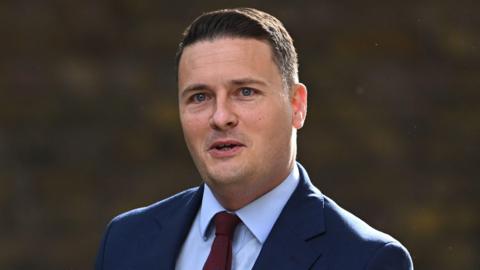
Keir Starmer leadership crisis Wes Streeting coffee meeting 2026 has produced one of the more remarkable political moments in recent Westminster history, with a private under-twenty-minute meeting between the Prime Minister and his Health Secretary generating more headlines and public conversation than the King arriving at Parliament for the State Opening, the most ceremonially significant event in the parliamentary calendar. Sir Keir Starmer offered meetings to cabinet ministers following Tuesday's cabinet session and Wes Streeting was among those who took up the offer, meeting privately at Number 10 in circumstances whose content the two principals are not expected to immediately disclose but whose political significance is being read as a signal about the state of a leadership crisis that has repeatedly pulverised Starmer's authority while no credible challenger has yet formally moved to unseat him. The Trade Union and Labour Party Liaison Organisation issued a statement the same morning declaring that it is clear the Prime Minister will not lead Labour into the next election, a union body intervention that added institutional weight to the parliamentary and public pressure that has been building around Starmer's position.
The State Opening of Parliament, at which the King reads out the government's planned legislation for the year ahead, had been deliberately scheduled for this week by government figures who anticipated a rough set of election results and the political turbulence that followed them, hoping the ceremonial occasion would help Starmer relaunch and reset his premiership while simultaneously keeping MPs away from Westminster during the days when Parliament does not sit before the King's Speech and making coordinated plotting more logistically difficult. They got the rough election results and the political tumult right, but the reset and relaunch have proven elusive in an environment where the plotting they hoped to interrupt has proceeded regardless of the parliamentary calendar's constraints. The awkward holding position that BBC political editor Chris Mason described captures the situation's specific dynamic: Starmer's authority has been repeatedly damaged, but the conditions for a formal leadership challenge have not yet materialised because no contender has assembled the 81 MPs required to trigger a contest and the most-discussed alternative, Greater Manchester Mayor Andy Burnham, does not hold a parliamentary seat.
The political landscape around Starmer is one of public declarations, private manoeuvring, and institutional positioning that collectively signal a leadership under terminal pressure while the formal mechanism for resolving that pressure remains unavailable. Streeting's supporters dismiss accusations that he has damaged the party through instability, while Starmer's allies accuse Streeting of causing massive damage by going to the brink without following through, with one Starmer supporter characterising the situation as Wes having bottled it while causing maximum collateral damage in the process. The belief among some Streeting supporters that their man will make a definitive move after the State Opening, perhaps on Thursday, reflects either genuine intelligence about his intentions or the wishful thinking of MPs who have already publicly declared Starmer finished and now need the challenge they promoted to materialise.
How Starmer's Authority Was Weakened and What Built the Crisis
The rough set of election results that government figures had been anticipating before the State Opening week served as the catalyst that converted accumulated discontent with Starmer's leadership into an open crisis whose public expression became impossible to manage through normal political discipline and message control. Labour governments typically face difficult mid-term local or parliamentary elections that generate pressure on incumbents, and the conventional response is to absorb the results, make minor personnel or policy adjustments, and rely on the discipline that fear of a worse outcome tends to impose on potential rebels. That conventional political physics appears to have broken down in the current situation, with the combination of the election results, the scale of the dissatisfaction with Starmer's leadership among Labour MPs and the broader labour movement, and the availability of alternative leadership figures in the public conversation removing the inhibitions that normally prevent internal challenges from becoming existential ones.
The specific issue of Wes Streeting's positioning in the leadership crisis reflects the dynamics of a situation where a senior cabinet minister whose ambition is widely understood within Westminster has been watching and responding to the pressure on the leader's position without yet making the decisive public commitment to challenge that would either succeed in removing Starmer or fail in a way that ends Streeting's own leadership ambitions. Cabinet ministers who are visibly positioning for a leadership vacancy while continuing to serve in the government that the leader they are effectively destabilising still heads occupy an uncomfortable political position that is difficult to sustain indefinitely, and the private coffee meeting with Starmer is one mechanism through which both parties might be testing the other's intentions without public commitment to any particular course of action. Whether Streeting used the meeting to signal loyalty, to test the prime minister's willingness to accommodate potential successors, or simply to demonstrate continued cabinet participation while the political situation evolved is something the meeting's participants have not disclosed.
Andy Burnham's absence of a parliamentary seat is the structural constraint that has most clearly prevented the leadership crisis from reaching its natural resolution, because Burnham's profile as Greater Manchester Mayor has made him the most widely discussed potential Starmer successor in media and political conversation without the parliamentary base that Labour's leadership rules require for a formal candidacy. A Labour leader must be a member of Parliament, and a sitting mayor who has not yet identified a parliamentary seat to contest cannot formally enter a leadership race regardless of how strong external political support for his candidacy appears. Burnham's supporters and the political commentators who have promoted his candidacy as the most plausible reset for Labour have been working around this structural constraint by building his national political profile while the parliamentary vacancy question is separately addressed, but the timeline mismatch between the political crisis's urgency and the constituency process's pace creates the specific awkward holding position that Mason identified.
The Union Movement's Intervention and Its Significance
The Trade Union and Labour Party Liaison Organisation's statement declaring that it is clear the Prime Minister will not lead Labour into the next election represents a qualitatively different form of pressure from the individual MP declarations and media commentary that have characterised most of the public criticism of Starmer's leadership. The TULO, which coordinates the relationship between the trade union movement and the Labour Party and whose member organisations provide substantial financial and organisational support to Labour, has institutional authority within the Labour Party's formal structures that individual MPs and commentators do not possess, and its public declaration about Starmer's electoral unsustainability carries weight that reflects the union movement's capacity to affect the Labour Party's financial, organisational, and membership dynamics as well as its electoral calculations.
The disagreements among unions about what to do now, reported alongside the TULO statement, suggest that the union movement's position is not as unified as the formal statement implies, with different unions having different assessments of the urgency of leadership change, different preferred successors, and different concerns about the process through which any change might occur. Unions that supported Starmer's original leadership election and that have had productive relationships with specific ministers in his government may be more cautious about the destabilising consequences of a rapid leadership change than unions whose relationship with the current administration has been more difficult. The internal union disagreements create the same kind of collective action problem that the parliamentary party faces: individual actors can signal their preference for change without the coordinated action that formal mechanisms require, producing a state of declared crisis without the institutional resolution that declared crises typically generate.
The Awkward Holding Position and What Must Eventually Give
Labour's leadership rules require 81 MPs, representing 20 percent of the parliamentary party, to nominate a candidate before a leadership challenge can formally begin, a threshold designed to ensure that leadership challenges reflect genuine significant dissatisfaction within the parliamentary party rather than being triggerable by small factions. The 81 MP threshold is both a formal constitutional requirement within Labour's rules and the political signal that determines when a leadership crisis has crossed from manageable to terminal, because a challenge that reaches 81 nominations has by definition mobilised a substantial proportion of the parliamentary party in a way that makes the prime minister's continuing authority functionally compromised even if they were to survive the subsequent membership ballot. The political significance of the threshold means that every public declaration of lost confidence in Starmer by a Labour MP is being tracked against the 81 figure, creating the competitive information environment in which Starmer's allies count those who have called for resignation against the overall parliamentary party size and conclude that the numbers are not yet there.
The distinction that Starmer's supporters are drawing between MPs who have called for his resignation and MPs who have specifically committed to nominating an alternative candidate is strategically important, because some of the most vocal public critics of Starmer's leadership are backing specific potential candidates whose support bases do not perfectly overlap. An MP who has publicly declared Starmer finished but whose preferred successor is Burnham rather than Streeting may not be available to sign a Streeting nomination paper, and vice versa, meaning the total number of dissatisfied voices overstates the coalition available to any single challenger. This fragmentation of the opposition to Starmer's leadership among different potential successors is one of the structural features that has allowed his premiership to survive despite the repeated public declarations of its unsustainability.
The brief interlude created by the King's Speech and the private coffee meeting between Starmer and Streeting represents a pause in the public political drama rather than its resolution, with the underlying dynamics of a damaged prime minister, an ambitious health secretary, an unsighted mayor, a restless union movement, and a parliamentary party that has been publicly declaring a leadership crisis without formally triggering the mechanism to resolve it all remaining in place when Parliament resumes its normal business and the ceremonial moment passes. What must eventually give, as Mason identified, is the gap between the declared political reality that Starmer cannot lead Labour into the next election and the formal political reality that no one has yet assembled the 81 nominations that would force the question to a resolution. The King's Speech interlude has bought a day; it has not changed the arithmetic.