
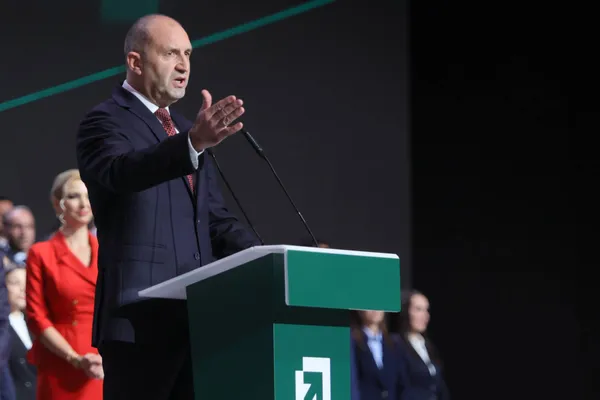
Bulgaria is preparing to hold its eighth bulgaria parliamentary election in just five years this Sunday, a frequency of voting that speaks volumes about the depth, durability, and structural character of the political crisis that has gripped the European Union's poorest member state for the better part of half a decade and that shows absolutely no sign of resolving itself cleanly or conclusively regardless of what Sunday's results ultimately produce at the ballot box. The country's electorate is exhausted in ways that go considerably beyond ordinary political fatigue or the routine dissatisfaction that democratic electorates periodically feel toward their governing classes, worn down by years of inconclusive elections, failed coalition negotiations conducted with increasing bitterness and bad faith, caretaker governments that lack the mandate and authority to address fundamental problems, and a persistent and evidence-based sense that the political class as a whole is more invested in its own survival, enrichment, and protection of accumulated privilege than in addressing the genuine and in some cases worsening hardships faced by ordinary Bulgarian citizens trying to build decent lives in a country that has been a European Union member state since 2007 but has never fully delivered the economic convergence and governance quality that membership was supposed to bring within reach.
The combination of democratic dysfunction at the institutional level and real, tangible economic pain at the household level has created a political environment defined by deep and at times explosive frustration, highly volatile voter sentiment that can shift dramatically between election cycles, and a hunger for something genuinely different that neither of the two main figures competing for power this Sunday has fully managed to satisfy or credibly embody in ways that have connected consistently with a majority of the electorate. Every election in this sequence has offered the promise of resolution and the possibility of a new political beginning. Every election so far has delivered instead another round of fragmentation, another failed attempt at coalition building, and another cycle of disappointed expectations that has pushed public trust in democratic institutions to historically low levels that themselves become part of the problem by making genuine governance even more difficult to achieve and sustain. Sunday's vote arrives in this context, carrying the weight of accumulated failure and the fading but still present hope that this time something might actually change in ways that matter to the people who live here rather than merely to the politicians who compete for the right to govern them.
On paper, Bulgaria's recent trajectory contains elements that should genuinely be cause for celebration, pride, and cautious optimism about the country's European future and its trajectory within the continental integration project. The country formally adopted the euro on the first of January, completing a long and at times deeply uncertain journey toward full participation in the eurozone that represents a genuinely significant milestone in Bulgaria's European integration story and reflects years of fiscal discipline, institutional reform, and political commitment to meeting the convergence criteria that eurozone membership requires. Bulgaria also completed its accession to the Schengen Area, ending years of exclusion from the passport-free travel zone that is one of the most tangible, visible, and popularly valued expressions of what European citizenship actually means in practice for ordinary people who want to move freely across the continent for work, family, education, and leisure. These are real and meaningful achievements by any objective institutional measure, and they reflect a degree of sustained political commitment to the European project that Bulgaria's government and its European partners worked toward through genuine effort and over extended periods of time. Yet the gap between these headline achievements celebrated in Brussels and European capitals and the lived experience of most ordinary Bulgarian citizens is striking in its scale and politically explosive in its implications.
How Bulgaria's Political Crisis Reached Its Current and Almost Unprecedented Breaking Point
Bulgaria's journey to its eighth parliamentary election in just five years cannot be understood adequately or fairly without appreciating both the depth and the very specific historical and institutional character of the governance failure that has made sustained political stability essentially impossible during this period and that has turned Bulgaria into something of an outlier even within the EU's collection of newer member states that have faced their own significant governance challenges. The country entered this cycle of electoral repetition when mass anti-corruption protests erupted in 2020 and targeted both Borissov's government and the country's controversial prosecutor general, generating enough sustained popular energy and political momentum to destabilize the existing political order in meaningful ways without producing a clear, coherent, and organizationally capable alternative that could fill the vacuum that partial destabilization inevitably created. The protests reflected genuine and widespread public anger at a political culture in which the boundaries between government power, economic privilege, judicial protection, and in some cases connections to organized criminal networks had become dangerously and visibly blurred over years of GERB dominance, and at a judicial and prosecutorial system that appeared to protect the powerful and politically connected from meaningful accountability while applying the law selectively and sometimes vindictively against those who had the courage or the misfortune to challenge established interests or fall out of favor with those who held real power.
The elections that followed in rapid and dizzying succession produced a series of results that faithfully reflected the fragmentation of Bulgarian political opinion and the comprehensive collapse of trust in established parties without managing to resolve the underlying and fundamental question of who should govern the country, on what political and policy basis, and with what realistic prospect of achieving enough parliamentary stability to actually get things done. Anti-establishment political formations rose to significant popular support with remarkable speed during this period, reflecting the genuine and powerful desire among Bulgarian voters for political actors untainted by association with the scandals and networks of the Borissov era, before falling almost as quickly when their own limitations, internal contradictions, and governance inexperience became apparent to a disillusioned electorate that had invested hope in them and felt burned by the experience. Caretaker governments appointed by President Radev during the extended periods between failed parliamentary attempts to form working coalitions became a recurring and increasingly normalized feature of Bulgarian political life, giving Radev himself a degree of political visibility, institutional influence, and public positioning that was unusual for a president in Bulgaria's parliamentary system and that laid the essential groundwork for his eventual and dramatic decision to resign the presidency and compete directly for the prime ministerial role rather than continuing to exercise influence from the relative safety and comfort of the presidential palace.
The specific institutional mechanics that have made coalition building so consistently and destructively difficult in Bulgaria during this period deserve careful examination because they illuminate why simply electing a new parliament again on Sunday is unlikely by itself to produce the stable governance that the country so urgently needs. Bulgarian parliamentary politics has been characterized during this period by a combination of extreme party fragmentation, deep personal and political animosities between potential coalition partners that make formal cooperation agreements extremely difficult to sustain even when they can be initially reached, and a structural tendency toward mutual vetoes and blocking coalitions that can prevent any government from forming without being able to replace it with anything more functional. The result has been a political system that is simultaneously unable to produce stable government and unable to break out of the cycle of instability through the normal democratic mechanism of holding new elections, since each new election has so far reproduced the same basic fragmentation in only slightly different configurations rather than producing the consolidation around viable governing alternatives that would create the conditions for genuine political resolution.
The Two Men Whose Rivalry Is Defining This Election and the Serious Questions Each Raises
Boyko Borissov is a figure whose political durability across decades of Bulgarian public life has been genuinely remarkable and in some ways difficult to explain to outside observers unfamiliar with the specific dynamics of Bulgarian political culture, but who carries a burden of accumulated scandal, public association with the worst and most damaging features of Bulgarian political culture, and deeply entrenched negative perceptions among large segments of the electorate that make him a profoundly polarizing rather than unifying figure at a moment when the country desperately and urgently needs leadership capable of rebuilding public trust across the social and political divides that years of polarizing politics have deepened and hardened. His GERB party remains firmly and consistently pro-European in its strategic orientation and its practical governance commitments, which gives it an important and genuine advantage in terms of the relationships, institutional knowledge, and credibility it can bring to Bulgaria's engagement with EU institutions, the management and effective utilization of EU structural and cohesion funds that represent a significant source of investment capital for the Bulgarian economy, and the broader question of Bulgaria's strategic alignment within the European and transatlantic community at a time when that alignment faces significant pressures from both internal and external sources. Borissov understands the machinery of European politics at a practical and personal level that comes from years of direct participation in it, and he has navigated EU summits, bilateral relationships with European leaders, and the complex negotiating environment of the Council with considerable skill and effectiveness even during periods when his domestic reputation was under severe pressure from scandal and political attack.
Rumen Radev represents something that is genuinely and substantively different from Borissov in terms of political style, personal background, stated agenda, and the nature of his relationship with the voter frustration that is driving this election, which is precisely the source of both the considerable popular appeal that current polling reflects and the serious and legitimate concerns that his candidacy has generated among Bulgaria's Western partners and European allies who are watching this election with a level of geopolitical attention that goes well beyond their normal interest in the domestic politics of a medium-sized Eastern European member state. His decision to resign the Bulgarian presidency, a constitutionally significant office that he had occupied for two terms and from which he had exercised considerable informal influence over Bulgarian politics during the caretaker government periods, specifically in order to compete directly for the prime ministership in a general election was a dramatic political gamble that generated significant domestic and international attention and positioned him unmistakably as someone willing to put his political career and public reputation on the line in a direct democratic contest rather than continuing to exercise influence from behind the relative safety and institutional protection of a presidential role that carries considerable prestige, significant ceremonial authority, and meaningful informal power without the full and direct accountability that comes with executive leadership of a parliamentary government.
His campaign platform centered on dismantling Bulgaria's oligarchic networks and restoring genuine accountability to public life has resonated powerfully and authentically with voters who have been waiting through five years of political dysfunction and eight parliamentary elections for someone to articulate their accumulated frustration with the existing political and economic order in terms that feel genuinely authentic and personally credible rather than merely tactical and calculated. The polling numbers that show him leading Borissov by approximately 31 percent to 21 percent are a meaningful and significant indicator of the scale and depth of public appetite for the change he claims to represent, though they also reflect the extent to which his support is driven by rejection of the alternatives rather than by overwhelming enthusiasm for his specific policy program and personal leadership qualities in all their dimensions. The fact that even this commanding polling lead still falls dramatically short of the majority threshold needed to govern without coalition partners illustrates the fundamental and structural challenge that faces Bulgarian politics regardless of which individual or party leads after Sunday's count.
However, Radev's foreign policy positions on Russia and Ukraine have generated genuine, substantive, and in diplomatic terms quite serious alarm among Bulgaria's Western allies and European partners in ways that cannot be fairly or accurately dismissed as merely establishment defensiveness about a challenging political outsider or as reflexive hostility from those whose interests are threatened by his anti-oligarchy agenda. His vocal and consistent opposition to Bulgarian military aid for Ukraine, articulated repeatedly and publicly during a period when every other EU and NATO member was working to align and strengthen the collective Western response to Russian aggression, and his noticeably and meaningfully softer rhetorical and policy stance toward Moscow relative to the overwhelming consensus position maintained by Bulgaria's EU and NATO partners raise questions of genuine strategic importance about the direction a Radev-led Bulgarian government would take at a moment when European solidarity on Ukraine is under significant pressure from multiple directions simultaneously and when the credibility and effectiveness of the EU's collective response to Russian aggression depends substantially on maintaining meaningful unity among all member states including smaller ones whose individual contributions matter less militarily than symbolically and politically.
Electoral Fraud Arrests and What the Coercion Scandal Reveals About Bulgarian Democratic Culture
The final weeks of campaigning before Sunday's election have been significantly and damagingly overshadowed by a disturbing, revealing, and in some respects genuinely shocking episode of alleged electoral coercion that has added substantially to the already considerable concerns among domestic observers, international election monitors, and EU institutional partners about the health and genuine competitiveness of Bulgarian democratic processes and the willingness of political actors across the spectrum to play by the fundamental rules of fair electoral competition when doing so might cost them votes they believe they need to survive or advance. Authorities detained over 200 people in connection with allegations of electoral coercion in the weeks immediately preceding the vote, a figure that is striking and alarming both for its sheer scale and for what it clearly suggests about the systematic, organized, and premeditated character of the alleged interference rather than the kind of isolated individual misconduct that can be managed and dismissed as exceptional behavior at the margins of an otherwise fair competitive process. The arrests came as law enforcement and electoral authorities investigated allegations that local officials, political operatives, and their networks of local intermediaries had attempted to manipulate voter behavior through methods specifically designed to exploit the economic vulnerability and social dependency of citizens who have been made precarious by years of poverty, inadequate public services, and governance failure.
The specific tactics allegedly employed in the electoral coercion cases are particularly revealing and deeply troubling about the real and operational relationship between economic vulnerability and political manipulation in Bulgarian public life, and about the way in which the deliberate confusion of state provision with political patronage has been cultivated and exploited as a tool of electoral control over populations whose material circumstances make them susceptible to this kind of pressure. Some local officials allegedly engaged in the systematic and calculated deception of tricking individuals into believing that state-funded winter heating assistance programs and hot lunch provision schemes, benefits provided by the Bulgarian government to economically vulnerable citizens as a matter of legal entitlement and funded entirely from public resources contributed by all taxpayers, were in fact personal gifts and acts of generosity from individual politicians who could withdraw them if electoral loyalty was not demonstrated. This deliberate manipulation of social welfare programs to create artificial feelings of personal obligation, gratitude, and fear toward specific politicians is a form of electoral coercion that is simultaneously morally egregious in its exploitation of vulnerable people, practically effective in communities where genuine material dependency on state support intersects with long-established traditions of patron-client relationships in local politics, and structurally damaging to the broader project of building a genuinely democratic political culture in which citizens exercise their votes freely and on the basis of considered political judgment rather than economic fear and manufactured obligation.
Sunday's election is ultimately and most profoundly about something considerably larger, more consequential, and more historically significant than the personal contest between Borissov and Radev or even the specific policy differences between the various parties competing for parliamentary representation and governmental influence. It represents perhaps the most critical test yet of whether Bulgaria as a political community and democratic society can finally and genuinely break the destructive and self-reinforcing cycle of political dysfunction that has made it the only EU member state to hold eight parliamentary elections in just five years, and begin the harder, slower, less dramatically satisfying, but ultimately more important work of building the stable, accountable, genuinely representative, and institutionally grounded government that Bulgarian citizens deserve after years of being failed by the political system that is supposed to serve them. Whether the winner who emerges from Sunday's vote is Borissov, Radev, or some other configuration of political forces assembled from the post-election coalition negotiations that are almost certain to be complicated, protracted, and deeply contentious given the personal and political histories of the likely participants, the fundamental challenge facing Bulgarian democracy remains exactly the same as it has been through all the previous elections in this exhausting cycle: rebuilding public trust in democratic institutions that have been severely and systematically damaged by years of scandal, dysfunction, coercion, and a political class that has too consistently and too visibly prioritized its own interests, networks, and survival over the welfare, dignity, and democratic rights of the citizens it was elected to represent and serve.