
China's commerce ministry issued a formal statement on Friday saying Beijing "firmly opposes and is strongly dissatisfied" with the UK government's decision to nationalise British Steel nationalisation. The ministry said the moves had "seriously infringed upon Jingye's legitimate rights and interests and severely undermined the confidence of Chinese companies investing in the UK." It called on Britain to "faithfully fulfil" its obligations under the China-UK Bilateral Investment Treaty, a legally binding agreement signed in 1986 designed to promote and protect investments between the two countries.
The ministry accused the British government of disregarding Jingye's contribution to the UK economy and said it had "forcibly took control of the company in the name of national security." It added that Beijing would monitor developments closely and support Chinese firms to protect their rights, without specifying what that support might involve. The statement represents the most direct pushback from Beijing over a UK economic decision in recent years and puts immediate diplomatic pressure on a new government that has yet to set out its approach to China.
Jingye is separately seeking financial compensation from the UK government. The Chinese firm had previously stated the business was losing £700,000 per day. The BBC was unable to obtain a direct response from Jingye to Thursday's nationalisation announcement. The UK government's own figures, based on a March assessment by the National Audit Office, put the running cost of the Scunthorpe steelworks at approximately £1.3 million per day, a figure Business Secretary Peter Kyle confirmed the government would need to cover "for the immediate future."
Why the government nationalised British Steel and what it means for the Scunthorpe plant and the 2,700 workers who depend on it
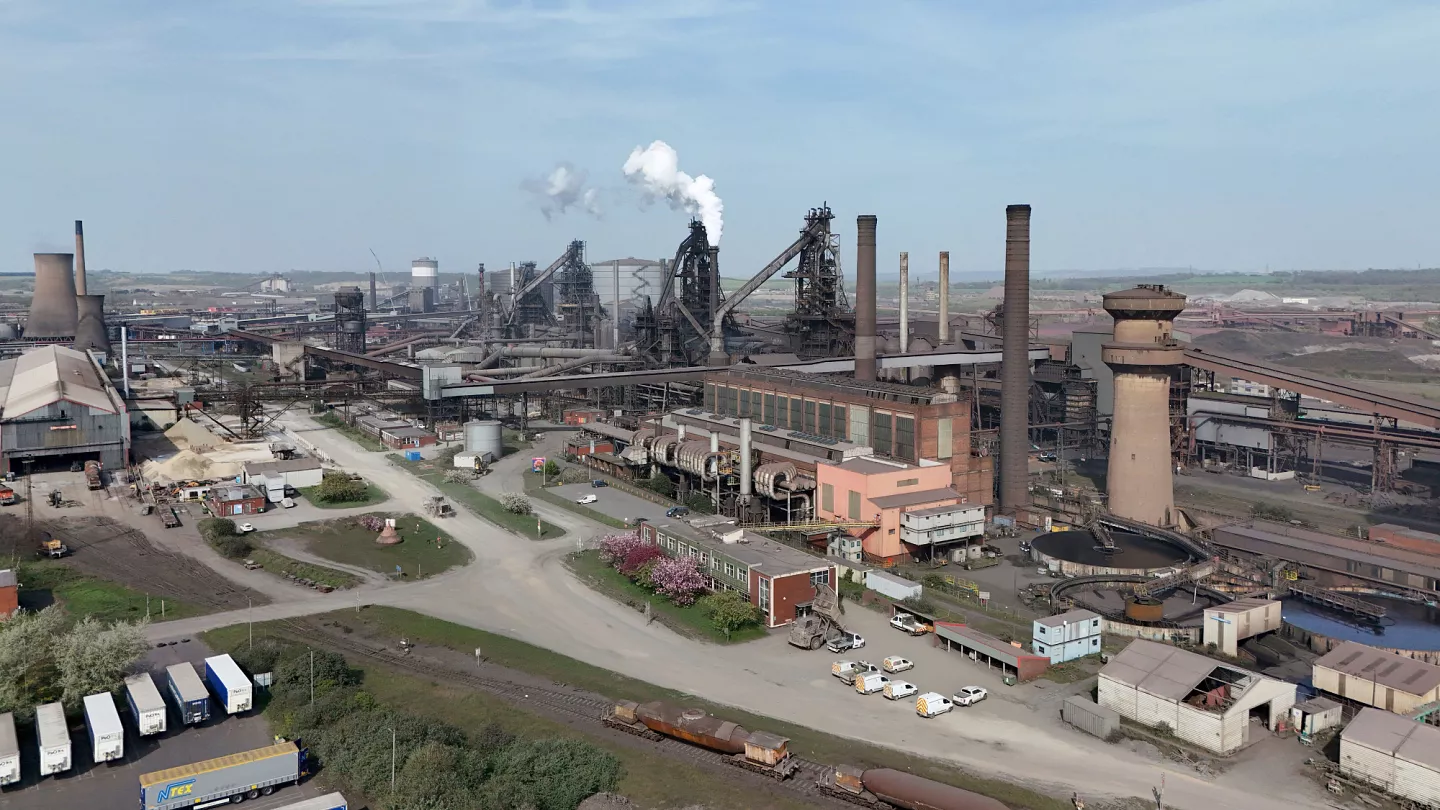
The UK government took formal control of British Steel's operations in Scunthorpe under legislation passed by Parliament on Wednesday, which allows the government to bring the steel industry into public ownership where a public interest test is met. The government had already taken operational control of the site last year while Jingye remained the legal owner, a situation that limited its ability to direct the plant's future. Full nationalisation removes that constraint and gives ministers the power to decide the plant's direction while keeping the blast furnaces operating.
The case for nationalisation rested primarily on two arguments. The first was employment: the Scunthorpe steelworks directly employs around 2,700 people and supports thousands more jobs across its supply chain. The second was strategic capability. If the plant stopped producing virgin steel, the UK would become the only member of the G7 group of leading economies without that ability. The plant produces types of steel not currently made anywhere else in Britain, much of it destined for Network Rail and the building industry, and losing that output was judged too disruptive to accept while alternatives remain unavailable.
The government's long-term strategy is for all domestically produced steel to come from electric arc furnaces, which recycle scrap metal into new products and are both cheaper and significantly less carbon-intensive to run than blast furnaces. However, ministers concluded that Scunthorpe should remain open until those alternatives are ready and in place. The government has been clear it is unlikely to run the business in the long term, given costs exceeding a million pounds per day, but it took the view that the immediate risk of losing virgin steel production capacity outweighed the cost of maintaining it.
"Disregarding Jingye's significant contribution to the UK economy and society, the British side forcibly took control of the company in the name of national security." China's commerce ministry statement, July 2026
The nationalisation lands on Andy Burnham's first day as prime minister and forces an immediate decision on Britain's approach to China
The timing of the nationalisation could not be more politically loaded for the incoming prime minister. Andy Burnham is set to take office on Monday, and the Chinese government's formal diplomatic objection to the British Steel decision will be among the first foreign policy challenges placed on his desk. The decision to nationalise a Chinese-owned business on grounds of national security, using emergency parliamentary legislation, sets a tone for UK-China economic relations that Burnham's government will need to either sustain or qualify from its first week in power.
The tension is a familiar one for any UK government: the economic benefits of close ties with the world's second-largest economy sit in persistent tension with security concerns and treaty obligations that pull in different directions. China is one of the UK's major steel suppliers alongside the European Union, the United States and India. A diplomatic deterioration with Beijing over the Jingye case would affect a trading relationship that extends well beyond steel and that a new government with ambitious economic growth targets cannot afford to ignore.
Beijing's invocation of the 1986 China-UK Bilateral Investment Treaty raises the prospect of formal legal proceedings as well as diplomatic friction. The treaty is a legally binding agreement, and China's explicit call on the UK to "faithfully fulfil" its obligations under it signals a potential route to arbitration if the compensation negotiations with Jingye do not produce a settlement. Burnham's approach to that legal and diplomatic pressure will be one of the defining early tests of his government's positioning between economic openness and the national security framework inherited from his predecessor.