
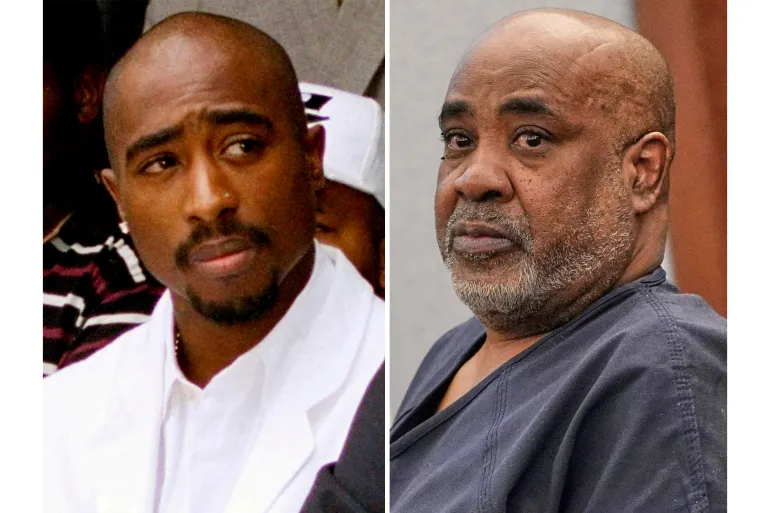
Thirty years after his death, the name Tupac Shakur still generates more search traffic than most living artists. The tupac trial 2026 proceedings that finally produced a murder charge against Duane Keith Davis, known as Keffe D, have reopened the most painful and most debated cold case in American music history. The questions that defined a generation, who killed Tupac, what drove the East Coast West Coast war that consumed him, and whether American hip hop's most gifted voice could have been saved from the forces that ultimately destroyed him, are being asked again in courtrooms, in documentaries, and in the hearts of millions who never met him but feel the loss as if they had.
This is the full story. It begins in darkness. It ends in something that looks, improbably, like light.
The Boy Who Was Born Into Struggle
Tupac Shakur was born Lesane Parish Crooks on June 16, 1971, in East Harlem, New York. His mother Afeni Shakur was a Black Panther activist who had been held in jail during her pregnancy, acquitted of conspiracy charges just one month before giving birth. His father Bilal Garland was absent. His stepfather Mutulu Shakur was a revolutionary whose FBI file was thicker than most people's biographies. His godfather Geronimo Pratt spent 27 years in prison for a murder he did not commit.
Before Tupac Shakur spoke a word or wrote a lyric, his family had already taught him that America's institutions were not designed to protect people who looked like him. That lesson was not abstract. It was his mother's story. It was his stepfather's imprisonment. It was the specific fury of a Black radical tradition that had been fighting and losing against American state power for decades by the time the boy who would become Tupac entered the world.
The family was poor. They moved constantly. Afeni struggled with crack addiction during periods of his childhood, a fact he would later address in music with the specific tenderness of a son who understood that his mother's addiction was the symptom of a deeper American wound rather than a personal moral failing. He attended the Baltimore School for the Arts, where he studied theatre, poetry, jazz, and ballet, and where a classmate named Jada Pinkett became his closest friend. He was, by every account of his teachers and peers, extraordinarily gifted.
Then Afeni moved the family to Marin City, California, when Tupac was 17. And the world that would ultimately destroy him began to close around him.
The Rapper Who Told the Truth Everyone Else Was Afraid to Say
His career began in 1990 when he joined Digital Underground as a roadie and backup dancer before releasing his debut solo album 2Pacalypse Now in 1991. The album was immediately controversial. Then-Vice President Dan Quayle called for it to be removed from shelves after a youth involved in a shooting claimed the album had influenced him. The controversy did not slow Tupac down. It clarified his purpose.
Tupac Shakur understood something that his critics did not: that the rage in his music was not the cause of the violence he described but the documentary evidence of conditions that had existed long before he picked up a microphone. His ability to move between the specific fury of Holla If Ya Hear Me and the devastating maternal tenderness of Dear Mama, between the street narrator of California Love and the social commentator of Keep Ya Head Up, was not an artistic contradiction. It was a complete portrait of a community that mainstream America had chosen not to see whole.
His acting career ran parallel to his music and revealed the same range. His performances in Juice in 1992 and Poetic Justice in 1993 demonstrated an actor whose emotional intelligence was genuine rather than performed. He was not simply a rapper who could act. He was an artist who happened to work in multiple forms simultaneously.
But the darkness that had always been proximate to his life was moving closer.
The Arrests, The Prison, The Bullet That Should Have Warned Him
The controversies that followed Tupac Shakur through his career were not simply the manufactured scandals of a celebrity press machine. They were the specific legal and personal consequences of a man whose proximity to violence, his own and others', was the defining condition of his adult life.
In 1993 he was charged with shooting two off-duty Atlanta police officers, though the charges were eventually dropped. In November 1993 he was charged with sexual assault in New York. He maintained his innocence but was convicted in 1994 of first-degree sexual abuse and sentenced to 18 months in prison. He served eight months before being released on bail while pursuing his appeal.
The specific night of November 30, 1994, before his sexual assault conviction was delivered, is the event whose significance in the Tupac Shakur story is impossible to overstate. He was shot five times in the lobby of Quad Recording Studios in Manhattan. He survived, checked himself out of hospital, and appeared in a wheelchair at his sentencing the next day. He was convinced the attack had been orchestrated by people he had considered allies, and his suspicions pointed specifically toward Sean Combs and the Bad Boy Records circle, though no charges were ever brought in connection with the Quad Studios shooting.
The Quad Studios shooting was the warning. The bullet he survived in 1994 was the prelude to the one he could not survive in 1996. The escalation of his feud with the East Coast, his alignment with Death Row Records and Suge Knight, his specific vulnerability to the gang conflicts that the Death Row orbit brought with it, were all downstream consequences of a man who had been shot five times and emerged more certain than ever that only force could protect him in a world whose institutions had never protected people like him.
The Night That Ended Everything
On September 7, 1996, Tupac Shakur attended the Mike Tyson vs Bruce Seldon boxing match at the MGM Grand in Las Vegas. During the fight, members of his entourage confronted and beat Orlando Anderson, a member of the Southside Crips gang, in the MGM Grand lobby. The beating was captured on surveillance footage. It was the specific act of aggression that set the evening's fatal sequence in motion.
Hours later, a white BMW pulled up alongside the car in which Tupac was riding and opened fire. He was struck by four bullets. He was rushed to University Medical Center in Las Vegas. He died six days later on September 13, 1996. He was 25 years old.
Who killed Tupac? For decades, the answer was known in certain circles but unprovable in court. The Tupac Shakur trial that finally arrived, the tupac trial 2026 proceedings in Las Vegas that have produced a murder charge against Duane Keith Davis, known as Keffe D, the uncle of Orlando Anderson, have given the question its most serious legal answer to date.
Keffe D, who had been publicly claiming knowledge of the murder for years and even discussed it in his own memoir, was indicted on one count of murder with use of a deadly weapon. In the Tupac trial, prosecutors argued that Keffe D was the only living person who was in the front passenger seat of the car from which the fatal shots were fired. Keffe D pleaded not guilty. The tupac trial 2026 proceedings have exposed the specific network of gang conflict, retaliatory violence, and institutional failure that allowed a murder this significant to go unprosecuted for nearly 30 years.
The tupac shakur trial is a reckoning not just with one man's guilt but with the decades of law enforcement indifference to a case that was unsolved not because the evidence did not exist but because the victim was a Black rapper whose murder was treated as an acceptable casualty of the lifestyle he was assumed to have chosen.
What the Music Survived
None of what came after his death, not the lawsuits, not the estate disputes, not the posthumous releases whose quality varied enormously, not the hologram performances that raised ethical questions about the commercialisation of the dead, none of it touched the music itself.
All Eyez on Me, released in February 1996, seven months before his death, is among the greatest albums in the history of American popular music. Its scale, its emotional range, its production, and the specific quality of his performance across 27 tracks delivered at a speed whose urgency now feels prophetic, created the artistic monument that every posthumous release has been measured against and none has matched.
The specific achievement of Tupac Shakur as an artist is not that he was great despite his circumstances. It is that he was great because of his refusal to separate his art from those circumstances. He refused the sanitised version. He refused the crossover compromise. He insisted on the whole picture, the poverty, the violence, the love, the fury, the tenderness, the political consciousness, and the specific beauty of Black American life in its full complexity, and in doing so created work that 30 years later still sounds like the truth.
Conclusion: The Man Who Was Killed and the Legend Who Could Not Be
Who killed Tupac is a question the tupac trial 2026 is finally answering in the legal system that should have answered it in 1996. The tupac shakur trial that has finally reached a courtroom is justice arriving decades late, which is a form of justice but also a form of indictment of the system that allowed the delay.
Tupac Shakur died at 25. He had been shot, imprisoned, assaulted, and surrounded by forces whose pull toward destruction was stronger than any single person's will could fully resist. He made mistakes. Some of those mistakes were serious. The sexual assault conviction is part of his record and cannot be erased from an honest portrait of who he was.
But the complete portrait includes the boy who studied ballet and theatre in Baltimore. The son who wrote Dear Mama with the specific devotion of someone who understood his mother's suffering as the product of a broken world rather than a broken person. The artist who refused to be less than everything he was even when the industry, the media, and the justice system all would have preferred a simpler version of him.
He did not overcome. He was killed before he had the chance to become whatever he would have been at 35, at 45, at the age he would be today. That is the specific grief of Tupac Shakur: not just what was lost but what was never allowed to exist. The music, however, remains. And in the music, something that cannot be shot, cannot be imprisoned, and cannot be silenced continues to speak.
Thirty years later, it is still the most alive thing in the room.