
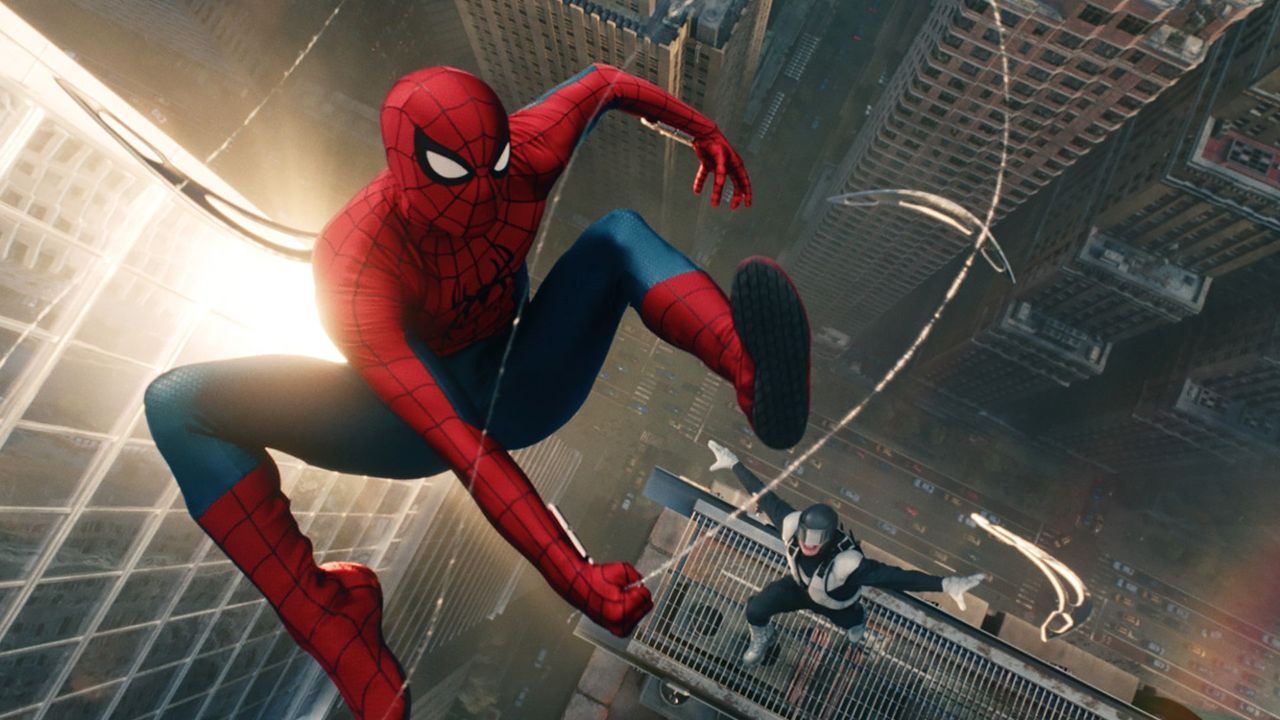
Best Movies in July 2026 is one of the strongest months for cinema in recent years, anchored by two films that represent entirely different visions of what blockbuster filmmaking can be. Christopher Nolan's The Odyssey is a near three-hour adaptation of Homer's ancient epic, shot entirely on 70mm IMAX film, the first feature in history to do so, with Matt Damon as Odysseus and an ensemble cast including Anne Hathaway, Charlize Theron, Robert Pattinson, Zendaya, Tom Holland, and Lupita Nyong'o. At the other end of the spectrum, Spider-Man: Brand New Day arrives as the fourth Tom Holland Spider-Man film and the first in a proposed new trilogy, with a new director in Destin Daniel Cretton and a story that deliberately strips Peter Parker back to basics.
Nolan's ambition with The Odyssey is the kind that demands to be taken seriously on its own terms. "I think what separates him from other directors is the stories he wants to tell are incredibly ambitious," Matt Damon said on 60 Minutes, "and the way he wants to tell them is incredibly ambitious. In this case he wanted to do it 100% in IMAX, which had never been done." For anyone who has sat through Oppenheimer's visceral recreation of the atomic age or Inception's bending architecture, the prospect of Nolan turning that same intensity on one of the foundational texts of Western literature, a story of war, wandering, gods, and homecoming, is genuinely exciting rather than merely spectacular.
Spider-Man: Brand New Day takes a different kind of creative risk. Following the memory-erasing spell cast by Doctor Strange in the previous film, Peter Parker begins this story as a young man in his mid-twenties whom nobody remembers, facing adult problems, including the Hulk, the Punisher, and a gang of ninja assassins, entirely alone. Director Cretton described it as capturing "that time in your mid-20s, when the harsh realities of life can sometimes slap you in the face," a tonal shift that suggests the new trilogy intends to grow up alongside its audience rather than recycling the formula that made the previous films commercially dominant but creatively predictable.
Enola Holmes 3, Moana's live-action remake, and the Minions' Hollywood adventure represent July's most accessible family and mainstream releases
July's most accessible films come from three very different creative directions. Enola Holmes 3 arrives on Netflix on July 1, written by Jack Thorne and directed by Philip Barantini, the screenwriter and director of the acclaimed Adolescence. Millie Bobby Brown returns as Sherlock's younger sister, now a grown woman about to marry Lord Tewkesbury (Louis Partridge), until Sherlock himself (Henry Cavill) is kidnapped and she must rescue him with Watson (Himesh Patel) and their mother (Helena Bonham Carter). Thorne has described the series as Victorian history lessons in disguise, with the third film examining Britain's colonial history, a thematic ambition that elevates it above typical franchise sequels.
Disney's live-action Moana, releasing July 8 to 10 internationally, raises a legitimate editorial question: is it too soon to remake a film from 2016 whose sequel only came out two years ago? Director Thomas Kail, who comes from theatre where revivals are commonplace, argues that reinterpretation is always valid when the creative intent is genuine. Dwayne Johnson reprises his animated role in live action, the monsters are rendered in CGI, and Kail promises "tons of new dialogue, lots of new jokes" alongside the story audiences already know. Whether that constitutes a genuine artistic case for the film's existence or simply a commercial one is a question worth sitting with before buying a ticket.
Minions and Monsters, the third Minions film and seventh Despicable Me entry overall, takes the yellow characters to 1920s Hollywood where they attempt to make their own monster movie. Director Pierre Coffin has always been clear about the franchise's roots: "All the Minions stuff is heavily inspired by silent-movie stars. The whole point of it is that you don't understand them when they speak, but you understand them nonetheless." Transporting that sensibility to the era of silent film itself is a genuinely clever structural choice, and if the twist involving a real live monster on a remote island pays off, this could be the most entertaining Minions film since the original Despicable Me introduced them to the world.
Remake, Reading Lolita in Tehran, and Evil Dead Burn are the month's most emotionally demanding and culturally significant films
The most emotionally challenging film of July is almost certainly Remake, Ross McElwee's documentary about the death of his son Adrian from a drug overdose in 2016. McElwee has built a cult following over decades by placing himself and his family at the centre of introspective, bittersweet non-fiction films, but this is the most personally devastating subject he has ever approached. Hannah Strong in Little White Lies described it as "his most nakedly intimate and devastating work, the culmination of a life lived in public for the sake of art," a film in which grief, love, and the act of looking back at a life through the footage a filmmaker compiles over decades all converge into something almost unbearable to watch.
Reading Lolita in Tehran, releasing July 10 in the US, stars Golshifteh Farahani in an adaptation of Azar Nafisi's bestselling 2003 memoir about teaching literature in Iran during the 1980s and 1990s as the post-revolutionary regime tightened its control. Farahani plays Nafisi, who eventually retreats from the University of Tehran to run a secret weekly book club in her home where a small group of women read Lolita, The Great Gatsby, and Pride and Prejudice while discussing how those novels illuminate their own increasingly constrained lives. Wendy Ide in Screen International called Farahani "a powerful and charismatic presence" in "a stirring story of courage and curiosity in the face of oppression," and the film arrives at a moment when questions about women's freedoms in Iran feel as urgent as they ever have.
Evil Dead Burn, directed by Sebastien Vanicek and starring Souheila Yacoub, takes the horror comedy franchise into new territory by placing its protagonist at a dinner with her late husband's family, a social nightmare that escalates into full demonic zombie carnage. Vanicek has been explicit that the film is designed to stand alone: "My goal was to craft a powerful, singular, almost personal story that could stand on its own," he told Variety, "while still resonating deeply within the rich, complex world that Sam Raimi has built." For audiences who found Evil Dead Rise in 2023 to be one of the most viscerally effective horror films in years, this is the July release that will stay with them longest, though perhaps not in the most comfortable way.
Nicolas Winding Refn's Her Private Hell and Gail Daughtry and the Celebrity Sex Pass are July's most distinctive niche offerings
Nicolas Winding Refn's Her Private Hell is his first film since The Neon Demon in 2016, and by his own implicit standards it is his most extreme and divisive work yet, from a director whose filmography includes Drive, Only God Forgives, and Pusher. Sophie Thatcher stars as an actress in a mist-shrouded future city who is about to begin shooting a science-fiction film when a supernatural serial killer begins targeting people in her building, while below in the city streets a noirish American soldier (Charles Melton) pursues a story that pays homage to Marvel's Daredevil comics. Chase Hutchinson in The Wrap described it as "a captivating cinematic experience, a series of visceral, vibrant and increasingly violent visions that you have to let wash over you," which is both the best possible description of a Refn film and a fair warning about what you are walking into.
Gail Daughtry and the Celebrity Sex Pass, from Wet Hot American Summer director David Wain, is the month's most deliberately ridiculous offering: a comedy built around the Friends concept of a celebrity exemption from relationship fidelity, in which Zoey Deutch's character travels to Los Angeles to seduce Jon Hamm after her boyfriend uses his pass on another celebrity. Cameos from Jennifer Aniston, Henry Winkler, Paul Rudd, and Elizabeth Banks, all playing versions of themselves, push the film into postmodern comedy territory, with deliberate references to The Wizard of Oz woven through the road trip structure. Richard Lawson in The Hollywood Reporter called it "proudly stupid, a scattershot, oddball comedy that satisfies in visceral, pleasurable ways that a more sophisticated comedy could not," which is as honest an endorsement as any comedy film can receive.
Together, these ten films make July 2026 a month that offers something genuinely worthwhile for almost every kind of cinemagoer. The editorial case for the month is not that every film is equally essential but that the range is unusually strong: from Nolan's ancient epic to a grief documentary, from franchise horror to a 1920s Hollywood comedy with actual monsters, from a feminist literary drama set in revolutionary Iran to the newest chapter in the most commercially dominant superhero franchise of the decade. The question is not whether there is something worth watching. The question is whether you have enough evenings in July to get through everything that deserves your time.