
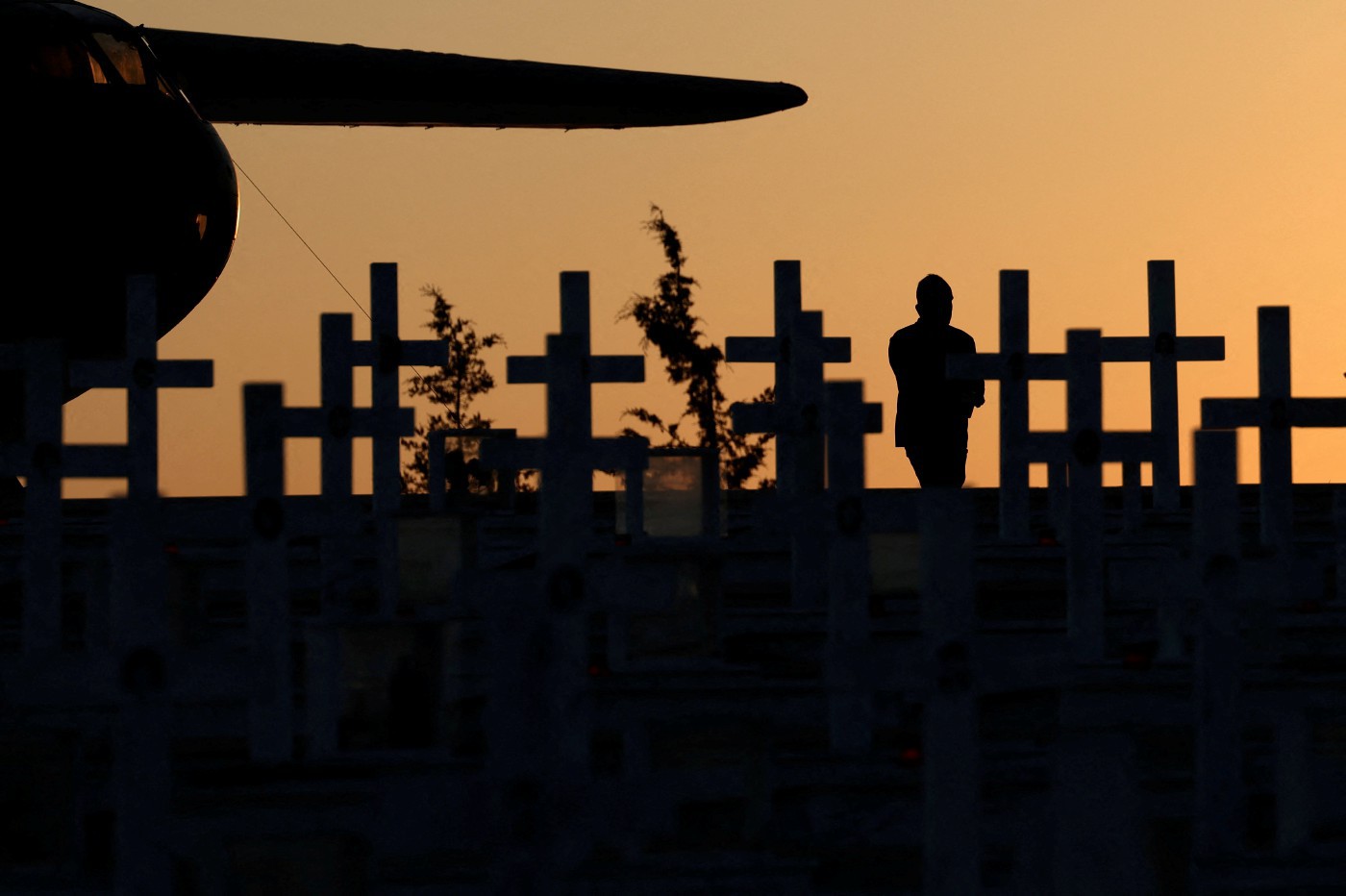
Cyprus Peace Talks marked 52 years since Turkey's military invasion with solemn ceremonies on Monday, as the island's divided communities reflected on a conflict that has shaped the political geography of the eastern Mediterranean for more than half a century. Air raid sirens sounded across the southern Greek Cypriot government-controlled areas of Cyprus on Monday morning, timed to mark the hour that Turkish forces first landed in 1974. The commemorations served both as a moment of national remembrance and as an annual reminder of the unresolved political division that continues to define Cyprus's relationship with Turkey, Greece, and the broader international community.
The invasion of 1974 came days after a short-lived Greek-inspired coup against the Cypriot government. Turkey intervened militarily, citing its obligation as a guarantor power to protect the Turkish Cypriot community following years of intercommunal friction and violence that had accompanied Cyprus's independence from Britain. The operation resulted in Turkish forces occupying the northern third of the island, displacing tens of thousands of Greek Cypriots from their homes and creating the division that persists today. Turkey continues to describe the military action as a "peace operation" rather than an invasion, a characterisation that the Republic of Cyprus and the international community have not accepted.
Military celebrations were also planned on Monday in the Turkish Cypriot north, the self-declared state that calls itself the Turkish Republic of Northern Cyprus. That entity is not recognised by any country in the world except Turkey, a fact that has significant implications for the peace process: the northern administration's international isolation makes formal multilateral negotiations structurally difficult, since most international bodies and countries deal only with the Republic of Cyprus as the internationally recognised government of the island. The anniversary ceremonies, marking different versions of the same historical event, encapsulate exactly the gulf in political narrative that any peace settlement would need to bridge.
UN Secretary-General Antonio Guterres will visit Cyprus from 27 to 29 July in an attempt to revive a peace process that has produced no substantive talks for years
The anniversary falls at a moment of renewed, if cautious, diplomatic activity. UN Secretary-General Antonio Guterres is scheduled to visit Cyprus from 27 to 29 July in a fresh attempt to break the deadlock in a peace process that has produced no substantive negotiations for years. The UN has been the primary international facilitator of Cyprus peace talks since the island's division, and Guterres's visit represents a personal engagement by the organisation's most senior official, signalling that the UN views the current moment as potentially conducive to renewed dialogue.
Cyprus President Nikos Christodoulides responded to the upcoming visit with measured optimism, setting expectations carefully rather than predicting a breakthrough.
"We hope the conditions will be created for the resumption of negotiations."
Cyprus President Nikos Christodoulides
The careful phrasing of the president's statement reflects the difficulty of the diplomatic terrain Guterres will be navigating. Previous rounds of UN-facilitated talks, including the Crans-Montana conference in Switzerland in 2017, collapsed without agreement after the two sides and their guarantor powers failed to bridge their core differences. The fact that the president spoke of hoping conditions would be "created" for negotiations, rather than expressing confidence that negotiations would resume, signals that the groundwork for a new round of talks has not yet been laid and that the Guterres visit is intended to assess and potentially build that groundwork rather than launch formal negotiations immediately.
The core dispute between Greek and Turkish Cypriots over federation versus two sovereign states has blocked every peace effort for decades
The fundamental obstacle to any Cyprus settlement is a disagreement about what kind of solution the talks are supposed to produce, a problem that sits at a more basic level than any specific negotiating detail. Greek Cypriots seek reunification of the island as a federation, a model in which the two communities would share a single internationally recognised state with a federal structure preserving distinct Greek Cypriot and Turkish Cypriot zones and governance arrangements. Turkey and the Turkish Cypriot leadership seek recognition of two separate sovereign states, a model that would amount to a formal partition of the island and international recognition of the northern state.
These two positions are not merely different points on a negotiating spectrum that compromise could bridge. They reflect fundamentally different visions of what Cyprus is and what it should become. A federation preserves the unity of the island under international law while accommodating the political separation of its communities. Two sovereign states would codify and permanently entrench that separation in a form the Republic of Cyprus, the European Union, and the United Nations have consistently said they cannot accept. Decades of negotiations have so far failed to find a framework that either side is willing to accept as a basis for substantive talks, let alone a final settlement.
The dispute carries consequences that extend well beyond the island itself. It is a persistent source of tension between Greece and Turkey, two NATO member states whose relationship shapes the security dynamics of the eastern Mediterranean and the Aegean. It is also a direct obstacle to Turkey's long-standing ambition to join the European Union. The Republic of Cyprus, as an EU member since 2004, has legal standing within the bloc that gives it significant leverage over Turkey's accession process. Any improvement in the Cyprus situation would therefore have implications for the EU-Turkey relationship, for NATO's internal cohesion, and for the broader geopolitical order of a region that has rarely been more strategically important to Western interests than it is at present.
"We hope the conditions will be created for the resumption of negotiations." Cyprus President Nikos Christodoulides on the Guterres visit
Why Cyprus matters for NATO, the European Union, and Turkey's future relationship with the West
The Cyprus dispute is not a frozen conflict in a remote corner of the map. It sits at the intersection of NATO's internal tensions, the EU's relationship with a candidate country of strategic importance, and the competing interests of Greece and Turkey, two alliance partners whose bilateral relationship has been strained for decades partly because of Cyprus. For NATO, a dispute between two member states over the status of a third country creates operational and political complications that the alliance has managed but never resolved. Greece and Turkey have come close to military confrontation over other bilateral issues, and the Cyprus question remains an aggravating factor in a relationship that the alliance needs to function smoothly.
For the European Union, the Cyprus issue is directly tied to one of the bloc's most consequential and unresolved external relationships. Turkey has been a formal EU candidate country since 1999, and its accession process has been effectively frozen for years. The Republic of Cyprus's EU membership means that any progress on Turkey's accession requires at minimum a workable relationship with Nicosia, which the current state of the Cyprus dispute makes structurally difficult. A resolution of the Cyprus question would remove one of the most significant formal obstacles to a renewed EU-Turkey dialogue, though it would not on its own resolve the other political and legal issues that have stalled Ankara's accession process.
For Cyprus itself, the upcoming Guterres visit offers a moment of diplomatic attention that has been absent for years. Whether that attention translates into substantive progress depends on whether both communities and their respective supporters in Ankara and Athens are prepared to engage on terms that could produce a framework both sides can accept. Fifty-two years of division has shown that goodwill and UN facilitation are necessary but not sufficient conditions for a settlement. What has consistently been missing is a political alignment between the communities and their guarantor powers on what a solution should look like. The question Guterres arrives to answer is whether that alignment is any closer in 2026 than it was the last time a UN secretary-general sat down with the parties in earnest.