
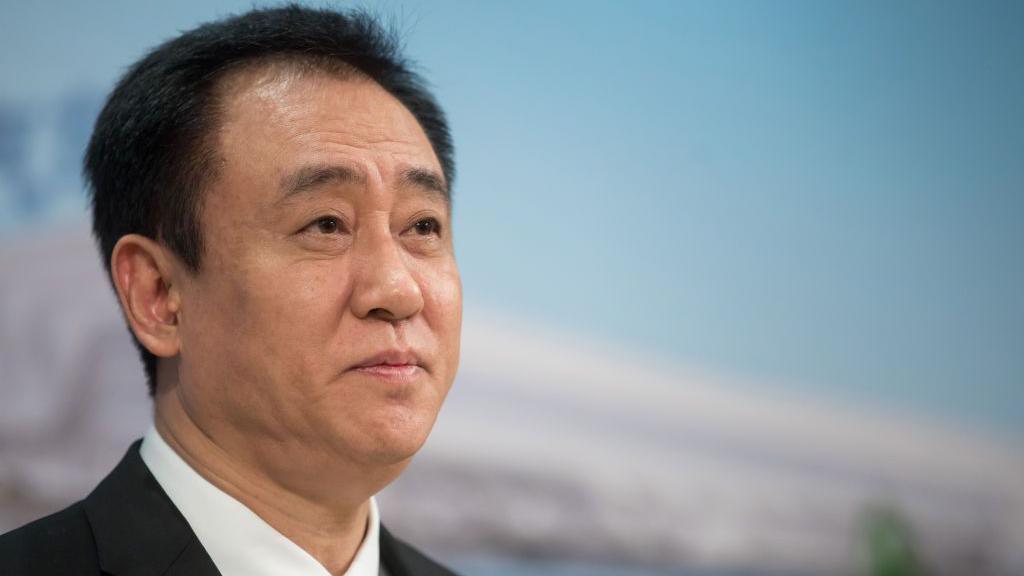
Evergrande founder Hui Ka Yan guilty plea 2026 has been confirmed after the founder of China's collapsed real estate giant appeared before a Shenzhen court on April 13 and 14 and pleaded guilty to multiple charges including embezzlement of assets and corporate bribery, according to a statement issued by the court following the public hearings. Chinese state media reported that Hui expressed remorse during the proceedings, and the court announced that its verdict will be delivered at a later date, leaving the specific sentencing consequences of his guilty plea to be determined in subsequent proceedings. The plea marks a pivotal moment in the unravelling of what was once China's biggest real estate firm, a $50 billion market-capitalisation company whose collapse into a debt crisis in 2021 shook the country's property sector, left investors and domestic banks reeling, and contributed to a persistent property market slump that has weighed heavily on China's broader economic development in the years since.
The court heard that Evergrande had taken millions of dollars in pre-sale funding from potential house buyers that were not used for construction as intended, but were instead diverted to new projects, resulting in hundreds of unfinished properties scattered across China whose buyers paid for homes that were never delivered. That specific pattern of fund diversion, using prospective buyers' deposits as operational financing for an ever-expanding business rather than as construction funding for the specific projects those deposits were paid for, is the most directly human element of a corporate fraud story that is often told primarily in its macroeconomic dimensions. Behind every unfinished property is a family that paid their life savings for a home they never received, a human consequence of Evergrande's business practices that Hui's guilty plea formally acknowledges as criminal conduct rather than as business misfortune.
Hui Ka Yan, also known by his Mandarin name Xu Jiayin, rose from genuinely humble origins in rural China, where he was raised by his grandmother, to become Asia's richest person with a fortune estimated at $42.5 billion in 2017 according to Forbes. His journey from rural poverty to the pinnacle of Asian wealth through the vehicle of Evergrande, which he founded in 1996 and grew into an empire spanning property development, electric vehicles, food and drinks, and professional football, is one of the defining stories of China's economic boom era. The courtroom in Shenzhen where he pleaded guilty to embezzlement and bribery is the final chapter of that story, and the remorse he expressed represents both a legal strategy and a reckoning with a business career whose extraordinary ascent ended in the most consequential corporate collapse in Chinese economic history.
How Evergrande Was Built and How Its Empire Collapsed
Hui Ka Yan's biography is inseparable from the story of China's property boom, because both the man and the sector rose together through the same economic conditions and the same fundamental assumptions about the nature of Chinese economic growth. Evergrande was founded in 1996 at a moment when China's urbanisation wave was creating enormous demand for housing in cities that were growing at rates the world had never seen, and Hui built his company on the insight that the combination of demographic momentum, rising incomes, and the cultural importance of homeownership in Chinese society would sustain property prices and demand for years. That insight was correct for nearly two decades, and Evergrande grew rapidly on the back of the economic boom, expanding across hundreds of cities and accumulating the property portfolio that made it China's biggest real estate firm.
Hui's personal wealth, which Forbes estimated at $42.5 billion in 2017 placing him at the top of Asia's rich list, was built almost entirely on Evergrande's stock market valuation, which at its peak exceeded $50 billion and reflected investors' confidence in the company's ability to continue growing its property portfolio in a market that appeared to have unlimited upside. The expansion beyond property into electric vehicles through Evergrande Auto, food and drinks through Evergrande Spring, and professional football through Guangzhou FC, which became China's top football team, reflected the ambition of a founder who had built one of Asia's most valuable companies and believed the same growth instincts that had made property successful would translate into entirely different sectors. The diversification was funded by the same borrowing that had financed the core property business, extending the leverage model into sectors where the cash flow characteristics and capital requirements were even less favourable than in property development.
Evergrande's expansion was made possible by China's rapid economic growth and by the credit environment that sustained that growth, with Chinese banks, trust companies, and shadow finance institutions willing to provide the capital that Hui needed to continue building because the property market's consistent appreciation provided the collateral value that made lending at scale seem rational. The company became known as the world's most indebted property developer, with approximately $300 billion of borrowed money underpinning its business at the point of its collapse, a leverage level that required continuously rising property prices and sales volumes to service. When Beijing introduced new rules in 2020 to control property sector debt, targeting the leverage ratios of major developers through regulations known informally as the three red lines, Evergrande's business model was directly and fatally challenged because it could no longer borrow the new money needed to repay its existing obligations.
The 2020 Regulatory Change, the 2021 Collapse, and the $300 Billion Debt Crisis
Beijing's 2020 property debt regulations represented the specific policy catalyst that triggered Evergrande's collapse, though the underlying vulnerability had been building for years in the form of a business model that required continuous debt expansion and rising prices to function. The three red lines policy, which set specific limits on developers' debt-to-asset ratios, net debt ratios, and cash-to-short-term-debt ratios, placed Evergrande on the wrong side of all three thresholds simultaneously, restricting its ability to take on new borrowing at precisely the moment when its existing debt obligations required refinancing. The company's response, selling properties at large discounts to generate the cash flow needed to meet near-term obligations, accelerated the very price deterioration that its business model could not survive, creating a feedback loop between distressed sales, falling prices, and deteriorating financial ratios that led directly to the 2021 default.
The collapse of Evergrande in 2021 sent shockwaves through China's financial system that were felt far beyond the company's own investors and creditors, because Evergrande's size and the scale of its pre-sale commitments to homebuyers created systemic risks across multiple dimensions simultaneously. Banks with direct loan exposure to Evergrande faced asset quality deterioration. Trust companies that had sold wealth management products backed by Evergrande receivables faced investor demands for redemption that they could not meet. Most significantly, the hundreds of thousands of homebuyers who had made down payments on unfinished Evergrande properties faced the prospect of having lost their deposits without receiving the homes they had been promised, a social and political crisis that threatened the legitimacy of the entire pre-sale model that had funded Chinese property development for decades.
Evergrande's downfall has been consistently cited as a trigger for the broader property market slump that has weighed on China's economy since 2021, both because its default signalled the end of the assumption that major Chinese developers were too big to fail and because the crisis of confidence it created in the pre-sale funding model reduced buyer willingness to commit deposits to new projects whose delivery was now seen as uncertain. The contagion effects spread to other highly leveraged developers, and the Chinese property sector entered a prolonged period of contraction whose consequences for the broader economy, including reduced construction activity, falling land sales revenues for local governments, and declining consumer wealth in property-heavy household balance sheets, are still playing out in 2026. Evergrande was simultaneously a symptom of the property sector's structural vulnerabilities and a catalyst for their expression, making Hui's personal accountability before the Shenzhen court a bookend to a chapter in Chinese economic history that cost the country's economy and its citizens an incalculable toll.
The Pre-Sale Fund Diversion and the Human Cost Behind the Headlines
The court's finding that Evergrande took millions of dollars in pre-sale funding from potential homebuyers and diverted those funds to new projects rather than using them to complete the properties the buyers had paid for is the specific criminal conduct at the heart of Hui's guilty plea, and it represents the most direct connection between the company's fraudulent practices and the harm suffered by individual Chinese families. Pre-sale funding is the mechanism by which Chinese property developers collect buyers' deposits and mortgage drawdowns for properties that have not yet been built, using that cash to finance construction while buyers wait for completion and delivery. The model requires that developers use pre-sale proceeds for the specific projects they were raised for, a requirement that Evergrande systematically violated by diverting funds to other projects, new acquisitions, and general corporate purposes.
The hundreds of unfinished properties that resulted from this fund diversion represent the aggregate human consequence of years of systematic misappropriation of buyer funds. Each unfinished property represents not just a failed investment but a family's disrupted life, including buyers who took out mortgages they are still servicing for properties they do not occupy, who made down payments that may never be recovered, and who made life decisions including marriages, births, and job relocations around anticipated delivery dates that were never met. China's so-called loulan or rotten-building protest movement, in which buyers of unfinished properties organised mortgage strikes and public demonstrations, was the political expression of this human cost, and it created the social pressure that made Hui's eventual prosecution politically necessary for a government that had initially been ambivalent about holding the founder accountable for the consequences of practices that the regulatory environment had implicitly permitted for years.
The March 2024 regulatory action that fined Hui $6.5 million and banned him from China's capital markets for life over Evergrande's overstatement of revenue by $78 billion established a specific documented record of financial misrepresentation that preceded and supported the criminal charges he has now pleaded guilty to. A company that overstated its revenue by $78 billion over multiple reporting periods was not simply making accounting errors but systematically misrepresenting its financial condition to investors, lenders, regulators, and the homebuyers whose decisions to commit their savings to Evergrande's projects were based on the false impression of financial strength that the inflated revenue figures created. The progression from the civil penalty and market ban to criminal charges for embezzlement and bribery reflects the Chinese authorities' determination to hold Hui personally accountable for conduct that went beyond regulatory violation into outright fraud.
The Guilty Plea, the Awaited Verdict, and Evergrande's Legacy
Hui Ka Yan's guilty plea in the Shenzhen court is the most significant act of personal accountability by a major Chinese property developer's leadership that China's property crisis has produced, and its significance extends beyond the individual case to the broader question of how China's government and legal system will hold accountable the business leaders whose decisions contributed to the property sector crisis. The guilty plea removes the uncertainty of a contested trial and establishes Hui's personal criminal responsibility for the specific conduct documented in the charges, providing a legal foundation for the sentencing that the court will deliver at a later date. The expressions of remorse that Chinese state media reported reflect the standard Chinese judicial process's expectation of contrition, but they also close off the defensive narrative that Evergrande's collapse was the result of external regulatory changes and market conditions rather than of deliberate fraud at the leadership level.
The charges of embezzlement of assets and corporate bribery that Hui pleaded guilty to cover the two most direct forms of corporate criminal conduct documented in the case. Embezzlement of assets addresses the fund diversion from buyer pre-sale deposits to other purposes, establishing that the misappropriation of buyer funds was not a business judgment but a criminal taking of money entrusted to the company for specific purposes. Corporate bribery addresses the relationships with officials and other parties whose cooperation was necessary for the scale of business that Evergrande conducted, establishing a pattern of corrupt practice that supported the company's operational model across multiple jurisdictions and regulatory environments. Together these charges present a picture of a company whose extraordinary success was built on a foundation of systematic fraud and corruption rather than on legitimate business excellence.
Evergrande's stock market journey from a more than $50 billion valuation at its peak to the delisting from the Hong Kong exchange in August 2025, after shares that had already lost 99 percent of their value were finally removed from trading after more than fifteen years, represents the complete destruction of the shareholder value that Hui's management had created at the market's peak. The shareholders who held Evergrande stock through its collapse, including retail investors who had been attracted by the company's size and apparent financial strength, lost the overwhelming majority of their investment in a decline that the revenue overstatement charge establishes was based on false financial information. Hui's guilty plea is a legal accountability moment that cannot restore those losses, but it establishes the factual record that may support civil claims and that provides the public documentation of wrongdoing that China's property crisis has needed for its own historical reckoning.
The Property Market Legacy and China's Ongoing Economic Consequences
The property market slump that Evergrande's collapse triggered in 2021 remains a defining feature of China's economic landscape in 2026, with residential property prices in many Chinese cities still below their 2021 peaks and land sales revenues that local governments depend on for a substantial portion of their fiscal capacity still depressed relative to the years when the property boom funded infrastructure investment and public services. The macro-economic transmission channels from the property sector's contraction to broader growth are multiple and persistent: household wealth concentrated in property has declined, consumer spending has been affected by falling asset values and uncertainty about the property market's recovery, and the construction sector contraction has reduced both employment and the manufacturing demand for building materials and equipment.
China's government has implemented multiple rounds of property market support measures since 2021, including interest rate reductions, down payment requirement reductions, restrictions on sales, and various demand stimulation programmes, with limited success in restoring the pre-crisis trajectory of price appreciation and transaction volumes. The property sector's persistent weakness reflects structural factors that go beyond the cyclical consequences of Evergrande's default and the regulatory policy that triggered it, including the demographic slowdown that is reducing the household formation rates that sustained property demand for decades, the urbanisation trend that has reached a more mature phase where migration-driven demand is less powerful than in earlier years, and the legacy of the overbuilding that the credit-fuelled boom produced in smaller cities where supply exceeds sustainable demand.
Hui Ka Yan's journey from the rural poverty of his childhood through the stratospheric wealth of his Evergrande years to the Shenzhen courtroom where he entered his guilty plea encapsulates something larger than an individual story of rise and fall. It is the story of China's growth model itself, the extraordinary wealth creation of the reform era, the debt-fuelled property boom that amplified that wealth creation beyond what fundamentals could support, and the inevitable reckoning when the gap between the financial architecture and the underlying economic reality became too large to paper over with new borrowing. The verdict that the Shenzhen court will deliver at a later date will set the personal consequences for the man at the centre of that story, but the consequences for China's economy, its homebuyers, and its financial system are already written in the property market data, the balance sheets of Chinese banks, and the unfinished buildings that stand across hundreds of Chinese cities as the most visible monument to what Hui Ka Yan built and how he built it.