
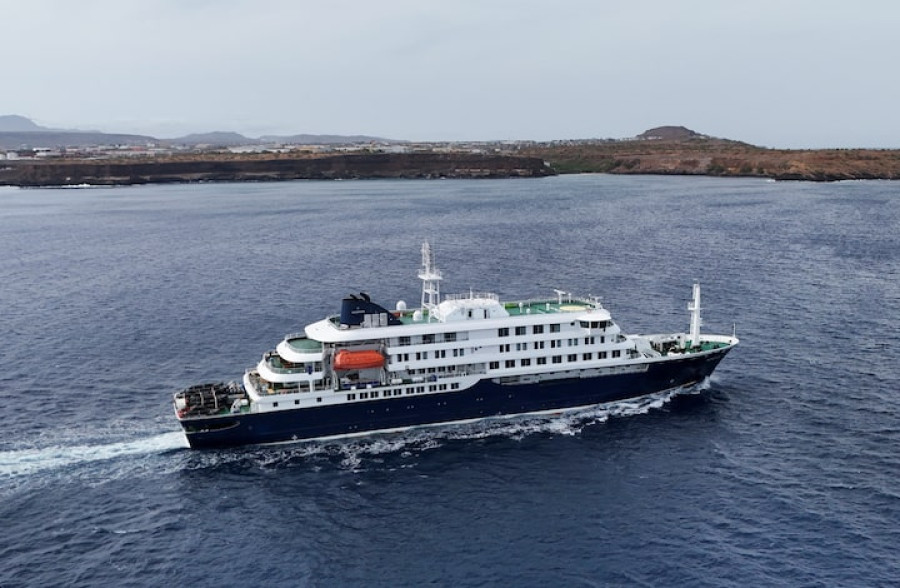
Hantavirus cruise ship MV Hondius outbreak 2026 has triggered an international contact tracing operation spanning at least 12 countries after three people died and five confirmed cases were identified aboard the expedition vessel, prompting health authorities from the United States to Singapore to monitor returned passengers while the World Health Organization worked to coordinate the global response and repeatedly reassure a public still carrying pandemic anxiety that this situation is fundamentally different from COVID-19. The three people who died were a Dutch couple and a German national, making them the earliest confirmed cases in an outbreak that the WHO said also includes three suspected additional cases beyond the five confirmed infections. Hantavirus is primarily spread through contact with infected rodents and their droppings, but the Andean strain identified in several victims of this outbreak is one of the rare variants that can in limited circumstances be transmitted from person to person, which is the specific characteristic that has elevated the international health response to a level that a purely rodent-transmitted virus would not require.
The MV Hondius, operated by Oceanwide Expeditions, stopped at St. Helena in the South Atlantic Ocean on April 24, and all passengers who disembarked at that stop have been contacted by the ship's operator, including seven British citizens and six Americans among the passengers from at least 12 countries. The first confirmed hantavirus case in this outbreak was identified in early May, meaning a period of several weeks passed during which passengers had dispersed to their home countries before the outbreak was detected and the contact tracing process began. The ship is currently sailing to the Canary Islands where it is expected to arrive Saturday or Sunday, carrying dozens of remaining passengers who are not currently showing any symptoms, and the WHO said it was working on step-by-step guidance for their disembarkation and travel home.
WHO director of epidemic and pandemic management Maria Van Kerkhove was direct and emphatic in her public messaging at a press conference, stating that this is not coronavirus and this is a very different virus, explicitly rejecting the comparisons to the COVID-19 pandemic that the words outbreak and cruise ship inevitably trigger in public consciousness after 2020. The WHO's repeated emphasis that the risk to the general public is low reflects genuine epidemiological assessment rather than reassurance for its own sake, because hantavirus does not spread with the respiratory efficiency of COVID-19 and the person-to-person transmission of even the Andean strain requires the kind of close contact that differs fundamentally from the airborne spread that made the pandemic so difficult to contain. President Trump told reporters on Thursday he had been briefed on the situation and expressed hope it was under control, noting that a report was expected Friday.
How the Outbreak Developed and What Made Hantavirus Dangerous on This Ship
The Dutch couple believed to be the first hantavirus cases in this outbreak boarded the MV Hondius on April 1, making their infection predating the St. Helena stop by more than three weeks and suggesting the exposure to the virus occurred either before boarding or in the early stages of the voyage. Dutch airline KLM removed the Dutch woman from a plane in Johannesburg on April 25 due to her deteriorating medical condition, a day after the ship had docked at St. Helena, and she died before she could reach the Netherlands, making her death one of the most geographically dispersed elements of an outbreak whose spread across multiple continents creates the contact tracing complexity that health authorities are now managing. A KLM flight attendant who had contact with her on the Johannesburg flight has been admitted to hospital in Amsterdam showing possible hantavirus symptoms, extending the chain of potential transmission from the ship itself into the commercial aviation network in a way that will require careful monitoring.
The Dutch authorities' decision to call crew and passengers who helped the Dutch woman daily for health checks reflects the precautionary approach appropriate for a rare person-to-person transmissible strain, ensuring that any symptom development is caught as early as possible and that the individuals most exposed to the confirmed cases have access to regular medical assessment rather than having to self-identify symptoms and seek care independently. Three patients were evacuated from the ship on Wednesday, with two admitted to hospital in the Netherlands and one transferred to Germany for medical care. Martin Anstee, an expedition guide and one of the Netherlands evacuees, told Sky News he was doing okay but that many tests remained ahead, providing a human voice to what had until then been a largely statistical account of cases and contacts.
Oceanwide Expeditions said it was working to establish details of all passengers and crew who embarked and disembarked at the various stops since March 20, a contact tracing task of significant complexity given the expedition nature of the voyage that typically involves stops at multiple remote locations over extended periods. The March 20 start date for the contact tracing exercise means the operator is attempting to account for more than six weeks of passenger and crew movement across multiple countries, with the challenge amplified by the expedition cruise format that attracts passengers from many different nations on itineraries that visit some of the most remote locations in the South Atlantic and Antarctic regions. Switzerland confirmed a positive test in a man who travelled on the ship and was admitted to hospital, while Canada identified three passengers who had returned home before the outbreak was identified, one of whom shared a flight with a symptomatic person.
Why Hantavirus Is Different From COVID and What Public Risk Actually Looks Like
The WHO's insistence that this is not COVID reflects the epidemiological reality that hantavirus, even in its rare person-to-person transmissible Andean strain form, does not share the key characteristics that made COVID-19 so difficult to contain. Hantavirus is not airborne in the way that SARS-CoV-2 spread, does not have the pre-symptomatic transmission profile that allowed COVID to spread silently through communities before people knew they were infected, and does not have the global baseline of zero immunity among all human populations that made COVID's early spread so explosive. Person-to-person transmission of the Andean strain has been documented in limited outbreaks historically but has not produced the kind of sustained community spread chains that define pandemic potential, and the contained nature of this outbreak despite several weeks of undetected dispersal supports the assessment that transmission efficiency is significantly lower than the COVID comparison would imply.
The U.S. CDC classified the outbreak as a level 3 emergency response, indicating serious monitoring engagement without the kind of domestic transmission risk assessment that would trigger the higher-level responses reserved for threats with genuine widespread community spread potential. Multiple U.S. state health departments are monitoring returned passengers in Georgia, Arizona, California, and Texas, with all currently asymptomatic individuals being watched rather than hospitalised or quarantined, reflecting the proportionate response that the low transmission risk assessment supports. Singapore's Communicable Diseases Agency isolated and tested two residents who were on board, applying the precautionary monitoring that the Andean strain's rare person-to-person transmission history justifies without treating the situation as an imminent public health emergency.
Contact Tracing Status and What Arriving Passengers Face in the Canary Islands
The WHO's preparation of step-by-step guidance for the disembarkation of remaining passengers in the Canary Islands represents the specific immediate operational challenge that the international health response must address in the coming days, providing the arriving ship's destination authorities with a clear framework for managing the passengers' departure and onward travel to their home countries in ways that maintain appropriate monitoring without unnecessary restriction of movement for asymptomatic individuals. The guidance challenge is to balance the public health requirement to track and monitor anyone who may have had contact with confirmed cases against the legal and ethical constraints on restricting the movement of people who show no symptoms of illness and who come from the many countries whose cooperation in subsequent monitoring the WHO needs to maintain.
None of the passengers currently remaining on the ship have symptoms, which means their arrival in the Canary Islands will be managed under monitoring and notification protocols rather than under quarantine or isolation measures that would be more operationally challenging and more legally contested. The passengers' subsequent dispersal to their home countries across at least 12 nations will activate the international surveillance network that the WHO coordinates, with national health authorities in each destination country responsible for the ongoing monitoring of returned individuals who may have been exposed to the virus during the voyage. The Danish citizen who returned home has been advised to self-isolate as a precaution, and the Canadian authorities' monitoring of three returned passengers including one who shared a flight with a symptomatic person illustrates the graduated response that different levels of exposure risk appropriately trigger.
The broader reassurance that health authorities are trying to deliver, that this is a serious and actively managed outbreak but not a public health emergency of international concern in the COVID sense, rests on the epidemiological characteristics of hantavirus that Van Kerkhove's press conference articulated clearly. Public anxiety about viral outbreaks following the pandemic experience is understandable and predictable, and the health communication challenge of this outbreak is to provide honest information about a real risk while preventing the kind of disproportionate fear response that would impede the contact tracing cooperation that is the actual public health priority. Trump's Friday report commitment suggests that the U.S. government anticipates the public communication dimension of this outbreak will require active management, and the CDC's level 3 classification provides the institutional framework for that management without the highest-level alarm that the public health situation does not currently justify.