
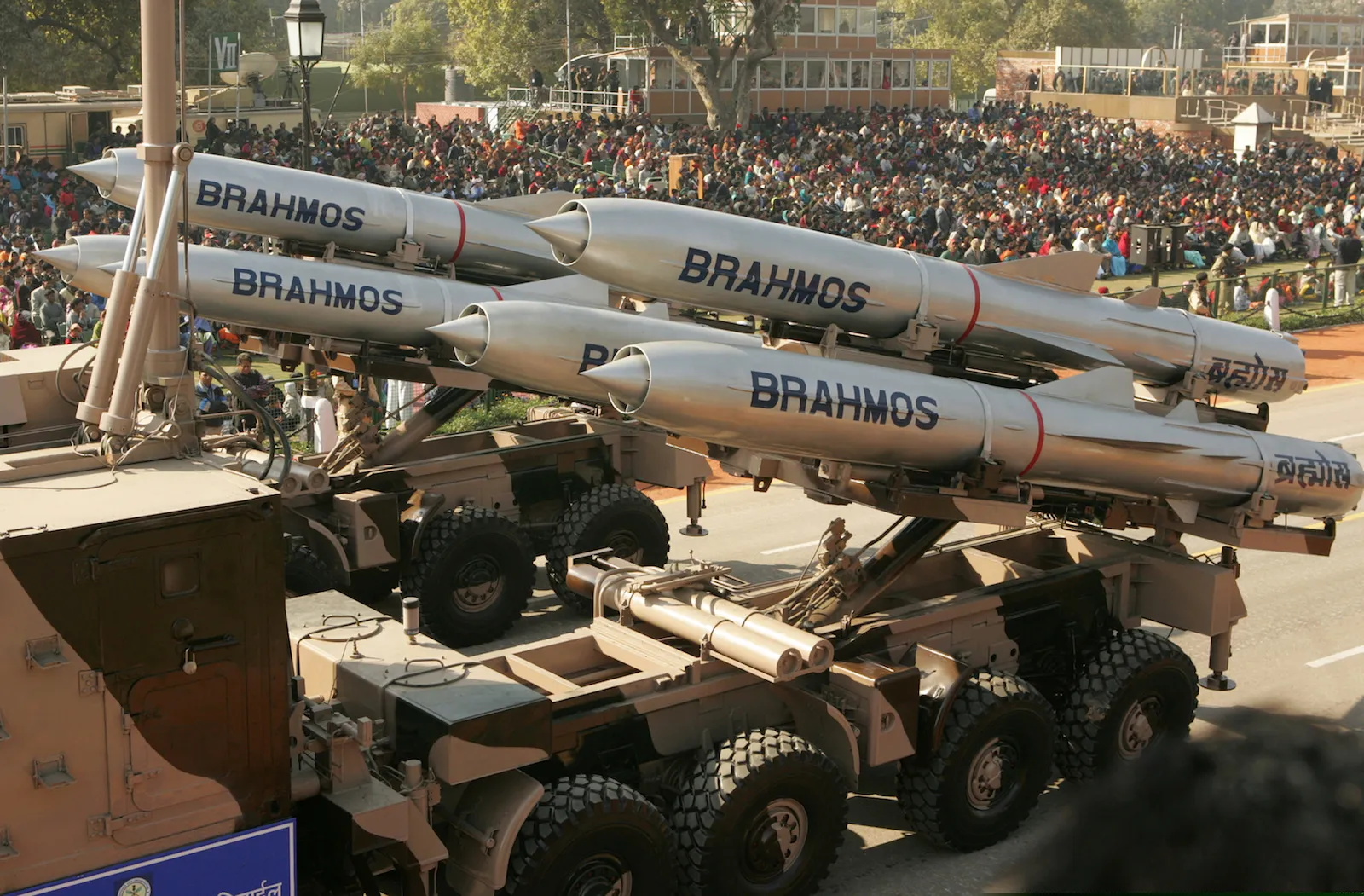
India is in active discussions with the UAE over the potential sale of the India BrahMos Missile supersonic cruise missile and the Akashteer automated air defence system, four Indian government sources told Reuters in the first public account of negotiations that had not been previously reported. The talks signal a significant expansion of India's role as an arms exporter into the Gulf region, a market historically dominated by the United States, France, and other Western suppliers. One source with direct knowledge described the discussions as being "at initial stages and progressing fast."
BrahMos, jointly developed by India and Russia, is among the fastest cruise missiles in operational service anywhere in the world. With a range of 290 kilometres and the ability to be launched from land, sea, and air platforms, it represents a qualitative upgrade in offensive strike capability for any buyer. Akashteer, developed by India's state-run Bharat Electronics Ltd and the Indian Army, is a fully automated air defence system designed to integrate data from multiple sensors and coordinate a real-time response to aerial threats, a function that defence experts say would complement the UAE's existing Western-supplied systems rather than replace them.
Indian government officials and the UAE foreign ministry both declined to respond to Reuters' requests for comment, a standard diplomatic posture for negotiations still in progress. The absence of an official denial, combined with four separate sources confirming the talks, gives the reports significant credibility. The timing of the disclosure is itself diplomatically meaningful, coming as the UAE accelerates its arms procurement following a period in which it was heavily attacked by Iran during the recent Middle East war, creating urgent demand for diversified, battle-tested defence systems beyond those it already holds from US suppliers.
Why is the UAE seeking Indian weapons now, and what drove the shift in its defence procurement strategy?
The UAE's interest in Indian weapons systems is a direct response to the strategic lessons of the recent war, in which Iran targeted the Gulf nation and exposed gaps in its existing defence architecture. The UAE already operates some of the world's most advanced Western defence systems, including the US-supplied MGM-168 ATACMS ballistic missile, the Terminal High Altitude Area Defense system known as THAAD, and Patriot air defence batteries. Despite that inventory, the scale and nature of Iranian attacks during the war created pressure to add new layers of capability and reduce dependence on a single supplier ecosystem.
The UAE also has a direct interest in protecting the Strait of Hormuz, the critical channel through which its energy exports flow and through which a significant share of global oil trade moves. Any sustained threat to the Strait translates directly into economic vulnerability for Abu Dhabi, which gives the UAE a strategic rationale for acquiring long-range precision strike capability like BrahMos alongside tighter air defence integration through Akashteer. The combination of offensive and defensive systems reflects a procurement approach designed to deter and respond to threats simultaneously rather than absorb them and react.
The scale of the UAE's current procurement ambitions is visible in the parallel deals it has been pursuing. Earlier this year, Abu Dhabi signed a memorandum of understanding with South Korea to promote defence cooperation worth more than $35 billion, a figure that illustrates just how aggressively the UAE is investing in diversifying its military supply base. Pearl Pandya, South Asia senior analyst at Armed Conflict Location and Event Data, framed the India dimension clearly: "A diversified supplier base gives the UAE more strategic autonomy, and closer ties with India have the added benefit of not antagonising the US as the countries remain allies."
How India's BrahMos combat debut against Pakistan transformed its defence export diplomacy
The BrahMos missile's credibility as an export product was transformed by India's use of it in last year's four-day war with Pakistan, the first time the system had been deployed in actual combat. That battlefield validation, which demonstrated the missile's performance under real operational conditions rather than just test environments, triggered a wave of buyer interest from countries that had been evaluating the system for years without committing. Two Indian government sources confirmed that the combat debut directly sparked new inquiries from multiple countries.
India has since moved to formalise that interest into signed agreements. It has concluded deals to sell BrahMos to Vietnam and Indonesia, and has received expressions of interest from Thailand, South Africa, Brazil, and Chile, adding four more countries to a potential customer base that previously consisted of only the Philippines, which bought BrahMos in 2022 as the system's only prior export sale. The breadth of interest across Southeast Asia, Africa, and Latin America signals that BrahMos is now being evaluated as a global defence export product rather than a regional one.
India's overall defence export trajectory makes the UAE talks even more significant in context. Exports surged to over $4 billion in the year ending March 2026, compared with just $7.26 million in 2013-14, a growth of more than 55,000 percent across roughly a decade. That shift from negligible exporter to a $4 billion annual figure reflects a deliberate government push to build defence manufacturing capacity and convert India's position as the world's second-largest arms importer into a more balanced posture as both buyer and seller. A BrahMos sale to the UAE, one of the world's most active arms buyers, would be the highest-profile transaction in that emerging export story.
What the India-UAE arms talks reveal about shifting regional alliances and the Saudi-Pakistan factor
The defence talks between India and the UAE carry a diplomatic weight that extends well beyond the commercial value of the weapons being discussed. Two Indian government sources described the deepening partnership explicitly as a counter to the recent defence pact between Saudi Arabia and Pakistan, India's strategic rival. By building a closer military relationship with Abu Dhabi, New Delhi is not merely selling hardware but positioning itself as the preferred security partner for a Gulf state navigating its own complex regional rivalries, including competition with Riyadh for leadership in the Arab world.
Pandya elaborated on this dimension directly, noting that the growing India-UAE relationship must be understood against "the competition between Riyadh and Abu Dhabi for regional leadership." She described expanded defence ties between India and the UAE as "a form of strategic signalling, allowing both countries to showcase the strength and depth of their partnerships," a framing that positions the potential BrahMos sale as a diplomatic statement as much as a procurement decision. For India, the signal is that it can offer credible, combat-proven weapons to Gulf states without the political conditions or alliance obligations that US arms sales typically carry.
One procedural hurdle remains before any BrahMos sale to the UAE can be finalised: Russia's approval, required because the missile is jointly developed. One Indian source said this is unlikely to prove a significant obstacle given the close ties between Moscow and Abu Dhabi, a relationship that has itself been shaped by the UAE's deliberate maintenance of non-aligned postures toward major powers, including during the Ukraine conflict. Siemon Wezeman, a senior researcher in SIPRI's arms transfers programme, assessed both BrahMos and Akashteer as potentially suitable for the UAE's needs, while noting that international competition for Gulf arms contracts is intensifying and that Abu Dhabi brings substantial experience as a sophisticated multi-supplier buyer.