
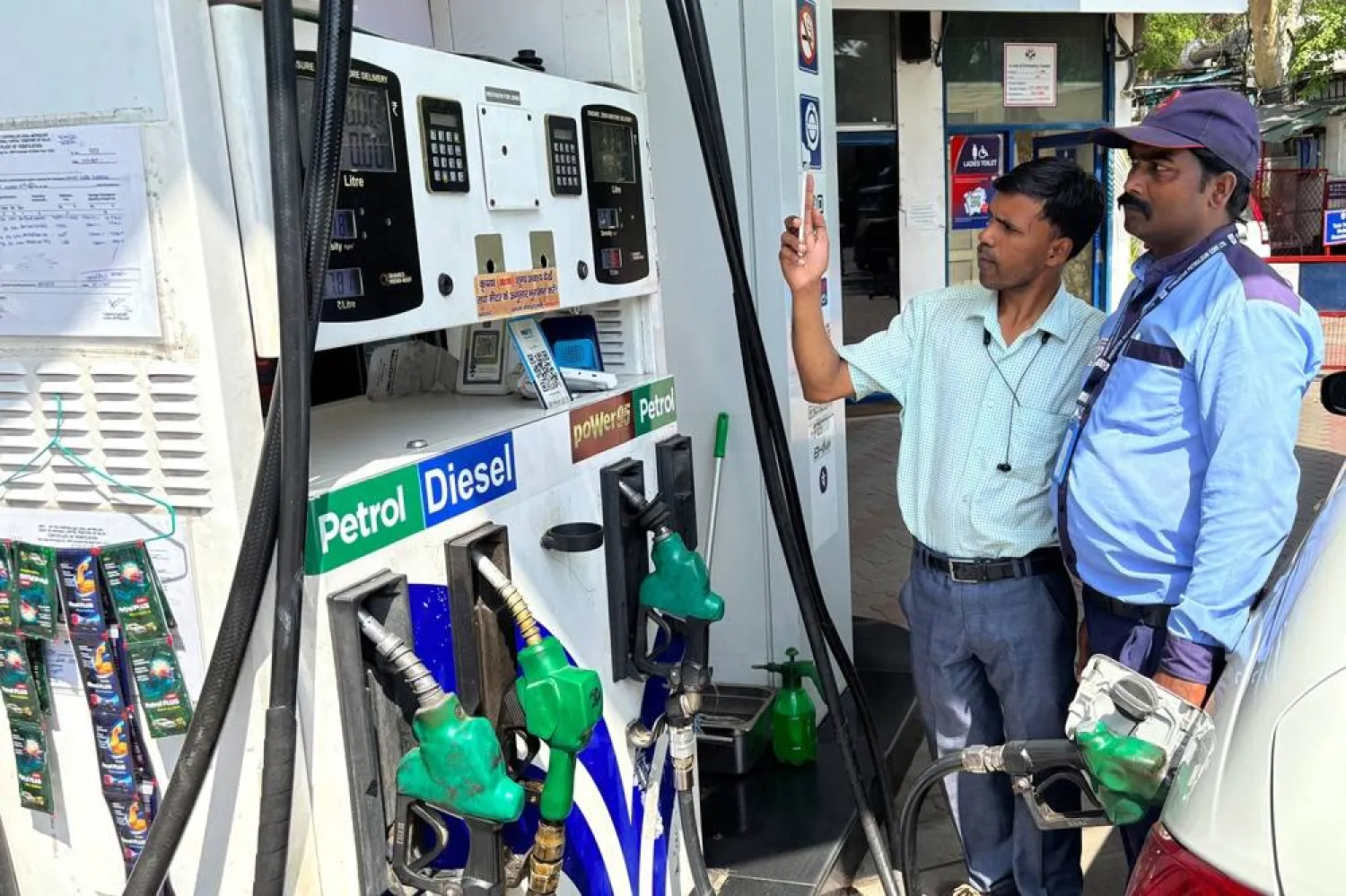
India petrol diesel state-owned fuel retailers have raised petrol and diesel prices for the second time in a single week, as the country's largest oil marketing companies scramble to recover mounting losses triggered by the surge in global crude oil prices following the US-Israeli war on Iran. The latest increase of approximately 0.9 rupees per litre, announced on Tuesday, brings the retail price of petrol in New Delhi to 98.64 rupees per litre and diesel to 91.58 rupees per litre, according to fuel dealers across the capital. The back-to-back price increases mark a dramatic shift in India's fuel pricing posture after years of price stability, and industry sources say further hikes are almost certainly coming as retailers continue to bleed billions of rupees daily from the gap between their procurement costs and retail selling prices.
The scale of the financial damage being absorbed by India's state fuel retailers is striking. Sujata Sharma, a joint secretary in the oil ministry, confirmed on Monday that the three state-run retailers are collectively losing approximately 7.5 billion rupees every single day under current market conditions. She also made clear that the government has no plans to provide direct financial support to the companies, placing the entire burden of loss recovery on a series of retail price increases that consumers will absorb progressively. For a country where petrol and diesel prices are felt immediately across household budgets, agricultural costs, freight rates, and the broader inflation trajectory, the government's decision to allow market-driven price recovery without fiscal intervention is a significant policy choice with wide economic and political consequences.
India's position as the world's third-largest importer and consumer of oil makes it acutely vulnerable to crude price shocks of the kind that the Iran war has generated. The country depends heavily on imported crude to meet the energy needs of its vast and growing economy, and international price spikes translate rapidly into domestic cost pressures that affect everything from transport and food prices to manufacturing input costs and consumer purchasing power. The Iran war has disrupted global oil supply chains and sent crude prices sharply higher, and India, which was among the last major economies to begin adjusting retail fuel prices in response, is now playing catch-up through a series of staged increases that dealers and analysts expect will continue in the weeks ahead.
From Four Years of Frozen Prices to Two Hikes in One Week: What Changed and Why
The current wave of fuel price increases represents a striking reversal of the price stability that Indian consumers had grown accustomed to over the preceding four years. The state-run fuel retailers had not raised petrol and diesel prices for four years before Friday's increase of three rupees per litre, a period during which global crude prices moved through multiple cycles of increase and decrease while Indian retail prices remained essentially fixed. That extended price freeze reflected a deliberate policy choice by the government, which as majority shareholder of Indian Oil Corporation, Hindustan Petroleum, and Bharat Petroleum exercises significant influence over pricing decisions even though petrol and diesel are nominally deregulated in India. The three companies together control more than 90 percent of India's network of approximately 103,000 fuel stations and tend to set prices in coordination rather than independently.
Opposition parties have been direct in their characterization of why prices were held stable for so long and why increases have now come in rapid succession. Critics including opposition leaders argued that the Modi government deliberately postponed fuel price increases to avoid giving voters a reason to punish the ruling Bharatiya Janata Party in the series of state elections that concluded in the recent electoral cycle. The timing of the price freeze and its alignment with state election schedules lent credibility to that argument. Prime Minister Narendra Modi's BJP won two of the four states whose elections coincided with the prolonged price stability period, expanding the party's political footprint. With those elections concluded, the political constraint on price adjustment has been removed and the financial imperative of recovering retailer losses has taken precedence, producing two increases within a single week and the prospect of more to follow.
The pattern of staggered increases that dealers and analysts now anticipate is explicitly modeled on the approach India took in April 2022 during the COVID pandemic recovery period, when global crude prices also surged and the government allowed a series of incremental retail price adjustments rather than a single large corrective increase. That approach distributes the inflationary impact across multiple weeks rather than concentrating it in a single shock, which is both politically more manageable and economically less disruptive for households and businesses that need time to absorb rising fuel costs into their budgeting. The 0.9 rupee increase announced on Tuesday, following Friday's three rupee hike, fits that staggered pattern, and industry sources at the refining companies said more increases of similar or larger magnitude are needed to fully close the gap between current retail prices and the costs implied by prevailing international crude prices.
Political Pressure, Consumer Impact, and Modi's Appeal to Conserve Fuel
The political sensitivity of rising fuel prices in India cannot be overstated, and the government's handling of the current situation is being watched carefully by analysts, opposition parties, and the public alike. Prime Minister Modi has responded to the fuel cost crisis with an unusual public appeal, urging citizens to limit their travel to conserve fuel and to curb gold purchases, a combination of advice that reflects both the energy security dimension of the Iran war's impact on India and the government's concern about the current account pressure that high oil import costs and gold demand together create on India's balance of payments. The appeal to behavioral change as a complement to price adjustment is politically notable because it places some of the adjustment burden on consumer choices rather than framing it purely as a government-imposed cost.
The government's simultaneous confirmation that no direct financial support is planned for the loss-making fuel retailers signals that policymakers have concluded that absorbing the losses through public funds is less sustainable and less desirable than allowing retail prices to gradually reflect market realities. That calculation has important implications for the pace and scale of future price increases. With daily losses running at 7.5 billion rupees and the government declining to provide relief, the financial pressure on Indian Oil, Hindustan Petroleum, and Bharat Petroleum to accelerate their price recovery is intense and will grow more acute with every passing day that international crude prices remain elevated. Refinery industry sources who spoke on condition of anonymity confirmed that the current pace of increases is insufficient to restore financial sustainability at prevailing crude levels and that further hikes are being planned and discussed internally.
For Indian consumers, the cumulative impact of the current and anticipated future fuel price increases will be felt most directly through transport costs, which flow through into food prices, logistics costs, and the general inflation basket in ways that affect lower-income households most severely. The three rupee increase of Friday combined with the 0.9 rupee increase of Tuesday already represents a cumulative rise of nearly four rupees per litre within a single week, a meaningful increase for consumers who fill their vehicles regularly and for businesses that depend on road transport. The government faces a difficult balancing act between allowing sufficient price adjustment to protect the financial health of its state-owned retailers and managing the inflationary and political consequences of price increases that arrive faster and in larger increments than consumers have experienced in four years.