
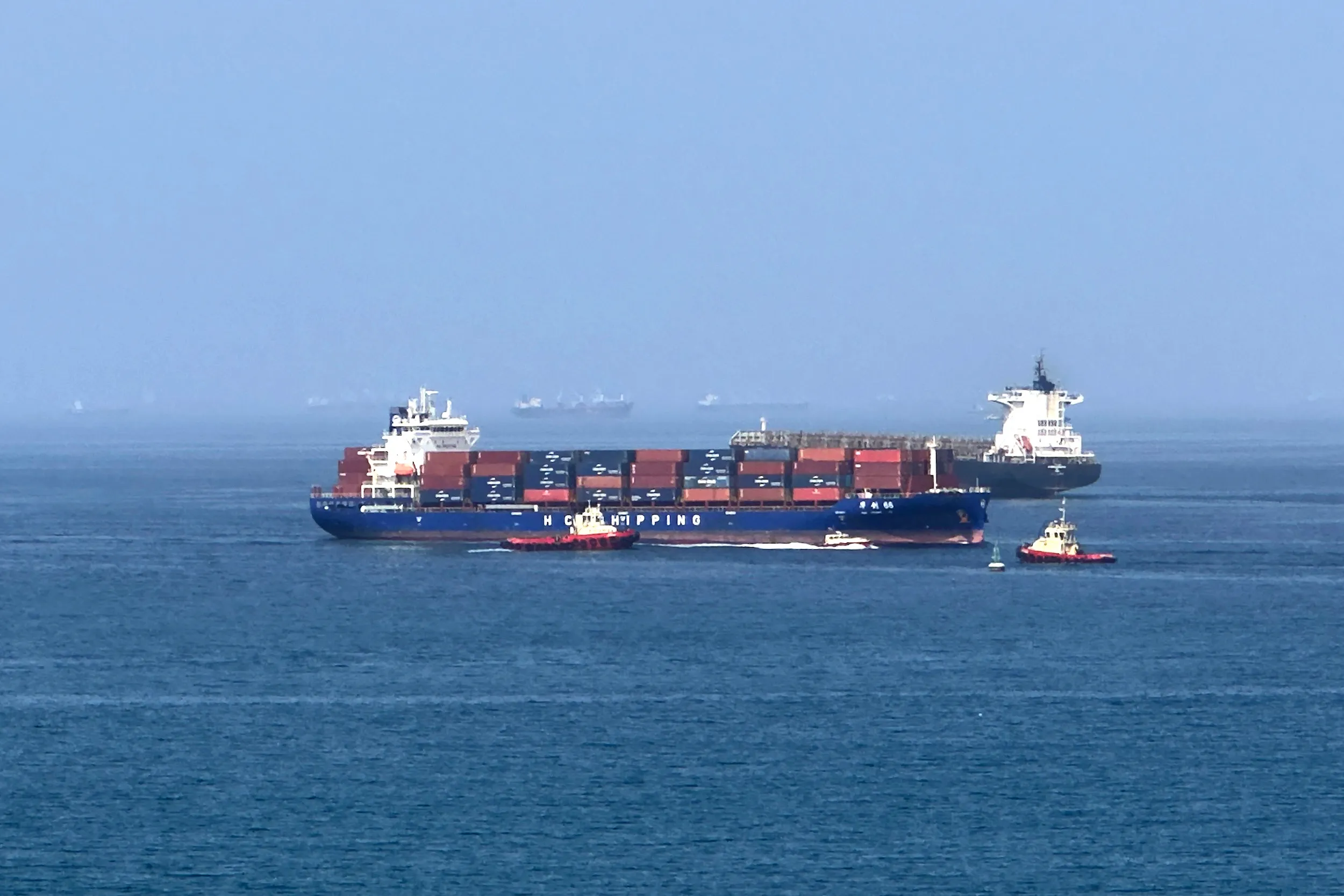
No commercial vessels have transited the Strait of Hormuz while broadcasting their location since Sunday evening, according to ship-tracking website MarineTraffic, as the waterway that handles roughly a fifth of global oil trade became a live military theatre for the second consecutive night. The US military confirmed it had struck dozens of Iranian military targets overnight, including air-defence systems, coastal radar sites, missile and drone capabilities, and small boats. The strikes used aircraft, ships and drones, and the Pentagon noted the first-ever operational use of one-way attack sea drones.
Iran responded by targeting US military bases in Jordan, Bahrain and Kuwait, as well as radar systems in Oman. Iranian foreign ministry spokesman Esmail Baghaei described the strikes as "defensive" and said they were directed solely against bases and facilities used by the US to attack Iran. "We will not hesitate in our self-defence," he said. Iran's Persian Gulf Strait Authority declared on Sunday that transit through the waterway was "not currently possible" due to what it called illegal movements of US military forces in the region.
The collapse in vessel crossings has been rapid and steep. Twenty-one commercial ships crossed the strait on Saturday. That figure fell to eight on Sunday, and of those eight, six were "dark" crossings recorded by maritime intelligence firm Kpler, meaning those vessels did not broadcast their positions during transit. Only two of Sunday's crossings were tracked in real time, and both had crossed before Iran's authority made its announcement. Since Sunday evening, the number of broadcasting vessels crossing the strait has fallen to zero.
Trump claimed Iran had agreed to "a perfect deal" at the weekend. Iran's foreign ministry called that "absolutely untrue"
A sharp public contradiction between Washington and Tehran over the state of negotiations has added a layer of diplomatic confusion to the military confrontation. On Sunday, President Donald Trump told NBC that Iran had agreed to a deal with the United States during talks over the weekend.
"They agreed to a deal yesterday, a perfect deal for us. No nuclear, no this, no that, no nothing. They gave up everything."
President Donald Trump, speaking to NBC on Sunday
Iran's foreign ministry moved quickly to reject that characterisation. Spokesman Esmail Baghaei said Trump's comments were "absolutely untrue" and stated that the meeting between the two countries in Oman on Saturday had been focused solely on the Strait of Hormuz. Baghaei added that Iran's goal in those talks was to ensure the safe passage of ships, but said US pressure on Oman had hindered efforts. Mediators, he confirmed, were continuing their work.
On the 14-point memorandum of understanding signed on June 17, Baghaei was direct: Iran would not execute its commitments under the agreement if the United States failed to honour its side of the deal. The foreign ministry described the MOU as having "entered a crisis." Iran had pledged under the interim agreement to open the strait, but has been firing on commercial vessels it says are using an unauthorised route. The US military maintains that international shipping is still able to flow through the waterway and says its strikes continue to degrade Iran's ability to attack vessels.
"Control of the strait is more important than dozens of atomic bombs." Senior Iranian officials, cited in reporting on the conflict
The UN Secretary-General warned of "catastrophic consequences" if full-scale hostilities resume, as the UK, France and Germany condemned Iran's attacks
UN Secretary-General Antonio Guterres said on Sunday he was "deeply concerned" by the renewed military confrontations in the Gulf region and called on all parties to exercise "maximum constraint." His statement, issued before the latest round of US overnight strikes, warned that a return to full-scale hostilities would have "catastrophic consequences." He also called for the restoration of "full freedom of navigation" in the Strait of Hormuz.
Iran's foreign ministry spokesman rejected the framing of the UN chief's statement, arguing that Iran's strikes on US bases in the region were a "legitimate and lawful exercise of its inherent right to self-defence under international law." Baghaei also called on Guterres to urge countries in the region to stop allowing the US to use their territories as launchpads for attacks on Iran, directly naming the host countries of the US bases that Iran targeted overnight.
The UK, France and Germany issued a joint statement condemning Iran's "reckless attacks" on vessels in the Strait of Hormuz and at facilities in Bahrain, Oman and Jordan. The E3 group called for the "swift and full" resumption of shipping in the strait. Their statement was issued before the latest round of overnight exchanges, meaning the diplomatic response from Europe's three largest economies now trails an escalation cycle that has moved faster than the mechanisms designed to contain it.
Oil prices surged nearly 5 per cent as European stock markets opened flat and US futures pointed lower on Monday morning
Financial markets registered the gravity of the Hormuz shutdown immediately at the start of Monday trading. Brent crude, the global benchmark wholesale oil price, surged almost 5 per cent in early Monday trading to over $79 a barrel, reflecting the direct threat that a prolonged strait closure poses to global energy supply chains. The strait handles a fifth of the world's oil trade, and every day without commercial transit compounds the supply disruption risk that energy markets have been pricing since the conflict resumed.
European equity markets appeared to absorb the news with more composure. The FTSE 100 in London, the Cac 40 in Paris and the Dax in Frankfurt all opened flat, showing no significant movement from Friday's close. US markets had not yet opened at that point, but futures trading suggested the S&P 500 index could open down by approximately half a per cent when share trading began in New York at 09:30 local time.
The Trump administration has a particular political incentive to restore shipping through the strait as quickly as possible. Bringing oil prices down before the November midterm elections is a stated priority, and a prolonged Hormuz closure directly undermines that goal by keeping energy costs elevated. Analysts described the current situation as one of controlled escalation, with neither side believed to want a return to full-scale war, but with both sides taking military actions that are progressively narrowing the space for the mediators still working to resolve the dispute.