
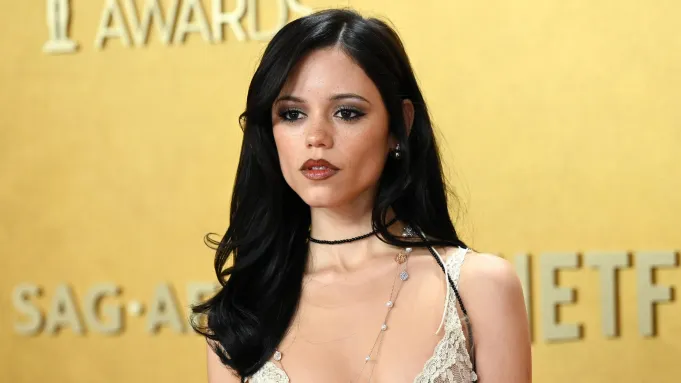
Jenna Ortega Leos Carax Lily May B film Cannes 2026 announcement has generated significant buzz at the ongoing Cannes Film Festival, with the Wednesday star confirmed to lead the acclaimed French filmmaker's next feature, described by Variety as one of the most talked-about projects unveiled at this year's edition of cinema's most prestigious showcase. Slated to go on floors in Spring 2027, Lily May B marks Carax's follow-up to his celebrated 2021 musical romance Annette, which opened Cannes that year and earned the director the Best Director award, and represents the first collaboration between the boundary-pushing French auteur and the American actress who has become one of the most recognisable faces in global entertainment through her starring role in Netflix's Wednesday and her recent work in Tim Burton's Beetlejuice Beetlejuice. The remaining cast members for the film are expected to be announced in September, leaving the Cannes announcement focused entirely on the Carax-Ortega pairing that is already generating the kind of cinephile excitement that major filmmaker-star collaborations at Cannes traditionally produce.
The film's synopsis, teased at Cannes and published by Variety, offers the kind of poetic and enigmatic narrative framework that Carax's cinema is known for: once upon a time, there was a little girl, a young woman and a young boy, each holding a secret too heavy to bear, who met in an end-of-the-world world and together rode a big motorcycle through empty cities, deserted freeways, and immemorial forests, encountering many dangers on their journey in search of who they were and in search of a place to be. Carax himself teased the film with the equally evocative statement that once upon a time, this is what destroyed us, and this is what kept us alive, the kind of directorial hint that opens interpretive space rather than closing it and that is entirely consistent with the approach that produced Annette, Holy Motors, and the rest of Carax's singular body of work. The combination of a road movie structure, apocalyptic setting, and the emotional weight of secrets too heavy to bear suggests a film that will inhabit the same register of lyrical intensity and visual ambition that defines Carax's filmography.
Ortega's selection by Carax is itself a statement about her standing in contemporary cinema that goes beyond the obvious commercial logic of attaching a globally recognised star to an art house project, because Carax is not a filmmaker known for commercial calculation in his casting choices. His previous films have featured Denis Lavant across multiple collaborations, Kyle McLachlan, Edith Scob, and in Annette the pairing of Adam Driver and Marion Cotillard in a film whose musical structure and narrative extremity placed it firmly outside mainstream commercial cinema even as it opened Cannes and generated significant awards attention. The decision to cast Ortega in Lily May B reflects Carax's assessment that she possesses the specific qualities his vision for the film requires, a judgement whose credibility derives from the director's track record of identifying in his collaborators capacities that their previous work had partially but not fully revealed.
How Jenna Ortega Became a Global Star and What Leos Carax's Cinema Represents
Jenna Ortega's rise to global recognition is one of the more striking recent examples of the way that streaming television can create instant worldwide stardom, with the Wednesday series on Netflix, in which she plays Wednesday Addams in a coming-of-age supernatural drama set at a gothic boarding school, generating the kind of viral cultural moments and international fan devotion that theatrical film releases achieved for previous generations of stars but that the distributed, simultaneous global streaming release model can now produce with extraordinary speed. The specific moment that crystallised Ortega's global recognition most vividly was the solo dance sequence in Wednesday's first season, performed to The Cramps' Goo Goo Muck, which became one of the most replicated and discussed entertainment moments of 2022, generating millions of social media recreations across cultures and languages in a phenomenon whose organic spread demonstrated both Ortega's specific physical and expressive gifts and the series' ability to create genuinely cross-cultural moments.
Ortega has spoken about the dance's reception with characteristic thoughtfulness, describing it in an earlier interview as an honour that was very unexpected, noting that when you make these jobs you never know what will come of them or if anyone will watch them. Her expression of gratitude for the reception and continued surprise at its scale reveals an artist who has processed extraordinary sudden fame without losing the grounded perspective on her craft that makes her interesting to work with rather than simply famous. The Wednesday dance's particular resonance in India, where her HTCity interview demonstrated the specific local enthusiasm for the series, illustrates how genuinely global the recognition has become, reaching audiences whose cultural contexts for the gothic and supernatural vary enormously from the American tradition the Addams Family franchise inhabits.
Beetlejuice Beetlejuice, Tim Burton's 2024 sequel to his 1988 cult classic, gave Ortega the opportunity to work with one of the directors most directly connected to the visual and tonal world that Wednesday inhabits, with Burton's aesthetic sensibility of grotesque beauty, suburban gothic darkness, and deadpan horror comedy having been a direct influence on the Wednesday series that Ortega anchors. Her performance in Beetlejuice Beetlejuice alongside Michael Keaton, Winona Ryder, and Catherine O'Hara demonstrated her capacity to hold the screen in ensemble contexts of established stars whose cultural histories with the franchise preceded her own involvement, and whose return brought the weight of nostalgia that could easily have marginalised a newer addition to the ensemble. The film's commercial success confirmed that Ortega's star power extends beyond the Wednesday brand to her personal drawing power with audiences who follow her work regardless of the franchise context.
Leos Carax's Cinema and Why Lily May B Is a Major Event
Leos Carax occupies a singular position in contemporary world cinema as a filmmaker whose output is sparse, intensely personal, and consistently capable of the kind of cinematic experience that most filmmakers working with far greater frequency never achieve. His body of work, spanning from Boy Meets Girl in 1984 through Mauvais Sang, The Lovers on the Bridge, Pola X, Holy Motors, and Annette, is unified by a commitment to cinema as a medium of heightened emotional and sensory experience rather than narrative information delivery, with each film creating a world whose rules and atmosphere are entirely internal to itself rather than calibrated to conventional audience expectations. Holy Motors, his 2012 return after a twelve-year absence from feature filmmaking, was received as one of the masterpieces of contemporary cinema in large part because it demonstrated that Carax's distinctive vision had not been compromised by the long hiatus but had deepened into something even more uncompromisingly personal.
Annette, which brought Carax to the broadest international audience of his career through Cannes, the streaming release via Amazon Prime Video, and the Best Director award, demonstrated that his cinema could retain its specificity while also achieving genuine popular reach when the confluence of subject matter, performance, and music created the right conditions. The Ron Mael and Russell Mael of Sparks-written score and original songs gave Annette an unusual accessibility through its musical architecture that Carax's strictly dramatic films had not always achieved, and Adam Driver's performance as a stand-up comedian whose relationship with his opera singer partner descends into darkness gave the film's emotional extremity a grounded human entry point. Lily May B's road movie structure and its ensemble of young protagonists suggests a different tonal register from Annette's operatic tragedy, but the motorcycle journey through apocalyptic landscapes and the secrets too heavy to bear promise the same emotional intensity in a different formal mode.
Cannes Buzz, Spring 2027 Production, and What the Collaboration Promises
The conversation around Lily May B at Cannes reflects both the intrinsic excitement of any new Carax project announcement and the specific cultural energy that Ortega brings as the actress whose global recognition bridges the art house audience that attends and watches Carax's films and the much larger popular audience that followed her through Wednesday and Beetlejuice Beetlejuice. A Leos Carax film without Ortega would be significant news in the festival world but primarily of interest to the cinephile community that forms the core of his audience. A Leos Carax film with Ortega is news for every entertainment publication globally, creating the kind of crossover interest that can give an art house film the theatrical attention and critical engagement that translates its specific cinematic achievement into the wider cultural conversation that Cannes prizes.
The Spring 2027 production timeline means the film is still more than a year from shooting, with the September announcement of additional cast creating the sustained news cycle that will maintain Lily May B's presence in entertainment coverage through the end of 2026 and into the pre-production period. Cannes announcements of this kind, made before the film has been shot or completed, are designed to build the anticipation and critical framework within which the finished film will eventually be received, setting expectations, generating the investment interest that international co-productions require, and establishing the cultural conversation around the collaboration that will shape how the film is understood when it arrives. The enigmatic synopsis and Carax's characteristically poetic directorial statement have done exactly this work, providing enough information to ignite imagination while withholding enough to sustain curiosity through the production period.
Ortega's first collaboration with a filmmaker of Carax's stature and specific aesthetic represents a significant expansion of her cinematic range beyond the genre and franchise contexts that have made her famous, creating the opportunity for the kind of career-defining performance that collaborations between emergent major stars and singular auteur directors have historically produced. The combination of the young woman role in the film's trio of protagonists, the physically and emotionally demanding road movie narrative structure, and the Carax directorial environment that prioritises raw authentic performance over conventional technical polish creates the conditions in which Ortega's specific gifts, her physical expressiveness, her capacity for stillness within intensity, and her ability to carry emotional weight without explaining it to the audience, can be displayed in ways that Wednesday and Beetlejuice Beetlejuice, for all their creative demands, have not fully activated.