
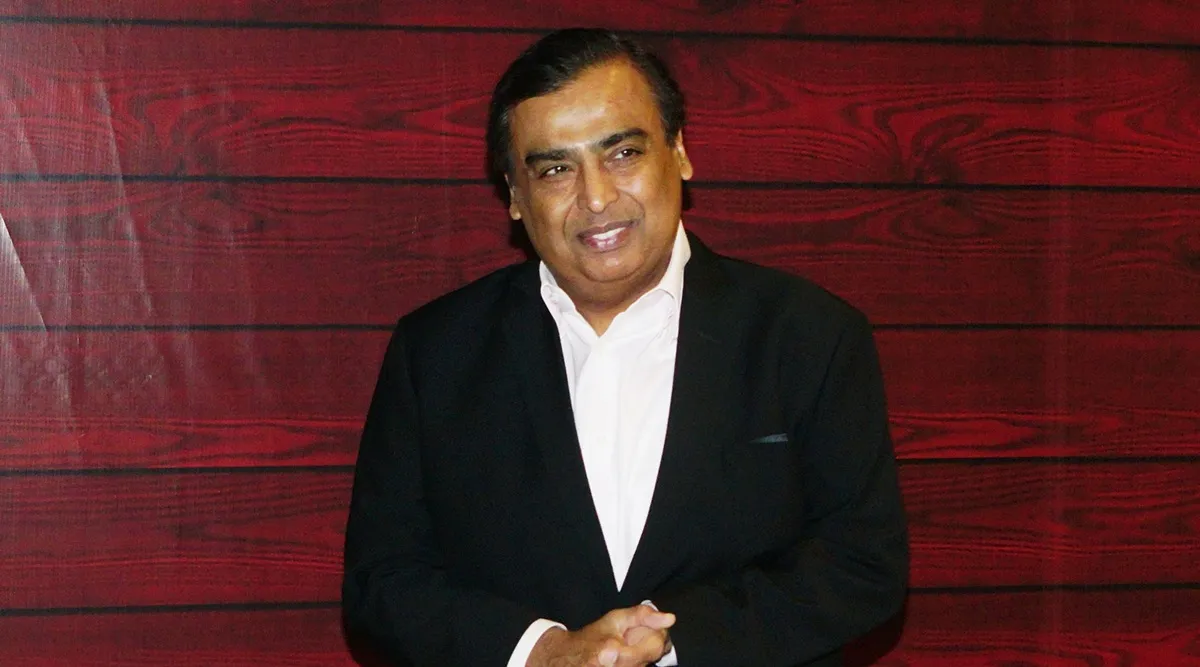
Jio Platforms IPO India Ambani Reliance share sale 2026 has been formally initiated after the board of Mukesh Ambani's telecom giant approved a draft prospectus for the initial public offering at Reliance Industries' annual shareholder meeting on Friday, with media reports expecting the offering to raise approximately $4 billion from a company that Jefferies estimated in November was worth around $180 billion and that serves more than 500 million subscribers as India's largest telecom operator. Ambani, one of the world's richest men and Asia's wealthiest individual, told shareholders the proposed listing of Jio would demonstrate to the world that India can build technology companies of global scale, global capability, and global value, framing the IPO not merely as a capital raising exercise but as a national statement about India's capacity to produce internet and artificial intelligence companies whose scale and technological ambition is comparable to the global technology leaders that American and Chinese markets have produced. The offering arrives a year after Ambani first said Jio would be listed in the first half of 2026, with the announcement one day after the National Stock Exchange filed papers for its own long-awaited market debut that could raise more than $3 billion, creating the specific capital market momentum whose convergence with the Jio announcement is generating the most significant IPO story in India's recent financial history.
The stock market and finance significance of the Jio IPO extends well beyond the $4 billion capital raise itself to the signal it sends about investor appetite for new offerings after months of volatility in Indian equity markets whose performance has been affected by the Iran war's energy price consequences, global risk-off sentiment, and the rotation dynamics that have complicated India's earlier IPO market strength. A successful Jio debut would validate the thesis that India's large-cap technology company story remains investible at premium valuations despite the market turbulence, while demonstrating that the country's capital markets can absorb a $4 billion offering from a company valued at a multiple of revenue that reflects the growth premium rather than the earnings multiple that more conventional valuation frameworks would support. Investors who are already positioned in Indian equities after previous Reliance Industries holdings will be making fresh allocation decisions about the Jio offering, while international institutional investors who have been waiting for the right India technology company story to justify significant new exposure will be assessing whether Jio's combination of subscriber scale, financial services ambitions, and AI infrastructure positioning justifies the valuation that the offering will price.
The timing alongside the NSE IPO creates the specific capital market supply dynamic that India's institutional investor base must absorb, because two major offerings competing for the same allocation capital in the same market window creates the pricing tension that investment bankers must navigate in building the order books that will determine whether both listings achieve the valuations their respective managements are seeking. The combined potential raise of more than $7 billion between Jio and NSE in a relatively compressed timeframe represents a significant test of Indian market depth at a moment when the IPO market has been navigating the volatility that Ambani's announcement implicitly acknowledged by framing the offering as a test of appetite for new listings after the recent slowdown.
How Jio Built the Subscriber Base and Business Model That Justifies Its Valuation
Jio's 2016 market entry is one of the most consequential competitive disruptions in the history of any country's telecommunications sector, with Ambani's decision to offer effectively free mobile data services for the first six months and then maintain dramatically lower pricing than incumbents triggering the rapid consolidation of India's telecom market from more than a dozen operators to essentially three. The low-cost mobile data strategy, which was enabled by Reliance's willingness to absorb billions of dollars of initial losses in exchange for building the subscriber base that network effects in telecommunications reward, created the specific competitive dynamic that drove Vodafone Idea into financial distress, forced the merger of multiple smaller operators, and established Jio as the undisputed market leader in subscriber count with the pricing power that leadership provides. The subscriber base of more than 500 million that Jio can now point to as the foundation of its IPO story is the direct product of that initial disruption, with the loss-leader pricing phase having been replaced by the steady average revenue per user improvement that the consolidated market's reduced competition has enabled.
The Meta investment of $5.7 billion in 2020, which was the largest single investment into any Indian company at the time and was followed by additional investments from Google, KKR, Silver Lake, Vista Equity Partners, and other global investors, validated the Jio story for the global investment community at a scale that transformed the company from a disruptive telecom operator into a broadly recognised global technology platform whose investor base includes some of the world's most sophisticated institutional allocators. The Meta partnership's evolution from the initial equity stake to the current collaboration on making Meta's open-source AI models accessible to Indian businesses and developers, alongside Meta's agreement to lease capacity at Reliance's AI-enabled data centre being built in Gujarat with 168 megawatts of capacity, documents the strategic partnership's deepening in ways that give the IPO story the global technology company narrative that Ambani's demonstration to the world framing reflects.
The SpaceX Starlink distribution agreement, shared with rival Bharti Airtel, represents Jio's specific positioning in the satellite internet market whose development could extend connectivity to the rural and semi-urban Indian markets where terrestrial network coverage remains incomplete and where the subscriber growth opportunity is most significant for the next phase of Indian telecom penetration. The Starlink agreement gives Jio access to the satellite internet technology whose deployment alongside its terrestrial 5G network creates the hybrid connectivity coverage that no single technology can provide alone, and whose commercial success would add the satellite services revenue stream to the existing mobile, broadband, and enterprise services that constitute Jio's current business mix.
The $180 Billion Valuation and How Jefferies Arrived at It
The $180 billion valuation that Jefferies estimated in November places Jio among the world's most valuable telecommunications companies by a significant margin, reflecting not just the telecom business whose subscriber scale and ARPU trajectory justify a substantial premium to Indian telecom peers, but the optionality value of the financial services, cloud computing, enterprise services, and artificial intelligence businesses that Jio has been building as strategic expansions beyond the core connectivity service. Investment bank valuation of high-growth technology-adjacent telecom companies requires the specific methodology of sum-of-the-parts analysis that assigns separate multiples to each business segment based on comparable companies in each sector, and Jefferies' $180 billion likely reflects a core telecom business valued at a premium to Bharti Airtel alongside separate valuations for the financial services platform JioFinance, the cloud and enterprise services business, and the AI and digital infrastructure assets that the Meta data centre agreement has most recently highlighted.
The $4 billion raise that media reports expect represents a relatively small percentage of the $180 billion estimated total company value, suggesting the IPO is designed to create a public market price discovery mechanism and a trading float that institutional and retail investors can access rather than to raise the maximum possible capital from selling a large ownership stake. A small public float relative to total company value is the specific IPO design choice that allows founder control to be maintained while establishing the market valuation that benefits all shareholders including the pre-IPO investors whose stakes are marked to market once public trading establishes the price. Reliance Industries, which owns the majority of Jio, and the global institutional investors who took stakes at various valuations since 2020 will all see their holdings revalued at whatever multiple the public market assigns in the offering's price discovery.
The NSE Momentum, the Market Sentiment Test, and What Success Requires
The National Stock Exchange's filing for its long-awaited market debut, announced one day before Jio's IPO announcement, creates the specific capital market narrative momentum that investment bankers call deal flow, in which multiple significant offerings in the same timeframe generate the investor attention, media coverage, and market conversation that benefits each individual offering by keeping India's IPO market at the top of the investment community's consciousness. The NSE itself listing on exchanges creates the specific structural irony of an exchange company using the listing mechanism it operates to raise capital for its own expansion, but the $3 billion-plus raise that media reports expect demonstrates the commercial scale of the infrastructure business that underpins India's equity market ecosystem and that institutional investors have been waiting to access through public equity for years.
Together, the Jio and NSE listings would be among India's largest IPOs in recent years, rivalling Hyundai Motor India's $3.3 billion offering from two years ago in their individual scales while collectively representing a capital markets moment whose combined volume tests the depth of India's institutional and retail investor base in ways that the individual offerings separately do not. The success or failure of this combined IPO wave will shape market expectations about India's capacity to absorb the pipeline of major offerings that have been accumulating during the months of market volatility, with each successful large offering building the confidence that encourages the next company in the queue to proceed while each disappointing debut reinforces the caution that has been slowing the pipeline's clearance.
Jio's IPO success requires the convergence of several factors whose alignment the current environment partially supports but does not guarantee: Indian equity market stability in the weeks between the draft prospectus and the offering's pricing, institutional investor appetite for a large-cap India technology company at premium valuations, retail investor enthusiasm for the Ambani brand and Jio's consumer recognition, and the global investor community's continued willingness to allocate to emerging market technology stories despite the Iran war's ongoing uncertainty about global growth and energy costs. The company's demonstration to the world positioning that Ambani articulated frames the IPO's success as a national technology story rather than simply a corporate finance transaction, potentially mobilising the patriotic retail investor enthusiasm that has participated strongly in previous major Indian IPOs and that would provide the demand foundation that institutional allocations need to produce a fully subscribed and oversubscribed offering.