
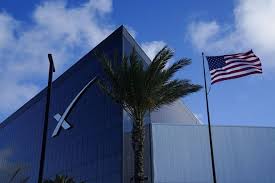
SpaceX IPO price record 75 billion Nasdaq Musk 2026 has been confirmed after Elon Musk's rocket and spacecraft manufacturer priced the biggest-ever U.S. initial public offering at $135 per share on Thursday, raising $75 billion through the sale of 555.56 million shares and valuing the space, satellite, and AI provider at $1.77 trillion, a record for any initial public offering in history that surpasses the previous global record set by Saudi Aramco's $25.6 billion raise in December 2019. The offering places SpaceX as the seventh most valuable U.S.-listed company when shares begin trading on the Nasdaq on Friday, ranking above JPMorgan Chase, Berkshire Hathaway, Eli Lilly, Meta Platforms, and Musk's own Tesla, despite the company having lost money last year and carrying revenues that significantly trail the mega-cap companies it is now valued more highly than across multiple industries and sectors. The valuation represents not a conventional financial assessment of current earnings capacity but an investor bet on the future of humanity's relationship with space, satellite internet, and artificial intelligence infrastructure, with Kim Forrest, chief investment officer at Bokeh Capital Partners, putting it directly: people buying the stock are buying into the future and mankind escaping the Earth, not really investing in a company in the traditional sense.
Musk executed the IPO on his own terms in ways that broke with multiple Wall Street conventions, setting the price before the roadshow that bankers and investors have traditionally used to negotiate IPO terms, announcing the price at just after 3 p.m. EDT while markets were still open rather than after the 4 p.m. close that issuers conventionally observe to avoid price-moving events affecting the sale, and setting aside an unusually large 30 percent of shares for retail buyers rather than the institutional allocation that has dominated major IPO structures. Rick Meckler, partner at Cherry Lane Investments, described the process as really in uncharted territory, saying he had never seen the price announced instead of the normal process of price discovery based on orders, and noting the strong emphasis on retail investors who are probably a little indifferent to pricing precision. Musk also structured the company's governance to preserve strong founder control, retaining 82 percent of SpaceX's voting power after the offering, ensuring that the world's most valuable startup listing remains under the direction of its founder regardless of the public shareholder base that the $75 billion offering creates.
The IPO's market timing coincides with a projected sharp rebound in the U.S. IPO market that Goldman Sachs has forecast will see 2026 proceeds quadruple to a record $160 billion, driven by a pipeline that includes not just SpaceX but artificial intelligence companies OpenAI and Anthropic among the major anticipated listings. Adam Sarhan, chief executive of 50 Park Investments, assessed the pricing as just about right, not too hot and not too cold, while noting that the real test will be how the market digests the IPO over the next several weeks rather than on day one. Matt Kennedy, senior strategist at Renaissance Capital, provided the hype calibration benchmark: most IPOs pop in the 10 to 15 percent range on day one, and anything less than 10 percent would be somewhat disappointing given the deal's profile, while a pop of more than 50 percent would signal pure hype trading rather than fundamental value discovery.
How SpaceX Built the Company Whose IPO Has Broken Every Record
SpaceX's journey from its 2002 founding with the mission to build the systems and technologies necessary to make life multiplanetary, understand the true nature of the universe, and extend the light of consciousness to the stars, to becoming the company responsible for more than four-fifths of the mass launched into orbit over the past three years, represents one of the most extraordinary corporate development trajectories in technology history and the foundation on which Thursday's record-breaking IPO rests. Musk founded SpaceX against the prevailing consensus that private companies could not economically build and operate rockets capable of competing with the established aerospace industry, and the company's development of the Falcon 9 reusable rocket, the Falcon Heavy, and the Starship heavy-lift vehicle has systematically demonstrated that private innovation could not only compete with but dramatically undercut the cost structures of the government-dominated launch industry that preceded it. The achievement of launch industry dominance, measured in the four-fifths of orbital mass share that SpaceX cites in its IPO prospectus, provides the specific market position evidence that separates SpaceX's valuation from pure speculative enthusiasm by documenting an actual and verifiable competitive position in a critical infrastructure industry.
The Starlink satellite internet constellation, which currently connects millions of consumer, enterprise, and government customers across 164 countries, territories, and other markets and which accounts for most of SpaceX's current revenue, is the specific business whose cash generation is financing the company's broader aerospace development activities and whose growth trajectory provides the revenue foundation that the IPO's valuation requires. Starlink's expansion from a concept to a multi-billion dollar revenue business has demonstrated that the satellite internet market opportunity is real, that customers across geographies and use cases will pay for the connectivity it provides, and that the regulatory and technical challenges of building and operating a large-scale low-earth-orbit constellation can be managed at commercial scale. The multiyear cloud services agreement with Google's Alphabet, announced last week, adds the enterprise infrastructure dimension to Starlink's consumer and government customer base, providing the commercial relationship with one of the world's most sophisticated technology buyers that institutional investors assessing SpaceX's revenue quality will read as a third-party validation of the service's value.
The IPO's breaking of the Aramco record requires the inflation-adjusted comparison context that Reuters provided, noting that Aramco raised $33.2 billion in inflation-adjusted terms for a $2.21 trillion value, making SpaceX's $1.77 trillion valuation lower than Aramco's inflation-adjusted peak in real terms while its $75 billion cash raise substantially exceeds the inflation-adjusted Aramco figure. The comparison illustrates the specific way in which SpaceX's IPO is unprecedented in nominal terms while operating in a historical context that the inflation adjustment reveals, and it documents the scale of the capital market moment that Thursday's pricing represents regardless of the inflation-adjusted technicalities that academic financial analysis requires. Goldman Sachs, Morgan Stanley, BofA Securities, Citigroup, and JPMorgan as joint book-running managers represent the full weight of Wall Street's major investment banking institutions participating in an offering that has been the most anticipated IPO in U.S. market history.
The Revenue Reality and Why Analysts Question the Valuation
The specific financial concern that analyst Kim Forrest and Goldman Sachs chief economist Andrew Matheny's observations collectively represent is the gap between SpaceX's extraordinary valuation and the conventional financial metrics that justify the valuations of the companies it now ranks above, with SpaceX having lost money last year and carrying revenues that are substantially lower than those of JPMorgan Chase, Meta Platforms, and the other major companies whose valuations it has eclipsed. A company valued at $1.77 trillion that lost money in the most recent fiscal year is being valued entirely on future expectations rather than on current or recent financial performance, creating the specific valuation risk that the future scenarios priced into the stock must materialise in forms that the company's current financial performance does not yet confirm. Forrest's observation that buyers are investing in mankind escaping the Earth rather than in a company is the compressed expression of this valuation reality, acknowledging both the legitimate long-term vision that justifies optimistic future scenarios and the distance between that vision and the current financial fundamentals that conventional investment analysis would use to assess the entry price.
The government contract dependence that Forrest identified as creating financial forecast uncertainty reflects SpaceX's specific revenue concentration risk, where NASA contracts for Artemis lunar landers, Space Force launch contracts, and government Starlink procurement represent a substantial portion of the revenue base whose continuity depends on political decisions and procurement processes outside SpaceX's control. Government contracts provide revenue stability when they are in place but create the specific discontinuity risk that commercial contracts whose renewal is market-driven do not carry in the same way, and SpaceX's IPO prospectus disclosure of the $28.5 trillion addressable market that the company describes as the largest in human history is partly the financial communication device that redirects investor attention from the current government contract concentration toward the future commercial market opportunity that the concentration will eventually need to be replaced by. The $28.5 trillion figure spans the xAI, Starlink, and launch market opportunities that SpaceX identifies as its growth vectors, but its scale relative to the company's current revenues requires the multi-decade growth trajectory assumptions that make SpaceX's valuation an exercise in long-term scenario analysis rather than near-term earnings capitalisation.
Friday's Nasdaq Debut, the Retail Buyer Dynamics, and What the First Week Will Reveal
SpaceX's decision to allocate 30 percent of IPO shares to retail buyers is the specific offering structure choice that most directly reflects Musk's approach to the offering's distribution and the retail investor enthusiasm for his personal brand and vision that makes retail allocation commercially viable at a scale that would be unusual for any other company. The retail allocation decision reverses the conventional IPO wisdom that institutional buyers provide the price stability and long-term holding behaviour that large IPOs require to trade successfully in the secondary market, betting instead that the specific retail enthusiasm for SpaceX and Musk creates a retail buyer base whose commitment to the long-term vision is as durable as institutional holding behaviour. Meckler's observation that retail investors are probably a little indifferent to pricing precision is the specific risk that the retail allocation creates: a buyer base that is less sensitive to valuation multiples and more motivated by narrative enthusiasm may pay prices that conventional institutional investors would not, but may also be more susceptible to sentiment shifts that create the kind of post-IPO volatility that undermines the long-term capital market relationship that the company needs.
The index inclusion effort that Musk pursued with mixed results would have created the mechanical buying pressure that index fund rebalancing generates when a new company of sufficient size is added to major indices, with passive funds required to purchase shares in proportion to the company's index weight regardless of their analysts' views on valuation. The mixed results of this effort mean that SpaceX enters its Nasdaq debut without the automatic index buying floor that would have provided price support from the passive investment complex, making the initial trading dynamics more dependent on active buyer demand from retail and institutional investors whose assessment of the valuation is the genuine market test that the first trading days provide. Kennedy's 10 to 15 percent pop expectation, with the more than 50 percent pop as the pure hype indicator, provides the specific first-day performance benchmarks against which the market's assessment of whether SpaceX's IPO has been priced appropriately will be initially measured.
The Blue Origin competitive threat that SpaceX's prospectus acknowledges, with Jeff Bezos' company having recently experienced its own New Glenn rocket development setback but continuing to pursue the government contracts and commercial launch market that SpaceX currently dominates, provides the specific competitive risk that the long-term value of SpaceX's market position depends on its ability to maintain the innovation pace and cost advantage that current dominance reflects. A company valued at $1.77 trillion based partly on its four-fifths share of launched orbital mass faces the valuation consequence of any significant market share erosion that Blue Origin, United Launch Alliance, or international competitors might achieve, creating the specific competitive moat assessment that institutional investors will be making as they decide whether Friday's opening price justifies long-term investment or whether the IPO enthusiasm represents the maximum sentiment that the story will generate before the financial reality of revenue growth requirements disciplines the valuation.