
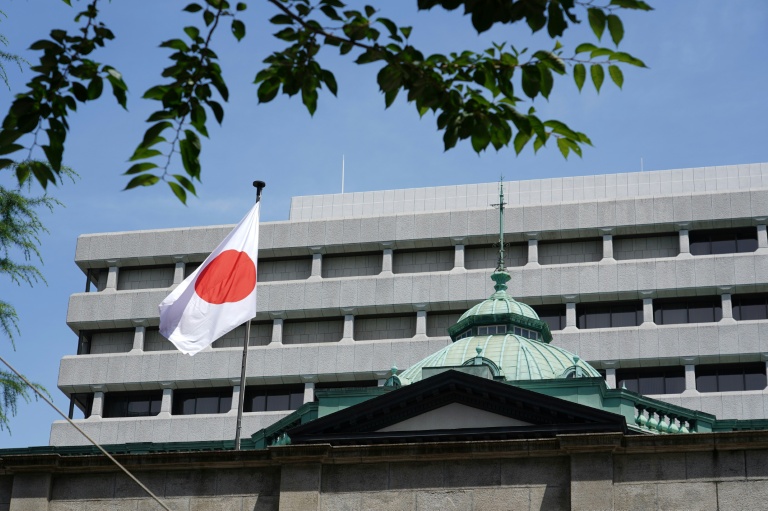
The Bank of Japan raised its main policy rate to 1% on Tuesday, up from 0.75%, pushing borrowing costs in the country to their highest level since 1995. The move places Japan interest rate firmly inside a global tightening cycle that other central banks have been navigating throughout the year as the war involving Iran has driven up energy prices and squeezed household budgets across import-dependent economies. For a country that spent two decades fighting deflation rather than inflation, the decision marks a genuine inflection point in its post-bubble economic history.
Jesper Koll, a Japan economist who spoke to the BBC, framed the moment in stark historical terms. "After twenty years of deflation, Japan is now in an inflationary upcycle," he said, adding that "emergency or crisis management monetary policy is no longer needed and the BOJ wants to get back to a normal monetary policy." That framing matters for how global investors interpret the move: this is not a defensive reaction to a single shock but a structural recalibration of how Japan's central bank views its own economy after a generation of stagnation.
The world economy context is unavoidable here. Higher energy prices driven by the Iran war have placed particular pressure on countries like Japan that depend heavily on oil and gas imports from the Middle East. Japan's wholesale prices climbed more than 6% in May compared with a year earlier, the fastest pace of increase in three years, a clear signal that imported cost pressures are working their way through the economy even as consumer-facing inflation remains comparatively contained.
From near-zero for two decades to a 31-year high: how Japan's rate policy got here
To understand the significance of Tuesday's decision, it helps to look back at where Japan's monetary policy has been. Interest rates were cut aggressively in the 1990s to combat the fallout from a collapse in asset prices, including property and stocks, that followed the bursting of Japan's economic bubble. Rates then stayed near zero for roughly two decades as prices fell and growth stagnated, a period commonly referred to as Japan's lost decades and one that shaped an entire generation of monetary policy thinking inside the BOJ.
The shift away from that era began in March 2024, when the BOJ delivered the country's first rate hike in 17 years. Since then, the bank has raised rates gradually and methodically rather than abruptly, with the policy rate reaching "around 0.75%" in December before Tuesday's move to 1%. That gradualism reflects the BOJ's awareness that Japan's economy, businesses, and government finances have all been structured around the assumption of near-zero borrowing costs for an extended period, making any rapid adjustment economically disruptive.
Tuesday's increase is the second rate hike since Prime Minister Sanae Takaichi took office last year, and it had been broadly anticipated by markets following the BOJ's December move. Takaichi, known for favouring higher government spending, had previously dismissed the idea of raising interest rates, a position that placed her somewhat at odds with the direction the BOJ was signalling. Notably, she has not publicly criticised the central bank's tightening push since taking office, a silence that markets have read as tacit acceptance of the BOJ's independence on this question.
The BOJ's difficult trade-off: taming inflation without choking growth or government finances
Japan's overall inflation rate stood at 1.4% in April, which remains below the BOJ's 2% target, creating an unusual policy puzzle. The central bank is raising rates even though headline inflation has not yet reached its stated goal, a decision driven by forward-looking concern rather than current data. The BOJ explicitly flagged this in its statement, noting that "medium and long-term inflation expectations have also continued to increase" and warning of "a risk of underlying inflation deviating above our price target" if it does not act pre-emptively.
That pre-emptive logic comes with real costs. Higher interest rates increase borrowing expenses for the Japanese government, which carries one of the highest public debt burdens among major economies, as well as for businesses that have spent decades planning around cheap credit. The BOJ acknowledged the risk that Japan's economy could deteriorate sharply due to the Iran war's economic fallout, but said that risk is now less likely because of government measures easing the impact of high fuel costs on households, giving the bank more room to focus on its inflation mandate.
BOJ Governor Kazuo Ueda, the central figure in setting interest rate policy, missed this week's meeting while hospitalised for treatment of an infected liver cyst. Despite his absence, the decision proceeded with other policymakers carrying through the direction Ueda himself had signalled earlier this month, when he said that "should it be judged that upside risks to prices outweigh downside risks to economic activity, it will be necessary to thoroughly discuss the pros and cons of raising the policy interest rate." His prior guidance effectively pre-authorised the move even without his presence at the table.
A weak yen and a global currency realignment are pushing Japan toward higher rates
Beyond domestic inflation concerns, currency stability is a significant driver behind the BOJ's tightening path. The yen has come under sustained pressure against other major currencies including the US dollar and the euro, and a persistently weak yen makes imported energy and goods more expensive for Japanese consumers and businesses, compounding the inflation problem the BOJ is already trying to manage. Raising interest rates tends to support a currency by making yen-denominated assets more attractive to global investors seeking yield.
Ulrike Schaede, a business professor at the University of California San Diego, captured the logic succinctly: "There has been a sense that the yen is too cheap and that raising its currency will not hurt." That observation reflects a broader shift in how Japanese policymakers and global investors now view the yen, after years in which a weak currency was seen as a deliberate tool to support Japanese exporters rather than a problem requiring correction.
Schaede went further, suggesting that the BOJ's gradual but persistent tightening could signal something larger unfolding across the world economy. What we are seeing, she said, could represent "a slow global realignment" in how major economies position their currencies and monetary policy relative to one another. That framing positions Japan's rate decision not as an isolated domestic story but as one data point within a broader shift in global capital flows and currency valuations playing out across multiple major economies simultaneously.
How Japan's new rate compares globally and what it signals for the world economy
Even after Tuesday's increase, Japan's interest rate remains markedly low by international standards. The United States and the United Kingdom both currently maintain interest rates above 3%, more than triple Japan's new level, although both the Federal Reserve and the Bank of England are expected to hold their rates steady at meetings this week as they assess the inflationary impact of the Iran war on their own economies. That gap underscores just how far Japan's monetary policy still has to travel before it converges with its major economic peers, even as the direction of travel becomes unmistakable.
Elsewhere in the world economy, the Reserve Bank of Australia held its rate steady at 4.35% on Tuesday, the same day as Japan's hike, while explicitly noting it may raise rates again if needed to bring inflation under control. The near-simultaneous decisions from Tokyo and Canberra, one tightening and one holding but warning of future tightening, illustrate how unevenly the global energy price shock from the Iran war is being absorbed across different economies depending on their starting inflation levels and existing rate positions.
For global markets, Japan's decision carries outsized importance because of the country's role as one of the world's largest creditor nations and a major source of capital flowing into global bond and equity markets through what is known as the yen carry trade. As Japanese rates rise, the incentive for investors to borrow cheaply in yen and invest in higher-yielding assets elsewhere diminishes, a dynamic that has previously triggered volatility in global markets when the BOJ has shifted policy unexpectedly. The world economy is now watching closely to see whether this latest, more anticipated move proceeds smoothly or triggers similar ripple effects.