
Shopify, the Ottawa-based e-commerce infrastructure company whose platform underpins millions of merchants worldwide, is preparing to ban all vapes from its platform as soon as this week, two sources familiar with its plans told Reuters. The move follows more than a year of talks with a bipartisan coalition of 25 US state attorneys general who have been pressing the company to take stronger action against a booming market for unlicensed e-cigarettes that are illegal to import or sell in the United States but remain widely available online and in physical stores.
The planned ban will apply to all vapes sold through Shopify Vape Ban in the United States, including products that carry FDA marketing authorisation, according to the two sources, making it a blanket policy rather than a targeted enforcement against known bad actors. That scope is significant from a regulatory standpoint because it means the company is not attempting to distinguish between compliant and non-compliant sellers but is instead removing an entire product category from its infrastructure, a more sweeping approach that reflects the difficulty of verifying authorisation status at scale across millions of merchant accounts.
A Shopify spokesperson confirmed the company's general approach without addressing the specifics of the planned ban. "We've always prohibited illegal activity and take action when we become aware of merchants violating our policies," the statement said, adding that internal policy decisions take into account global legal frameworks rather than pressure from any single group. "We adjust our enforcement approach when legal changes call for it," the spokesperson added, framing the move as a routine policy update rather than a direct response to the attorneys general campaign, even though the timing aligns directly with those negotiations.
How a $9 billion illegal vape market was built on unlicensed imports and why regulators took so long to act
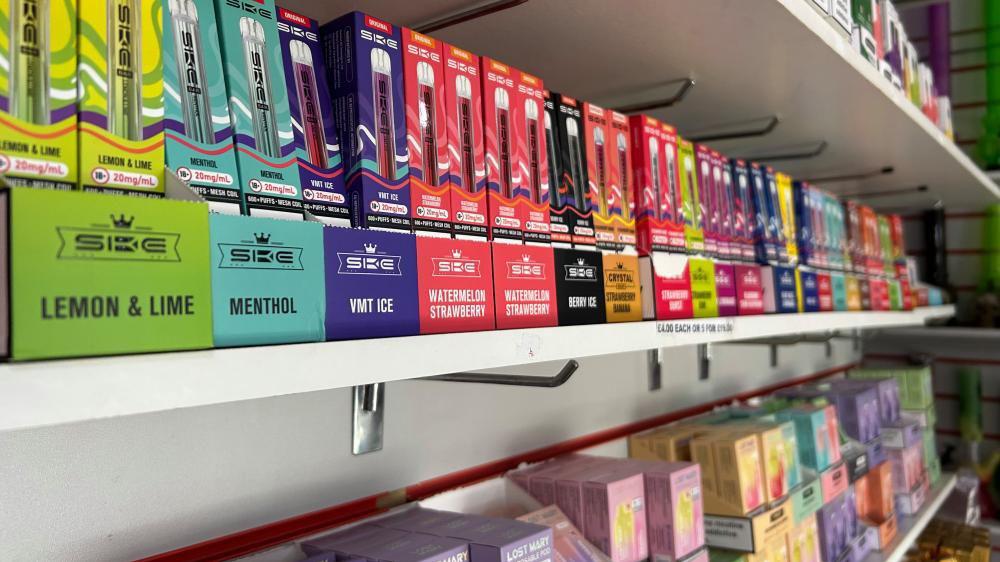
The illegal US vape market is currently valued at approximately $9 billion, according to British American Tobacco, whose US business has been materially damaged by the proliferation of unlicensed competitors. The vast majority of these products are manufactured in China and enter the US market without the marketing authorisation that the Food and Drug Administration legally requires for e-cigarettes to be sold in the country. Despite being illegal to import or sell, these products are accessible at convenience stores, gas stations, vape shops, and online retailers across the country, reflecting an enforcement gap that has persisted for years.
The FDA's approach to authorising e-cigarette products has itself contributed to the conditions in which the illegal market flourished. To date, the agency has granted marketing authorisation to just 45 e-cigarette products, the vast majority of which are tobacco-flavoured, a narrow approval base that companies like BAT argue has stifled legitimate market development while doing little to reduce consumer demand. The resulting vacuum between what consumers want and what can legally be sold has been filled almost entirely by unlicensed imports, primarily from Chinese manufacturers operating outside the reach of US regulatory enforcement.
State law enforcement officials moved to fill the federal enforcement gap by targeting the commercial infrastructure the illegal market depends on rather than individual sellers, a regulatory strategy that recognises the practical limits of prosecuting thousands of small retailers one at a time. The bipartisan coalition of 25 state attorneys general began pushing Shopify in 2025 and issued a formal letter to major card networks including Mastercard in April 2026, building a multi-front pressure campaign designed to make it commercially and financially difficult for illegal vape sellers to operate online regardless of where they source their products.
Mastercard moves to cut off payment processing for unlicensed vape sellers, extending the regulatory net
Running parallel to the Shopify action, Mastercard has issued a global notice to the financial partners responsible for adding merchants to its payment network, warning them that facilitating unlicensed vape sales violates the company's standards. The notice, issued in May and obtained by Reuters, targeted acquirers, the financial institutions that act as intermediaries between merchants and card networks to complete credit-card transactions, and made clear that those intermediaries bear responsibility for the compliance status of the merchants they onboard.
Mastercard's notice specified that when acquirers register a merchant they are "attesting that all appropriate controls are in place" to ensure merchant activities comply with the law. It recommended that acquirers implement controls including reviewing and approving merchant product inventories and conducting ongoing transaction and invoice monitoring, effectively asking financial intermediaries to perform ongoing compliance checks rather than relying on one-time onboarding reviews. Mastercard said it would launch investigations when illegal vape sellers are found to be using its services, with both retailers and their acquiring institutions at risk of fines for non-compliance. "We have zero tolerance for unlawful activity on our network," the company stated.
The combined effect of Shopify's platform ban and Mastercard's network enforcement creates a two-point pressure on the illegal vape supply chain: reduced access to e-commerce storefronts on one side and reduced access to card payment processing on the other. Together, these actions represent the most coordinated infrastructure-level enforcement push against the illegal vape market that US state regulators have achieved since the problem emerged at scale, even if they stop short of addressing the physical retail channels through which the majority of unlicensed vapes are still sold.
What Shopify's vape ban means for licensed sellers, the e-commerce industry, and cross-border regulation
The practical impact on legal, FDA-authorised e-cigarette sellers operating through Shopify is expected to be limited, because a relatively small proportion of authorised vape sales in the United States take place through e-commerce channels. Brands like BAT and Juul primarily distribute through physical retail, meaning the Shopify ban is more likely to be absorbed as a minor operational disruption for licensed players rather than a material commercial blow. The intended targets are the unlicensed sellers for whom e-commerce represents a more critical sales channel, making the platform-level ban a disproportionately effective tool against the illegal segment.
For the broader e-commerce industry, the Shopify ban sets a precedent with implications beyond vapes. One source described the expected ban as likely to have a "chilling effect" on sellers operating in adjacent legal grey zones, where the line between licensed and unlicensed products is not always clear to the platforms hosting them. Shopify's decision to implement a blanket category ban rather than a merchant-by-merchant review reflects the scalability problem every major e-commerce platform faces when trying to police product compliance across a merchant base that runs into the millions, and other platforms will be watching closely to see how the enforcement holds up in practice.
The geographic scope of the Shopify ban remains publicly unresolved. Shopify did not answer a question from Reuters about whether the policy would extend beyond the United States, leaving open the question of how the company will handle markets with different regulatory frameworks. Other countries have taken markedly different regulatory approaches to vaping: India has banned vape sales entirely, while Australia restricts them to pharmacies only. A US-only ban would still represent the largest single platform action against the illegal vape market to date, but an international extension would significantly amplify its effect on cross-border e-commerce channels used by Chinese manufacturers to reach consumers in multiple markets simultaneously.