
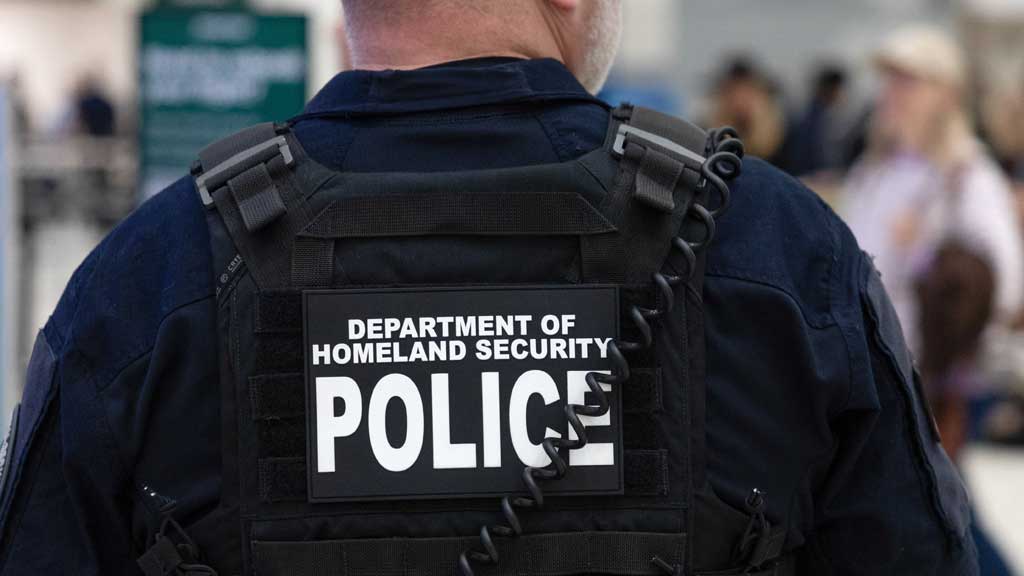
Judge rules CBP violated warrantless arrest order in a significant federal court finding issued Wednesday by U.S. District Judge Jennifer Thurston, who determined that U.S. Customs and Border Protection officials breached her previous April 2025 order when they carried out an immigration enforcement sweep at a Home Depot parking lot in Sacramento in July 2025. Thurston, an appointee of Democratic former President Joe Biden serving in the Eastern District of California, found that agents had detained people without reasonable suspicion, used eleven virtually identical forms to support detentions and arrests in a way that suggested pre-drafted justifications rather than individualised probable cause determinations, and had arrested everyone who could not establish citizenship rather than making the flight risk and community danger assessments that Congress requires before warrantless arrests can be made. The ruling orders agents throughout the Eastern District of California to properly document the reasons for future stops, adding a new layer of judicial oversight to the immigration enforcement operations that have been a defining feature of the Trump administration's domestic policy agenda.
The Sacramento Home Depot enforcement action sits within the broader context of an aggressive and hardline immigration crackdown that the Trump administration has been pursuing with the backing of Customs and Border Protection and Immigration and Customs Enforcement across multiple states. Human rights organisations have widely condemned the crackdown as violating due process and free speech rights, and have documented what they describe as an unsafe environment for ethnic minorities in the United States created by enforcement tactics that rights groups characterise as encouraging racial profiling. Trump and his administration have consistently framed the immigration enforcement actions as necessary measures to reduce illegal immigration and improve domestic security, a position that has driven repeated confrontations with federal judges across the country who have found specific enforcement actions to be in violation of constitutional protections and existing court orders.
Judge Thurston's finding that agents detained people without reasonable suspicion, drawn from her careful examination of the entire record including recorded footage of the Sacramento action, represents a specific and concrete accountability determination rather than a general critique of immigration policy. The distinction matters because it frames the court's intervention not as a policy disagreement with the executive branch but as an enforcement of specific legal requirements that Congress has mandated and that a previous court order had specified. Agents who arrest everyone who cannot establish citizenship, rather than applying the individualised flight risk and community danger assessments that the law requires, are not making discretionary enforcement judgments within their authority. They are bypassing the legal framework that constrains that authority, and federal courts are one of the institutional mechanisms through which that framework is enforced.
How Judge Thurston's Original Order Was Established and Why It Matters
Judge Thurston's April 2025 order barring federal agents from warrantless arrests without finding probable cause of a flight risk was issued in the context of the escalating immigration enforcement activity that accompanied the Trump administration's return to office and immediate implementation of its America First immigration agenda. The order responded to documented enforcement practices that plaintiffs argued violated the Fourth Amendment's protection against unreasonable searches and seizures and the due process requirements of the Fifth Amendment, both of which apply to individuals on U.S. soil regardless of immigration status. The legal framework within which the order operates draws on decades of constitutional precedent establishing that immigration enforcement, like all law enforcement activity, must be conducted within the constraints of constitutional rights protections that Congress and the courts have codified.
The specific requirement that agents consider whether a non-citizen poses a flight risk or a danger to the community before making a warrantless arrest is not a judicial invention but a congressional mandate embedded in immigration law, as Judge Thurston emphasised in her Wednesday court records. Congress requires agents to make this individualised determination precisely because warrantless arrest is an extraordinary exercise of government power over individuals who have not been charged with any crime, and the flight risk and community danger assessment serves as the substitute for the judicial warrant process that would otherwise be required. When agents bypass that assessment and arrest everyone who cannot establish citizenship, they are not exercising their lawful authority, they are exceeding it in ways that Congress specifically attempted to prevent through the statutory language that the judge cited.
The Eastern District of California's geographic jurisdiction, which covers a large portion of the California Central Valley and surrounding regions with significant agricultural and working communities, many of whose members have been directly affected by the immigration enforcement actions that have characterised the Trump era, gives Judge Thurston's orders practical significance across a large population of people whose daily lives intersect with immigration enforcement in ways that urban federal districts may not capture as directly. Her orders apply to agents operating throughout that district, creating a judicial oversight zone whose boundaries matter for the communities within them and whose enforcement depends on the court's ability to monitor compliance and impose consequences when violations are documented.
The Sacramento Home Depot Sweep and What It Showed About Enforcement Tactics
The choice of a Home Depot parking lot as an enforcement location is not coincidental in the context of immigration enforcement tactics that target sites where day labourers, construction workers, and informal labour market participants congregate to seek work. Home Depot parking lots in California and other states with significant immigrant populations have been identified by immigration enforcement advocates as sites where workers gather in the early morning hours seeking employment from contractors and homeowners, making them locations where groups of people whose immigration status may be uncertain can be found in concentrated numbers and approached collectively rather than individually. That tactical logic produces exactly the pattern of mass enforcement that the court's finding addresses, the arrest of everyone present who cannot establish citizenship regardless of individual flight risk or danger assessment.
The eleven virtually identical forms used to support detentions and arrests in the Sacramento sweep are the specific evidentiary finding that most clearly demonstrates the systematic nature of the violation. Individual detention forms that are virtually identical across eleven different detentions cannot represent genuinely individualised probable cause determinations, because different individuals in different circumstances with different histories and behaviours would produce different documented justifications if agents were actually making the case-by-case assessments the law requires. Virtually identical forms are the documentary fingerprint of a mass enforcement action in which the decision to detain was made collectively rather than individually, with the forms then completed to satisfy the paper requirements of legal compliance rather than to document the genuine reasoning that would make those detentions lawful.
The recorded footage that Judge Thurston reviewed as part of the entire record she examined is a particularly significant evidentiary element because it provides a visual record of what actually occurred during the enforcement action that can be compared against the documentary record of the detention forms. When the footage shows an enforcement action that does not match the individualised reasonable suspicion determinations that the forms purport to document, the court has the basis for a specific factual finding that goes beyond legal argument into documented fact. The existence of that footage, and the court's careful examination of it alongside the documentary record, reflects the increasing role that surveillance and recording technology plays in the legal accountability of law enforcement actions that would previously have been documented only through the officers' own accounts.
The Pattern of Court Orders and Administration Responses
Judge Thurston's Wednesday finding is one of multiple judicial interventions across the federal court system that have found specific Trump administration immigration enforcement actions to be in violation of constitutional requirements and existing court orders, creating a pattern of executive-judicial confrontation that has been a defining feature of the administration's first months in office. Federal judges appointed by both Democratic and Republican presidents have issued findings critical of specific enforcement practices, and the administration has typically appealed those findings while continuing to argue that its enforcement actions are lawful and necessary for national security and domestic safety. The legal landscape of immigration enforcement in 2026 is one of ongoing contested litigation across multiple jurisdictions simultaneously.
The human rights organisations that have documented the crackdown's impacts on ethnic minority communities, and that have raised concerns about racial profiling in enforcement targeting decisions, provide a parallel accountability track to the judicial process that captures dimensions of the enforcement pattern that individual court cases may not fully address. An enforcement action that is unlawful in its specific procedural execution, as the Sacramento sweep appears to be based on Judge Thurston's finding, may also reflect broader targeting patterns that are lawful in their individual procedural steps but that cumulatively produce discriminatory enforcement outcomes. The court's role is to address the specific legal violations it can document, while the human rights documentation captures the broader pattern within which those specific violations occur.
The administration's framing of its immigration actions as aimed at reducing illegal immigration and improving domestic security is the political and policy context within which the legal confrontations play out, and that framing has domestic political support that makes the judicial accountability mechanism neither easily avoidable nor politically costless to the administration when it is applied. Trump's political base supports the immigration crackdown and interprets judicial interventions as partisan obstruction by Democratic-appointed judges, a framing that the administration's public communications consistently advance. The constitutional and legal reality that the courts are applying pre-existing legal requirements rather than imposing new policy constraints does not eliminate the political contestation that surrounds each judicial finding.
Wednesday's Ruling, Its Requirements, and What It Means Going Forward
The specific requirement that agents throughout the Eastern District of California properly document reasons to make future stops creates an ongoing compliance obligation that is more practically constraining than a simple prohibition against specific conduct. Proper documentation requires agents to record their actual reasoning at the time of a stop or arrest, creating a contemporaneous paper trail that can be reviewed by supervisors, audited by courts, and examined in future litigation. When that documentation requirement is imposed by a federal court following a finding of violation, agents are on notice that their documentation will be subject to judicial scrutiny and that inadequate or templated forms will be treated as evidence of unlawful enforcement rather than as satisfying the documentation requirement.
The distinction between the court's April 2025 order and the Wednesday violation finding is the distinction between a prospective instruction and a retrospective accountability determination. The April 2025 order told agents what they must do going forward. The Wednesday finding determined that they had not done it in the July 2025 Sacramento sweep, and the new documentation requirement adds specificity to the compliance obligation that the original order had established. That progression from order to violation finding to enhanced compliance requirement is the standard judicial enforcement cycle, and its next stage, if violations continue, would typically involve more severe consequences including potential contempt proceedings against the relevant officials.
The court's specific language that agents arrested everyone who could not establish citizenship rather than making the individualised assessments Congress mandates is worth examining carefully because it identifies the enforcement logic that produced the violation. An enforcement approach that uses the inability to establish citizenship as the effective threshold for arrest is treating immigration status as a proxy for the individualised danger and flight risk assessment that the law requires, substituting a categorical determination for the individual assessment that legal compliance demands. That substitution is precisely what the court finds unlawful, and the documentation requirement is designed to make it impossible to repeat that substitution without creating a paper record of the failure to make the required assessments.
The Due Process Arguments and What Rights Groups Have Documented
The due process and equal protection arguments that human rights groups have advanced in connection with the Trump immigration crackdown are both legally grounded and practically urgent for the communities they describe. Due process in the context of immigration enforcement means that individuals detained or arrested have the right to understand why they are being detained, to have that detention based on an individualised legal justification rather than a categorical sweep, and to access legal counsel and challenge their detention through available legal processes. When agents use virtually identical forms for eleven detentions, the people detained are effectively being processed as interchangeable members of a suspected group rather than as individuals with distinct circumstances, which is the procedural pattern that due process protections are specifically designed to prevent.
The racial profiling concerns that rights groups have raised about the broader enforcement pattern connect to the specific Sacramento enforcement action through the location and tactics of the sweep. A Home Depot parking lot enforcement action in California that targets workers gathered to seek informal employment is, in the demographic reality of that state and that labour market, an enforcement action that will disproportionately affect Latino workers regardless of their immigration status, including U.S. citizens and lawful permanent residents who cannot immediately produce documentation when approached by federal agents. The rights groups' argument that the crackdown creates an unsafe environment for ethnic minorities reflects this reality, in which enforcement tactics that are facially immigration-focused produce practical impacts that extend to the entire ethnic community regardless of immigration status.
The free speech dimension of the rights group critiques, which may seem less immediately connected to an immigration enforcement case, reflects concerns about the chilling effect of aggressive enforcement on communities' willingness to participate in civic life, report crimes to local law enforcement, or assert their legal rights when confronted by federal agents. When community members fear that any interaction with authorities may result in detention or the detention of family members regardless of their legal status, the practical exercise of constitutional rights including freedom of speech, freedom of assembly, and the right to petition government becomes inhibited in ways that are difficult to document in any individual case but that collectively represent a significant erosion of constitutional participation for affected communities.
What the Administration's Response Is Likely to Be and What Comes Next
The Trump administration's pattern of responding to adverse judicial rulings in the immigration enforcement context has been to appeal the rulings through available appellate channels, to argue publicly that the judicial interventions represent partisan judicial activism rather than legitimate constitutional interpretation, and to continue enforcement activities in ways that test the boundaries of what the orders prohibit while attempting to comply with their specific requirements. The Wednesday finding is likely to follow a similar pattern, with the administration's lawyers examining the ruling for the basis of an appeal or a narrowing argument while enforcement activity in the Eastern District of California adjusts to the enhanced documentation requirements that Judge Thurston has imposed.
The documentation requirement specifically, requiring agents to properly document reasons for future stops, creates a compliance test that the court can assess in future litigation if additional enforcement actions in the district produce complaints or evidence that the documentation is again inadequate. The Sacramento Home Depot sweep's eleven virtually identical forms became the evidentiary basis for the Wednesday finding, and any future enforcement action that produces similar documentation patterns faces the risk of a similar finding with potentially more serious consequences. The practical constraint that the documentation requirement imposes on enforcement operations depends on whether agents and their supervisors treat it as a genuine compliance obligation or as a paper requirement to be satisfied in form while the underlying enforcement approach continues unchanged.
The broader significance of Judge Thurston's ruling for the national debate about immigration enforcement and judicial oversight is that it provides a documented example of how the legal accountability mechanisms that the constitutional system provides can function even in a political environment where enforcement agency priorities and judicial requirements are in direct tension. The court's ability to examine recorded footage, compare it against detention forms, find specific violations of specific legal requirements, and issue specific remedial orders represents the institutional constraint mechanism that the rule of law depends on operating through exactly this kind of adversarial and documented process. Whether that constraint mechanism ultimately shapes enforcement practice in the ways the court intends, or whether it produces compliance in form while enforcement approaches adapt to preserve their operational substance, is the practical question whose answer will emerge from the Eastern District of California in the months and enforcement actions ahead.