
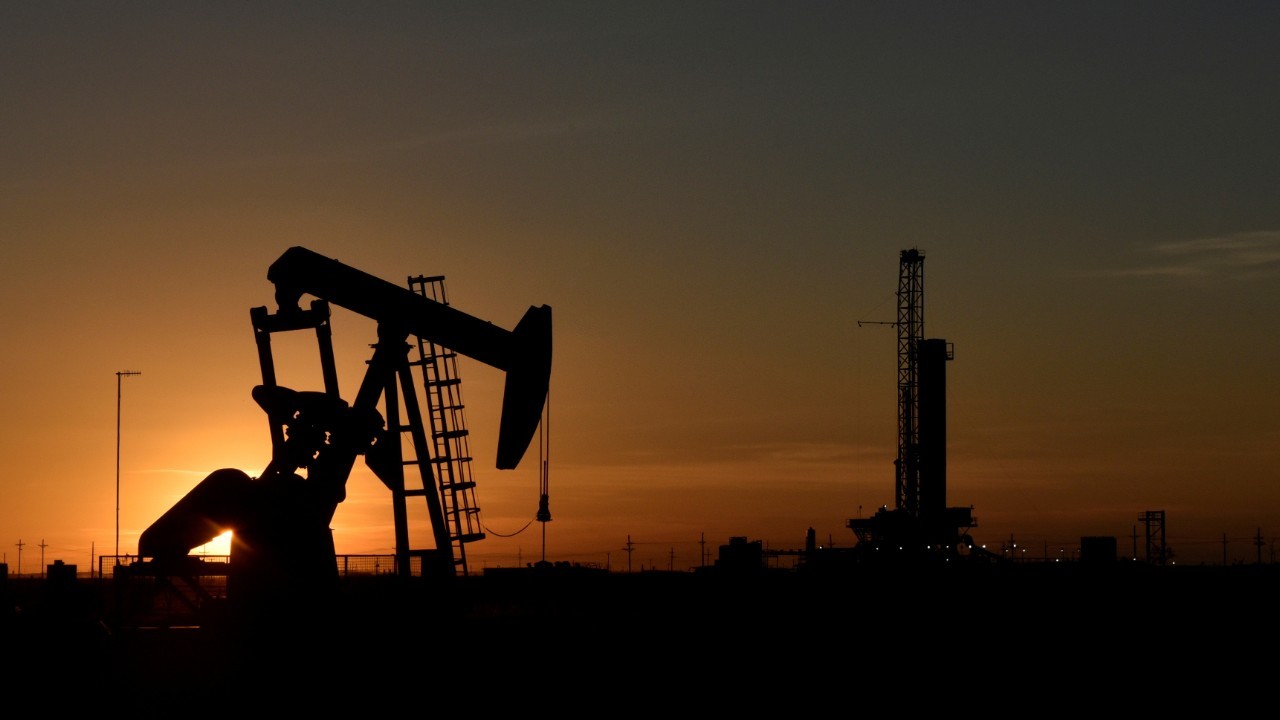
Oil prices rise Middle East ceasefire optimism that briefly lifted markets earlier this week has faded into a more sober reassessment of how long the energy disruption caused by the Iran war is likely to last. Brent crude futures climbed $2.08, or 2.03 percent, to $104.30 a barrel by early Thursday morning GMT, while U.S. West Texas Intermediate futures rose $1.93, or 2.14 percent, to $92.25 a barrel clawing back losses from the previous session as investors concluded that the combination of Strait of Hormuz closure, Russian supply disruption, and Iraqi production constraints represents a supply crisis with no near-term resolution in sight. The 2 percent recovery in a single session is not a sign of market confidence it is a sign of markets repricing a conflict that is proving more durable and more disruptive than the ceasefire optimism of earlier in the week had suggested.
Iran's foreign minister confirmed on Wednesday that Tehran is still reviewing the U.S. 15-point proposal to end the war but has no intention of holding talks to end the Middle East conflict a formulation that allows Iran to acknowledge the existence of the American plan without committing to any engagement with its terms. The White House responded through press secretary Karoline Leavitt, who warned that President Trump will hit Iran harder if Tehran fails to accept that the country has been defeated militarily a threat that raises the prospect of further military escalation precisely at the moment when diplomatic engagement is the only mechanism that could relieve the energy supply pressure weighing on the global economy. The gap between what Washington is threatening and what Tehran is prepared to accept has not narrowed.
Tsuyoshi Ueno, senior economist at NLI Research Institute, captured the market mood with precision: optimism regarding a ceasefire has faded, and the bar Washington has set appears high enough to leave oil prices vulnerable to further volatility depending on the trajectory of both negotiations and military actions. That vulnerability is not hypothetical it is structural, because every day the Strait of Hormuz remains effectively closed removes supply from a global market that has no alternative source to replace what the IEA has described as the biggest-ever oil supply disruption. Strategic reserve releases, demand reduction measures, and alternative routing efforts have provided partial relief but not a solution, and the market understands that distinction with increasing clarity.
How the Oil Supply Crisis Was Built Layer by Layer
The Strait of Hormuz carries approximately one-fifth of the world's crude oil and liquefied natural gas supply through a narrow maritime corridor running along Iran's southern coastline a geographic concentration of energy trade that has no viable alternative route at anything approaching the volumes the strait normally handles. The closure of that corridor, which the IEA has described as the biggest-ever oil supply disruption, has removed a supply flow that global markets had priced as permanently available based on four decades of uninterrupted transit since the last serious Hormuz crisis during the Iran-Iraq Tanker War of the 1980s. Markets built on the assumption that the strait would always be open are now pricing in a world where it has been closed for five weeks with no clear reopening timeline.
The IEA's coordinated release of approximately 400 million barrels from member countries' strategic petroleum reserves was the largest emergency intervention in the agency's history a measure calibrated to the severity of a supply disruption that had no precedent in the modern energy market. Japanese Prime Minister Sanae Takaichi's request to IEA chief Fatih Birol for an additional coordinated release during Wednesday's talks reflects Tokyo's assessment that the initial reserve release has not been sufficient to cover the supply deficit for the duration of a conflict that is now entering its fifth week without a diplomatic resolution in sight. Japan imports approximately 95 percent of its oil from the Middle East, giving it more direct exposure to the Hormuz closure than any other G7 economy and the strongest incentive to press for whatever measures can provide short-term relief while diplomacy proceeds.
The 15-point U.S. proposal sent to Iran through Pakistan confirmed in detail by three Israeli cabinet sources familiar with the plan calls for the removal of Iran's stocks of highly enriched uranium, a halt to enrichment activities, significant curbs on the ballistic missile programme, and the cutting of Iranian funding for regional allies including Hezbollah and other proxy forces. Each of those conditions addresses a core element of Iran's strategic deterrence and regional influence architecture the tools through which the Islamic Republic projects power and maintains its position as a regional force. Accepting all four conditions simultaneously would represent a comprehensive strategic retreat that would fundamentally alter Iran's security posture and regional standing, a set of demands that explains why the foreign minister's response was to acknowledge receipt without indicating any intention to negotiate.
Russia's Supply Crisis Adds a Second Front to the Global Energy Shock
The Hormuz closure is not the only supply disruption hitting global oil markets simultaneously a significant and compounding crisis in Russian export capacity has added a second front to the global energy shock that market analysts are now pricing into their supply forecasts. At least 40 percent of Russia's oil export capacity is currently halted, according to Reuters calculations based on market data, following a combination of Ukrainian drone attacks on export infrastructure, a disputed attack on a major pipeline, and the seizure of tankers in circumstances that remain contested. The simultaneous disruption of Russian and Gulf oil supply represents a supply shock combination that the global market has never experienced before, because both disruptions are geopolitical in origin and neither has a market-based resolution.
Russia's export capacity reduction matters disproportionately to global prices because Russian crude has been serving as a partial alternative supply source for buyers excluded from Hormuz transit during the current crisis. Countries that have been able to source Russian crude at discounted prices including some Asian economies that were already buying Russian oil to avoid the premium pricing of alternative suppliers are now finding that source reduced as well, narrowing the alternatives available to importers trying to manage the Hormuz closure's impact. The dual disruption creates a pricing environment where the normal market mechanism of substituting one supply source for another is structurally constrained by the simultaneous unavailability of the two largest disruption-period alternatives.
Iraqi oil production, which had already been squeezed by the Hormuz closure cutting off the export routes through which Iraqi crude normally reaches global markets, has deteriorated further with storage tanks reaching high and critical levels according to three Iraqi energy officials who spoke to Reuters on Wednesday. Iraq's inability to export oil it is producing forces it to reduce production because there is physically nowhere to put the output a storage-induced supply constraint that compounds the transit-induced constraint from the Hormuz closure. The combination of transit blockage and storage saturation is pushing Iraqi production toward levels that will require weeks to recover even after the strait reopens, because restarting fields and pipelines at full capacity is not an instantaneous process once they have been throttled back to avoid infrastructure damage from oversaturation.
The History of Hormuz Crises and Why This One Is Different
The Strait of Hormuz has been the subject of Iranian closure threats and partial disruption throughout the forty-year history of the Islamic Republic, with the most serious previous episode being the Tanker War of the 1980s when Iran and Iraq attacked oil tankers as part of their broader conflict. That episode produced significant disruption but never a complete closure tankers continued to transit under military escort and with elevated insurance costs, and the global market adapted through rerouting, strategic reserve use, and pricing adjustments that distributed the disruption across the international economy without producing an acute crisis of the current magnitude. The current closure is different in its completeness and in the absence of a naval escort solution that could restore transit at scale.
The IEA was created in 1974 specifically in response to the Arab oil embargo of 1973, designed to coordinate the collective response of oil-importing nations to supply disruptions through strategic reserve coordination and demand management. The agency's description of the current disruption as the biggest-ever oil supply shock represents an institutional acknowledgment that this crisis exceeds the parameters the IEA was designed to manage that the tools available through the reserve release mechanism and demand reduction measures are insufficient to substitute for the physical supply the Hormuz closure has removed. That acknowledgment has profound implications for how long markets can be managed through institutional intervention rather than requiring a political resolution to the underlying conflict.
U.S. crude inventories rising by 6.9 million barrels to 456.2 million barrels in the week ended March 20 — the highest level since June 2024 and far exceeding analyst expectations for a 477,000-barrel increase tells a different and equally important story about what the Hormuz closure is doing to the structure of U.S. energy markets. American refineries are accumulating crude because the export markets that would normally absorb U.S. production have been disrupted, because domestic demand has been reduced by the economic pressure of high fuel prices, and because the supply routing changes created by the Hormuz crisis have redirected some crude flows toward U.S. storage rather than the Gulf markets where they would normally end up. High domestic inventories provide a buffer against future supply shocks but do not solve the global distribution crisis the Hormuz closure has created.
Iran Reviews the Plan, Markets Reprice, and Escalation Looms
Iran's foreign minister's statement that Tehran is still reviewing the U.S. 15-point plan while having no intention of holding talks represents the most carefully calibrated Iranian diplomatic communication of the conflict so far acknowledging the plan's existence without accepting its framing, maintaining review as an activity without committing to response, and explicitly separating the act of reading a document from any agreement to negotiate its terms. That calibration serves multiple purposes simultaneously: it avoids the domestic political cost of being seen to engage with an enemy that has spent five weeks bombing Iranian cities, it maintains a channel of communication through Pakistan that could be used for more substantive exchanges, and it signals to global markets and G7 foreign ministers that Iran has not completely closed the door on a diplomatic process.
The White House's response through Karoline Leavitt warning that Trump will hit Iran harder if Tehran does not acknowledge military defeat escalates the rhetorical pressure while making the diplomatic pathway narrower. Demanding that Iran publicly accept the characterisation of military defeat as a precondition for any engagement is a maximalist political requirement that the Iranian government, whatever its private assessment of the military situation, cannot accept without a level of domestic political cost that would destabilise the clerical establishment's grip on power. The threat of harder strikes if Iran refuses to capitulate creates a binary choice between military escalation and complete surrender that leaves no space for the graduated de-escalation that diplomatic processes normally require to build momentum.
Tsuyoshi Ueno's assessment that the bar Washington has set appears high enough to leave oil prices vulnerable to further volatility is the market's translation of that diplomatic impasse into price risk. Every day the 15-point plan sits unanswered, every statement Iran makes distinguishing reviewing from negotiating, and every White House threat of harder strikes reduces the probability of the near-term ceasefire that would reopen the Strait of Hormuz and allow Brent crude to trade sustainably below $100. The 2 percent recovery on Thursday is markets buying back the pessimism discount they sold the previous session not markets pricing in a resolution but markets managing the daily volatility of a crisis whose endpoint remains genuinely unknown.
Russia and Iraq Add Compound Pressure to an Already Stressed Market
The 40 percent disruption to Russian export capacity arriving simultaneously with the Hormuz closure has created a supply shock combination that energy analysts have struggled to find historical precedent for two major exporters simultaneously unable to move their crude to market through different mechanisms operating in different geographies. The Russian disruption, driven by Ukrainian drone attacks and tanker seizures, has a different resolution timeline and mechanism than the Hormuz closure it depends on infrastructure repair and diplomatic developments in the Ukraine conflict rather than on the Iran war's trajectory. The independence of the two disruptions from each other means that resolving one does not automatically resolve the other, and markets must price both as separate risks with separate timelines rather than treating them as a single shock with a single resolution.
Iraqi storage tanks reaching high and critical levels represents a slow-moving but significant additional pressure point that compounds the acute supply disruption from the Hormuz closure with a structural production constraint that will outlast the closure itself. When storage tanks fill to capacity, oil producers must either find alternative storage which at this point in the crisis is largely unavailable or reduce production to prevent infrastructure damage. Production that is reduced because storage is full does not restart instantaneously when storage space becomes available wellheads, pipelines, and processing facilities must be carefully brought back to operating pressure and flow rates in a process that takes days to weeks depending on the degree of reduction. Iraqi production capacity that has been throttled during the Hormuz closure will require a recovery period after the strait reopens, meaning global supply will not instantly return to pre-crisis levels even when the political resolution allows transit to resume.
U.S. crude inventories at their highest since June 2024 provide a statistical buffer against future supply shocks but create a different market dynamic domestic producers face price pressure from high inventory levels even as international benchmark prices remain elevated because of the Hormuz closure. That price divergence between domestic and international crude complicates the economics of U.S. energy companies, affects the political dynamics of Trump's domestic energy messaging, and creates arbitrage opportunities that shape the flow of crude between U.S. storage and international markets in ways that are difficult to predict or manage through conventional supply and demand analysis. The inventory build is a symptom of the global supply routing crisis as much as it is a domestic market development.
What Markets Need to See Before Oil Prices Sustain Below $100
The market consensus, reflected in analyst commentary from NLI Research Institute and energy desks across global investment banks, is that sustained oil prices below $100 require one thing above all others physical resumption of tanker transit through the Strait of Hormuz at volumes approaching the pre-crisis baseline. Strategic reserve releases, demand reduction measures, alternative supply routing, and diplomatic signals all affect the daily volatility of oil prices without changing the fundamental supply arithmetic that keeps Brent above $100 as long as the strait is closed. ING's repeated analysis that the market highs are still ahead of us if the strait does not reopen has proven accurate across the weeks of the crisis and has not been invalidated by any development yet.
The diplomatic pathway to strait reopening runs through the 15-point plan and whatever response Iran eventually formulates not publicly, since Iran has explicitly said it will not hold talks, but through the Pakistani channel and whatever other back-channel mechanisms are operating in the margins of the G7 meeting in France and the consultations between Oman, Qatar, and both parties. The plan's demands enriched uranium removal, enrichment halt, missile programme curbs, proxy funding cuts are the starting position of a negotiation that has not yet officially begun, and the distance between that starting position and the endpoint that Iran could accept while maintaining its revolutionary identity is the distance between current oil prices and the pre-crisis baseline that the global economy needs to return to.
The escalation threat from Washington harder strikes if Iran does not acknowledge defeat and the Iranian parliament's movement toward Hormuz toll legislation represent simultaneous movements in opposite directions from the negotiated resolution that markets are pricing in as their base case for eventual normalisation. A market that is already pricing the IEA's biggest-ever supply disruption label has not yet fully priced the scenario in which the war continues for months rather than weeks, in which the toll legislation creates a permanent institutional claim on the strait that requires separate dismantlement, or in which harder U.S. strikes produce Iranian escalation that closes the strait more completely than it is already closed. Those tail risks remain in the market's peripheral vision, and Thursday's 2 percent recovery does not mean they have been dismissed.