
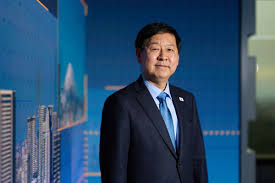
South Korea Iran war economic response has escalated to its most aggressive level yet, with the government announcing a 5 trillion won emergency bond buyback worth approximately $3.32 billion alongside an expansion of fuel tax cuts effective from Friday midnight measures designed to protect Asia's fourth largest economy from a global market rout that is hitting South Korea with particular severity due to its heavy structural dependence on energy imports passing through the now effectively closed Strait of Hormuz. Finance Minister Koo Yun-cheol announced the package on Thursday as three-year treasury bond yields had surged to their highest point since mid-2024, bond markets had entered a sharp selloff, and consumers were absorbing fuel price increases that the government can no longer allow to pass through unchecked to retailers and households across the country.
The bond buyback will be executed in two equal tranches 2.5 trillion won on March 27 and another 2.5 trillion won on April 1 injecting liquidity directly into the local bond market to cap rising yields and stabilise financial conditions that have deteriorated sharply as markets priced in more than 100 basis points of interest rate hikes over the next twelve months. The announcement produced an immediate market response, with three-year notes rebounding after the package was confirmed a sign that the government's intervention has the scale and credibility to move markets in the near term even if the underlying pressures driving the bond selloff remain entirely unresolved. The fuel tax expansion runs parallel to the financial market intervention, targeting the consumer price level directly by preventing international oil price spikes from being passed through to South Korean pump prices.
The measures announced Thursday are not a one-off response they are the latest in a sequence of escalating policy interventions from a government that Finance Minister Koo described as prepared to use all available resources to deal with what he called a grave situation. The Middle East war that began in late February has entered its fourth week, and in Koo's own words the economic impact higher prices, supply disruptions, and heightened volatility in foreign and financial markets is increasingly evident across every dimension of the South Korean economy. South Korean President Lee Jae Myung held a high-level economic meeting to discuss what he described as an unpredictable situation that together with a complex global supply chain makes remedies genuinely difficult to formulate.
Why South Korea Is More Exposed Than Almost Any Other Economy
South Korea's vulnerability to the Strait of Hormuz closure is not a policy failure or a temporary exposure that better planning could have avoided it is the structural consequence of an economic development model built on energy-intensive manufacturing that required cheap, abundant, reliable imported energy as a fundamental input. South Korea has virtually no domestic oil or gas production, importing essentially all of its petroleum needs from international markets. The Middle East, accessed through the Strait of Hormuz, supplies the overwhelming majority of those imports a geographic concentration that made perfect economic sense when the strait was reliably open and perfectly exposes South Korea when it is not.
The country's petrochemical industry illustrates the depth of the structural exposure. Half of the naphtha that fuels South Korea's large petrochemical sector one of the most important industries in the Korean industrial economy, producing plastics, fertilisers, synthetic fibres, and the chemical precursors for dozens of downstream manufacturing processes is imported through the Strait of Hormuz. When the strait closes, the feedstock for that industry is cut by half within weeks, creating production constraints that ripple through the entire downstream industrial supply chain. The government's announcement of a new export control on naphtha products effective Friday midnight reflects the urgency of managing a domestic shortage of a material that is simultaneously unavailable on international markets at accessible prices.
South Korea's bond market vulnerability compounds the energy exposure through a financial channel that operates independently of but simultaneously with the physical energy disruption. The country's bonds are scheduled for inclusion in the World Government Bond Index next month an event that would normally attract significant foreign capital inflows and strengthen the won. The current crisis has introduced uncertainty into that inclusion process and prompted the government to announce enhanced monitoring of foreign capital flows in anticipation of potential volatility around the index event. A bond market under domestic selling pressure from energy-driven inflation fears arriving simultaneously with the structural change of index inclusion creates a financial management challenge that the bond buyback is designed to address before it becomes an acute crisis.
The Historical Context of South Korean Economic Crisis Management
South Korea has navigated economic crises of severe external origin before most notably the 1997 Asian financial crisis that required an IMF bailout and forced a fundamental restructuring of the Korean corporate and financial system, and the 2008 global financial crisis that hit export-dependent economies like Korea with particular severity before a relatively swift recovery driven by the country's manufacturing competitiveness and fiscal flexibility. Both episodes produced institutional learning about the importance of early, credible, large-scale government intervention the lesson that waiting to see how bad a crisis becomes before responding allows market dynamics to develop momentum that makes subsequent intervention more costly and less effective.
The bond buyback announced Thursday reflects that institutional memory 5 trillion won deployed in two tranches over five days is a significant and specific commitment designed to signal both the government's seriousness and its financial capacity to act. The precision of the tranching 2.5 trillion won on March 27 and 2.5 trillion won on April 1 is not accidental. It provides an immediate market stabilisation effect on Thursday while signalling continued support through April 1, giving bond market participants a concrete timeline for government intervention that reduces the incentive to sell in anticipation of further yield increases. That forward guidance dimension of the announcement may be as important as the actual liquidity injection in terms of its market stabilisation effect.
The expansion of fuel tax cuts from 7 to 15 percent on gasoline and from 10 to 25 percent on diesel represents a significant fiscal commitment that will reduce government revenue during a period when emergency spending is already elevated. The decision to expand cuts rather than introduce new ones builds on the existing mechanism introduced two weeks earlier when the government first imposed a fuel price ceiling, demonstrating policy continuity and institutional coordination between the finance ministry and the energy regulators responsible for implementing retail price controls. The sequencing ceiling first, then expanded tax cuts, now combined reflects a government that is escalating its intervention toolkit in proportion to the escalating severity of the crisis rather than deploying all available tools simultaneously and exhausting its policy space.
South Korea's Energy Mix and the Nuclear Power Decision
The decision to raise the operating rate of nuclear power plants above 80 percent and scrap the seasonal cap on coal power plants represents a fundamental near-term energy policy shift driven by the emergency conditions of the Hormuz closure. South Korea has been navigating a politically contested energy transition involving the relative roles of nuclear, coal, renewables, and imported gas in its electricity generation mix a debate shaped by environmental commitments, energy security concerns, and the economic interests of different industrial and regional constituencies. The emergency conditions of the current crisis override that debate by making maximum domestic electricity generation capacity the overriding priority regardless of the energy mix implications.
Nuclear power in South Korea has the advantage of using uranium fuel that is not imported through the Strait of Hormuz its supply chains run through different geographic routes that the Iran war has not disrupted making it genuinely more secure than oil or gas-fired generation during the current crisis. Raising nuclear operating rates above 80 percent means pushing plants toward their designed capacity limits, accepting the maintenance scheduling trade-offs that higher utilisation rates require, and signalling to electricity markets that domestic generation will be maximised to reduce dependence on imported fuel for power generation. That reduction in imported fuel demand for electricity generation frees up whatever petroleum supply is available for the transportation and industrial uses where substitution is harder or impossible.
The seasonal coal cap removal is a more environmentally contested decision that reflects the severity of the energy supply emergency. South Korea's coal power plants operate under seasonal restrictions designed to reduce air pollution during months when weather conditions cause particulate concentrations to reach health-damaging levels restrictions that were introduced in response to public health advocacy and that enjoy significant civil society support. Scrapping those restrictions during the current crisis trades public health protection for energy security, a trade-off that the government is making explicitly and that will face scrutiny from environmental and public health advocates even as most Koreans acknowledge the immediate energy emergency that motivates it.
Bond Buyback, Fuel Cuts, and the Scale of What South Korea Is Managing
The 5 trillion won bond buyback is the largest single emergency financial market intervention in South Korea's recent history and its announcement produced immediate measurable results three-year treasury notes rebounded after the package was confirmed, providing validation that the government's commitment has sufficient scale to move a market that had been under sustained selling pressure. Markets were pricing in more than 100 basis points of interest rate hikes over the next twelve months before the announcement, a level of monetary tightening expectation that reflected investor assessment of the inflation outlook created by the combination of energy price surges, won weakness, and supply chain disruption from the Hormuz closure.
Finance Minister Koo's framing of the situation as a grave situation requiring all available resources carries specific communication weight it is not the language of a government managing a manageable problem but the language of a government that has assessed the severity of the crisis and concluded that extraordinary measures are justified and necessary. Korean bond market participants and currency traders hear that framing as a signal that the government will not allow financial market dysfunction to compound the real economy disruption from the energy supply shock that the fiscal and monetary resources of Asia's fourth largest economy are being actively deployed rather than held in reserve for a worse scenario that may yet arrive.
The government's announcement of enhanced monitoring of foreign capital flows ahead of South Korean bonds' World Government Bond Index inclusion next month adds a financial stability dimension to Thursday's package that extends beyond the immediate bond market intervention. Index inclusion events attract large passive capital inflows from funds that track the index, and those inflows can create exchange rate and bond market volatility that amplifies rather than reduces existing pressures. Monitoring infrastructure that can detect unusual capital movements and trigger timely policy responses gives the government situational awareness during a period of heightened financial market sensitivity preparation that reflects the institutional sophistication of a finance ministry that has managed complex external shocks before.
Fuel Tax Cuts and the Consumer Price Protection Logic
The expansion of fuel tax cuts gasoline from 7 to 15 percent and diesel from 10 to 25 percent targets the most direct and politically sensitive channel through which the Hormuz closure reaches ordinary South Korean households. Petrol prices at the pump are the energy price signal that consumers encounter most visibly and most frequently, and rapid increases in pump prices generate political pressure that governments in energy-import-dependent economies cannot ignore regardless of the fiscal cost of intervention. South Korea's initial fuel price ceiling introduced two weeks ago capped the retail price at a level based on pre-conflict supply and pricing conditions but the subsequent escalation of oil prices above those reference levels has required a larger fiscal tool than the ceiling alone can provide.
The 25 percent diesel tax cut is the more economically significant of the two reductions, because diesel is the fuel of South Korea's logistics and freight industry the trucks, buses, and heavy vehicles that move goods through the supply chain between ports, warehouses, manufacturers, and retailers. A significant diesel price increase does not stay in the transport sector it propagates through every supply chain as higher freight costs that eventually appear in the retail prices of everything from food to electronics. By cutting diesel tax more aggressively than gasoline, the government is attempting to contain the second-round inflation effects of the energy shock before they fully transmit through the domestic supply chain into consumer price inflation that erodes real wages and household purchasing power.
The new export control on naphtha products effective Friday midnight protects the domestic supply of a material that is simultaneously scarce internationally and critical to South Korea's petrochemical industry. Allowing naphtha to be exported at a time when domestic supplies are constrained by Hormuz-route disruptions would deplete the domestic stockpile faster than the industry can manage, forcing production cuts in petrochemical facilities that employ tens of thousands of workers and that supply downstream industries across the Korean manufacturing economy. The export control is a wartime supply management measure directing a scarce resource toward domestic industrial use rather than allowing market pricing to determine its allocation between domestic and export uses at a time when the market outcome would be socially and industrially damaging.
What Comes Next and Whether the Measures Are Enough
Finance Minister Koo's explicit statement that the government could take additional action if needed is both a reassurance to markets and an honest acknowledgment that the measures announced Thursday may prove insufficient if the Iran war continues and the Hormuz closure persists beyond the near-term horizon that current market pricing assumes. The 5 trillion won bond buyback provides liquidity but does not resolve the underlying inflation and monetary policy uncertainty driving yield increases if inflation expectations continue to rise because oil prices remain above $100 and the Hormuz stays closed, the bond market will face renewed selling pressure that requires additional intervention to contain.
President Lee's characterisation of the situation as unpredictable reflects the honest assessment of a government that cannot control the primary driver of its economic emergency the military and diplomatic trajectory of a conflict it did not start and cannot end. South Korea's policy options are all second-order responses to a first-order problem that requires a ceasefire and a Hormuz reopening that only the United States, Israel, and Iran can negotiate. The bond buyback, fuel tax cuts, nuclear operating rate increase, coal cap removal, and naphtha export controls are all measures that reduce the damage from the crisis rather than resolving it a distinction that Finance Minister Koo acknowledged implicitly when he described the government as dealing with a grave situation rather than solving one.
The international dimension of South Korea's response its participation in IEA strategic reserve releases, its engagement with the G7 discussions in France, and President Lee's earlier fuel price ceiling announcement reflects a government that understands its economic emergency is inseparable from the global political emergency of the Iran war and that domestic policy tools alone cannot substitute for the international diplomatic resolution that would reopen the strait. Thursday's emergency measures buy time and reduce immediate market dysfunction, but they do not change the fundamental arithmetic that Asia's fourth largest economy is paying an enormous and growing price for a war being fought in a region it depends on for the energy that powers everything it produces, exports, and consumes.