
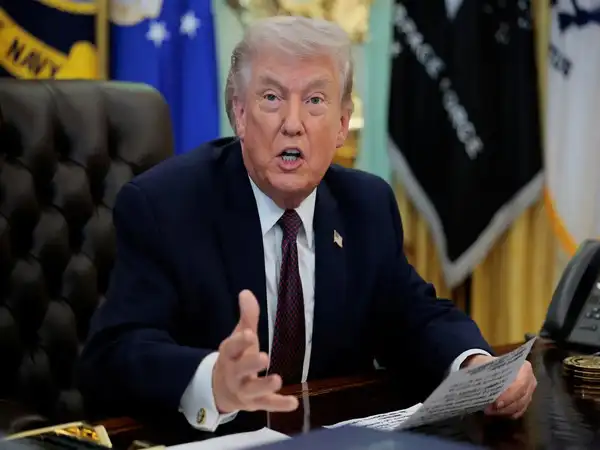
Trump DHS back pay shutdown order 2026 has been signed by President Donald Trump as an emergency directive instructing the payment of each and every employee at the Department of Homeland Security the equivalent of compensation and benefits lost during the partial shutdown of the agency that has left tens of thousands of federal civilian workers without pay since February, according to a White House memo published Friday. The emergency order covers employees across DHS component agencies including the U.S. Coast Guard, the Cybersecurity and Infrastructure Security Agency, the Federal Emergency Management Agency, and other DHS entities whose civilian workforces have been operating without pay through nearly seven weeks of a funding standoff that Congress has been unable to resolve through normal legislative channels. Trump stated in the order that the funds would have a reasonable and logical nexus to DHS functions, language that appears to acknowledge the legal complexity surrounding the reallotment of funds that Congress has appropriated for specific purposes and that the executive is now redirecting to cover back pay obligations.
The emergency back pay order arrives in a political environment where the government funding standoff has been producing measurable operational disruptions across multiple DHS components, most visibly at the Transportation Security Administration, where the absence of pay contributed to daily worker absences exceeding 10 percent of the total TSA workforce and created chaos and long security lines at U.S. airports across the country. Trump signed a separate order last week to pay TSA's 50,000 airport security officers, and those workers began receiving payments on Monday, providing the model for Friday's broader DHS order that extends the same logic to the rest of the department's civilian workforce. The legislative resolution that would end the shutdown through normal appropriations processes moved a step closer on Thursday when the Senate cleared the way for the House to pass a DHS funding bill through September 30, but the House met on Thursday and did not vote to approve the funding bill, leaving the emergency order as the current mechanism for addressing the immediate pay crisis.
The backdrop of the funding standoff includes the deadly shootings by immigration agents that preceded the legislative failure, a specific political context that has charged the debate over DHS funding with a level of controversy that goes beyond the routine politics of government funding legislation. U.S. lawmakers' inability to agree on DHS funding legislation in the aftermath of those events has produced the partial shutdown that left tens of thousands of federal workers unpaid, and the political difficulty of the funding negotiations reflects both the substantive policy disagreements about immigration enforcement and the institutional dynamics of a Congress that has struggled to pass appropriations legislation on regular schedules throughout the current political era. The emergency back pay orders represent an executive branch intervention into a problem created by legislative gridlock, using presidential emergency authority to address an immediate human crisis while the underlying political dispute about DHS funding remains unresolved.
How the DHS Shutdown Began and What It Has Cost Workers and the Public
The Department of Homeland Security's partial shutdown, which began in February 2026 and has now extended to nearly seven weeks, represents one of the most prolonged funding gaps affecting a major national security agency in recent American governmental history. The shutdown's origin in the political aftermath of deadly shootings by immigration agents placed it within one of the most contested policy domains of the Trump era, where the administration's aggressive immigration enforcement agenda has generated both passionate political support and fierce political opposition that has made compromise on related funding legislation unusually difficult to achieve. The specific connection between the immigration enforcement controversy and the DHS funding debate has created a legislative impasse in which the two sides' inability to agree on substantive policy questions has spilled into the appropriations process that should be a more routine exercise of congressional responsibility.
The breadth of the DHS funding gap extends well beyond the immigration enforcement functions that are the immediate subject of political controversy to affect the full range of the department's diverse security missions. The Coast Guard, which is responsible for maritime law enforcement, search and rescue operations, drug interdiction, and environmental protection along the United States' extensive coastline and waterways, has had its civilian support workforce operating without pay through the entire shutdown period. CISA, whose mission of protecting the nation's critical infrastructure from cyber and physical threats has become increasingly urgent in an era of sophisticated state-sponsored and criminal cyber attacks, has similarly had its civilian workforce unpaid. FEMA, which provides the federal government's disaster response and recovery capability for communities affected by hurricanes, floods, wildfires, and other catastrophic events, has been operating with a workforce that has not received compensation since February.
The human consequences of seven weeks without pay for tens of thousands of federal workers are not abstract policy considerations but immediate personal and family crises experienced by real people with mortgages, rent, car payments, childcare costs, medical bills, and the ordinary financial obligations of American households. Federal workers who continue reporting to work without pay are relying on savings, credit, and informal support networks to maintain their family finances during the shutdown, a position that is sustainable for weeks but not indefinitely, and whose stress on individual workers and their families compounds with each week that the funding standoff continues. The workers most vulnerable to the financial pressure of an extended shutdown are those at lower pay grades whose savings provide less cushion, and who may have fewer options for alternative income during periods without federal pay.
The TSA Crisis and What Airport Chaos Revealed About Shutdown Stakes
The Transportation Security Administration's experience during the funding standoff provided the most visible and most directly felt public demonstration of what happens when essential national security workers go without pay for extended periods. TSA's 50,000 airport security officers are civilian federal employees whose work is essential to the safe functioning of the commercial aviation system that moves millions of Americans and international travellers through the country's airports daily, and whose absence in numbers exceeding 10 percent of the workforce created the queue lengths, processing delays, and operational disruptions that played out in real time across the country's airports. The images of extended security lines and the reports of missed flights and disrupted travel plans provided the political pressure that prompted Trump's order last week specifically addressing TSA pay.
The airport security disruption illustrated the operational reality that national security functions cannot be sustained through worker goodwill and patriotic duty alone when those workers face extended periods without the compensation that allows them to maintain their own lives and households. TSA officers who called in sick or absent during the shutdown were in most cases not abandoning their sense of professional duty but responding to the practical impossibility of continuing to commute, pay for work-related expenses, and maintain family obligations without an income. The 10 percent daily absence rate was a rational economic response to an untenable financial situation, not a workforce quality problem, and the restoration of pay through Trump's order last week, which resulted in the 50,000 TSA workers beginning to receive payments on Monday, immediately addressed the root cause of the operational disruption.
The model that the TSA back pay order created, an executive emergency directive using available funds to address the immediate compensation crisis while Congress works toward a legislative resolution, is the template that Friday's broader DHS order follows. The legal basis for both orders rests on the administration's assertion that the funds used to cover the back pay have a reasonable and logical nexus to DHS functions, a formulation that acknowledges the constitutional principle that Congress controls appropriations and that the executive cannot simply redirect funds at will, while asserting that the specific redirections being made fall within the range of executive flexibility that emergency conditions justify. Whether that legal assertion is correct is a question that could be litigated if any party chose to challenge the orders, but the immediate political and operational dynamics favour the executive action over continued waiting for legislative resolution.
The Shootings, the Controversy, and Why DHS Funding Became Politically Toxic
The deadly shootings by immigration agents that preceded the DHS funding standoff injected a specific and highly charged political controversy into the appropriations process that would otherwise be a more routine legislative exercise. Immigration enforcement has been one of the most politically polarising domains of the Trump administration's policy agenda, with the administration's supporters viewing aggressive enforcement as essential to national security and law order and its critics characterising the enforcement approach as producing excessive force incidents, civil rights violations, and community trauma. The shootings, in this context, became both a specific policy failure requiring accountability and a political rallying point for different sides of the immigration enforcement debate, making the DHS funding legislation that followed a vehicle for competing political positions rather than a straightforward appropriations bill.
Congress's inability to fund DHS through normal legislative channels in the aftermath of the shootings reflects the institutional dynamics of a legislature where immigration policy disagreements have consistently prevented the kind of bipartisan compromise that appropriations legislation traditionally requires. The Senate's clearing of the way for a House vote on a DHS funding bill through September 30 on Thursday represents a legislative step forward, but the House's failure to actually vote on the bill after meeting on Thursday means that the legislative resolution remains incomplete and the emergency executive orders remain the active mechanism for addressing the immediate pay crisis. The political difficulty of getting House members to vote on a DHS funding bill in the current political environment reflects both the substantive immigration policy disagreements and the electoral calculations of members who face primary challenges from either direction if they vote in ways that their most engaged constituents find unacceptable.
The seven-week duration of the shutdown, and its extension to cover agencies whose missions are unrelated to the immigration enforcement controversy at the shutdown's political core, illustrates how government funding standoffs inevitably impose their costs on functions and workers well beyond the specific policy dispute that triggered the impasse. Coast Guard maritime security, CISA cyber defence, and FEMA disaster response are not policies that command significant political controversy, and the workers who perform those functions are not participants in the immigration enforcement debate. Their unpaid status throughout the shutdown is a consequence of the legislative process's inability to separate the uncontroversial funding of essential security functions from the politically toxic immigration enforcement questions that have paralysed the broader DHS appropriations debate.
The Emergency Order, Its Legal Basis, and the Path to Legislative Resolution
Friday's emergency order covers each and every employee at the Department of Homeland Security for compensation and benefits equivalent to what they lost during the partial shutdown, a comprehensive scope that extends back pay protection to the Coast Guard civilian workforce, CISA employees, FEMA staff, and all other DHS component agency workers who have been without pay since February. The order's inclusive language, specifically using each and every, appears designed to prevent any ambiguity about which employees qualify for back pay or to avoid the kind of coverage disputes that partial back pay orders can generate when their scope is not precisely defined. The White House memo publishing the order provides the institutional documentation of the directive that agencies need to begin processing the back pay payments to their workforces.
The legal mechanism that Trump is using to fund the back pay, asserting that the funds used have a reasonable and logical nexus to DHS functions, reflects the executive branch's need to work within the constitutional framework that assigns appropriations authority to Congress while using available executive flexibility to address an immediate crisis. The nexus language is doing specific legal work in the order, establishing the connection between the repurposed funds and the DHS mission that the administration believes satisfies the constitutional and statutory requirements for the reallotment. Legal scholars will examine whether the nexus standard the administration is applying is consistent with the Impoundment Control Act, the Anti-Deficiency Act, and other statutory constraints on executive reprogramming of appropriated funds, but the immediate practical effect of the order is to direct agencies to begin processing back pay regardless of the legal questions that will be examined later.
The back pay order's timing, coming on a Friday while Congress has moved toward but not completed a legislative funding solution, suggests the administration's assessment that the legislative process is unlikely to produce a resolution quickly enough to prevent further financial hardship for DHS workers and further operational consequences for DHS agencies. The Senate's Thursday action clearing the way for a House vote is a necessary but not sufficient step toward legislative resolution, and the House's failure to vote on Thursday despite meeting leaves the timeline for legislative completion genuinely uncertain. The emergency order provides immediate relief to tens of thousands of workers without waiting for a legislative process that has already taken seven weeks to reach its current incomplete state.
The Senate Action and the House's Failure to Vote
The Senate's clearing of the way for the House to pass a DHS funding bill through September 30, accomplished in the early hours of Thursday, represented the legislative body's attempt to provide the House with a clear path to ending the shutdown through normal appropriations channels. Senate clearance in this context means the upper chamber has completed its procedural steps to enable the House to act on a funding bill, removing any Senate-side obstacle to legislative completion. The ball is now in the House's court, and the House's failure to hold a vote on Thursday despite convening suggests that the political dynamics within the House Republican conference have not been resolved to the point where leadership can schedule and win a vote on DHS funding.
The House's difficulty in passing DHS funding reflects the specific challenges of managing a legislative conference in which immigration enforcement is a first-order political identity issue for a significant faction of members, and where the political association between DHS funding and the shootings controversy creates both the substantive policy complexity and the electoral risk calculation that individual members must navigate. A DHS funding bill that is acceptable to members who want stronger accountability for the immigration enforcement shootings may not be acceptable to members who view any such accountability mechanisms as attacks on the enforcement culture they want to protect, and finding legislative language that can command a majority in this environment requires the kind of political negotiation that has evidently not been completed as of Thursday's House session.
The September 30 funding horizon that both the Senate-cleared bill and the House's pending vote target is the end of the federal government's fiscal year, providing a funding extension that would carry DHS through the end of FY26 without requiring further supplemental appropriations during the remainder of the fiscal year. Passage of a through-September-30 funding bill would not resolve the underlying policy disputes about immigration enforcement that contributed to the shutdown's origin, but it would restore normal appropriations funding, end the need for emergency executive orders to address pay crises, and allow DHS agencies to plan and operate with the budget certainty that is essential for effective government functioning. The legislative path to that outcome now runs through the House, and the timing of a House vote depends on the political work that remains to be done within the conference.
What the Back Pay Orders Mean for Affected Workers and Agencies
For the tens of thousands of DHS civilian workers who have been without pay since February, Friday's emergency order represents the most immediate and practical form of relief available in the absence of a legislative solution, providing the assurance that their back compensation will be paid and allowing them to begin making the financial plans that seven weeks of income uncertainty have made impossible. The restoration of pay expectations, even before the actual payments are processed through agency payroll systems, has immediate practical value for workers who may be deciding whether to continue reporting to work, whether to seek alternative employment, or how to manage the debt and financial stress that seven weeks without pay has accumulated. The order's comprehensiveness, covering all DHS employees rather than just those in the most publicly visible agencies, ensures that the relief reaches the full workforce regardless of which component they serve in.
For the agencies themselves, the back pay order restores the employment relationship's fundamental compact at a moment when worker morale and retention have been under severe stress. Agencies that have been asking workers to continue performing essential security functions without pay for seven weeks have been relying on an extraordinary level of professional commitment that cannot be sustained indefinitely without the reciprocal commitment of compensation. The normalisation of pay, even through an emergency order rather than through regular appropriations, allows agency leadership to manage their workforces with restored expectations and to address the operational consequences of the shutdown period without the additional burden of managing an ongoing pay crisis simultaneously.
The longer-term institutional consequences of the seven-week DHS partial shutdown extend beyond the immediate financial hardship to the questions of workforce retention, recruitment, and morale that will shape these agencies' human capital capacity in the months and years ahead. Federal workers who experienced seven weeks without pay may be reconsidering the security and reliability of federal employment, may be more receptive to private sector recruitment, and may carry reduced confidence in the government's commitment to fulfilling its obligations to its workforce. These attitudinal shifts do not reverse automatically when back pay is processed, and the agencies affected by the shutdown will face ongoing workforce management challenges that the emergency order addresses financially but does not resolve institutionally. The legislative resolution that remains to be achieved will determine whether the DHS funding crisis of early 2026 becomes a one-time disruption or a recurring vulnerability in the government's ability to retain and rely on the civilian security workforce it needs to function.