
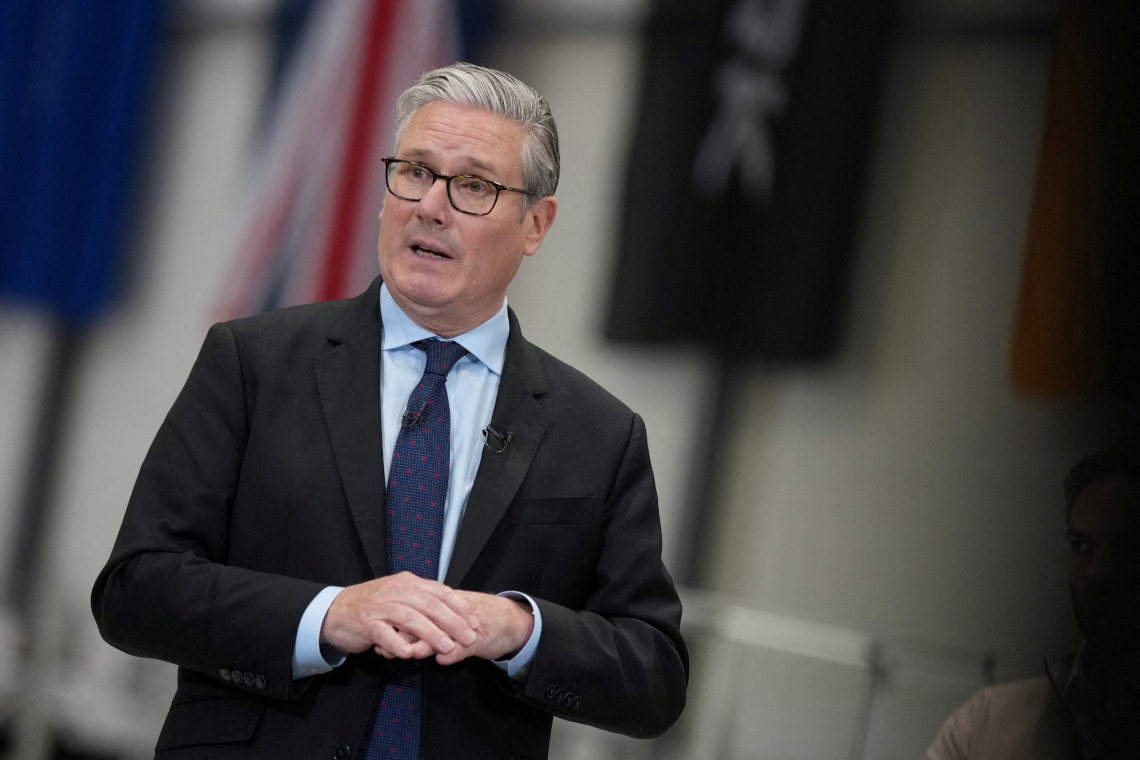
Prime Minister Keir Starmer is preparing to announce a ban on harmful online platforms for children under 16 in what would represent one of the most significant government interventions in digital regulation that Britain has undertaken since its Online Safety Act became law. The Times reported on Monday that Starmer had decided to proceed with the restrictions after consulting bereaved parents whose children were harmed through social media and studying the legislative model introduced by Australia in December, which imposed a similar age-based ban Social Media that has since attracted international attention as a policy template. A Downing Street source confirmed the direction of travel with pointed language about the prime minister's willingness to confront the technology sector directly: "The prime minister is not afraid about taking on the tech companies and their bosses to protect young people."
The policy, as it is being developed, draws a distinction that will be central to the government's public defence of its approach: a ban on platforms deemed harmful does not mean a blanket prohibition on all forms of social media for children under 16. Safer platforms, presumably those with stronger moderation frameworks, age verification systems, and design features that do not exploit addictive engagement mechanics, would remain accessible. That distinction matters enormously from a policy design perspective because it shifts the government's role from a blunt instrument that prohibits an entire category of technology to a regulatory authority that assesses individual platforms against defined safety standards, a more defensible position legally and politically but also a considerably more complex one to implement and enforce consistently.
A source close to the matter told reporters that a formal legislative ban was unlikely to be introduced this week, with more immediate government action expected to focus on preventing children from producing sexualised images online that can be used for sextortion. That sequencing reflects a pattern common to major technology policy initiatives: announce the ambition, build political momentum around the most acute harms, and use the public and parliamentary pressure generated to drive forward the broader legislative agenda over subsequent months. Starmer's speech on Monday was expected to frame the question as one of ensuring technology delivers positive change rather than exclusively a prohibitive regulatory announcement, a framing designed to position the government as pro-technology and pro-safety simultaneously rather than casting it as an adversary of the digital economy.
How the UK Got Here and Why the Existing Online Safety Law Has Not Been Enough
Britain's existing legislative framework for children's online safety, the Online Safety Act, already places legal obligations on social media companies to take measures protecting children from illegal and harmful content. The Act represented a significant policy achievement and was years in the making, surviving multiple parliamentary sessions, changes of government, and sustained lobbying from technology companies who argued that the drafts were unworkable, would chill free expression, or set precedents incompatible with the global nature of internet platforms. Its passage was widely hailed as a world-leading piece of legislation, and regulators including Ofcom were given significant new powers to enforce its provisions and levy substantial fines against non-compliant platforms.
The problem, as the Starmer government's renewed push demonstrates, is that existing law has not produced the outcomes in children's online experience that its proponents anticipated. Mental health organisations, child safety researchers, and bereaved parents have continued to present evidence that platforms whose algorithms are specifically designed to maximise engagement time and emotional response are producing measurable harm in children and young people, including anxiety, depression, eating disorders, self-harm, and in the most acute cases, suicide. Those harms have not diminished since the Online Safety Act came into force, and the government's decision to move toward a more explicit age-based restriction reflects an assessment that platform-level obligations enforced through regulatory pressure are not moving quickly enough to address a documented public health concern.
Earlier in 2025, Britain held a formal consultation on children's social media access that considered a range of policy instruments beyond an outright ban, including curfews on late-night platform access, time limits on daily use, and direct curbs on the addictive design features that keep children scrolling. That consultation process generated significant public engagement and gave the government a body of evidence and public opinion to draw on as it moved toward a more definitive policy position. Starmer's conversations with bereaved parents, which Downing Street confirmed as a factor in his thinking, reflect a political judgment that the human cost of inaction is now too visible and too well-documented to justify continuing with an approach that asks platforms to regulate themselves within a framework that has demonstrably not prevented harm to children.
What the Ban Would Mean in Practice, How Europe Is Moving in the Same Direction, and What Experts Are Warning
The international context of the UK's policy development is now clearly shaped by the Australian precedent, which Starmer is specifically cited as having studied before deciding to proceed. Australia's under-16 ban, introduced in December, required platforms to verify the ages of their users and prevent accounts from being created by or accessible to children below the threshold. The implementation challenges have been significant, including questions about verification technology, the use of VPNs to circumvent restrictions, and the displacement of younger users to platforms less well-known and therefore less subject to public scrutiny. Britain's policymakers will have examined those implementation questions carefully, and the government's apparent decision to distinguish between harmful and safer platforms suggests an attempt to learn from Australia's experience and build a more nuanced framework rather than replicating the model directly.
Across Europe, the policy momentum is moving clearly in the same direction, though at different speeds and with different specific provisions. France, Denmark, and Poland are actively considering tighter restrictions on children's social media access. Greece announced in April that it would ban access for children under 15 from January 2027, a slightly lower age threshold than both Australia and the UK are working toward. The convergence of multiple European governments toward age-based restrictions within the same policy window is significant from a regulatory standpoint: it creates pressure on the largest platforms to develop consistent age verification and content restriction systems across multiple jurisdictions rather than continuing to lobby for country-by-country exemptions. That collective regulatory pressure is arguably more consequential for platform behaviour than any single national ban.
Experts remain divided on how effective a total ban would actually be in practice, and young people themselves have expressed opposition to the restrictions. A group of young Londoners who spoke to Reuters recently said they were against the proposed curbs, a response that reflects both the generational dimension of the debate and the genuine complexity of designing a policy that aims to protect young people from harms that many of them do not experience as harms in their daily digital lives. The government's task is to construct a policy framework that is legally robust, technically enforceable, internationally coordinated, and capable of withstanding both the lobbying power of the technology sector and the political challenge of being seen to override the expressed preferences of the very age group it is designed to protect. None of those challenges is straightforward, and the sequencing of announcements over the coming weeks will give a clearer picture of how confidently Whitehall believes it has resolved them.