
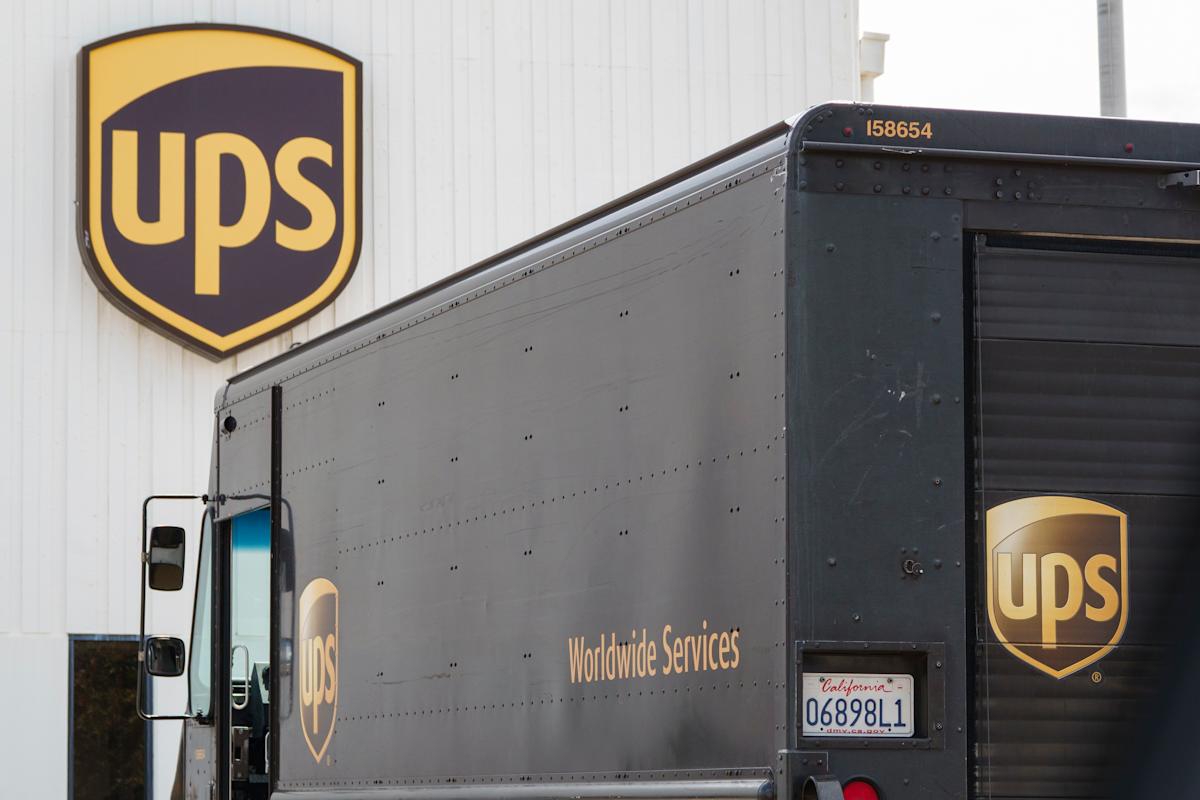
United Parcel Service has reached a formal and legally binding agreement with the International Brotherhood of Teamsters to limit its controversial Driver Choice Program, capping severance offers at no more than 7,500 drivers across the United States. The deal was announced publicly on Sunday after several weeks of mounting tension, legal challenges, and public pressure from union leadership that had pushed both sides back to the negotiating table. Under the specific terms of the settlement, drivers who voluntarily choose to leave the company through this program will receive a $150,000 early retirement package as financial compensation for ending their employment relationship with UPS Teamsters Agreement. The agreement brings a measure of resolution to one of the most closely watched and fiercely contested labor disputes in the American logistics and package delivery industry in recent years.
The timing of this settlement carries enormous significance for workers, shareholders, and the broader labor movement in the United States. UPS had already announced in January 2025 that it planned to eliminate up to 30,000 jobs and permanently close 24 distribution and delivery facilities across the country as part of a sweeping and aggressive restructuring initiative. That plan was largely driven by the company's strategic decision to reduce its dependence on low-margin package deliveries tied to Amazon, its single largest customer by volume. As UPS attempts to reposition itself for sustainable long-term profitability in a rapidly shifting e-commerce landscape, the human cost of that corporate strategy has become impossible for either side to ignore or minimize. For the Teamsters, protecting their members from being quietly eased out through unilateral company programs was not simply a bargaining position. It was a fundamental obligation written directly into the hard-won contract they had fought for years to negotiate and ratify.
The $150,000 early retirement offer included in the settlement gives participating drivers a financial cushion as they transition away from careers they have often dedicated ten, twenty, or even thirty years of their lives to building inside the UPS system. While that figure is substantial on the surface, it represents a single lump-sum payment measured against the full value of lost future wages, pension contributions, health benefits, and retirement security that long-tenured UPS employees depend on as the foundation of their financial lives. Labor economists and union advocates have consistently pointed out that voluntary buyout programs, regardless of how generously they are structured in the short term, tend to benefit the employer significantly more than the individual worker when examined over a longer time horizon. The company removes a higher-cost employee from its payroll permanently while the worker absorbs the full uncertainty of re-entering a labor market that may not offer equivalent compensation, stability, or benefits. Nevertheless, the agreement to formally cap participation at 7,500 drivers is being widely interpreted across the labor community as a meaningful and hard-fought win for the Teamsters at a moment when unions throughout the country are working urgently to hold the line against the accelerating pace of corporate restructuring and workforce reduction.
How the Teamsters Organized, Pushed Back and Ultimately Forced UPS Back to the Negotiating Table
The International Brotherhood of Teamsters did not accept the Driver Choice Program without a fight, and they did not wait long before mounting a serious and coordinated opposition to it. Union leadership made clear from the very moment UPS rolled out the initiative that the program had been launched without going through the proper collective bargaining process, which the union argued was a direct, deliberate, and legally actionable violation of the 2023 labor contract that both sides had signed following one of the most consequential labor negotiations in the delivery industry in decades. That contract was itself the product of extraordinarily intense negotiations, including the credible and well-publicized threat of a nationwide Teamsters strike that had placed enormous operational and reputational pressure on UPS at a time when the company could not afford a prolonged work stoppage. The agreement that ultimately emerged from those talks contained specific and carefully negotiated contractual language designed to prevent UPS from bypassing the union and cutting individual employment arrangements directly with its drivers outside of the collective bargaining framework.
The Teamsters argued forcefully and publicly that the Driver Choice Program was exactly the kind of individual arrangement those contract provisions had been specifically written to prohibit and block. By offering drivers personalized severance packages outside of the collectively negotiated framework, the union contended that UPS was deliberately and systematically undermining the very foundation and purpose of collective bargaining as a labor relations institution. Union officials moved quickly to go public with their concerns and their legal arguments, framing the dispute not only as a straightforward contract enforcement matter but as a broader and more fundamental test of whether the 2023 agreement carried any real weight when corporate priorities shifted and financial pressures mounted. That framing struck a powerful chord both within the union's own membership across the country and among the wider labor advocacy community that had been watching the situation unfold with growing concern.
Teamsters leadership pursued multiple simultaneous strategies to apply pressure on UPS. They filed formal labor grievances through established dispute resolution channels provided under the contract. They communicated directly and forcefully with rank-and-file members to ensure drivers understood their rights and were not inadvertently pressured into accepting offers that bypassed union protections. They engaged media organizations to keep public attention focused on the dispute and its implications for workers beyond just the UPS system. And they made clear through both private communications and public statements that the union was prepared to escalate its response significantly if UPS did not return to the negotiating table and address the union's core objections to the program's structure and implementation.
The decision that UPS ultimately made to cap the program at 7,500 drivers and attach a formal and specific $150,000 retirement figure to it effectively brought the entire arrangement back within a structured, negotiated, and collectively agreed boundary. UPS's willingness to reach this settlement and accept those parameters is widely understood to reflect the success of the union's sustained pressure campaign across legal, political, and public opinion channels. For Teamsters leadership, the outcome validates a strategy of treating contract enforcement as genuinely non-negotiable and demonstrates clearly that workers organized under strong, well-crafted collective bargaining agreements still retain meaningful power when they are willing to organize and exercise it. The resolution also sends a direct and unmistakable signal to other major employers in the logistics, retail, and transportation sectors who are watching this situation that collectively bargained labor contracts carry real legal and financial consequences when companies attempt to work around them through unilateral programs.
The Business Strategy and Financial Pressures Driving UPS's Largest Restructuring in Modern Company History
To fully understand why United Parcel Service is moving so aggressively and at such scale in 2025, it is essential to examine the underlying business logic and financial pressures driving this restructuring. For years, Amazon represented one of UPS's most strategically significant delivery customers, generating enormous shipment volume that helped justify and sustain the company's sprawling and capital-intensive network of drivers, delivery vehicles, package sorting equipment, and distribution facilities spread across the country. Those Amazon deliveries, however, were also notoriously low in profit margin per package. UPS was effectively moving millions of packages every day for a company that was simultaneously and systematically building out its own proprietary delivery and logistics infrastructure, creating a compounding long-term competitive threat while simultaneously demanding aggressive pricing that steadily squeezed UPS's financial returns on that business. That combination of thin margins, growing competitive risk, and the strategic trajectory of Amazon's own logistics ambitions made the relationship increasingly difficult to justify from a pure business performance standpoint.
The decision to pull back from that relationship in a significant and deliberate way and redirect the company's focus toward higher-margin delivery customers and service categories required a fundamental and wide-ranging rethinking of how large UPS's workforce and physical facility network actually needed to be in a post-Amazon volume environment. Eliminating up to 30,000 positions and permanently shutting 24 facilities is the direct and unavoidable operational consequence of that major strategic pivot away from volume-driven, margin-thin delivery toward a more selective, higher-value service model. UPS leadership has been consistent and clear in arguing publicly that a leaner, more efficient, and more strategically focused operation built around profitable delivery relationships and premium service tiers will position the company more competitively and more sustainably over the next decade. Investors and Wall Street analysts have broadly supported that strategic logic and the financial discipline it represents, even as tens of thousands of workers on the front lines of the company's operations have faced enormous and deeply personal uncertainty about what these sweeping changes mean for their jobs, their incomes, and their futures.
The Driver Choice Program was specifically designed and introduced to accelerate that necessary workforce reduction through voluntary employee exits rather than through mandatory mass layoffs, which carry significantly greater legal complexity, contractual constraints under the union agreement, and long-term reputational risk for a company that depends heavily on its public image and its relationships with both customers and employees. From a pure management and human resources perspective, offering workers a structured and financially meaningful voluntary off-ramp is operationally cleaner, legally simpler, and reputationally safer than navigating the full legal and contractual requirements of large-scale involuntary layoffs under a complex union contract. The Teamsters recognized that dynamic clearly and moved decisively to ensure that any such off-ramp ran through the collective bargaining process as required by the contract, not around it as UPS had initially attempted. The result is a negotiated agreement that gives UPS a legitimate and functional pathway to reduce its headcount at meaningful scale while simultaneously preserving the union's legally established and contractually guaranteed role as the legitimate representative voice of its members in any workforce transition of this magnitude and consequence.
What This Agreement Means for the Future of Labor Relations in the Logistics Industry
The settlement between UPS and the Teamsters carries implications that extend well beyond the immediate dispute and the specific terms of the Driver Choice Program. The logistics and package delivery industry is in the middle of a period of profound and accelerating transformation driven by shifting e-commerce patterns, the rise of gig economy delivery models, increasing automation, and the strategic moves of major players like Amazon, FedEx, and a growing field of regional and technology-driven competitors. In that environment, the pressure on established carriers like UPS to reduce costs, increase efficiency, and restructure their workforces is not going away. If anything, that pressure is likely to intensify in the years ahead as the competitive landscape continues to evolve rapidly.
The outcome of this dispute establishes an important precedent about how that restructuring pressure will be managed in the context of unionized workforces operating under collectively bargained agreements. The Teamsters have demonstrated through this confrontation that they are willing and capable of mounting an effective and multi-channel challenge when UPS or any other employer attempts to implement workforce changes outside of the negotiated framework. That demonstration matters enormously for how future disputes in this industry are likely to unfold and how management teams at major logistics companies will approach workforce decisions that affect union members going forward.
Workers across the UPS system and throughout the broader Teamsters membership are watching the outcomes of this agreement carefully and drawing their own conclusions about what it means for the strength and enforceability of the protections they have negotiated. Union leadership will need to continue communicating clearly and transparently with members about how the settlement works in practice, how the cap on the Driver Choice Program will be implemented and monitored, and what rights drivers retain as the broader restructuring continues to unfold across the company. Maintaining that trust and transparency with members will be essential for the union's long-term credibility and effectiveness as UPS continues to navigate one of the most consequential transformations in its corporate history.