
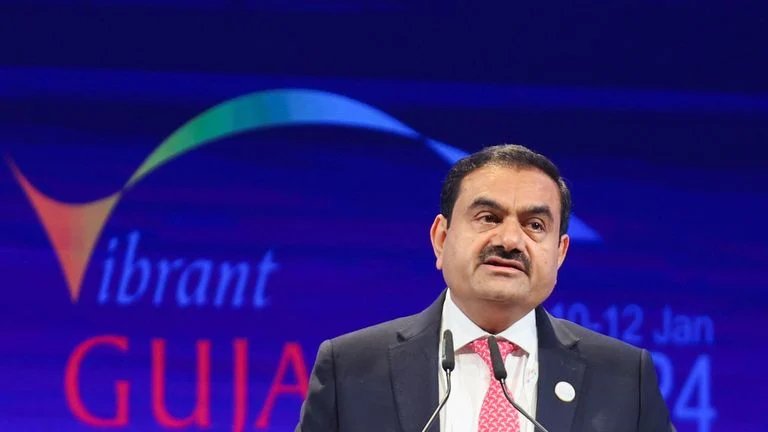
Gautam Adani US Justice Department charges dropped 2026 developments have accelerated after sources familiar with the matter told Reuters the U.S. Justice Department is close to dropping criminal fraud charges against the Indian billionaire who has promised to invest $10 billion in the American economy, while separately the Securities and Exchange Commission resolved a related civil fraud lawsuit through a settlement subject to court approval. The possible dismissal of criminal charges against Adani, who is a close ally of Indian Prime Minister Narendra Modi and is worth approximately $82 billion according to Forbes, comes after Adani's lawyer Robert Giuffra, who also serves as a personal attorney to President Donald Trump, presented Justice Department officials last month with a 100-page case arguing both that the charges lacked proper jurisdiction and that the evidence was insufficient to support prosecution. One source familiar with the matter said Giuffra told DOJ officials in that presentation that Adani could not make his $10 billion investment commitment while the criminal case was proceeding, though some prosecutors within the department made clear that the investment pledge would not affect their assessment of the case.
The case is the latest example of the Trump Justice Department seeking to abandon a high-profile criminal prosecution brought by federal prosecutors during the Biden administration, a pattern that has attracted significant attention from legal observers tracking whether the current DOJ is applying consistent standards to the decision to drop inherited cases. The potential dismissal of Adani's charges carries particular sensitivity given the explicit connection between Adani's lawyer's dual role as a Trump personal attorney and the argument his legal team made linking the investment pledge to the case's continuation, a circumstance that creates at minimum an appearance concern about whether the dismissal decision is being driven by the merits of the legal case or by the economic and diplomatic significance of an $82 billion Indian billionaire's promised American investment. The Justice Department did not immediately respond to Reuters' request for comment, and the deal was not yet completed as of Thursday's reporting.
The SEC settlement reached on Thursday, subject to court approval, resolves the securities regulator's civil fraud lawsuit with Adani and his nephew sharing the cost of an approximately $15 million resolution without Adani admitting or denying any wrongdoing, a standard SEC settlement structure that resolves civil liability while preserving the defendant's ability to maintain the denials of wrongdoing that Adani Group has consistently offered since the charges were first announced. The Adani Group would also pay a $275 million settlement with the U.S. Treasury's Office of Foreign Assets Control over a separate investigation involving the shipping of Iranian gas, a significant financial penalty that addresses a distinct regulatory matter and that together with the SEC resolution creates a comprehensive financial settlement of the civil and regulatory dimensions of Adani's U.S. legal exposure even before the criminal case's potential dismissal is finalised.
How the Adani Charges Were Filed and What They Alleged
Federal prosecutors in Brooklyn announced charges against Gautam Adani in November 2024, alleging that he had agreed to pay approximately $265 million in bribes to Indian government officials to secure approval for his company to develop India's largest solar power plant, a contract whose value to the Adani Group justified the alleged corrupt payments in the prosecutors' theory of the case. The solar power project at the centre of the allegations was a flagship renewable energy development that Adani Group presented as a major contribution to India's clean energy transition goals, making the alleged corruption scheme particularly striking because it involved a project that was publicly positioned as serving India's public interest through private sector investment in sustainable energy infrastructure. The scale of the alleged bribery, $265 million directed toward Indian government officials, placed the case among the more significant foreign corruption prosecutions that U.S. authorities had pursued under the Foreign Corrupt Practices Act and related statutes.
The financing dimension of the charges alleged that Adani and his co-conspirators raised more than $3 billion in loans and bonds by hiding their corruption from lenders and investors, constituting the securities and financial fraud elements of the prosecution that gave U.S. courts jurisdiction over conduct that occurred primarily in India. U.S. prosecutors have consistently asserted jurisdiction over foreign corruption when it involves U.S. capital markets, U.S. currency, or the use of U.S. financial infrastructure, and the allegation that Adani's companies raised billions in U.S. capital markets while concealing the bribery scheme from investors provided the jurisdictional hook for the Brooklyn prosecution. Adani Group immediately called the allegations baseless and has maintained that position throughout the legal proceedings, framing the charges as a misunderstanding of legitimate business conduct in India's energy sector regulatory environment.
The SEC's parallel civil fraud lawsuit addressed the securities law dimensions of the same alleged conduct, pursuing the civil regulatory remedies that the Commission deploys against market participants who allegedly raise capital from investors while withholding material information about the legal and regulatory risks facing the investment. Civil and criminal prosecutions on related allegations by the DOJ and SEC simultaneously are a standard feature of major U.S. securities fraud enforcement actions, providing both the criminal accountability mechanism that the Justice Department manages and the civil investor protection mechanism that the SEC administers, with each agency pursuing its own legal standards and remedies independently while sharing factual investigative work. The Thursday settlement of the SEC case for $15 million shared between Adani and his nephew represents a civil resolution at a level consistent with the SEC's assessment of the securities law violation's scope and the defendants' ability and willingness to pay.
Adani's Investment Pledge and Its Political Context
Gautam Adani's public promise to invest $10 billion in the United States and create 15,000 jobs, made after Trump's 2024 election victory, was explicitly positioned as a contribution to Trump's economic agenda and a demonstration of Indian business's commitment to the U.S.-India economic relationship that the Trump administration has been cultivating. The timing and framing of the investment pledge, coming shortly after Trump's election and before the new administration took office, reflected a sophisticated understanding of how public commitments to American job creation and investment resonate with the incoming administration's economic priorities and could potentially affect the political environment in which regulatory and prosecutorial decisions about Indian business figures would be made. Adani had made similar investment commitments during Trump's first term, establishing a pattern of aligning his company's announced U.S. investment plans with the political preferences of Republican administrations.
Giuffra's dual role as Adani's defence lawyer and Trump's personal attorney creates the appearance concern that several legal observers have noted in Reuters' reporting, because the same individual who has personal access to and a professional relationship with the president is making representations to the president's Justice Department about a client's investment pledge as part of an argument for dropping a criminal prosecution. Whether that dual role influenced the DOJ's decision-making process or merely creates the appearance of potential influence is precisely what cannot be determined from the outside, and the Justice Department's silence on the matter leaves the question unresolved. Giuffra's presentation devoted the bulk of its 100 pages to the legal arguments about jurisdiction and evidence rather than to the economic arguments about the investment pledge, according to the source who spoke to Reuters, but the presentation included both dimensions in a single document presented to DOJ officials simultaneously.
The Near-Dismissal, Its Legal Basis, and What Comes Next
Giuffra's legal arguments for dismissal focused on two primary grounds: the absence of proper jurisdiction for a U.S. prosecution of conduct that occurred primarily in India involving Indian government officials and Indian companies, and the insufficiency of the evidence to sustain the charges. The jurisdiction argument challenges the legal basis for U.S. courts to adjudicate conduct whose primary actors, victims, and locations are foreign, even when some elements of the financing or market activity that accompanied the alleged conduct touched U.S. markets or financial institutions. This is a genuine and sophisticated legal argument that courts have grappled with in multiple major cross-border corruption prosecutions, and its strength depends on the specific connections between the alleged conduct and U.S. jurisdictional bases that the prosecutors identified in the indictment.
The evidence insufficiency argument, which Giuffra also advanced in parallel SEC civil case filings, challenges the factual foundation of the prosecution's theory and the quality of the evidence that prosecutors assembled to support it. Evidence challenges in complex multi-jurisdictional corruption cases are difficult to assess from outside the prosecution's files, because the strength of cooperating witness testimony, documentary evidence from financial records, and the interpretation of communications between alleged co-conspirators are matters whose evaluation requires access to the full investigative record that only the parties and the court possess. Giuffra's willingness to make the evidence challenge publicly in the SEC filing, as well as privately to DOJ officials, suggests confidence in the argument's merits rather than merely tactical positioning, though the source who spoke to Reuters noted some prosecutors were unconvinced by the overall case for dismissal.
The $275 million OFAC settlement over Adani Group's Iranian gas shipping activities represents the most significant remaining financial consequence of the overall legal situation regardless of how the criminal fraud case resolves, both because of its absolute size and because it addresses a distinct regulatory matter involving U.S. sanctions compliance rather than the bribery and securities fraud allegations at the centre of the criminal case. An OFAC settlement of this magnitude indicates that the U.S. Treasury's investigation found substantial evidence of sanctions violations in Adani Group's shipping activities, and the company's agreement to pay the penalty reflects a judgement that settlement was preferable to continued litigation over sanctions compliance questions whose resolution in court could have produced even larger penalties. The combination of the SEC resolution and the OFAC settlement creates a comprehensive financial accountability framework for Adani's U.S. legal exposure even if the criminal case is ultimately dismissed.