
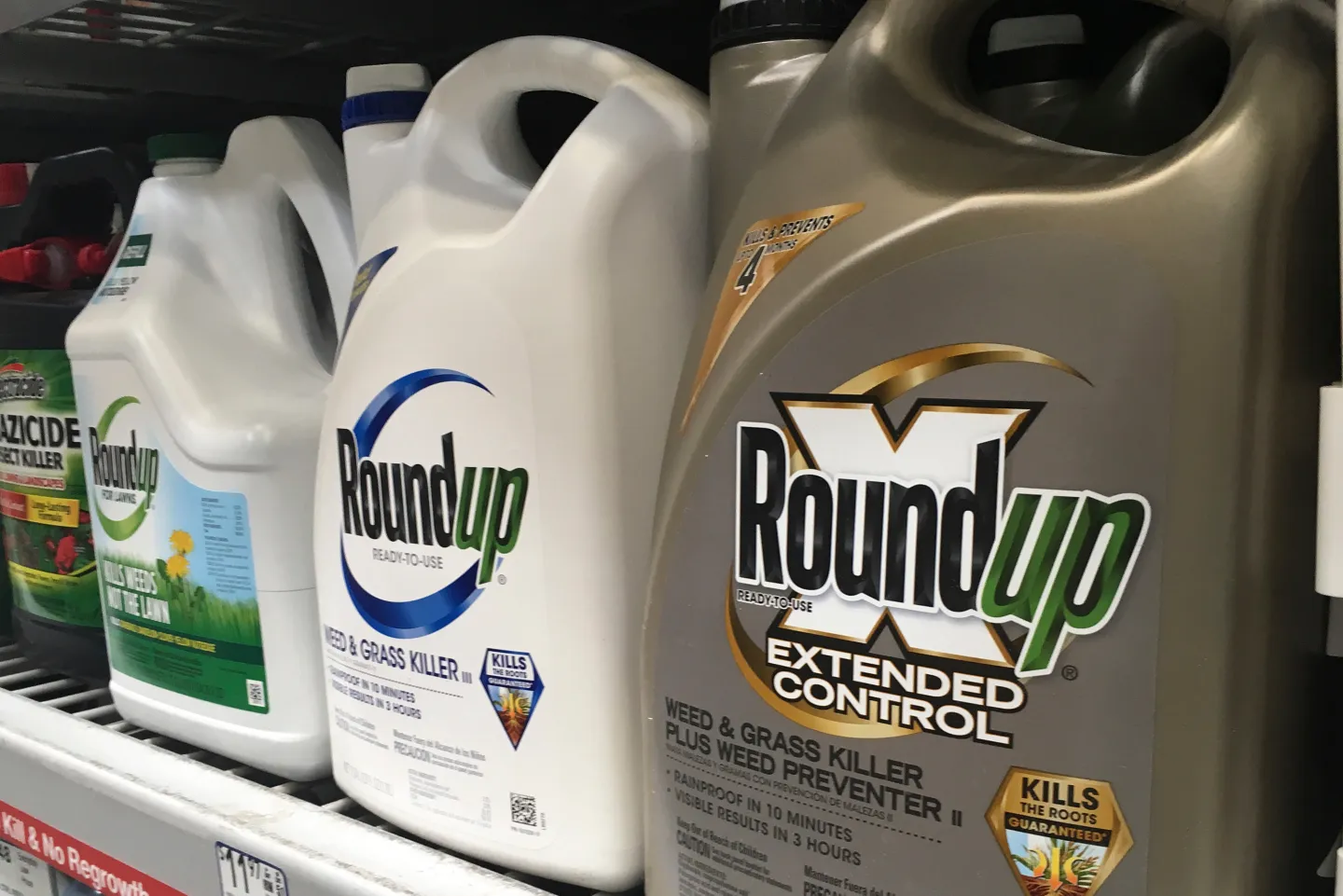
Bayer Roundup settlement class action lawyers fee 2026 request has been filed in Missouri state court, with six law firms seeking $675 million in attorneys' fees for their role in negotiating the $7.25 billion proposal to settle current and future lawsuits alleging that Bayer's Roundup weedkiller causes cancer. The fee request, submitted in a Thursday court filing, characterises the $675 million as modest and deliberately restrained given that courts frequently approve attorneys' fees of 33 percent or more of a settlement's total value, a standard that would produce a fee of approximately $2.4 billion on a $7.25 billion settlement. At less than 10 percent of the total settlement value, the six firms are seeking compensation that Christine Bartholomew, a professor at the University at Buffalo School of Law who studies class action fees, confirmed is within the range that courts have approved for very large settlements. Judge Timothy Boyer granted preliminary approval of the overall settlement in March and is scheduled to consider final approval in early July, creating the timeline within which both the fee request and the broader settlement's viability will be definitively resolved.
The $7.25 billion settlement, proposed in February through a new class action filed in Missouri state court, seeks to resolve nearly all the approximately 65,000 Roundup lawsuits currently pending in U.S. state and federal courts from plaintiffs who claim they developed non-Hodgkin lymphoma and other forms of cancer after using the glyphosate-based weedkiller at home or on the job. The settlement is structured to cover both current plaintiffs with existing claims and future claimants who have used Roundup and may develop cancer over time, a prospective coverage dimension that the class action lawyers argue guarantees recovery to thousands of people who would otherwise face the uncertainty and delay of individual litigation. Bayer, which acquired Roundup and the associated litigation when it purchased Monsanto in 2018 for $63 billion, has consistently maintained that decades of studies have shown glyphosate is safe and does not cause cancer, while simultaneously pursuing settlement to avoid the financial and operational uncertainty that 65,000 pending lawsuits represent for its business and its Monsanto unit's long-term financial stability.
The six law firms seeking the $675 million fee are The Holland Law Firm, Ketchmark and McCreight, Seeger Weiss, Motley Rice, Williams Hart and Boundas, and Waters Kraus Paul and Siegel. The fee request did not specify how the $675 million would be divided among the firms or the individual lawyers who worked on the deal, with the filing indicating that more details would be disclosed in future court documents. The settlement faces several remaining hurdles before the July approval hearing, including the June 4 opt-out deadline that will reveal what percentage of current plaintiffs choose to participate in the class action rather than pursuing their individual claims outside the settlement framework, and the opposition from some law firms representing clients in federal court who have questioned both the settlement's terms and the Missouri state court's authority to bind future claimants.
Roundup Litigation History and How the $7.25 Billion Settlement Was Reached
Roundup's active ingredient glyphosate became one of the most consequential agricultural chemicals in modern farming history following its introduction by Monsanto in the 1970s, growing into the world's most widely used herbicide through a combination of its effectiveness in controlling weeds, its relative safety profile compared to earlier herbicide generations, and the development of glyphosate-resistant genetically modified crops that allowed farmers to spray their fields without damaging their crops. The herbicide's dominance in agricultural and consumer markets generated extraordinary revenue for Monsanto for decades before the cancer liability questions that now threaten to define its commercial legacy began to accumulate through epidemiological studies, the 2015 classification by the World Health Organisation's International Agency for Research on Cancer of glyphosate as probably carcinogenic to humans, and the first major jury verdicts against Monsanto in 2018 and 2019.
Bayer's acquisition of Monsanto in 2018 for $63 billion was a strategic bet on the agricultural sciences business that immediately became complicated when the first major Roundup cancer jury verdicts arrived just months after the acquisition closed, creating a liability exposure that Bayer had underestimated and that has continued to grow through the subsequent years of litigation. The German pharmaceutical and agricultural science company inherited not just Monsanto's profitable herbicide business but its accumulating legal exposure to cancer claims whose scale and financial unpredictability transformed what Bayer's management had presented to shareholders as a strategic growth acquisition into one of the most expensive acquisition-related legal crises in corporate history. The approximately $10 billion that Bayer paid in 2020 to settle most of the Roundup lawsuits then pending was supposed to provide the resolution that would allow the company to move forward without the litigation overhang dominating its financial planning, but the continued filing of new claims ensured that the 2020 settlement was a chapter rather than a conclusion.
The June 2020 settlement's inadequacy as a final resolution of Roundup liability reflected the specific challenge of settling mass tort litigation that involves a latency period between exposure and disease onset, meaning new claimants continue to be diagnosed with cancer years or decades after using the product and would not have been included in a settlement that resolved claims filed as of a specific date. This structural feature of Roundup litigation, that the universe of potential claimants is not fixed but continues to grow as people who were exposed years ago are diagnosed with the cancers that the plaintiffs allege Roundup causes, is the specific reason that the current $7.25 billion settlement's design to cover both current and future claimants represents a structural improvement over the 2020 approach that left the future liability question unresolved.
The Federal Court Opposition and the Jurisdictional Question
The judge overseeing consolidated Roundup cases in federal court has criticised the settlement, specifically questioning whether a Missouri state court has the legal authority to impose the settlement's terms on people who do not currently have cancer but might wish to sue in the future. This jurisdictional concern addresses a genuine constitutional question about the reach of state court class action proceedings over future claimants who are not yet parties to any litigation and who may not be residents of Missouri or have any particular connection to the Missouri state court system. Federal due process requirements for class action settlements require that all class members have adequate notice and the opportunity to opt out, and the question of whether those requirements can be satisfied for future claimants who by definition cannot know they will want to sue is the specific legal issue that the federal court's criticism identifies.
The opposition from law firms representing clients in federal court reflects the competing interests of attorneys who have been building and managing Roundup cases through the federal multidistrict litigation process and who see the Missouri state court class action settlement as potentially preempting their clients' right to individual federal court trials whose jury verdicts have historically produced larger awards than class action settlements. The law firms opposing the settlement have financial interests aligned with their opposition, because successful individual federal court verdicts generate contingency fees based on the individual verdict amount, while class action settlement participation produces fees based on the settlement allocation, which may be lower than a successful individual verdict. The framing of the opposition in terms of their clients' procedural rights and the state court's jurisdictional limitations is accurate and legitimate, but it coincides with the opposing firms' own financial interests in a way that warrants noting.
The June Opt-Out Deadline and What July's Hearing Will Determine
The settlement's dual coverage of current plaintiffs with existing claims and future claimants who have used Roundup and may develop cancer represents its most distinctive and legally significant structural feature, addressing the latency problem that made the 2020 settlement inadequate by attempting to fix the total liability in a single comprehensive resolution. Current plaintiffs who participate in the settlement receive guaranteed recovery rather than the uncertainty of individual litigation, which despite producing some extraordinary jury verdicts in early cases has also produced outcomes ranging from full plaintiff victories to defence verdicts, with the additional burden of years of litigation delay before any payment is received. The class action lawyers argue that guaranteed settlement recovery, even at levels below the highest possible individual jury verdicts, represents better expected value for most claimants than the litigation alternative given the time, expense, and uncertainty of individual trials.
The June 4 opt-out deadline will provide the first concrete indication of whether the settlement has achieved the near-universal plaintiff buy-in that Bayer has said it needs before proceeding with the deal. A settlement of this type requires broad participation to fulfil its function of resolving the litigation comprehensively rather than simply removing some claimants while others continue to litigate, and if a substantial percentage of current plaintiffs opt out to pursue individual claims, the settlement's value to Bayer as a comprehensive resolution diminishes while its cost remains largely the same. Many law firms with large numbers of Roundup clients have signalled support for the settlement, providing a channel through which their clients are likely to participate, but the opposition from other firms means that some portion of the current plaintiff population will be advised to opt out and continue with individual litigation.
The July final approval hearing before Judge Boyer will determine whether the settlement survives the legal challenges that have been raised about the Missouri state court's jurisdictional authority over future claimants, the adequacy of the notice process for those future claimants, and the overall fairness of the settlement terms for the class. The $675 million attorney fee request will be evaluated as part of the overall settlement approval process, with the judge required to find that the fees are reasonable relative to the result achieved, the time and effort invested, and the standards that courts apply to class action fee requests at this settlement scale. Bartholomew's academic assessment that less than 10 percent of total settlement value is within the approved range for very large settlements provides the legal context within which Judge Boyer will evaluate the fee request, though the specific amounts involved and the complexity of the multi-firm representation will require detailed scrutiny of the work performed and its value relative to the outcome achieved.