
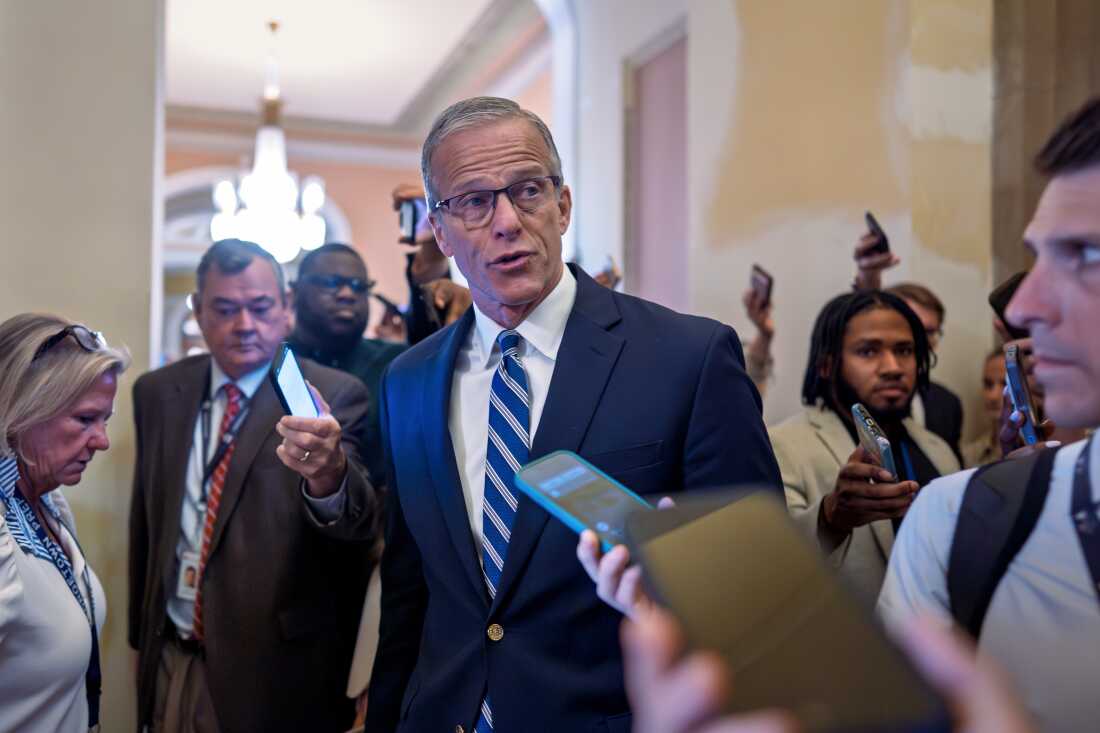
US Senate ICE Border Patrol immigration funding bill 2026 has passed by 52 votes to 47 in the early hours of Friday morning, providing the Department of Homeland Security with an additional $70 billion for immigration enforcement that will fund Trump's controversial migrant deportation crackdown over the next three years and augment approximately $100 billion in unspent DHS law enforcement money already enacted by the Republican-controlled Congress last year. The legislation, which received no Democratic support and lost one Republican vote, now heads to the House of Representatives where Republican leaders say it is not expected to be taken up before next week, extending the legislative process for a funding package whose primary purpose is to sustain the aggressive deportation operations that Immigration and Customs Enforcement and Border Patrol have been conducting across the United States throughout Trump's second term. The Senate passage represents a significant policy victory for the administration's immigration enforcement agenda, but the hours of procedural drama surrounding the vote, including a temporary shutdown of proceedings when Republican Senator Susan Collins joined Democrats on a motion related to the anti-weaponization fund and the subsequent exposure of significant Republican unease about a controversial fund that critics call a slush fund for Trump's political allies, documented the internal Republican tensions that are building five months before the November midterm elections.
The anti-weaponization fund controversy that overshadowed much of Thursday's lengthy debate and vote-a-rama amendment session is a policy fight within the policy fight, with the immigration funding bill serving as the legislative vehicle around which a broader and more politically toxic dispute about whether Trump can use federal taxpayer dollars to compensate political allies who claim government mistreatment has been attached. Senate Democratic Leader Chuck Schumer's motion to kill the fund, which failed 50 to 49 but attracted votes from Collins, Jon Husted, and Dan Sullivan, three Republican senators facing competitive reelection races in November, exposed the specific electoral vulnerability that the fund creates for Republican incumbents in a political environment where Trump's approval rating is declining even among Republican voters. All three senators who voted with Schumer against the fund are running in competitive races at a moment when their party's national brand is under pressure from the Iran war's economic consequences and a series of Trump administration decisions, including the White House ballroom proposal and the Blanche attorney general nomination, that have generated criticism from within the party.
Senator Thom Tillis's warning that failing to permanently eliminate the fund would place an unacceptable burden on congressional Republicans up for reelection in November reflects the specific political calculation that the most electorally exposed Republicans are making about which Trump administration priorities they can afford to defend and which ones represent liabilities that their campaign calculations cannot absorb. Tillis offered his own amendment to reallocate the fund's resources to fraud enforcement operations rather than simply eliminating it, a compromise approach that failed 84 to 15 while garnering 12 Republican votes and documenting the breadth of Republican concern about the fund even among those unwilling to simply vote for its elimination. Republican Senator Bill Cassidy, who lost his primary last month to two Trump-aligned challengers and therefore has less direct electoral exposure than his still-campaigning colleagues, joined Democratic Senator Cory Booker in a friend-of-the-court brief arguing the fund presents an immediate and dire threat to the constitutional order and the authority of Congress.
How the Immigration Enforcement Funding Package Developed and What the Anti-Weaponization Fund Represents
The $70 billion additional funding package that the Senate passed must be understood in the context of the approximately $100 billion in unspent DHS law enforcement funds that Republicans enacted in the previous legislative cycle, because the existence of that unspent balance is the specific fact that Democrats deployed throughout Thursday's debate to challenge the Republican accusation that Democrats were defunding ICE and Border Patrol. An agency with $100 billion in unspent funds from existing appropriations that is simultaneously requesting an additional $70 billion is either planning an extraordinary scale-up of operations that would require both tranches to execute, or building a financial reserve whose purpose is to sustain high-intensity enforcement operations beyond the immediate period that existing unspent funds would cover, or some combination of both. The Republican characterisation of Democratic opposition as defunding is itself a politically motivated framing whose relationship to the actual fiscal reality of $100 billion in unspent funds invites scrutiny, but it is the framing that has been most politically effective in the Republican base politics that the immigration enforcement debate serves.
Trump's deportation crackdown has been one of the most aggressive domestic enforcement operations in American immigration history, involving not only increased deportations of individuals with criminal records but broad enforcement sweeps targeting the undocumented population regardless of criminal history, the use of military and law enforcement resources that previous administrations had not deployed in domestic immigration enforcement, and the construction of detention facilities at scales that require the kind of sustained multi-year funding commitment that the three-year funding package is designed to provide. The policy stakes of the $70 billion package extend beyond the immediate operational funding to the institutional capacity building that the scale of investment enables, because building detention facilities, hiring and training ICE agents, establishing the logistical infrastructure for large-scale deportation operations, and maintaining the legal processing capacity that deportation requires takes years of sustained investment whose interruption from funding uncertainty creates operational setbacks that are difficult to reverse quickly.
The anti-weaponization fund that has become the most politically contentious element of the broader policy environment surrounding the immigration bill's passage represents a qualitatively different kind of policy controversy from the immigration enforcement funding itself, because it involves the potential use of federal taxpayer funds to compensate individuals who claim the government targeted them for political reasons, a mechanism whose application to Trump's political allies creates the specific constitutional concern that Republican senators Cassidy and Tillis have articulated and that federal judge Leonie Brinkema has already moved to block. The fund's creation, its subsequent White House and Justice Department pause, and Trump's Wednesday statement that he loves it and thinks it is important, combined with his refusal to confirm it had actually been terminated, create the specific policy uncertainty that Republican incumbents find most politically difficult to manage, because it requires them to either defend an unpopular fund or publicly oppose a president whose base loyalty they need for their own electoral survival.
The Vote-a-Rama Process and How It Exposed Republican Divisions
The vote-a-rama session that preceded the final immigration funding vote, a Senate procedural mechanism that allows unlimited amendment votes in a compressed time period, served as the legislative laboratory in which the Republican caucus's internal divisions over the anti-weaponization fund, the White House ballroom, and other Trump administration priorities were documented through recorded votes that will be available to November election campaign opponents and supporters alike. The Democratic strategy of forcing amendment votes on unpopular Trump administration initiatives, whether the $1 billion White House ballroom and security upgrades or the anti-weaponization fund, was designed precisely to create these recorded votes whose political consequences extend beyond the immediate legislative outcome to the campaign advertising that competitive race candidates will face in the fall. Collins, Husted, and Sullivan's vote with Schumer on the anti-weaponization fund motion, even as the motion ultimately failed, creates the specific bipartisan accountability moment that their campaigns can reference while the 12 Republicans who supported the Tillis amendment to reallocate rather than eliminate the fund creates a separate record of Republican unease that does not require a cross-party vote to document.
Cassidy's decision to join the friend-of-the-court brief with Democratic Senator Booker arguing the anti-weaponization fund presents an immediate and dire threat to the constitutional order is the most directly constitutionally principled Republican action in the entire sequence, framing the objection to the fund not as electoral calculation but as a fundamental concern about separation of powers and congressional authority over appropriations. Cassidy's primary loss last month to Trump-aligned challengers removes the electoral calculation that might otherwise complicate a Republican senator's willingness to take this step, creating the specific political freedom that losing a primary can paradoxically provide: the freedom to act on constitutional principle without the electoral consequences that would otherwise attach to opposing the president whose base you need. His proposal of an amendment to nullify the IRS agreement protecting Trump from tax audits, combined with the anti-weaponization fund court brief, documents the most sustained pattern of individual Republican resistance to specific Trump administration policies in the current Senate.
House Consideration, Electoral Stakes, and the Fund's Constitutional Status
Republican House leaders' indication that the immigration funding bill is not expected to be taken up before next week establishes the legislative timeline for the bill's final consideration, with the House's reception of the Senate-passed measure requiring the lower chamber's leadership to decide whether to bring the bill to the floor as passed, seek a conference to reconcile differences with any House version, or attach additional provisions that would send it back to the Senate. The House's own Republican caucus dynamics around the anti-weaponization fund will be the most politically sensitive element of the bill's House consideration, because House Republicans facing their own November competitive races will be watching the Senate's vote record and the public response to it when calculating their own positions on any House floor votes that touch the fund question. A House that passes the immigration funding with the anti-weaponization fund provisions intact gives its members the same electoral liability that Senate Republicans have been trying to manage, while a House that strips the fund provisions before passage creates a conference negotiation with the Senate over whether to restore them.
The fund's current status, with the White House and Justice Department having paused it following federal judge Brinkema's block and Trump's ambiguous Wednesday statement about whether it has been terminated, creates the specific policy uncertainty that makes the legislative attempts to permanently eliminate it both more urgent and more complicated. A fund that is currently blocked by a federal court order and whose administration has nominally paused is not the same as a fund that has been permanently eliminated through legislation, and Republican senators who are satisfied with the current block may be less motivated to take the politically visible step of a recorded vote for permanent elimination. Schumer's characterisation of the situation as providing nothing more than a promise from Trump's personal fixer rather than genuine accountability captures the Democratic argument that informal administrative pauses are insufficient institutional protections against a fund whose legal structure remains intact and whose creator has publicly expressed continued enthusiasm for it.
The November midterm elections that will determine whether Republicans retain control of Congress provide the specific political timeline within which all of these policy and procedural calculations are being made, with both the immigration enforcement funding and the anti-weaponization fund controversy serving as electoral tests of whether the Republican base's enthusiasm for aggressive immigration enforcement and Trump administration loyalty programs is stronger than the competitive district swing voters' concern about constitutional overreach and fiscal accountability. Collins, Husted, and Sullivan's reading of their competitive race environments as requiring demonstrated distance from the anti-weaponization fund is one data point in that electoral calculation, while the 47 Republican votes for the final immigration bill and the 12 Republican votes for the Tillis amendment provide the measure of where the caucus's centre of gravity currently sits on the balance between base loyalty and competitive district concern.