
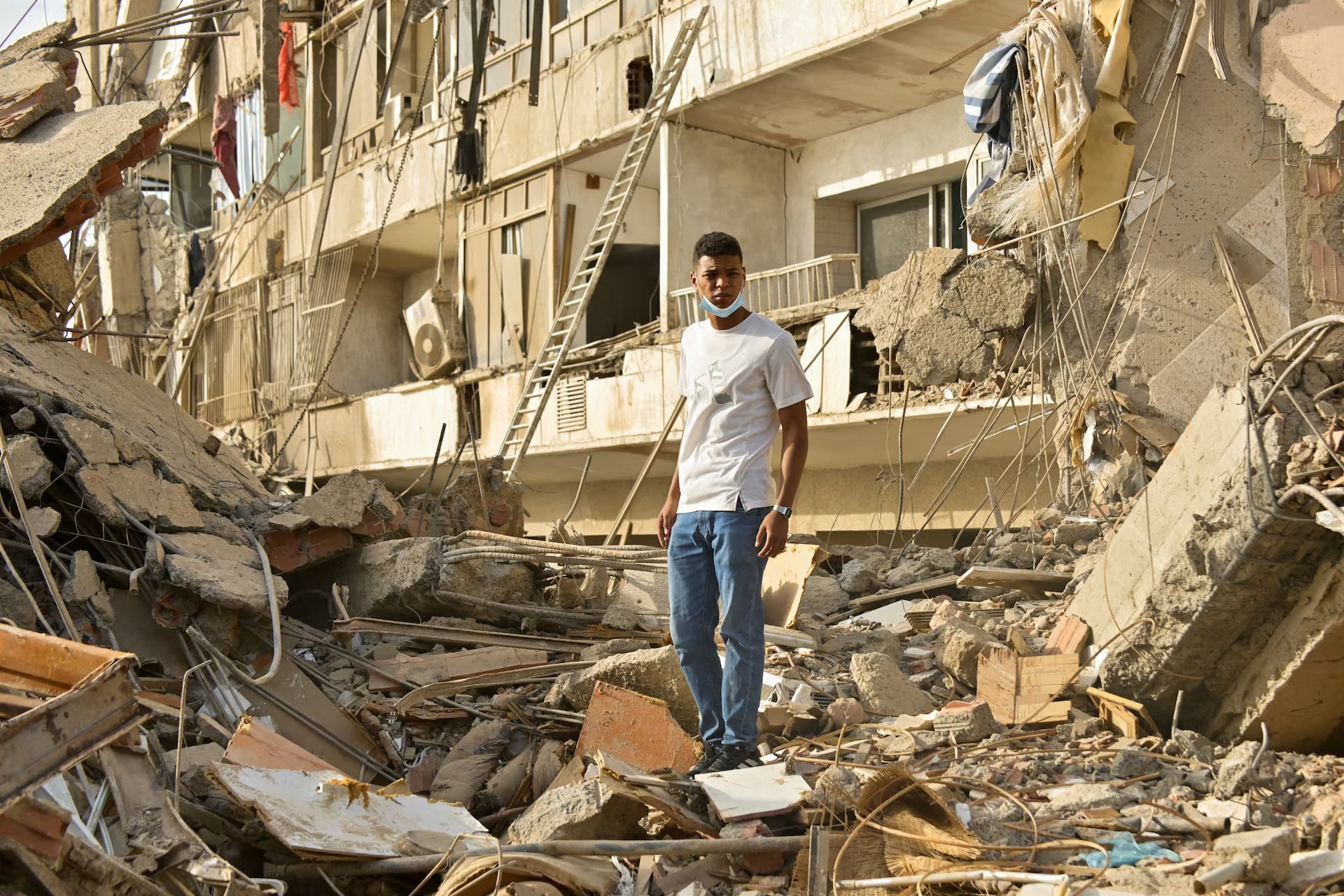
Venezuela earthquake 235 dead Caracas La Guaira rescue 2026 death toll has climbed to at least 235 confirmed fatalities with at least 4,300 injured after Wednesday's devastating double earthquake sequence, with National Assembly president Jorge Rodriguez reporting the rising toll on Thursday as rescue teams work through rubble in Caracas and the nearby coastal city of La Guaira where people can still be heard calling for help from beneath the debris of collapsed buildings. The United States has pledged $150 million in aid with Secretary of State Marco Rubio saying the U.S. was immediately deploying search and rescue teams, medical resources, and humanitarian assistance, while U.S. military transport ships and aircraft are being sent to support rapid relief operations in what has become the first major test of the new U.S.-Venezuela relationship established after Trump ordered the capture of Nicolas Maduro in January. The death toll is expected to rise significantly, with the USGS estimating a 42 percent probability that deaths will exceed 10,000 and a 33 percent probability of more than 100,000 fatalities based on previous similar earthquakes, the population size near the epicentre, building quality assessment, and the specific timing of the event during a national holiday when more people were at home than on a normal weekday.
The scale of physical destruction documented by Thursday morning is substantial: 250 buildings damaged or lost mostly in La Guaira, a 10-storey hotel in La Guaira verified by BBC footage as reduced to rubble, another multi-storey building collapsed in Tucacas on the coast 250 kilometres from Caracas, the Maiquetia international airport closed due to serious damage with video showing dust and debris falling from the terminal ceiling, and the Altamira and Los Palos Grandes neighbourhoods of Caracas identified by Interior Minister Cabello as the worst-hit areas. Chacao Mayor Gustavo Duque stood outside one ruined building on Thursday to confirm 11 deaths at that single site with 23 rescues completed, telling media his team was trying to clear rubble so specialists could reach people who were hopefully still alive. At least 30 aftershocks have been recorded since the two main events, according to Rodriguez on state television, creating the ongoing structural risk that makes damaged buildings dangerous and prevents residents from returning to their homes.
Medical student Juan Ortiz captured the human cost precisely in his BBC statement, saying one close friend had been confirmed dead, another was believed to be under rubble, and around 20 people he knew in the coastal area were missing. His description of being in shock, confusion, and frustrated that he cannot help gives voice to the specific experience of the thousands of Venezuelans near the disaster whose personal networks have been devastated but who lack the equipment, access, or institutional role to participate in rescue operations. BBC Mundo's Nicole Kolster, who lives on the seventh floor of an apartment building in Los Palos Grandes, described the second earthquake as the strongest she had ever felt, adding that it was so strong she thought the building was going to fall on top of her, providing the ground-level intensity assessment from one of the worst-affected Caracas neighbourhoods.
How Venezuela's Double Shallow Earthquake Created Maximum Destruction
The technical specifics of Wednesday's earthquake sequence create the precise explanation for why the destruction exceeded what the magnitude numbers alone would suggest to people unfamiliar with seismic engineering, with the first 7.2 magnitude quake centred 20.3 kilometres below the surface followed seconds later by the 7.5 at only 10 kilometres depth, both classified as shallow earthquakes whose proximity to the surface amplifies the energy delivered to buildings and infrastructure compared to deeper events of equivalent magnitude. When seismic energy travels through less rock before reaching buildings, more of the original energy remains concentrated at the surface rather than dissipating through the Earth's crust, producing the intense ground shaking that Kolster described and that the Altamira and Los Palos Grandes building collapses document. The sequence's one-two character, delivering the stronger and shallower 7.5 in the same thirty-second window as the initial 7.2, meant that buildings whose structural integrity had been compromised by the first shock were then hit by an even more powerful event before any stabilisation had occurred.
Venezuela's building stock vulnerability is the second critical factor in the destruction's scale, combining the pre-existing condition of structures maintained through years of economic crisis with the specific construction practices of a country where the 1967 earthquake's lessons about seismic building standards were implemented inconsistently across the decades of oil boom and bust that followed. The Altamira and Los Palos Grandes neighbourhoods being among the worst-hit in both 1967 and 2026 suggests a structural geography in which the same geological and soil conditions that amplify ground shaking in those specific Caracas areas have repeatedly produced the worst building damage when major earthquakes hit. Caracas-based journalist Luis Hernandez told BBC Newsday that assessing the true damage scale was difficult due to power cuts and internet failures, and that the economic crisis made independent assessment particularly challenging, connecting the pre-existing crisis to the information blackout that was complicating rescue coordination.
The national holiday timing when the 7.2 struck at 18:04 local time placed the maximum proportion of Caracas's population in residential buildings rather than workplaces, creating the worst-case exposure scenario for residential building stock whose earthquake vulnerability translates into casualties rather than empty-building property losses. Schools, offices, and commercial buildings that would have been occupied on a normal weekday were empty, but homes where families had gathered for the holiday were full, meaning the building collapses' human cost reflects residential density at its highest rather than the lower occupancy that a midday workday quake in the same locations would have produced. The USGS factors of building quality, population size, and time of day that informed its 42 percent greater-than-10,000-deaths estimate are all pointing in the worst direction simultaneously for Wednesday's Venezuelan event.
The 1967 Precedent and What Venezuela's Seismic History Means
The 1967 Caracas earthquake, which killed 200 people and was the last major seismic event to strike the Venezuelan capital before Wednesday, provides the historical reference point that multiple eyewitnesses invoked to describe the new event's intensity and the specific neighbourhoods that once again bore the worst damage. The fact that Altamira and Los Palos Grandes were among the worst-affected areas in both events reflects the persistent geological vulnerability of those specific Caracas districts rather than construction improvement failures alone, because the soil conditions and topography that amplify seismic waves in these residential neighbourhoods create a consistent pattern of elevated shaking intensity relative to other parts of the capital. The 1967 death toll of 200 compared to Wednesday's already-confirmed 235 with thousands more feared, in a city whose population has grown enormously since 1967 and whose building stock's seismic resilience has been degraded rather than improved by the economic crisis years, documents the compound vulnerability that Wednesday's event has exposed at its most severe expression.
Venezuela's position over the meeting point of the Caribbean and South American tectonic plates makes major earthquake events an inherent geological feature of the country's risk profile rather than an exceptional surprise, with the 1812 earthquake killing an estimated 30,000 people and the second earthquake in Wednesday's sequence being the strongest to hit Venezuela since 1900 according to USGS records. The opposition leader Maria Corina Machado's expression of infinite embrace and prayers for every Venezuelan home in hours of anguish on X captured the political dimension of a natural disaster occurring in a country whose political transformation since January has left millions of Venezuelans uncertain about what institutions they can rely on in a catastrophic emergency.
The US Aid Deployment, Airport Closure, and What Rescue Operations Face
The U.S. government's $150 million aid pledge and Secretary Rubio's confirmation of immediately deploying search and rescue teams, medical resources, and humanitarian assistance represents simultaneously the largest immediate international aid response to Wednesday's disaster and the most politically significant bilateral moment in U.S.-Venezuela relations since the January intervention that removed Maduro and established Rodriguez's transitional administration. Trump's Truth Social post describing the two major earthquakes as massive in scale with a devastating number of deaths, and his statement that the United States stands ready, willing and able to help, frames the aid response in the personal presidential communication style whose political character in a bilateral relationship as fraught as U.S.-Venezuela should not obscure the operational reality that U.S. military transport ships and aircraft providing search and rescue support represents a substantial logistical contribution to a disaster response whose domestic capacity is severely constrained.
The Maiquetia airport closure due to serious damage creates the specific logistical challenge that converts the international aid commitment into the operational problem of how relief materials and personnel actually reach Venezuela when its primary air gateway is non-functional. The terminal video showing dust and debris falling from the ceiling documents structural damage whose certification for safe reopening requires engineering inspection that takes time, with international relief supply chains needing to identify alternative entry points including Venezuelan secondary airports, the port of La Guaira, and overland routes from Colombia as the primary airport's repair timeline becomes clearer. Rubio's immediate deployment language suggests the U.S. has already activated the contingency planning for alternative entry that the airport closure requires, with the military transport assets whose dispatch he confirmed being flexible enough to use whatever entry points remain functional.
The rescue operations facing Chacao Mayor Duque's team outside the ruined building where 11 died and 23 were rescued, with the expressed hope of reaching people who are hopefully still alive, captures the specific operational situation of urban search and rescue at the 18 to 24 hour mark after an earthquake, where the first phase of finding and extracting easily accessible survivors has been completed and the second phase of reaching people in more deeply buried voids with structural stabilisation required has begun. Support from the Dominican Republic, El Salvador, Mexico, and Qatar joining the U.S. response creates the specific international team coordination challenge whose management Rodriguez's foreign ministry coordination role must execute effectively for the multiple national rescue teams' different methodologies, equipment specifications, and communication protocols to be directed to the sites where they can most effectively contribute rather than duplicating efforts.