
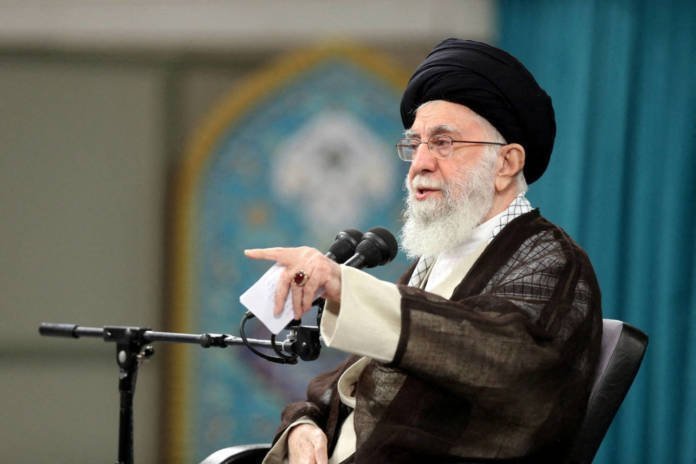
Israel Destroys Khamenei plane Mehrabad the plane used by Iran's late Supreme Leader Ali Khamenei at Tehran's Mehrabad airport overnight, the Israeli military confirmed on Monday, marking one of the most symbolically significant single strikes of the entire Iran war campaign. The aircraft, which had served as the personal and official transport for Khamenei and other senior Iranian officials and military figures for both domestic and international travel, was hit during a nighttime operation targeting the dual-use facility on the western edge of the Iranian capital. The destruction of the Khamenei plane at Tehran's Mehrabad airport represents a deliberate Israeli message that no symbol of Iranian state power, however personal or historically significant, is beyond the reach of its military operations Israel Destroys Khamenei plane.
The Israeli military confirmed that the aircraft had been used extensively by senior Iranian officials and top military commanders to travel domestically across Iran and internationally to coordinate with allied countries and proxy forces throughout the region. That operational detail transforms the strike from a purely symbolic act into a strategically justified targeting decision under Israel's stated campaign objectives, which have included degrading Iran's ability to command, communicate, and coordinate with its network of regional allies including Hezbollah in Lebanon, Hamas in Gaza, and Houthi forces in Yemen. Destroying the aircraft used to facilitate those relationships physically removes a tool of Iranian regional power projection that extended far beyond the borders of Iran itself.
Mehrabad airport has served Tehran for decades and remains one of the oldest aviation facilities in Iran, currently operating as the city's primary hub for domestic and regional flights. Beyond its civilian function, Mehrabad is a dual-use facility that houses Iranian air force assets alongside its commercial operations, making it a legitimate military target under the rules of engagement Israel and the United States have applied throughout Operation Epic Fury. The presence of both civilian and military infrastructure at the same location has been a recurring feature of Israeli targeting decisions throughout the conflict, and Monday's strike on the Khamenei aircraft continues that pattern of hitting military assets embedded within facilities that also serve civilian purposes.
What the Khamenei Plane Was Used For and Why Israel Targeted It
The aircraft destroyed at Mehrabad was not a ceremonial relic or a museum piece. It was an active operational asset used regularly by the highest levels of Iranian government and military leadership to move people, communications, and coordination across borders and between allied capitals. Senior Iranian officials used the plane for international travel to countries aligned with Tehran's regional strategy, including visits to coordinate with Hezbollah leadership in Beirut, meetings with allied governments in Damascus and Baghdad, and diplomatic engagements with nations that maintained relationships with Iran despite Western sanctions. The aircraft's destruction eliminates a private and secure channel of high-level Iranian mobility that commercial aviation or ground transport could not easily replicate.
The plane had also been used for domestic travel by Iran's senior military figures, including commanders within the Islamic Revolutionary Guard Corps who relied on fast and secure air transport to move between Iranian cities for operational planning and command coordination. In a country the size of Iran, where military installations, missile sites, and command infrastructure are spread across a vast geographic area, reliable air transport for senior commanders is not a luxury but an operational necessity. Israel's decision to destroy the aircraft therefore carries a practical military logic alongside its symbolic dimension, degrading the physical mobility of the people responsible for directing Iran's ongoing war effort against Israel and its allies.
The targeting of Khamenei's personal aircraft also carries a psychological dimension that Israeli military planners would have fully understood when authorizing the strike. Ali Khamenei led Iran for more than three decades and was killed in the opening salvo of Operation Epic Fury on February 28, 2026. His aircraft was a physical embodiment of his authority and the continuity of the Islamic Republic's leadership structure. Destroying it sends a message not only to Iran's new supreme leader Mojtaba Khamenei and the surviving leadership but to the Iranian population and to the regional allies who looked to the elder Khamenei as the symbolic and strategic anchor of the resistance axis that Iran has built across the Middle East over the past four decades.
Mehrabad Airport and Its Role as a Dual-Use Military and Civilian Facility
Mehrabad International Airport has a history stretching back to the early twentieth century, making it one of the oldest functioning aviation facilities in the entire Middle East. For decades it served as Tehran's primary international gateway before that role was transferred to the newer Imam Khomeini International Airport located further south of the city. Today Mehrabad functions primarily as a domestic and regional hub, handling a high volume of internal Iranian flights and shorter international routes to neighboring countries. Its location on the western edge of Tehran makes it geographically central to the capital and easily accessible to government ministries, military command centers, and the official residences of senior Iranian leadership.
The dual-use nature of Mehrabad is well documented and has been acknowledged in military and aviation analysis for many years. The Iranian air force maintains assets at the facility alongside the civilian operations, using the same physical infrastructure for military purposes including transport, logistics, and in some cases combat aviation support. This co-location of military and civilian functions is a deliberate feature of Iranian strategic planning, designed in part to complicate targeting decisions by adversaries who must weigh the risk of civilian harm against the military value of striking assets embedded within shared infrastructure. Israel has consistently argued throughout the Iran war that the presence of military assets within civilian facilities does not grant those assets immunity from legitimate military strikes.
The overnight strike that destroyed the Khamenei aircraft at Mehrabad was carried out without causing a broader shutdown of the airport's civilian operations according to available reporting, suggesting a level of precision in the targeting that Israeli military planners have emphasized throughout the conflict. Israel has repeatedly stated that its campaign against Iran is directed at military targets and the infrastructure of state power rather than at the Iranian civilian population, a distinction that becomes increasingly difficult to maintain as the war enters its third week and the scale of damage to Iranian cities and infrastructure continues to mount. The Mehrabad strike will inevitably be examined closely for its impact on civilian aviation safety and the broader question of how military operations can be conducted responsibly within shared-use facilities.
Israel's Broader Campaign Against Iranian Leadership and Command Infrastructure
The destruction of the Khamenei aircraft fits within a broader and consistent Israeli strategy throughout Operation Epic Fury of targeting the symbols, tools, and infrastructure of Iranian state and military power at the highest levels. The campaign began on February 28 with the killing of Supreme Leader Ali Khamenei himself alongside dozens of senior officials and military commanders in the opening wave of strikes. Since then Israel has systematically targeted Iranian missile systems, air defense networks, naval assets, command and control infrastructure, and the physical apparatus through which Iran projects power both internally and across its regional alliance network. The Mehrabad strike represents the latest and one of the most personally resonant actions in that sustained campaign.
Israel has also continued simultaneous military operations on multiple other fronts throughout the Iran war, maintaining pressure on Hezbollah across Lebanon including strikes on Beirut, conducting operations against Hamas in Gaza, and supporting the broader American air campaign against Iranian military targets. The Israeli military announced on Monday that its ground forces had begun limited operations against Hezbollah positions in southern Lebanon, adding a new dimension to a conflict that already spans multiple countries and involves a complex web of state and non-state actors. The multi-front nature of Israel's military campaign reflects both its strategic ambition and the genuine security threats it faces from the network of Iranian-backed forces that surround it on multiple sides.
The international response to the Mehrabad strike and the broader Israeli campaign against Iranian leadership targets has been sharply divided along predictable geopolitical lines. Russia and China have condemned the strikes as violations of Iranian sovereignty and called for an immediate ceasefire. Western governments have been more muted, with the United States continuing to support the Israeli and American military campaign while European allies express growing discomfort with the scale of destruction and the mounting civilian casualty figures. Iran's new supreme leader Mojtaba Khamenei has responded to each successive Israeli strike with pledges of continued resistance, and the destruction of his father's personal aircraft is unlikely to produce any different response from a leadership that has staked its legitimacy on defiance of American and Israeli military pressure.
What the Mehrabad Strike Signals for the Next Phase of the Iran War
The targeting of the Khamenei aircraft at Mehrabad airport on Monday night suggests that Israel's target selection in the Iran war is moving deeper into the symbolic and personal dimensions of Iranian state power rather than pulling back toward a more limited military focus. Having already killed the supreme leader, dismantled much of Iran's conventional military hardware, and struck command infrastructure across the country, Israel now appears to be targeting the physical objects associated with Iranian leadership as a way of sustaining psychological pressure on a government that has refused to negotiate or acknowledge military defeat. That approach carries both potential strategic benefits and significant risks of miscalculation.
The risk of escalation from strikes of this nature is real and well understood by military analysts watching the conflict. Each successive Israeli action that targets something personally connected to Iranian leadership raises the stakes for the Iranian government in terms of what kind of response is politically and militarily necessary to demonstrate continued resistance. Iran has already launched multiple large-scale missile and drone barrages against Israel, struck Gulf state infrastructure, restricted the Strait of Hormuz, and attacked American military assets across the region. A further escalation in Iranian retaliatory operations following the Mehrabad strike would fit the established pattern of the conflict and cannot be ruled out by anyone monitoring the war's trajectory.
For ordinary Iranians watching their capital's airports struck, their supreme leader's personal aircraft destroyed, and their new leadership vowing continued resistance while the human and economic cost of the war climbs daily, the Mehrabad strike is another data point in a conflict that shows no signs of approaching resolution. The gap between the Israeli and American narrative of a war being won and the Iranian narrative of a nation under illegal attack but refusing to submit is as wide today as it was when the first strikes fell on February 28. What happens in the days and weeks ahead will depend on whether any combination of military pressure, economic pain, and diplomatic effort can create conditions for talks that neither side currently says it wants.