
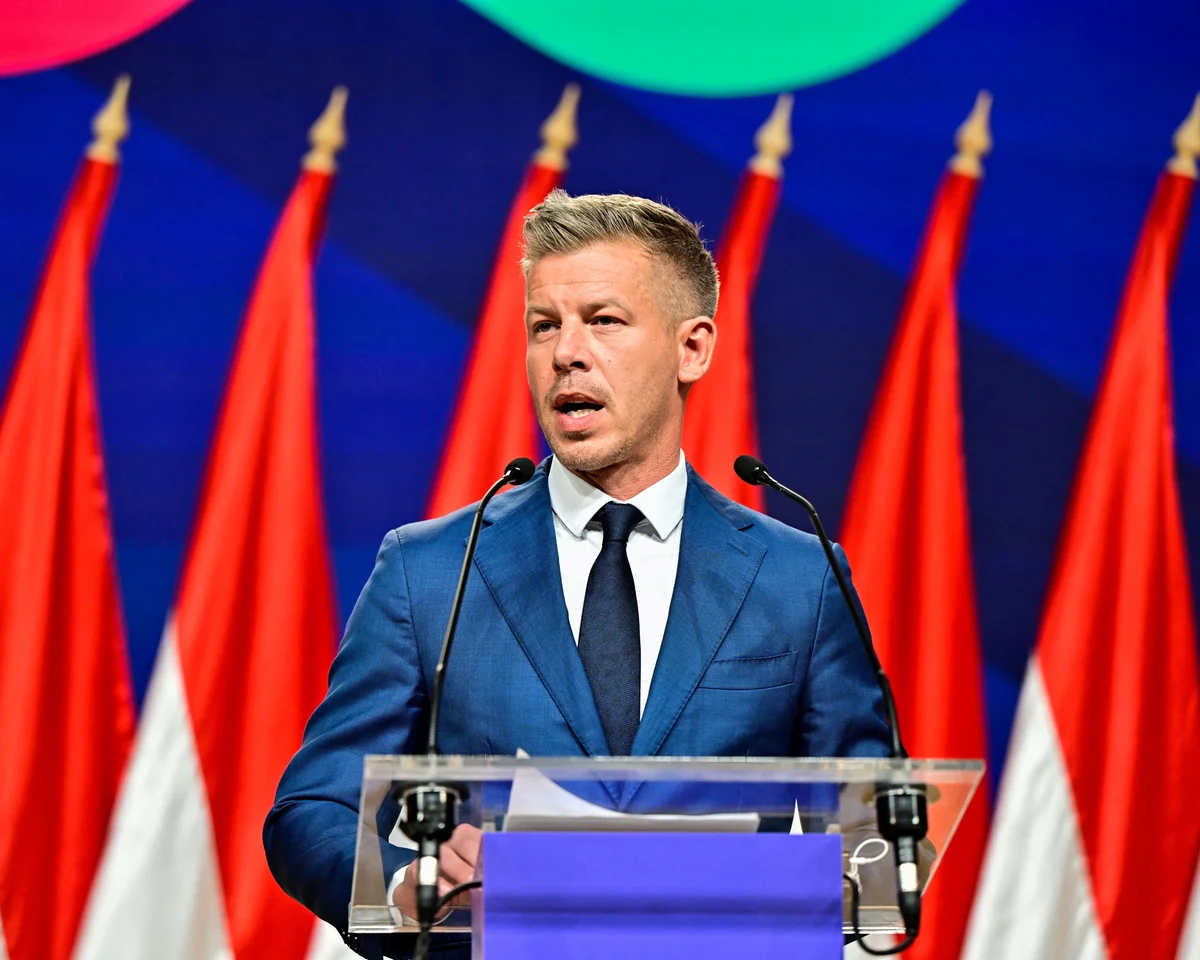
Hungary's election winner Peter Magyar announced on Friday that he hopes to take the oath of office as the country's new prime minister on either May 9 or May 10, with the exact date depending on a presidential decision regarding the inaugural session of the newly elected parliament. The announcement came as Peter Magyar Hungary PM Swearing-In Date Set for May Hungary continues to process the seismic political shift that Magyar's victory represents for a country that had been governed by Viktor Orban's nationalist Fidesz party for well over a decade, a period that fundamentally reshaped Hungary's democratic institutions, its relationship with the European Union, and its position within the broader landscape of European politics. Magyar's expected swearing-in marks not just a change of government but a potentially historic turning point for Hungarian democracy at a moment when the European left and progressive movements globally are watching Budapest with particular intensity and hope.
Magyar also announced that he intends to break with the established practice that has traditionally separated the convening of parliament from the swearing-in ceremony of a new prime minister. He stated clearly that he would take the oath of office on the same day that parliament is convened for its inaugural session, a departure from the procedural tradition that had kept these two events on separate dates in previous government formations. While this might appear to be a purely administrative or ceremonial detail, it carries symbolic weight that Magyar appears to have considered deliberately. Taking the oath on the same day parliament convenes signals a desire to move quickly, to minimize the ceremonial distance between democratic mandate and executive authority, and to demonstrate from the very first moments of his government that he intends to operate with urgency and directness rather than following the rhythms and rituals that characterized the Orban era.
The presidential decision on the date of parliament's inaugural session will therefore be the determining factor in whether Magyar is sworn in on May 9 or May 10, a narrow window that nonetheless carries considerable symbolic significance given the political context surrounding Hungary's political transition. May 9 is Europe Day, the annual celebration of the Schuman Declaration that laid the foundations for European integration and the institutions that eventually became the European Union. Being sworn in as Hungary's prime minister on Europe Day would carry an unmistakable and deliberate message about Magyar's intended direction for Hungarian foreign policy and his vision for the country's relationship with Brussels, a relationship that deteriorated severely under Orban's governance as the former prime minister repeatedly clashed with EU institutions over rule of law, democratic standards, and Hungary's alignment with Russian interests during the Ukraine conflict and beyond.
How Peter Magyar's Victory Ended Viktor Orban's Long Dominance of Hungarian Politics
Peter Magyar's path to Hungary's prime ministership is one of the most remarkable political stories in contemporary European politics, involving a relatively rapid rise from outside the conventional political establishment to the leadership of a movement capable of defeating one of Europe's most entrenched and institutionally embedded nationalist leaders. Orban had governed Hungary for most of the period since 2010, using his parliamentary supermajority to reshape the country's constitutional framework, judicial system, media landscape, and electoral rules in ways that critics described as systematic democratic backsliding and that led to Hungary's suspension from full EU voting rights on rule of law grounds. The scale and durability of Orban's political dominance had led many observers to question whether Hungary's opposition was capable of mounting a credible challenge within the existing institutional environment.
Magyar emerged as a political figure in circumstances that were deeply personal before they became publicly political. His public break with the Fidesz establishment, driven in part by his experiences connected to the inner workings of the Hungarian government through his former marriage to a prominent Orban administration official, gave him a credibility and authenticity that resonated with Hungarian voters who had grown frustrated with both the Orban government and the established opposition parties that had repeatedly failed to mount effective challenges. He spoke from direct experience about the gap between the government's public rhetoric and the private reality of how power was exercised in Orban's Hungary, and that testimony connected with an electorate that was ready for something genuinely different rather than more of the same from a reshuffled cast of familiar opposition faces.
The movement Magyar built around his Tisza party grew with remarkable speed given the structural advantages that Orban's years of institutional engineering had embedded in Hungary's political system to favor the incumbent. Campaign finance rules, media access, electoral district boundaries, and the administrative machinery of the state had all been shaped during the Orban years in ways designed to make challenges to Fidesz's dominance structurally difficult. Magyar's ability to overcome these embedded advantages and win a parliamentary majority sufficient to form a government reflects both the depth of Hungarian public disillusionment with Orban's leadership and Magyar's own effectiveness as a political communicator and organizer in the limited time he had to build a party capable of competing at national scale against a deeply entrenched and lavishly resourced political machine.
What Magyar's Government Will Mean for Hungary's Relationship With Europe and the World
The international significance of Magyar's victory and his impending swearing-in extends well beyond Hungary's borders in ways that have made it a focal point of attention for European leaders, EU institutions, and progressive political movements across the continent and beyond. Orban had been not just Hungary's prime minister but one of the most prominent and internationally active advocates for the nationalist and illiberal model of governance that has challenged liberal democratic norms across Europe and beyond during the past decade. His relationships with other nationalist leaders, his obstruction of EU consensus positions on Ukraine, Russia, and rule of law enforcement, and his use of Hungary's EU membership to block measures that the overwhelming majority of other member states supported had made him a uniquely disruptive presence within European institutions. Magyar's victory removes that disruptive force from its domestic base of power and opens the possibility of a fundamentally different Hungarian role within EU structures.
Spain's Prime Minister Pedro Sanchez, who was among the first European leaders to publicly welcome Magyar's victory, captured the mood among European progressives when he stated that the wave of far-right politics can be stopped and that Hungary proves it, a framing that immediately positioned Magyar's win as a proof of concept for the broader progressive electoral strategy being discussed and developed across European politics. The Barcelona progressive summit gathering that took place this week, which brought together left-wing leaders from across the world to discuss coordinated responses to the global far-right surge, treated Hungary's election result as a significant and timely piece of evidence that the political momentum enjoyed by nationalist and populist movements in recent years is not irreversible. For progressive parties facing their own far-right challengers in upcoming elections across Europe, Magyar's victory carries both symbolic encouragement and practical lessons about what kinds of political messaging, coalition building, and organizational approaches can succeed against entrenched nationalist governments.
The European Union's institutional response to Magyar's impending government will be closely watched for signals about how quickly and on what terms Hungary might restore its full participation in EU decision-making processes following the rule of law disputes that led to the suspension of its voting rights and the freezing of substantial EU funding during the Orban years. EU institutions have made clear that the restoration of Hungary's suspended rights and access to frozen funds is contingent on concrete and verifiable improvements in judicial independence, media freedom, and anti-corruption measures, commitments that Magyar has indicated his government intends to pursue as a central governance priority. The speed and seriousness with which his incoming administration moves to address these conditions will be one of the most closely watched dimensions of Hungary's political transition for European partners who are cautiously optimistic about the country's democratic trajectory but are waiting to see concrete action before drawing firm conclusions.
What to Expect From Magyar's First Days and Weeks in Office
The period immediately following Magyar's swearing-in will be among the most consequential in Hungary's recent political history, as his government moves from the realm of electoral promise to the practical challenges of actually governing a state whose institutions have been deeply shaped by fifteen years of Fidesz dominance. Rebuilding judicial independence, addressing the structural changes to media ownership and press freedom, reviewing the constitutional amendments that embedded Fidesz's preferences into Hungary's basic law, and restoring the civil society organizations and academic institutions that were systematically pressured or dismantled under Orban will all be priorities that Magyar's supporters expect him to pursue and that his opponents will contest at every available institutional and legal avenue. The process of democratic restoration in a country where the governing party has had as long and as comprehensive a hold on institutional power as Fidesz has had in Hungary is necessarily complex, contested, and slow relative to the speed with which those institutions were initially reshaped.
Magyar's decision to take his oath on the same day parliament convenes, breaking with the traditional procedural separation between these two events, is an early signal that his government intends to operate with a sense of urgency that acknowledges the scale of the work ahead. Every day that passes in the transitional period between election and full governmental authority is a day during which the outgoing administration retains the ability to make decisions, appointments, and institutional arrangements that an incoming government will then have to contend with or unwind. By compressing the ceremonial timeline and taking the oath at the earliest possible moment, Magyar is signaling an awareness of this dynamic and a determination not to allow the transition period to become an opportunity for the departing Fidesz government to further entrench its arrangements before handing over power.
The date of May 9 or May 10 for the swearing-in represents a concrete and rapidly approaching moment that will mark the formal beginning of Hungary's post-Orban governance experiment under Magyar's leadership. Whether that experiment succeeds in delivering the democratic restoration, European realignment, and institutional renewal that Magyar's supporters are hoping for will be determined over months and years of difficult governance work rather than in the ceremonies and symbolic gestures of the transition period. But those ceremonies and gestures still matter as signals of intent, and Magyar's choices about how to begin his government, from the date and format of his oath-taking to his earliest policy priorities and personnel appointments, will be parsed carefully by observers inside Hungary and across Europe who are trying to assess whether the historic opportunity represented by Magyar's victory will be seized with the seriousness and skill that this pivotal political moment demands.