
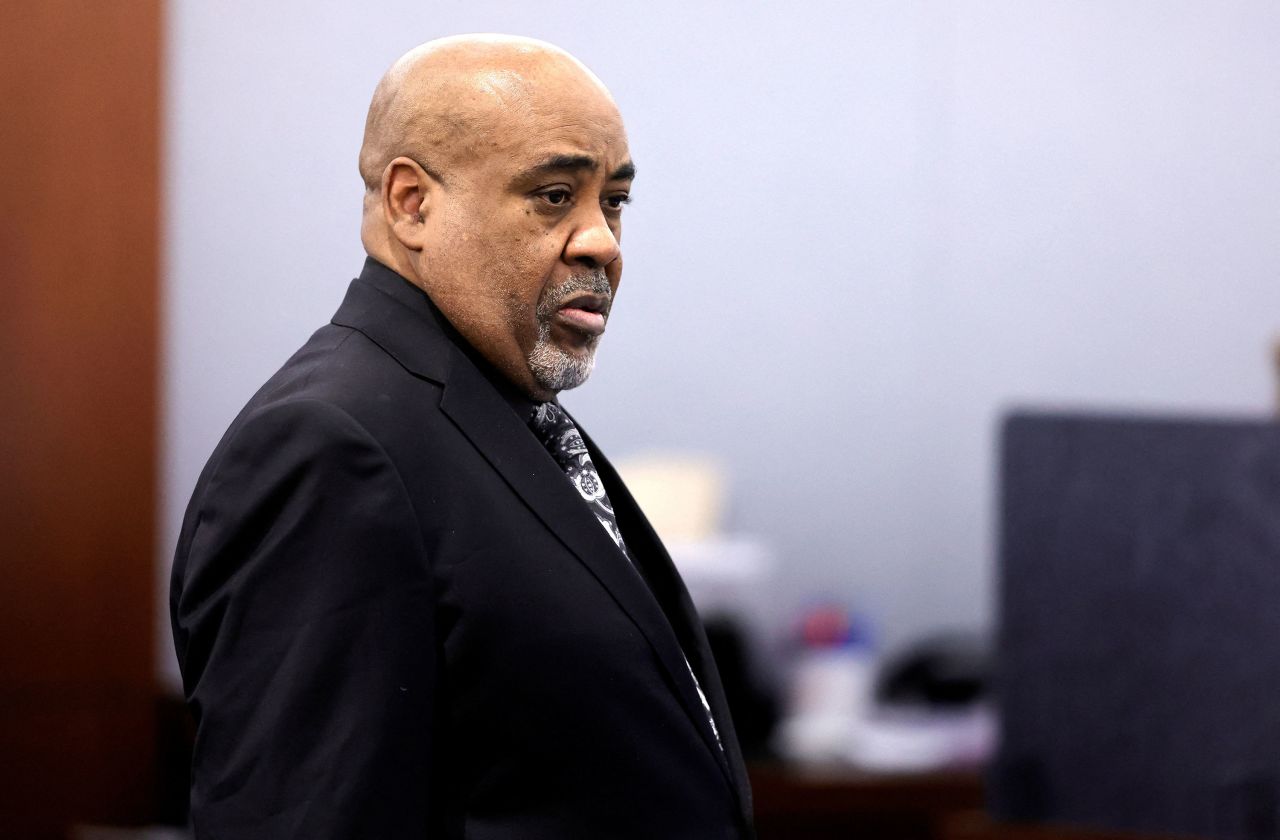
The man accused of orchestrating rapper Tupac Shakur's killing was convicted Monday Duane Davis Guilty of first degree murder with use of a deadly weapon in the 1996 Las Vegas slaying. Following a nearly two-week trial, jurors unanimously found Duane "Keffe D" Davis, 63, guilty of the murder that for nearly 30 years has gripped rap fans, true-crime experts and conspiracy theorists alike.
After the verdict was read, Shakur's sister, Sekyiwa "Set" Shakur, cried and reached back to hug the prosecutors. Davis's son covered his face with one hand. The courtroom was packed with several members from both Tupac Shakur's family and Davis's family in attendance.
He was wrong. The verdict was reached Monday after the roughly two-week trial came to a close three decades after the music icon's drive-by shooting death in Las Vegas. The decision was read after only hours of deliberations.
This is the complete story of how Duane Davis talked his way into a prison sentence.
The Man, the Gang, and the Night That Changed Everything
Duane Davis, known throughout his criminal career as Keffe D, was a senior figure in the South Side Compton Crips, one of the most influential street gangs in Los Angeles in the 1990s. The prosecution's witnesses included a gang expert who described Davis as the shot caller that younger gang members had to obey. In the specific hierarchy of gang structure, the shot caller is the decision maker. The person who says something happens, and it happens. The person whose authority within the gang is sufficient to direct violence without being the one who carries it out.
Clark County prosecutors had argued that Davis was a shot caller for the South Side Compton Crips in Los Angeles and that he sought revenge on Shakur after he attacked Davis' nephew. The sequence of events on September 7, 1996, is documented in evidence and testimony. Tupac Shakur and his Death Row Records entourage confronted and beat Orlando Anderson, Davis's nephew, in the lobby of the MGM Grand in Las Vegas following the Mike Tyson versus Bruce Seldon boxing match. Surveillance footage captured the beating. Within hours, a white BMW carrying Davis and others drew alongside the car in which Shakur was riding and opened fire.
Shakur was struck by four bullets. He was 25 years old. He died six days later.
Davis was not inside the car that fired the shots. Prosecutors didn't allege Davis fired the shots that killed Shakur but accused him of orchestrating the killing. As the shot caller, his criminal responsibility was for directing what happened, not for pulling the trigger. Under Nevada law, that is sufficient for a first-degree murder conviction. Davis faces one count of murder with a deadly weapon with gang enhancements.
The Controversy: The Man Who Talked Too Much
The specific tragedy of the Duane Davis case from a legal accountability perspective is not that justice was slow. It is that justice was slow despite Davis spending years providing it with every tool it needed.
Davis gave law enforcement interviews about his knowledge of the shooting. He participated in documentary films about the Tupac Shakur murder. He wrote a memoir in 2019 in which he described, in his own words, his presence and his role on the night Shakur was killed. In multiple interviews, Davis said he handed the gun to the back seat, but in others as well as in his book, Davis wouldn't say who pulled the trigger.
The specific legal significance of this behaviour is enormous. In a rebuttal argument, prosecutor Marc DiGiacomo pointed to a scrapbook Davis kept containing articles about Shakur. "This guy's scrapbooking his murder, for God's sake," DiGiacomo told jurors.
Why did Davis talk? The answer appears to be a combination of bravado, financial motivation, and a specific miscalculation about the protection that immunity might provide. He had received a form of limited cooperation protection from federal investigators in the early 2000s in exchange for information about other matters. He appears to have believed that this protection extended further than it legally did, and that his public statements about the Shakur murder were somehow legally insulated by that prior cooperation. He was wrong. Palal acknowledged that Davis' accounts of the killing evolved over the years but argued those differences reflected Davis' changing motivations and efforts to protect himself.
Davis said he's "innocent" and that he "ain't killed nobody." Davis also expressed remorse in giving interviews and writing about Shakur's death, claiming that he did so to make money.
Making money by publicly describing the role you played in a murder and then claiming you are innocent of that murder is the specific legal and moral position whose internal contradiction the jury resolved in three hours of deliberation.
The Investigation: Three Decades to Get Here
The 30-year gap between Tupac Shakur's murder and Duane Davis was found guilty of first degree murder verdict is not simply a story of a cold case finally solved. It is a story of institutional failure, changing law enforcement priorities, and the specific difficulty of prosecuting gang violence cases whose witnesses are themselves embedded in the criminal world whose cooperation with law enforcement carries personal consequences.
Las Vegas Metropolitan Police Department detectives knew the outline of what had happened within weeks of the shooting. The identities of the principal actors were not a mystery to law enforcement for most of the intervening 30 years. What was missing was the specific combination of admissible evidence, witness cooperation, and prosecutorial will to build a case that could survive the courtroom challenges that a competent defence would bring.
During the trial, investigators said a Las Vegas hotel bill was found at Davis' residence during a police search, but it wasn't clear when it was dated or where that evidence is currently located. The evidentiary gaps in a 30-year-old case are real and significant. Davis' defense attorney, Michael Sanft, challenged jurors to identify evidence outside Davis' own statements that placed him in Las Vegas or inside the Cadillac on the night Shakur was shot. He pointed to the absence of surveillance footage, phone records and other evidence putting Davis there. "They have nothing in this case that says that man was here in Las Vegas on Sept. 7, 1996," Sanft said.
The prosecution's answer to that challenge was direct. Palal told jurors that if they believe Davis' statements, they do not have to be independently corroborated with additional evidence. Davis had placed himself there in his own words, in his own memoir, in his own interviews. The jury believed Davis's own statements. They took three hours to decide.
The Trial: Two Weeks, 27 Witnesses, and Davis's Own Words
The panel of 10 women and six men heard from two dozen witnesses for the prosecution and three for the defense. The asymmetry of witness numbers reflects the asymmetry of the evidentiary position. The prosecution built its case from multiple directions. The defence had almost nowhere to go because the primary evidence against Davis came from Davis himself.
Duane Davis could face life in prison without the possibility of parole after he was convicted of first-degree murder Monday. Judge Carli Kierny will sentence him on October 13.
Following the verdict, Davis told the judge he would like to appeal the decision, adding that he wanted his "stuff back."
The specific phrase, he wanted his stuff back, is the final public statement of a man who has spent 30 years operating with the specific impunity that his community position provided and who has not yet fully processed that the jury's verdict has permanently ended that impunity. Sentencing is October 13. He is held without bond.
The Shakur Family: The Tears That Said Everything
After the verdict was read, Shakur's sister, Sekyiwa "Set" Shakur, cried and reached back to a person behind her. Shakur's sister, Sekyiwa "Set" Shakur, cried and hugged the prosecutors. Davis's son covered his face with one hand.
The contrasting images in that Las Vegas courtroom on the evening of August 31, 2026, are the complete emotional picture of what a murder verdict delivers and what it costs simultaneously. For the Shakur family, 30 years of waiting for the specific institutional acknowledgment that their brother's death mattered enough to prosecute, that the law would eventually reach the man who orchestrated it, produced the tears that Sekyiwa Shakur could not hold back. The guilty verdict provides a semblance of justice.
For Davis's family, their father and grandfather are going to die in prison. That grief is also real. The specific human cost of a murder conviction extends beyond the convicted to everyone who loved them, and Davis's son covering his face with one hand in a packed courtroom is the image of a family absorbing a blow that justice required but mercy cannot fully absorb.
Current Status and What Comes Next
Judge Carli Kierny scheduled sentencing for October 13 shortly after prosecutors announced they were dropping their pursuit of a gang enhancement due to witness logistics. Kierny ordered Davis to be held without bond pending the sentencing hearing.
Davis has indicated he will appeal. His defence attorney maintained that the case rested almost entirely on Davis's own statements whose admissibility and whose legal weight under Nevada's evidence standards will presumably form the basis of any appeal. The appellate courts will need to assess whether the prosecution's reliance on statements made across years of voluntary interviews, memoir writing, and documentary participation was legally sufficient to sustain a first-degree murder conviction without independent corroboration placing Davis at the scene.
The legal community's assessment is that the conviction is likely to survive appeal, precisely because Davis's own statements were so extensive, so public, and so consistent in their placement of him at the centre of what happened on September 7, 1996.
Conclusion: The Words That Finally Convicted Him
Duane Davis was found guilty of first degree murder on August 31, 2026, 30 years, 11 months, and 24 days after Tupac Shakur was shot in Las Vegas. He was convicted by a jury that deliberated for three hours. He was convicted by the words he had been saying for 25 years in interviews, in documentaries, in a memoir he published in 2019 to make money from the most significant crime of his life.
The specific irony of the Davis conviction is that it was built from his own desire to be known. Gang culture valorises reputation. Davis wanted to be known as the man who orchestrated the death of Tupac Shakur. He told that story repeatedly, in multiple forums, for money, for status, and for the specific kind of recognition that his world assigned to acts of revenge against those who had disrespected his family. He got that recognition. And then a jury used it to convict him of murder in the first degree.
The story does not end with Duane Davis overcoming anything. He did not overcome it. He was convicted. He faces life in prison. He is 63 years old.
The story ends with Sekyiwa Shakur crying and hugging the prosecutors in a Las Vegas courtroom. It ends with a family that has spent 30 years asking for the specific institutional acknowledgment that their brother's murder mattered, finally receiving it. It ends with justice that arrived late, imperfect, incomplete in its ability to explain who pulled the trigger, but real enough to count as the closest thing to accountability that 30 years of avoidance finally could not prevent.
Tupac Shakur was 25 years old when he died. He would have been 55 today. The verdict cannot give him back those 30 years. But it gave his family something they had been waiting for since 1996: the specific acknowledgment, delivered unanimously by a jury of 16 people, that what was done to him was murder, and that the man who orchestrated it is now going to spend the rest of his life in prison.That is not everything. But it is not nothing either.