
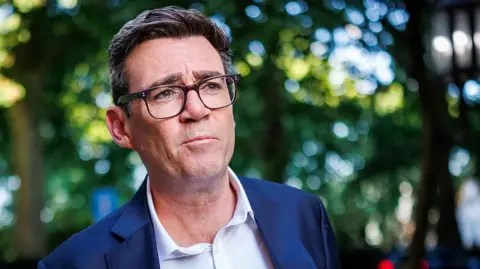
Andy Burnham New Labour leader new prime minister UK Friday 2026 confirmation arrives at a special party conference in central London where Home Secretary Shabana Mahmood, in her role as chair of Labour's ruling national executive committee, will formally announce Burnham as the new leader before he promises a new path for Britain in a speech setting out the broad ambitions of a government he will describe as unashamedly Labour in its priorities and having the courage to fix the big things that politics has neglected. Burnham will take over from Sir Keir Starmer as prime minister on Monday, completing the most rapid ascent to Downing Street in recent British political history for a man who was not even a Member of Parliament six weeks ago and who cemented his status as the sole leadership candidate after being backed by 379 Labour MPs and most trade unions linked to the party earlier this week, with potential challengers Wes Streeting and Al Carns both having declined to contest the succession. Cabinet appointments are not expected until Monday when Burnham formally enters Number 10, though multiple reports suggest Mahmood could be his pick for chancellor, with the BBC told there are live discussions about this significant appointment.
In his first speech as leader on Friday, and then his first speech as prime minister on Monday, Burnham will say making the economy work for people across the United Kingdom requires a new path to the one Britain has been on for the last 40 years, promising a distinctively Labour programme involving more public control of utilities including water, reindustrialisation, and driving growth in every postcode while returning power to communities. He will commit to being a leader for the north and the south, for Scotland, for Wales and for Northern Ireland, and for every town and every city in every nation and region of the country, reflecting the geographic inclusion narrative that has been central to his political identity since his decade as Greater Manchester mayor. He will also pay tribute to Sir Keir for winning the 2024 general election and point to NHS improvements and investment in public services as achievements of the Labour government he is inheriting, positioning the transition as continuity plus renewal rather than a clean break whose criticism of his predecessor could damage party unity.
"I think the public out there would think we'd slightly lost our minds if we didn't go through a process where we subject people who aspire to the highest office in the land to completely normal scrutiny," said Labour MP John Slinger for Rugby, whose concern about the unchallenged succession has not been fully resolved by the events since it was expressed.
How Burnham's Path to Number 10 Was Built and Why It Was Unopposed
Burnham's by-election victory in Makerfield last month was the specific constitutional prerequisite whose achievement transformed him from the most influential British politician not in parliament into a prime ministerial candidate whose eligibility the result confirmed, clearing the requirement that the UK's prime minister be a Member of Parliament and activating the leadership ambition that his decade as Greater Manchester mayor had been building toward since he left Westminster in 2017 to take the mayoral role. The speed of the subsequent succession, from the by-election victory through Starmer's resignation to Friday's formal leadership confirmation, is extraordinary by any historical measure of British political leadership transitions, compressing into approximately six weeks a process that previous Labour leadership contests have taken months to complete through nomination, campaigning, member voting, and formal endorsement procedures. The unopposed nature of the succession, while constitutionally valid and practically efficient in terms of minimising the period of governmental uncertainty, has generated the specific legitimacy questions that Slinger articulated and that Badenoch has been pressing through her demands for press conference scrutiny that a challenged leadership race would have provided through the competitive campaign process.
Burnham's 379 MP backers, representing the substantial majority of Labour's parliamentary group whose endorsement provides the parliamentary confidence foundation that his government requires for its legislative programme, documents the breadth of party support that his succession has built rather than narrowed during the transition period. The trade union backing alongside the MP endorsements creates the specific combination of parliamentary and movement support that Labour leadership requires for the electoral credibility that the party's trade union connection has historically provided, connecting the new leader to the organised labour movement whose mobilisation will be necessary for the 2029 general election campaign whose preparation Burnham's early months in office will need to advance alongside the governing demands of the immediate economic and diplomatic challenges he is inheriting.
Streeting's and Carns's decisions not to challenge Burnham, whatever the specific calculations behind each man's choice, created the unopposed path that has allowed the transition to proceed at a speed that would have been impossible if either had mounted the formal challenge requiring the 81 MP nomination threshold that Labour's leadership rules require. Streeting's reported consideration of a finance minister role in a Burnham government and Carns's defence background and resignation from the Starmer government over defence spending both suggest that the decisions not to challenge reflected specific negotiated or anticipated outcomes in a Burnham government rather than simple deference to the frontrunner's superior poll position.
Starmer's Legacy and the Foundation Burnham Is Building On
Sir Keir Starmer's resignation last month, accepting that he was not best placed to lead Labour into the next general election after heavy losses in May's local elections and facing widespread MP calls to stand aside, provides the specific political context within which Burnham's inherited government position must be understood as both opportunity and constraint. Starmer's 2024 general election victory, which delivered Labour's largest parliamentary majority in modern history, created the parliamentary arithmetic that Burnham will be governing with, giving him the legislative capacity to pursue his distinctively Labour programme without the coalition dependency or slim majority management that smaller majority governments require. The NHS improvements and public service investment that Burnham will tribute to Starmer represent the specific policy achievements whose continuation and development his government will need to build on rather than starting from the policy baseline of an opposition whose proposals have not been implemented.
Speaking from Ukraine on Thursday during what appeared to be a farewell visit in his capacity as outgoing prime minister, Starmer told Sky News he wanted an orderly transition and had built a sound foundation for Burnham, adding that he would support his successor and offer advice privately if asked. The Ukraine visit's symbolism, with the outgoing Labour prime minister in Kyiv as his successor prepares to take office in London, documents Starmer's specific legacy contribution to the coalition of the willing that European leaders praised him for helping to lead, providing Burnham with an international security framework whose continuation his government will need to manage alongside the domestic priorities that his Manchester speech and Friday's conference speech have foregrounded.
Labour has trailed Reform UK in opinion polls for almost 18 months, creating the specific electoral position whose reversal Burnham's supporters are hoping his arrival as prime minister will achieve through the combination of the political brand change that a new leader represents and the policy direction shift that his unashamedly Labour framing signals. The 18-month polling deficit reflects the accumulated impact of Starmer's local election losses, the governance controversies that his leadership encountered, and the Reform UK surge that represents the specific populist right-wing challenge to Labour's working-class voter base that Burnham has positioned himself as best equipped to counter through the blue-collar liberalism that his Greater Manchester record and political persona represent.
The IMF Warning, the Media Scrutiny Deficit, and What Monday Brings
The International Monetary Fund's warning to Burnham's incoming government to avoid increasing public spending in the face of cost of living pressures represents the specific international institutional constraint that the new prime minister's distinctively Labour programme, with its more public control of utilities and reindustrialisation ambitions, will need to navigate within the fiscal framework that the IMF's report identifies as the responsible path. The IMF's recommendation that the UK should be very selective in accommodating new demands, reprioritise while sticking to the deficit reduction plan, and focus spending reviews on reallocating resources across departments rather than increasing total spending creates the specific fiscal boundary whose management Burnham's insistence that he will not be indisciplined with public finances was designed to address before the IMF report formalised the constraint.
The tension between a Labour programme that promises more public control of utilities and reindustrialisation investment and an IMF framework that advises against new spending pressures defines the specific economic policy dilemma whose resolution will be the first major test of Burnham's governing credibility beyond the rhetorical framing of his leadership speeches. Mahmood as chancellor, if the live discussions produce that appointment, would bring the specific economic credibility of a Home Secretary whose public financial management track record could reassure markets that the new government's Labour programme commitments are fiscally bounded, creating the combination of political direction and economic reassurance that Labour governments have historically found difficult to maintain simultaneously when the pressures of governing confront the promises of opposition or leadership campaigns.
Burnham's planned listening tour of the UK during Parliament's summer recess creates the specific early governing choice to prioritise direct public engagement over legislative activity in the period when Parliament is not sitting, reflecting both the absence of immediate legislative urgency and the political calculation that demonstrating geographic commitment through physical presence across the UK's nations and regions serves the every postcode promise more effectively than producing early legislative proposals that could be introduced at any point. The No 10 North proposal, creating a Manchester unit tasked with handing local government more control in housing and transport, provides the institutional expression of the devolution agenda that his Greater Manchester experience has made central to his political identity and whose early implementation would signal that the 40-year new path rhetoric is being operationalised rather than remaining at the aspirational level.