
A brief lull in the Iran conflict has collapsed. The United States and Saudi Strike Iran-backed groups inside Iraq on Wednesday, hours after the U.S. military said it had intercepted a surprise Iranian ballistic missile attack on its forces and Jordan reported shooting down five more Iranian missiles aimed at the kingdom. The exchange came as Oman's proposal to jointly manage the Strait of Hormuz the waterway through which roughly a fifth of the world's oil and liquefied natural gas moved before the war was flatly rejected by Tehran.
Who: The United States, Saudi Arabia, Iran and its Revolutionary Guards (IRGC), Iraq's Popular Mobilization Forces, Jordan, and Oman as regional mediator. What: Coordinated U.S.-Saudi air strikes on Iran-backed targets in eastern Iraq, intercepted Iranian missile attacks on U.S. forces and Jordan, and the collapse of Oman's proposed Hormuz management deal. Where: Eastern Iraq, the Strait of Hormuz, Saudi Arabia's Eastern Province, and Jordan. When: The strikes and missile exchanges occurred Wednesday, following a Saudi drone-attack report on Tuesday. Why: Saudi Arabia and the U.S. blame Iran-backed militias operating from Iraqi territory for drone strikes on Saudi oil facilities, while Iran denies responsibility and accuses Washington of using the attacks to justify further military pressure over the strait.
What Happened
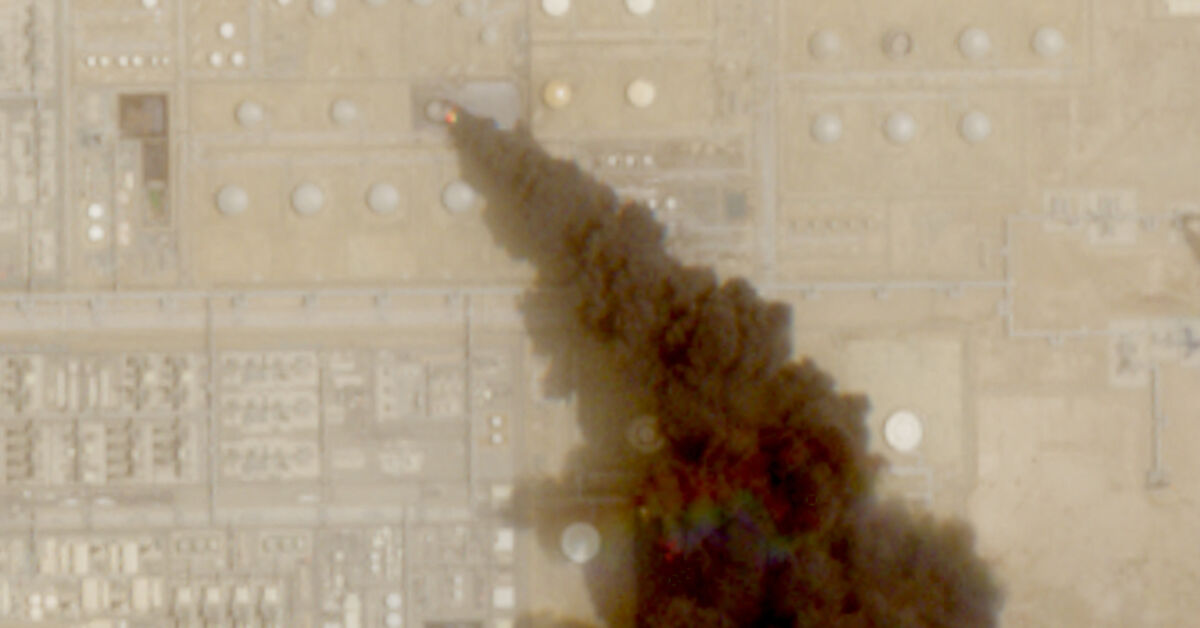
The sequence began Tuesday, when Saudi Arabia's Defence Ministry said its air defences destroyed several drones targeting oil facilities in the kingdom's Eastern Province, attributing the launch to Iran-backed militias operating from Iraqi territory. Later that day, U.S. Central Command and Saudi Arabia's Defence Ministry jointly announced strikes on multiple sites across eastern Iraq that they said Iran had used to coordinate drone operations. Saudi officials framed the response as defensive, saying they were not seeking to widen the conflict but would answer any further "aggression."
Iraq's Popular Mobilisation Forces, an umbrella of Iran-aligned militia groups with formal ties to the Iraqi state, said several of its facilities across the country were hit in the strikes, with preliminary reports of deaths, injuries and structural damage.
The exchange escalated further on Wednesday. U.S. Central Command said its forces had intercepted an attempted surprise ballistic missile attack by Iran on U.S. troops stationed in the region, while the IRGC confirmed it had fired missiles at American installations in Jordan. Jordan's military said its own air defences shot down five Iranian missiles targeting the kingdom. Iran's Revolutionary Guards separately claimed their naval forces had intercepted and forcibly stopped three oil tankers inside the Strait of Hormuz for taking what they described as an unsafe, unauthorized route — an account Reuters said it could not independently verify.
Amid the fighting, Iran rejected a Omani-brokered proposal for joint regional management of the strait, with a senior Iranian official telling Reuters the plan had no realistic chance of succeeding and accusing the U.S. and Saudi Arabia of pressuring Oman to advance what he called "unrealistic plans."
Why It Happened
The immediate trigger was the pair of drone attacks on Saudi oil infrastructure, which Riyadh and Washington attributed to Iran-backed militias based in Iraq. But the broader escalation reflects the breakdown of a fragile ceasefire that had followed President Trump's abrupt suspension of a two-week U.S. bombing campaign against Iran, after which Tehran appeared to reciprocate by pausing its own attacks. That pause did not hold.
Underlying the renewed fighting is an unresolved dispute over control of the Strait of Hormuz. Iran effectively closed the strait after the U.S. and Israel struck Iranian targets on February 28. A subsequent U.S.-Iran agreement partially reopened the waterway and set the stage for broader talks, including on Iran's nuclear programme, but that arrangement collapsed in early July when Iran fired on vessels using a shipping channel it does not recognize. Since then, both sides have offered competing visions for how or whether transit through the strait should be shared or restricted, with Oman's joint-management plan representing the most recent attempt at a diplomatic off-ramp.
Timeline
- February 28: U.S. and Israeli strikes on Iran prompt Tehran to effectively close the Strait of Hormuz.
- Last month: A U.S.-Iran agreement partially reopens the strait and sets up future talks on broader issues, including Iran's nuclear programme.
- Early July: The agreement collapses after Iran fires on vessels using a shipping channel it does not recognize.
- Two weeks of bombing (prior period): The U.S. conducts a sustained air campaign against Iran.
- Days before Wednesday: Trump suspends the bombing campaign; Iran appears to pause its own attacks.
- Tuesday: Saudi Arabia reports drones targeting oil facilities in its Eastern Province, launched from Iraq by Iran-backed militias; U.S. and Saudi forces strike sites in eastern Iraq in response; Oman's Hormuz proposal is reported by Reuters sources.
- Wednesday: Iran rejects Oman's proposal; IRGC claims to have stopped three tankers in the strait; U.S. Central Command says it intercepted an Iranian ballistic missile attack; Jordan shoots down five Iranian missiles; Iraq's Popular Mobilisation Forces reports casualties and damage from U.S.-Saudi strikes; oil prices rise more than $3 a barrel; Gulf Cooperation Council foreign ministers hold an emergency video call.
Political Impact
The collapse of the ceasefire puts renewed pressure on the diplomatic track that produced last month's partial Hormuz reopening agreement and on the broader talks meant to address Iran's nuclear programme. Iran's rejection of the Omani proposal, and its insistence that it must retain control over the inbound route and part of the outbound route through the strait, signals that Tehran views full or shared international oversight of Hormuz as a red line rather than a negotiating position. Iranian officials have also sought to separate themselves specifically from the drone attacks on Saudi Arabia, with a defence official quoted on state television calling attribution of those attacks to Iran a "major miscalculation" language suggesting Tehran is trying to avoid direct responsibility for actions carried out by allied militias.
For the Gulf Cooperation Council, the emergency video call among foreign ministers reflects growing regional anxiety that the conflict, initially framed as a bilateral U.S.-Iran confrontation, is increasingly drawing in third countries Iraq, Jordan and Saudi Arabia among them raising the diplomatic stakes for a bloc whose members depend heavily on stable Gulf shipping and regional security arrangements.
Economic Impact
Oil prices rose more than $3 a barrel on Wednesday as markets priced in the risk of a wider conflict following the U.S.-Saudi strikes. The reaction underscores how sensitive global energy markets remain to any sign of renewed disruption in or around the Strait of Hormuz, given the roughly one-fifth share of global oil and liquefied natural gas trade that historically passed through the waterway before the war.
Oman's proposed fee structure under which ships would make voluntary contributions modeled on the arrangement used in Asia's Strait of Malacca by Indonesia, Malaysia and Singapore was designed in part to create a sustainable funding mechanism for navigation safety, environmental protection and search-and-rescue operations without handing Iran unilateral control or mandatory toll authority. Washington has firmly rejected the idea of any tolls or fees tied to strait transit, insisting the waterway is international and should remain free of Iranian restrictions, while Iran separately argues that a 50-50 joint arrangement with Oman would not adequately serve its interests.
Business Impact
Shipping companies and oil traders operating through or near the Strait of Hormuz face compounding uncertainty: unverified claims of tankers being forcibly stopped by Iranian naval forces, active strikes on regional oil infrastructure, and a stalled diplomatic process all raise insurance costs and complicate route planning. Saudi Arabia's Eastern Province, home to significant national oil infrastructure, remains a direct target of militia drone attacks, adding operational risk for companies with assets or supply chains tied to that region.
Energy analysts note that even unverified incidents such as the IRGC's claim of intercepting three tankers can move markets and shipping insurance premiums simply by reinforcing the perception of an unresolved and escalating conflict, independent of confirmed outcomes.
Global Impact
The widening cast of directly affected states Iraq, Jordan, Saudi Arabia, and now potentially Oman as a rejected mediator illustrates how a conflict rooted in U.S.-Iran tensions over Hormuz has evolved into a multi-country regional crisis. The precedent set by Oman's rejected proposal, modeled explicitly on the cooperative Strait of Malacca framework, may also shape how other contested maritime chokepoints are approached diplomatically in the future, particularly where a dominant regional power resists shared international oversight.
Expert Analysis
Analysts tracking the conflict note that Iran's rejection of the Omani plan, combined with its insistence on retaining control over key transit routes, suggests US strikes Tehran views maritime leverage over Hormuz as one of its few effective points of pressure against Washington and its regional allies one it is unlikely to surrender through multilateral arrangements. At the same time, the involvement of the Popular Mobilisation Forces, an Iraqi state-linked but Iran-aligned network, complicates any narrative of a clean bilateral conflict: strikes on PMF facilities inside Iraq risk drawing Baghdad more directly into the crisis, regardless of Washington's stated intent to target only Iran-backed elements. Analysts caution that unverified claims from any side including Iran's tanker-interception claims and initial casualty figures from the PMF should be treated carefully until independently confirmed.
What Happens Next
The most immediate flashpoint to watch is whether Iran or its regional allies respond further to the U.S.-Saudi strikes in Iraq, and whether Jordan or Saudi Arabia face additional missile or drone attempts. Diplomatically, the fate of the Omani proposal now rejected by Tehran but potentially subject to revision will determine whether any near-term framework exists for de-escalating the Hormuz standoff. The broader U.S.-Iran talks on nuclear and other issues, which were meant to follow last month's now-collapsed strait agreement, remain in limbo, and their revival is likely to depend on whether the current round of strikes and interceptions stays contained or spreads further.