
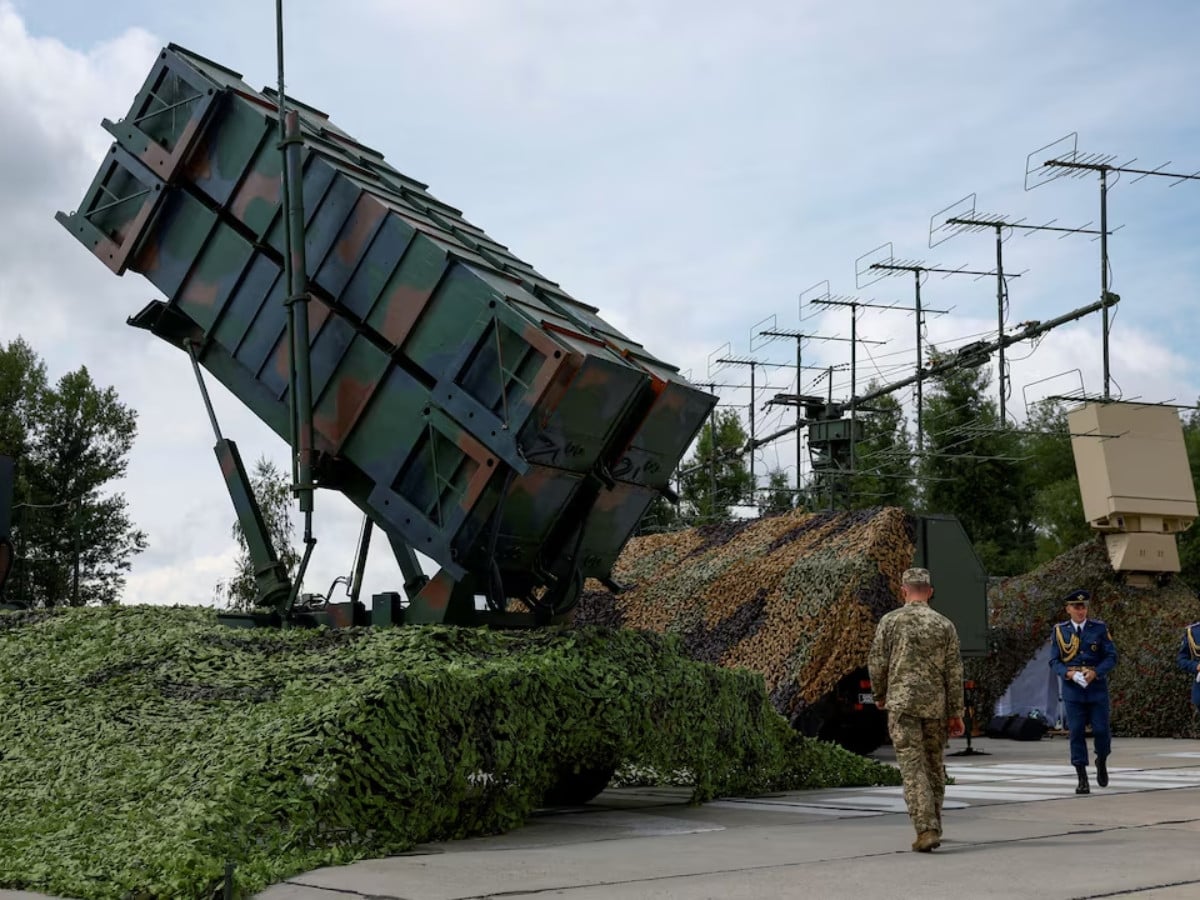
Kyiv is racing against the calendar. As Russian ballistic missiles rain down on Ukrainian cities with growing frequency, Ukrainian officials are pushing a coalition of European governments and defense manufacturers to deliver a working prototype of a new anti-ballistic missile system codenamed Freyja missile defense system within the first half of 2027.
Who: Ukraine's National Security and Defense Council, ten European governments, President Volodymyr Zelenskyy, and defense manufacturers including Eurosam, Leonardo, Thales, Saab and Ukraine's Fire Point. What: A jointly developed, lower-cost alternative to the U.S. Patriot system capable of intercepting ballistic missiles. Where: The initiative was formally launched in Paris and is being coordinated across Ukraine and allied European capitals. When: A minimum viable product is targeted for the first half of 2026's successor year mid-2027 with Zelenskyy expressing hope the system could be operational within a year. Why: Ukraine's near-total dependence on scarce, politically vulnerable U.S. Patriot supplies has left it unable to intercept a growing share of Russian ballistic strikes.
This is not simply a procurement story. It is a case study in how a wartime nation and its allies are trying to solve an industrial bottleneck that has direct consequences for civilian safety, defense-sector economics, and the broader balance of power in the Russia-Ukraine war.
What Happened
Davyd Aloian, deputy secretary of Ukraine's National Security and Defense Council and the official overseeing the Freyja project, confirmed that an international steering committee tasked with costing the research and development phase will meet for the first time in the coming weeks. According to Aloian, the working assumption is an "ambitious" timeline: a minimum viable product a prototype capable of demonstrating real interception results should be ready within the first half of next year.
The announcement follows a summit held in Paris roughly two weeks ago, where leaders from ten European countries, alongside about a dozen defense manufacturers, formally launched the anti-ballistic coalition. Zelenskyy attended in person, underscoring how central the project has become to Ukraine's wartime strategy.
Ukraine has pledged to contribute a launcher and an interceptor missile of its own, which Zelenskyy has framed as requiring little more than testing to validate. Kyiv is asking its partners to supply the harder-to-source components: modern radar systems, sensors, and expertise in missile guidance and control electronics capabilities concentrated in a handful of Western defense firms.
Why It Happened
The urgency traces directly to a widening gap between Ukraine's air defense needs and its available interceptor stockpiles. The Patriot system remains the only weapon in Ukraine's arsenal that can reliably down Russian ballistic missiles, which travel at several times the speed of sound and require highly specialized interceptors to defeat. But Patriot supply has been squeezed by competing global demand, limited production capacity, and shifting political decisions among allied governments.
That shortage has had visible, deadly consequences. Russia intensified ballistic strikes on Kyiv and the southern port city of Odesa this month, launching dozens of missiles that Ukrainian forces were largely unable to intercept because of a shortfall in interceptor stocks. Other systems relied on by European militaries, including the Franco-Italian SAMP/T and Germany's IRIS-T, have not yet demonstrated a reliable ability to down ballistic missiles, leaving a capability gap that Freyja is explicitly designed to fill.
Timeline
- Recent weeks: Russia escalates ballistic missile strikes on Kyiv and Odesa; interception rates decline due to interceptor shortages.
- Roughly two weeks ago: Paris summit formally launches the Freyja coalition, with ten European heads of state/government and around a dozen manufacturers present.
- Last month: Fire Point, developer of Ukraine's Flamingo cruise missile, announces a partnership with Germany's Hensoldt to supply radar technology for Freyja.
- Coming weeks: International steering committee holds its first meeting to estimate R&D costs.
- First half of 2027: Target date for a minimum viable product / working prototype.
- Within roughly a year (Zelenskiy's stated hope): Aspirational date for an operational system.
Political Impact
Freyja is as much a political project as a technical one. By designing the system around an open architecture allowing individual countries to integrate their own preferred components, such as a Danish-made radar or a Swedish Saab subsystem Ukraine and its partners are trying to lower the political barriers to participation. Aloian described the goal plainly: the coalition is meant to function as a practical engineering effort rather than a politically fraught negotiation.
That framing matters because it sidesteps the kind of consensus-building delays that have slowed other multinational defense initiatives. It also reduces Ukraine's reliance on any single ally's willingness to keep releasing Patriot interceptors a dependency that has repeatedly exposed Kyiv to the shifting political winds in Washington and other capitals.
Economic Impact
Financing remains one of the project's biggest open questions. Officials are considering establishing a dedicated body— potentially a fund to channel contributions from participating governments and companies and to guarantee stable, long-term financing rather than ad hoc pledges. Direct involvement from private defense manufacturers, alongside government funding, is intended to cut through bureaucratic delay and speed procurement.
For Ukraine's allies, the economic calculus is straightforward: a jointly produced, open-architecture system spreads production costs and intellectual property across several national defense industries rather than concentrating them in a single U.S. supply chain. Proponents argue this could make interceptors cheaper and faster to produce at scale than the Patriot's PAC-3 missiles, which have long production lead times and high unit costs.
Business Impact
The manufacturer roster reads like a who's-who of European defense primes: Eurosam (maker of the SAMP-T interceptor), Leonardo, Thales and Saab have all joined the effort. Ukraine's own Fire Point best known for developing the long-range Flamingo cruise missile will serve as the lead industrial partner, with German sensor and radar specialist Hensoldt already contracted to supply radar technology.
For these companies, Freyja represents both a wartime contribution and a commercial opportunity: a chance to co-develop next-generation interceptor and radar technology with real-world combat validation in Ukraine, potentially positioning their systems for future European air-defense procurement as NATO members reassess their own missile-defense gaps.
Global Impact
Freyja sits inside a broader European push to reduce dependence on U.S. weapons systems at a moment of uncertainty over long-term American commitment to Ukraine's defense. Multiple European governments that also rely on Patriot batteries for their own territorial defense have a direct interest in diversifying their supply of ballistic-missile interceptors. A successful, exportable Freyja system could reshape procurement decisions well beyond Ukraine, offering NATO's European members an alternative sourced largely from within the continent.
Expert Analysis
Analysts tracking European defense-industrial policy note that open-architecture, multi-vendor systems are notoriously difficult to deliver on tight timelines because integrating radars, launchers and interceptors from different national suppliers introduces significant technical risk. The 18-month-or-so window Ukraine is targeting for a minimum viable product is aggressive by historical standards for air-defence development, though Ukraine's wartime testing environment where systems can be validated against real Russian missile threats may compress timelines that would otherwise take years in peacetime conditions.
What Happens Next
The immediate milestone is the first steering committee meeting, where participating governments and manufacturers will attempt to pin down realistic research and development costs. From there, the coalition must finalize its financing mechanism, confirm which countries will contribute which components, and begin integrating Ukraine's launcher and interceptor with allied radar and guidance systems. Whether the mid-2027 prototype deadline holds will depend heavily on how quickly that funding structure and technical integration work come together and on whether Russian strikes on Ukrainian infrastructure and testing sites allow the work to proceed uninterrupted.