
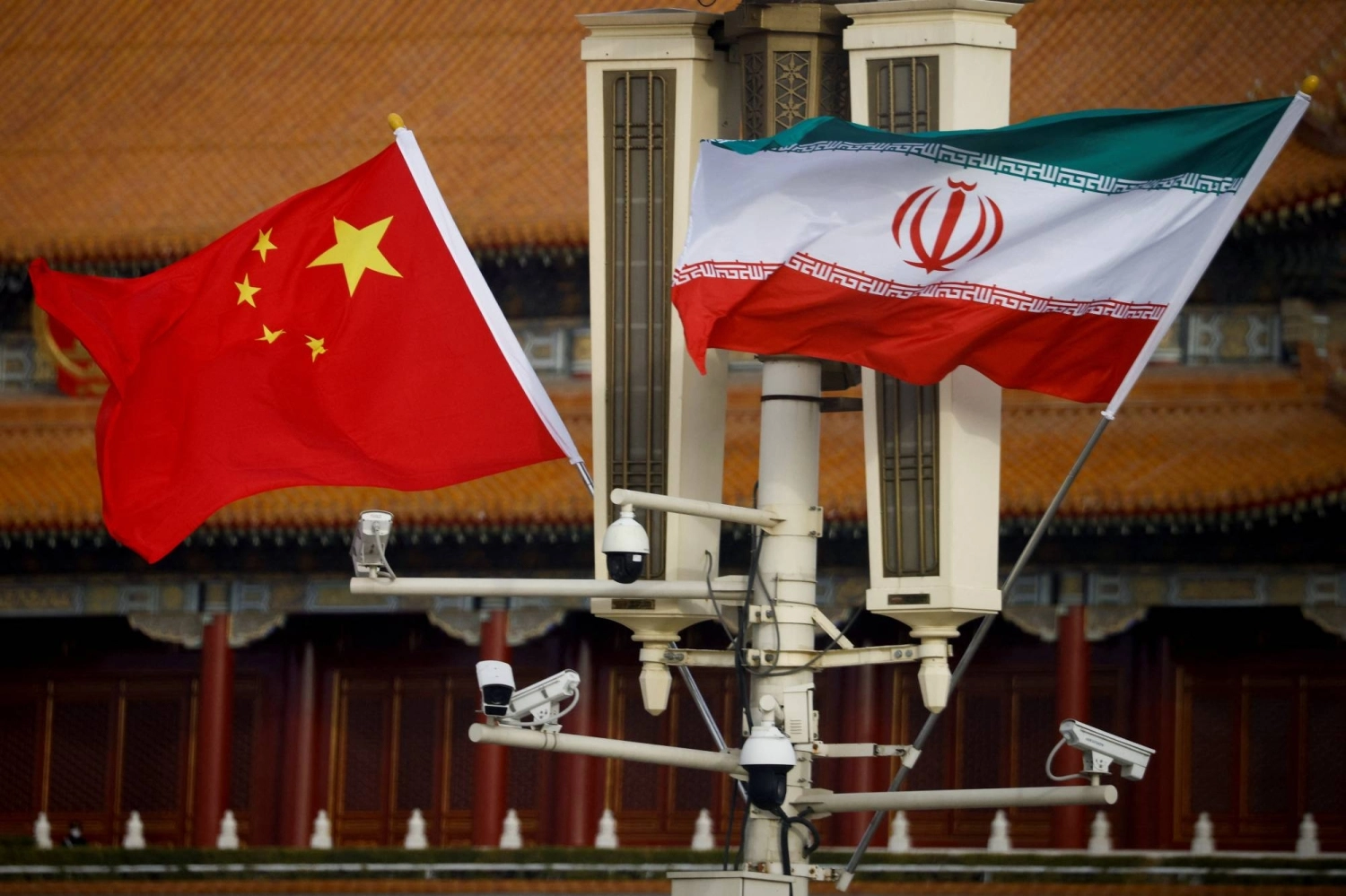
Iran is expected to receive MANPADS missile deal within weeks the first shipment of up to 400 Chinese-made shoulder-fired air defence missile launchers, in a deal valued at $60 to $70 million that represents one of Tehran's largest-known military procurement efforts since the outbreak of its war with the United States and Israel, according to three sources with direct knowledge of the transaction who spoke to Reuters on condition of anonymity. The contract covers between 300 and 400 man-portable air defence systems, specifically the Chinese QW-12 and FN-16 missile systems, and was signed with Zhongqing Baoshang International Investment, a Hong Kong-based company described by the sources as acting as an intermediary between Iran and the Chinese supplier. Deliveries are planned to begin by air from Urumqi in western China, transiting through Pakistan before reaching Iran.
The deal's significance extends well beyond its dollar value, which is modest by the standards of major military procurement. MANPADS, the acronym for man-portable air defence systems, are valued precisely because they cannot be easily targeted before they are used. Unlike the fixed surface-to-air missile batteries that US and Israeli strikes have systematically attacked throughout the five-month conflict, shoulder-fired systems can be carried by a single operator, positioned around any sensitive site, and relocated before an adversary's targeting cycle can identify and destroy them. The gap in Iran's air defences that the war exposed was not primarily a gap in the sophistication of its hardware but in the density and mobility of its layered protection, particularly against the low-flying drones and precision cruise missiles that have been among the most effective tools used against Iranian military and infrastructure targets.
China's Foreign Ministry denied the deal existed, calling reports "completely groundless" and reiterating Beijing's stated role in "promoting peace and ending the conflict." Pakistan, whose territory is described in the sources' account as a transit route for the initial deliveries, flatly denied any involvement through its military public relations body, ISPR, calling the suggestion "absolutely concocted and false." Both denials follow a well-established pattern in sensitive arms transfer reporting: governments that cannot publicly acknowledge participation in transactions that would breach UN sanctions, bilateral commitments, or diplomatic understandings consistently deny those transactions regardless of the evidence. The three independent sources familiar with the deal, including a European security source aware of multiple contracts under discussion, a Middle East security source with knowledge of Iran's procurement efforts, and two Western intelligence sources, provide a level of corroboration that gives the reporting substantial credibility despite the official denials.
The Deal, the Route, and the Systems Being Transferred
The specific weapons systems at the centre of the deal require explanation for readers unfamiliar with the MANPADS category. The QW-12 is a Chinese-developed shoulder-fired infrared-guided surface-to-air missile designed to engage low-flying aircraft, helicopters, and drones. It uses a passive infrared seeker to lock onto the heat signature of a target's engine exhaust, requires no radar emission that could give away the operator's position, and can be set up and fired by a single trained operator in a matter of seconds. The FN-16 is a related Chinese system in the same infrared-guided short-range engagement category. Defence analysts regard the QW-12 as less capable than newer variants in the QW series, specifically the QW-18 and QW-19 which offer improved guidance, longer range, and better performance against countermeasures, but assess the system as still capable of providing effective short-range protection against drones and low-flying targets, which are precisely the attack profiles Iran has been most vulnerable to during the current conflict.
The scale of the order, 300 to 400 systems, is what makes this transaction strategically significant rather than merely tactically relevant. A single MANPADS team can protect a specific location from a specific threat direction at a specific time. Three to four hundred teams, deployable simultaneously across the full range of Iran's military installations, energy infrastructure, command facilities, and strategic assets, create a fundamentally different defensive environment from what Iran currently operates. Even if a substantial fraction of the systems are lost to counter-measures or attrition, the remainder creates a coverage density that requires any attacker to account for MANPADS threat in ways that alter targeting calculations, ingress routes, and the risk calculus for low-altitude operations.
The transit route described by the sources, air cargo from Urumqi in China's western Xinjiang region to Pakistan, then onward to Iran, reflects a procurement geography that bypasses the more obvious and more scrutinised routes through which Iran has historically received military supplies. Urumqi is a transportation hub for Central Asian cargo that is less subject to the attention that China's major coastal ports receive from Western intelligence and customs monitoring. The Pakistan leg provides geographic plausibility, given the existing Iran-Pakistan land border and air connections, while maintaining deniability at the Chinese end: a Hong Kong intermediary company, freight that originates in western China, and a transit through Pakistan creates a chain of transactions that is individually defensible and collectively difficult to intercept.
The Air Defence Gap That the War Exposed
Understanding why Iran is prioritising MANPADS acquisition requires understanding specifically what the US-Israeli military campaign did to Iran's air defences over the five months of the conflict. Iran entered the conflict with a layered air defence architecture that had been built up over decades and included longer-range systems, medium-range batteries, and short-range close-in defences. US and Israeli strikes specifically targeted this architecture, with the explicit goal of degrading Iran's ability to protect its own military capabilities. Over five months of conflict, strikes on radar installations, missile battery positions, command and control infrastructure, and the production facilities that support air defence maintenance have systematically reduced the density and effectiveness of Iran's protective coverage.
The result is what defence analysts describe as a capability gap at the lower altitude layer: the ability to detect, track, and engage the low-flying drones and precision cruise missiles that have been among the most effective attack tools used against Iran. Ballistic missiles, which Iran has in substantial numbers, travel high and fast and require different intercept technology. But drones and cruise missiles that fly at very low altitudes to avoid radar, hugging terrain features or flying beneath radar coverage zones, require defence that covers the lower atmosphere specifically. That is precisely what MANPADS provide: coverage of the 0 to approximately 5,000 metre altitude band where short-range infrared-guided systems can engage targets that sophisticated longer-range systems are not optimised to address.
The choice of a Hong Kong intermediary rather than a direct Chinese government-to-government arms transfer reflects the legal and diplomatic constraints on the deal. China is a signatory to UN Security Council resolutions that restrict arms transfers to Iran, though the specific applicability of those restrictions has been a subject of dispute since the conflict began. A transfer facilitated through a private Hong Kong company creates legal ambiguity about the official character of the transaction, while the involvement of the Zhong Qing Bao Shang parent group, a Chinese entity, links the transaction back to Chinese industrial networks. The legal architecture of the deal is designed to provide Beijing with deniability while ensuring the transaction proceeds through channels that the Chinese state has the ability to facilitate or block, which means the deal almost certainly has at least tacit approval at a level of the Chinese government that will not be publicly acknowledged.
Iran's Air Defence Procurement Since the Conflict Began
February 28 — US and Israel launch initial strikes on Iran. Among the primary targets are Iran's air defence radar and missile battery sites, whose destruction is intended to suppress Iran's ability to defend its own territory against subsequent strikes.
March to June — Successive phases of US and Israeli targeting systematically degrade Iran's layered air defence architecture. Iran responds with ballistic missile and drone barrages, demonstrating offensive capability while its defensive coverage is progressively reduced.
Months ago — Iran begins exploring procurement options for replacement air defence systems. Sources familiar with the situation tell Reuters Iran has been seeking QW-12 and QW-18 missiles. A European security source confirms awareness of multiple contracts under discussion involving QW-series MANPADS.
Last month — Fire Point, Ukraine's missile manufacturer, announces a radar deal with Hensoldt for the Freyja project, in a separate development that illustrates how the global defence industry is responding to the conflict's creation of new procurement demand on multiple sides.
Recent weeks — The MANPADS deal between Iran and Zhongqing Baoshang International Investment is signed. Reuters reports separately that Iran is close to a separate agreement with China for anti-ship cruise missiles.
Within weeks — First delivery of QW-12 and FN-16 systems expected to arrive in Iran via the Urumqi-Pakistan-Iran route, according to three sources familiar with the deal.
China's Deniable Arming of Iran and What It Means for US-China Relations
The political implications of China arming Iran during an active US military campaign against Tehran are significant and multi-layered. At the bilateral US-China level, documented evidence of Chinese weapons reaching Iran while the US is simultaneously conducting military operations against that country represents exactly the kind of indirect Chinese support for a US adversary that American policymakers have been warning about since the conflict began. The use of a Hong Kong intermediary and the Pakistan transit route are specifically designed to create the deniability that allows Beijing to maintain formal neutrality while materially improving Iran's defensive capabilities. Whether Washington's response to this report is diplomatic protest, additional sanctions on Chinese entities, or a harder line in US-China trade negotiations will depend partly on the administration's assessment of what it can afford to confront simultaneously while conducting a ceasefire with Iran.
For the broader China-Russia-Iran alignment that Western governments have been tracking since Russia's invasion of Ukraine, the MANPADS deal is the latest evidence of what analysts describe as a deepening military-economic partnership among countries that share an interest in reducing US global military primacy. China has provided Iran with economic support through sanctioned oil purchases, diplomatic cover at the UN Security Council, and now, if the sources are correct, direct military hardware. This pattern of Chinese behaviour, maintaining formal neutrality while providing material support to US adversaries, has been observed in relation to Russia's Ukraine war as well, where Chinese dual-use components have consistently appeared in Russian weapons systems despite Beijing's denials.
Pakistan's categorical denial of involvement in the transit is diplomatically important but does not resolve the underlying question of what Pakistani authorities knew or could have prevented. Pakistan's ISPR characterisation of the transit reports as "absolutely concocted and false" is the strongest available diplomatic language short of threatening consequences, but the geographic and logistical reality is that cargo moving by air from Urumqi to Iran via Pakistan would be difficult to execute without some level of Pakistani awareness, even if that awareness did not constitute formal authorisation. Whether Pakistan was actively facilitating, passively permitting, or genuinely unaware of the transit will be a subject of intelligence assessment rather than public diplomatic exchange.
What $70 Million in MANPADS Means for Iran's Defence Economy and Chinese Arms Exports
The $60 to $70 million contract value for 300 to 400 MANPADS places this deal in context within Iran's overall defence procurement picture. Iran's defence budget has been severely constrained by decades of Western sanctions that have restricted access to international financial systems and foreign currency, compounded by the economic disruption of the current conflict, which has closed the Strait of Hormuz and disrupted oil export revenues. A $70 million procurement in this environment represents a meaningful allocation of scarce foreign exchange reserves to a specific defensive capability that Tehran's military leadership has identified as a priority gap.
For China's arms export industry, the MANPADS deal is part of a broader pattern of expanding Chinese defence exports to countries that cannot access Western military hardware. Chinese MANPADS systems, including the QW series, have been exported to various state and non-state actors across the Middle East, Asia, and Africa over the past two decades, building a commercial track record that makes the Iran deal a logical extension of existing business relationships. The involvement of a Hong Kong intermediary rather than a direct state export reflects the specific legal constraints on the Iran transaction, but the underlying industrial and commercial relationship between Chinese defence manufacturers and international customers seeking alternatives to Western or Russian arms is a genuine and growing market that the current conflict has made more visible and more urgent.
The anti-ship cruise missile deal that Reuters separately reported as being "close to conclusion" between Iran and China, if confirmed, would represent a more strategically significant and more expensive procurement that specifically addresses Iran's ability to threaten commercial shipping in the Strait of Hormuz and the broader Persian Gulf. Anti-ship cruise missiles allow Iran to threaten vessels at greater range and with less warning than the mines, fast boats, and shorter-range weapons it currently deploys. Their acquisition would substantially increase the military cost of any effort to force the Strait open without Iranian consent and would change the strategic calculus for both sides in the current ceasefire negotiations.
Arms Industry Dynamics, Sanctions Evasion, and the Hong Kong Intermediary Model
The use of Zhongqing Baoshang International Investment, a Hong Kong-based company, as the intermediary for the Iran MANPADS deal reflects a business model that sanctions specialists have been tracking for years. Hong Kong, while nominally under Chinese sovereignty since 1997, maintains a separate legal and financial system from mainland China that creates a distinct corporate identity for entities registered there. Companies incorporated in Hong Kong can, in theory, engage in transactions that would be more directly attributable to Chinese state entities if conducted through mainland-registered companies. The erosion of Hong Kong's separate legal status since the 2020 national security law has reduced but not eliminated this distinction in practice.
The Zhong Qing Bao Shang parent group's non-response to Reuters' request for comment is standard operating procedure for entities involved in sensitive transactions where public acknowledgement would create legal exposure or diplomatic complications for associated governments. Western sanctions investigators and export control agencies will be examining the corporate structure, beneficial ownership, and transaction records of the entity involved as a consequence of the Reuters reporting. Whether that examination produces enforcement action against the company or its principals depends on the jurisdictional reach of the relevant sanctions regimes and the willingness of the governments administering them to pursue enforcement against a target with Chinese commercial connections.
For the broader defence business community, the MANPADS deal illustrates the ongoing viability of indirect procurement channels for countries under arms embargoes. Iran has maintained access to Chinese, Russian, and North Korean military hardware throughout two decades of Western sanctions through precisely the kind of intermediary and transit arrangements described in this report. The creativity and persistence of Iranian procurement networks, combined with the willingness of Chinese defence industry entities to supply through channels that maintain Beijing's deniability, means that sanctions regimes that cannot close the Chinese supply channel face fundamental limitations in their ability to constrain Iranian military modernisation.
MANPADS Proliferation, Drone Warfare, and What 400 Systems Change
The proliferation of MANPADS is one of the most consistently concerning issues in global security because of the dual-use character of the systems: the same shoulder-fired missile that can defend a military installation against hostile drones can also be used to threaten civilian aviation, which flies at altitudes well within the effective range of modern MANPADS. International efforts to control MANPADS proliferation, conducted through the Wassenaar Arrangement and various bilateral export control agreements, have had mixed success against the background of growing Chinese and Russian production and export of these systems to non-aligned customers.
The specific deployment context for the 400 systems Iran is acquiring, military site protection, infrastructure defence, and mobile team deployment, is entirely consistent with legitimate defensive military use. But the experience of previous MANPADS proliferation events, including the widespread distribution of Libyan stockpiles after the 2011 collapse of the Gaddafi government, demonstrates that weapons transferred to state militaries can end up in the hands of non-state actors through conflict, corruption, or deliberate redistribution. Iran's extensive proxy network across the Middle East, which includes the Houthis in Yemen, Hezbollah in Lebanon, and various Iraqi armed groups, all of whom have demonstrated capability and willingness to attack aerial targets, creates a realistic proliferation pathway for systems initially delivered to Iranian military forces.
The drone warfare dimension deserves specific attention. The US-Iran conflict has demonstrated on both sides the strategic utility of drones at every price point, from cheap expendable one-way attack drones to sophisticated precision strike systems. The primary utility of MANPADS in the current conflict is as a counter-drone tool: positioning shoulder-fired operators around military sites and infrastructure to engage low-flying drones before they can reach their targets. If the 400 systems are successfully delivered and distributed, the survivability of Iran's military assets against drone attack improves substantially, which in turn affects the damage assessment that US military planners must produce when considering whether resumed bombing of Iranian targets would achieve what the first two weeks of the renewed campaign did not.
What Defence Analysts, Intelligence Sources, and Arms Experts Are Saying
Defence analysts quoted in the reporting characterise the QW-12 as less capable than the newer QW variants, specifically the QW-18 and QW-19 that Iran was also seeking according to the European security source aware of multiple contracts. The gap between QW-12 capability and what Iran ideally wants reflects a commercial and political negotiation: China's willingness to provide more capable systems is constrained by the need to maintain deniability and by Beijing's own assessment of how much military capability it wants Iran to acquire at what pace. Providing older systems that fill an urgent defensive gap while retaining the option to supply more capable systems later is a characteristic feature of Chinese arms transfer strategy.
The European security source's awareness of "several contracts under discussion" involving QW-series MANPADS, including QW-12, QW-18, and QW-19, suggests that the deal now confirmed is potentially the first of multiple tranches rather than a complete transaction. If Iran can secure the more capable QW-18 or QW-19 systems in subsequent agreements, the improvement in its short-range air defence capability would be substantially greater than the initial delivery suggests. Western intelligence services will be monitoring subsequent Chinese-Iranian defence contacts for evidence of follow-on agreements in the QW series or for the separate anti-ship cruise missile deal that Reuters has already reported as being in advanced negotiation.
The Pakistan transit route, while denied by Islamabad, is assessed by regional security analysts as a plausible mechanism for the reasons the sources describe: geographic adjacency, existing air cargo connections, and a bilateral relationship between Iran and Pakistan that, while often tense, includes established channels for unofficial commerce and transit. Pakistan's position as a country with close ties to both China and the Gulf states, combined with its geographic position between Central Asia, Iran, and South Asia, makes it a natural transit zone for goods moving between China and Iran regardless of the official diplomatic relationship between any pair of countries involved.
Delivery Confirmation, US Response, and the Negotiation Implications
Delivery monitoring — Western and Israeli intelligence services will be actively monitoring the Urumqi-Pakistan-Iran air cargo route described in the sources' account. Whether the first shipment arrives as expected within weeks, or whether international pressure on Pakistan or Chinese entities disrupts the timeline, will be the first test of how robust the procurement arrangement is.
US response — The Trump administration will face pressure from Congress, Israel, and Gulf allies to respond to documented Chinese weapons transfers to Iran during an active US military campaign. Available responses include additional sanctions on Zhongqing Baoshang and its parent group, diplomatic protest to Beijing, and the deployment of the transfer reports as leverage in the US-China trade negotiations that have been a feature of the Trump administration's engagement with Beijing.
Ceasefire negotiations — The MANPADS deal creates a specific complication for the US-Iran ceasefire negotiations by demonstrating that Iran is receiving external military support that will reduce the long-term effectiveness of any resumed US bombing campaign. For Washington's negotiators, the deal is an argument for reaching an agreement now while Iran's defences remain degraded; for Tehran, it is a reason to negotiate from greater confidence knowing that defensive reinforcement is en route.
Anti-ship cruise missile deal — If Reuters' separate reporting on Iran's near-concluded anti-ship cruise missile deal with China is confirmed, the strategic implications for Strait of Hormuz negotiations dwarf those of the MANPADS transaction. Anti-ship missiles that can threaten commercial tankers at extended range would substantially increase the military cost of any forced opening of the Strait and would need to be addressed directly in any comprehensive settlement.
MANPADS as a proliferation risk — Whether the systems delivered to Iran's military forces remain in Iranian state hands or find their way to proxy groups will be one of the most consequential medium-term questions from this transaction. Western intelligence services will be monitoring for evidence of redistribution to Houthi, Hezbollah, or Iraqi armed group inventories.
What to Watch Next
Whether the first Urumqi-Pakistan-Iran air cargo shipment arrives as described, or whether international pressure disrupts the timeline, which would be the first test of how robust the procurement arrangement is under external scrutiny.
The US administration's response to the Reuters reporting, specifically whether additional sanctions are applied to Zhongqing Baoshang, its parent company, or Chinese defence manufacturers whose systems are involved.
Confirmation or denial of the separate China-Iran anti-ship cruise missile deal and its implications for Strait of Hormuz negotiating dynamics if confirmed.
Whether Western intelligence services detect evidence that QW-12 or FN-16 systems are redistributed from Iranian military forces to Houthi, Hezbollah, or Iraqi proxy groups, the most consequential proliferation risk from the transaction.
How the MANPADS deal affects the US military's target selection and damage assessment planning for any resumed bombing campaign if the current ceasefire negotiations fail.