
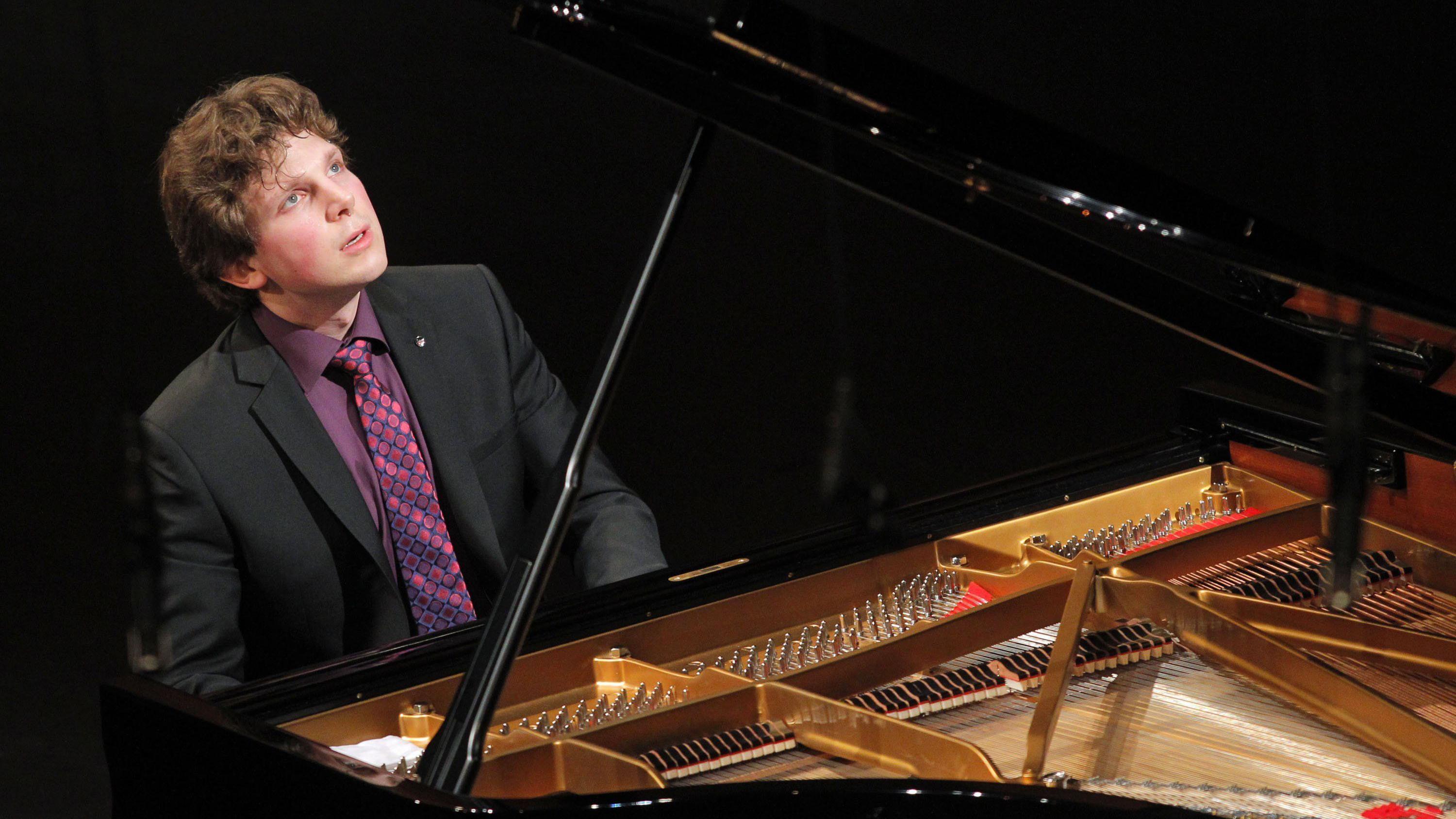
Jayson Gillham Melbourne Symphony Orchestra Gaza case 2026 has reached a pivotal moment after Justice Graeme Hill adjourned the Federal Court proceeding following a three-week trial, urging both parties to resolve the workplace discrimination dispute between themselves rather than wait for a judicial decision, telling the MSO and the acclaimed British-Australian pianist that it would be in both sides' interests to settle the matter without him having to say the things he would need to say in a judgement. The case, which has attracted significant attention across the arts community and free speech advocates in Australia, centres on the MSO's decision to cancel Gillham's scheduled August 15, 2024 performance following comments he made during a concert four days earlier in which he told an audience of approximately 150 people that Israel had killed more than 100 Palestinian journalists in Gaza since October 2023 and that the killing of journalists constitutes a war crime under international law. Gillham is suing the MSO for workplace discrimination, arguing that his political belief, a protected attribute under Victorian law, was the basis for the concert cancellation, and that an employer cannot mistreat an employee because of such a belief, while the MSO maintains it was blindsided by comments made on its stage without prior notice and was responding to a highly pressured situation involving what it described as the biggest issue in the world at the time.
Justice Hill's adjournment statement, noting that while he usually makes judgements pretty quickly this was not that sort of case and that it might take him some time to work through everything, carries the implicit signal that his deliberations are not pointing toward a clear and straightforward outcome in either party's favour and that the complexity and sensitivity of the legal questions involved make a negotiated resolution preferable to a judicial determination that will require him to make findings the parties may find uncomfortable. His acknowledgment that two previous settlement attempts had failed while still urging the parties to use the additional time created by his deliberation period to try again reflects the specific judicial position of a judge who has heard three weeks of testimony from almost two dozen witnesses, formed views about the evidence that will eventually produce a judgement, but who considers the public interest dimensions of the case, including arts workplace rights, freedom of political expression, and the relationship between artist independence and institutional control, sufficiently significant to warrant a further settlement attempt before those dimensions are resolved through binding judicial findings.
The case's core legal question, whether the MSO's cancellation of Gillham's performance constituted discrimination based on his political belief in violation of the Equal Opportunity Act provisions protecting political belief as an attribute, sits at the intersection of Australian workplace law, artistic freedom, and the institutional governance of performing arts organisations that receive public funding and manage relationships with both donors and audiences whose views on contested political issues may diverge sharply from those of the artists they engage. Gillham's lawyers' argument that political belief is a protected workplace right in Victoria and that an employer cannot take adverse action based on that belief frames the MSO's cancellation as a straightforward discrimination case, while the MSO's lawyers' characterisation of the situation as a highly pressured response to a highly controversial statement made at the height of global attention to the Gaza conflict frames it as a contextually justified institutional response to an extraordinary circumstance rather than a discriminatory employment decision.
How the August 2024 Concert Comment Created an Institutional Crisis
Gillham's statement during the Melbourne concert on August 11, 2024, was not a spontaneous outburst but a prepared introduction that he read out deliberately, telling the audience that Israel had killed more than 100 Palestinian journalists since October 2023, that these killings constituted targeted assassinations of prominent journalists travelling in marked press vehicles or wearing press jackets, and that the killing of journalists is a war crime in international law done to prevent the documentation and broadcasting of war crimes to the world. The specificity and legal framing of the statement, invoking international law's classification of journalist killings as war crimes, distinguished it from casual political commentary and reflected the pianist's considered position on an issue he clearly regarded as serious enough to address from the concert stage to an audience gathered primarily for musical performance. The Committee to Protect Journalists has since reported that 206 journalists have been killed in Gaza since October 2023, providing the factual context that either validates the substance of Gillham's claims or updates them, depending on how the figure relates to the count available at the time he spoke.
The three complaints that Gillham's statement generated, compared to the almost 500 complaints that followed the MSO's decision to cancel his next performance, document the specific asymmetry in public response that the MSO's institutional decision created and that ultimately produced the further complication of the MSO cancelling the entire concert due to safety concerns. The MSO described itself as blindsided by Gillham's comments in its communication to patrons, saying he had put the organisation in a difficult situation and adding that the MSO does not condone the use of its stage as a platform for expressing personal views, a position whose application to a performing artist whose entire professional identity involves self-expression from the concert stage creates the specific tension that the lawsuit is now forcing the courts to resolve. The scale of the public response to the cancellation, with the 500 complaints dramatically outnumbering the three that prompted it, provided early evidence that the MSO had misjudged the reputational calculus of its decision in a way that its own subsequent acknowledgment of an error in cancelling confirmed.
The MSO's acknowledgment that it had made an error and its attempt to reschedule Gillham's performance on the condition that he would not make statements from the stage created the specific legal complication that Gillham's barrister Sheryn Omeri described in closing statements as insulting, because it combined a nominal admission of error with a proposed remedy that required Gillham to surrender the right that the cancellation had been based on. Asking Gillham to return to perform under a condition of pre-emptive silence about political beliefs as the remedy for having cancelled his performance over the expression of political beliefs does not remedy the discrimination Gillham alleges but reproduces it in a different form, creating the institutional posture that Omeri characterised as insulting and that the MSO's barrister Justin Bourke KC framed as a reasonable response to a highly pressured situation where controversy surrounded what he called the biggest issue in the world.
Victorian Political Belief Protection and Why This Case Tests Its Limits
The Victorian Equal Opportunity Act's protection of political belief as an attribute against which employers cannot discriminate provides the specific legal framework within which Gillham's claim is being assessed, and the case is testing how far that protection extends when the political belief is expressed in a workplace context in ways that the employer argues create institutional harm, reputational damage, and audience conflict rather than simply reflecting a personal view held privately or communicated in a non-workplace setting. Political belief as a protected attribute in Victorian anti-discrimination law was designed to prevent employers from making employment decisions based on employees' political affiliations, voting behaviour, or ideological commitments, but the application of that protection to a performing artist who expresses a political view as part of or in connection with a performance creates a more complex fact pattern than the classic case of an employer firing an employee for union membership or political party affiliation.
The MSO's position that it does not condone the use of its stage as a platform for expressing personal views raises the question of whether a performing arts organisation that engages an artist to perform on its stage can contractually restrict the artist's communication with the audience as a condition of the engagement without that restriction constituting discrimination based on the beliefs it is designed to suppress. If Gillham would have been permitted to make a statement on a different political topic, or if the MSO would not have cancelled a performance following a statement expressing pro-Israeli sentiment, the question of whether the cancellation was based on the content of his belief or simply on the act of making any political statement from the stage becomes legally significant. The evidence from the almost two dozen witnesses whose testimony Justice Hill must assess presumably addresses these contextual questions about what the MSO knew, intended, and considered in making its decisions, and his comment that this was not the sort of case he could resolve quickly suggests the evidence on these questions is complex and contested.
The Adjournment, Settlement Prospects, and What a Judgement Would Mean
Justice Hill's specific language about not wanting to say the things he would need to say in a judgement is the clearest available signal about how the judge is currently viewing the case, suggesting that his assessment of the evidence and law has produced conclusions that are uncomfortable for one or both parties and that he considers a settlement that avoids those conclusions to be in the interests of the parties and possibly the broader institutional relationships involved. A judge who anticipates that his judgement will contain findings he would prefer the parties to avoid through settlement is communicating something about the direction of those findings without disclosing them, and the parties' lawyers will be interpreting that communication in their advice to their clients about the settlement risk calculus they face. The two previous failed settlement attempts suggest that the gap between what Gillham considers an adequate remedy and what the MSO is willing to offer has been substantial enough to prevent agreement through two rounds of negotiation, and whether Justice Hill's adjournment creates sufficient pressure on the MSO to close that gap depends on how the parties' lawyers are interpreting his settlement encouragement signal.
The MSO's institutional position in any settlement negotiation is complicated by the fact that it has already publicly acknowledged making an error in cancelling Gillham's August 15 performance, creating an admission that has compromised its ability to defend the cancellation as fully justified while simultaneously not having agreed on any remedy that Gillham considers adequate. A settlement that provides Gillham with acknowledgment, financial compensation, and possibly a future engagement without the pre-emptive silence condition would address the core elements of his legal claim while allowing the MSO to close a chapter that has produced substantial reputational damage and diverted significant institutional resources to three years of litigation and a three-week trial. Gillham's decision to pursue litigation after the MSO rejected his reasonable requests to remedy the situation suggests a plaintiff whose primary concern extends beyond financial compensation to the institutional acknowledgment of a principle, and settlements that provide money without acknowledging that principle may face the same resistance that two previous attempts have encountered.
The case's implications beyond the immediate parties extend to the governance practices of performing arts organisations across Australia regarding what they can require of performing artists in terms of pre-performance approval of statements, the scope of political belief protection in artistic workplace contexts, and the institutional accountability mechanisms that should apply when arts organisations whose public subsidies create obligations to both artistic freedom and public trust make decisions that affect those values. Justice Hill's acknowledgment that his judgement might take some time reflects the genuine legal complexity of questions whose resolution will create precedents affecting not just the MSO and Gillham but the relationship between artistic freedom and institutional authority across Australia's performing arts sector.