
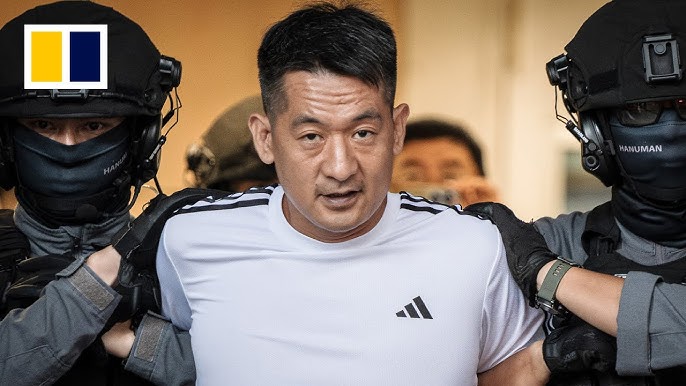
Thailand Illegal Crypto Mining has issued an arrest warrant for Wang Yicheng, a Chinese businessman who was the subject of a 2023 Reuters investigation into transnational crypto-investment fraud, alleging he was a key figure in a network that used illegal cryptocurrency mining to launder proceeds from scams and online gambling. Police Major Woranan Srilam, spokesman for Thailand's Department of Special Investigation, confirmed to Reuters that Wang had been charged in November with theft and violations under the Computer Crimes Act, which covers interference with computer systems. Wang is believed to have already left Thailand, with Thai authorities now working with international partners to track his location.
The DSI identified Wang as a former leader of a Thai-Chinese trade association and described him as central to a group of Chinese investors using illegal crypto mining infrastructure to move criminal proceeds through the financial system. The investigation uncovered electricity theft worth approximately $28 million, making it one of the largest illegal crypto mining cases documented in the region in recent years. The DSI also issued arrest warrants for four unnamed Chinese nationals and four Myanmar nationals connected to the same network, indicating that the operation extended well beyond a single individual and involved a structured criminal organisation operating across multiple countries.
Wang did not respond to a request for comment from Reuters. China's Foreign Ministry said it was not aware of the situation. The US Department of Justice declined to comment on the Thai arrest warrant. The silence from all three parties leaves a significant information gap around the full scope of Wang's activities and the extent to which Chinese and US law enforcement have been cooperating on the underlying case, beyond the 2023 cryptocurrency seizure that US authorities carried out from an account bearing his name.
What the 2023 Reuters investigation revealed about Wang's scam-linked crypto wallet and his political connections in Thailand
The 2023 Reuters investigation first brought Wang Yicheng's name into public focus by documenting that a crypto wallet in his name had received at least $9.1 million between 2021 and 2022 from an account that TRM Labs and other blockchain analysis firms had linked to pig-butchering scams. Pig-butchering is a specific form of fraud in which victims are deceived over extended periods into making investments in fraudulent cryptocurrency platforms, often after being contacted by someone posing as a romantic interest or business contact online. The investigation was clear that it could not determine whether Wang was the actual controller of the wallet account or whether someone else had opened it in his identity, a distinction that remains legally significant.
What the investigation could establish was the political and institutional context in which Wang was operating. At the time the scam-linked funds flowed through the wallet bearing his name, Wang was serving as vice president of the Thai-Asia Economic Exchange Trade Association, an organisation that promotes Thai-Chinese business ties and whose leadership had cultivated relationships with senior Thai police and other officials in both countries. Major bitcoin mining equipment manufacturer Bitmain confirmed to Reuters in 2023 that Wang was a close partner and customer, though it stated its equipment had been supplied legally. After the Reuters report was published, the trade association told Reuters that Wang had left its board.
The combination of scam-linked financial flows, political connections to law enforcement elites, and a leadership position in a bilateral trade body that bridged Thai and Chinese business circles is precisely the profile that investigators and UN analysts have identified as characteristic of the higher tier of transnational organised crime networks operating in Southeast Asia. These networks do not operate from the shadows alone. They embed themselves in legitimate institutional structures to access the social capital, regulatory goodwill, and political protection that makes large-scale criminal operations sustainable over years rather than months.
How pig-butchering scam networks and KK Park connect to the broader criminal ecosystem across Southeast Asia
The scams documented in the Reuters investigation were partly traced to KK Park, an industrial compound on the Myanmar-Thailand border that has become one of the most widely documented hubs of transnational fraud operations in the region. KK Park and facilities like it operate from compounds that are physically located in areas with weak state authority and are typically staffed at least in part by trafficking victims, people who have been deceived or coerced into working as scam operators and who face violence if they refuse or attempt to leave. The United Nations has documented that these operations generate billions of dollars annually and represent one of the fastest-growing forms of organised crime globally.
One of the individual victims identified in the Reuters investigation was a 71-year-old man from California who lost his entire life savings of $2.7 million after being approached online by someone posing as a young woman. His case illustrates the human cost that sits behind the financial flows and corporate structures being investigated. Pig-butchering operations are designed to be invisible to victims until the moment the money disappears, building relationships over weeks or months before the fraudulent investment scheme is revealed. By the time victims realise what has happened, the funds have typically already moved through multiple wallets and jurisdictions, making recovery extremely difficult.
Thailand and other Southeast Asian governments have intensified their crackdowns on Chinese-run scam syndicates in recent months, with coordination extending to cross-border operations involving Myanmar, Laos, and Cambodia. The DSI's investigation into Wang Yicheng sits within this broader regional enforcement push, and the fact that Thai authorities have named him publicly and issued an international arrest warrant, rather than pursuing the case quietly, signals that the pressure on the political protection networks that have historically shielded these operations is increasing. The question investigators must now answer is whether Wang's flight from Thailand represents a permanent escape or simply a temporary relocation to another jurisdiction within the same transnational network.
What the US cryptocurrency seizure and DOJ involvement reveal about the cross-border dimensions of the case
The United States is not a passive observer in the Wang Yicheng investigation. In June 2023, US law enforcement seized approximately $500,000 in cryptocurrency from an account in Wang's name, after tracing funds stolen from a victim in Massachusetts back to that account. The DSI confirmed that US law enforcement had independently identified Wang as a suspect in a digital-asset fraud case, meaning two separate national jurisdictions arrived at the same individual through independent investigative pathways, a convergence that significantly strengthens the evidentiary picture even as the DOJ declined to comment on the Thai arrest warrant.
The cross-border architecture of the case reflects how transnational crypto crime networks are specifically designed to exploit jurisdictional fragmentation. Funds move from victims in the United States, Australia, Europe, and elsewhere into wallets linked to operators in Southeast Asia, are then processed through illegal mining operations and gambling platforms to obscure their origin, and emerge as apparently legitimate cryptocurrency holdings that can be liquidated anywhere in the world. Each individual transaction crosses multiple legal jurisdictions, and the cooperation required between law enforcement agencies to trace the full chain is both technically complex and diplomatically demanding.
The DSI's statement that transnational organised crime groups use illegal crypto mining to "generate income, launder money, and drive technology-crime networks" captures a key investigative insight that has reshaped how regional authorities approach these cases. Illegal mining operations are not simply a side business for scam networks. They function as integrated components of the criminal financial system, converting electricity theft into cryptocurrency that can be blended with scam proceeds to make the overall pool of funds harder to trace. Understanding that integration is what allowed the DSI to connect Wang's alleged mining activities to the broader scam and money laundering network that is now the subject of multiple arrest warrants across two countries.