
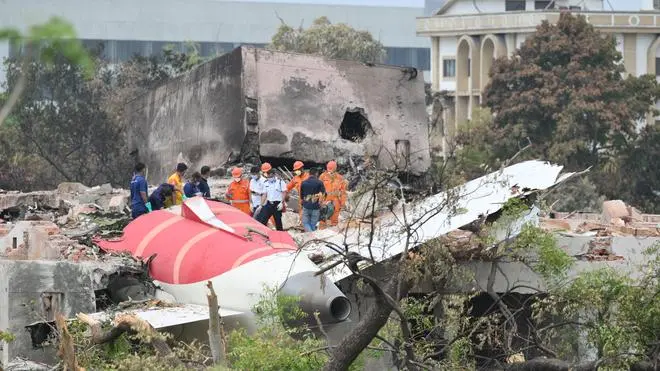
India's civil aviation minister has confirmed that the official investigation into last year's catastrophic Air India Boeing Dreamliner crash, which claimed 260 lives, is now in its final stage and that a comprehensive report is expected to be released within approximately one month. Minister Ram Mohan Naidu made the announcement on Friday while speaking to reporters on the sidelines of an event held in Gandhinagar, the capital of Gujarat in western India. The statement marks the most definitive public timeline that Indian aviation authorities have offered since the crash occurred, and it signals that one of the deadliest aviation disasters in Indian history is approaching a formal investigative conclusion that families of victims, aviation safety experts, and the broader public have been waiting for.
The crash, which involved a Boeing 787 Dreamliner operated by Air India, killed all 260 people on board and sent shockwaves through India's rapidly growing civil aviation sector. The disaster raised immediate and urgent questions about aircraft maintenance standards, operational safety protocols, regulatory oversight, and the airworthiness certification processes applied to one of Boeing's flagship long-haul aircraft. Air India, which has been undergoing a significant transformation under its new ownership following its privatization and acquisition by the Tata Group, faced intense scrutiny in the aftermath of the tragedy over whether its accelerated expansion program had placed sufficient emphasis on safety culture alongside commercial growth.
Minister Naidu's confirmation that the investigation is in its last stage comes at a moment of heightened public sensitivity around aviation safety in India. The country's civil aviation sector has experienced extraordinary growth over the past decade, with passenger volumes, fleet sizes, and route networks expanding at rates that regulators and safety systems have struggled to keep pace with. The final report from the Air India crash investigation is therefore expected to carry implications well beyond the specific circumstances of the accident itself, potentially reshaping regulatory requirements, maintenance protocols, and safety oversight frameworks across India's entire commercial aviation industry.
What the Investigation Has Covered and Why the Final Report Matters So Much
Aviation crash investigations of this scale and complexity are among the most technically demanding inquiries that any regulatory body undertakes, involving the reconstruction of flight data recorder information, cockpit voice recorder transcripts, maintenance logs, air traffic control communications, meteorological data, and physical evidence from the crash site. India's Aircraft Accident Investigation Bureau, which leads domestic crash investigations, has been working through this evidence base since the accident occurred, and the confirmation that the process is now in its final stage suggests that the core factual findings have been established and that investigators are in the process of finalizing their safety recommendations.
In previous major aviation accidents involving Boeing aircraft, investigation reports have played a critical role in identifying systemic safety issues that extended far beyond the individual flight involved. The investigations into the Boeing 737 MAX crashes in 2018 and 2019 are the most prominent recent examples, where final reports revealed design flaws, regulatory capture concerns, and pilot training inadequacies that led to sweeping global groundings, design modifications, and fundamental reforms in how aviation regulators certify new aircraft systems. While the Air India Dreamliner crash involves a different aircraft type with a different operational history, the precedent of investigation reports driving systemic reform is well established in international aviation safety practice.
The one-month timeline offered by Minister Naidu, qualified with the word mostly to allow for the possibility of minor delays, gives stakeholders a concrete expectation to plan around. Families of the 260 victims have been waiting for authoritative answers about what caused the crash and whether it could have been prevented. Aviation safety advocacy organizations have been calling for transparency about the investigative findings. Boeing, which has faced a sustained period of safety-related scrutiny and regulatory pressure over the past several years, will be watching the report's findings closely given their potential implications for the Dreamliner program's reputation and operational requirements globally.
Air India's Safety Record and the Broader Questions Facing India's Aviation Sector
Air India's journey over the past several years has been defined by transformation on multiple fronts simultaneously. The airline's privatization and acquisition by Tata Sons represented one of the most significant corporate transactions in Indian aviation history, ending decades of government ownership and bringing in new leadership committed to rebuilding what had become a financially distressed and operationally struggling carrier. Under Tata's ownership, Air India embarked on an ambitious expansion program involving new aircraft orders, route additions, service improvements, and a fundamental cultural overhaul of the organization. The Dreamliner crash occurred against the backdrop of that transformation, raising difficult questions about whether safety systems kept pace with the pace of organizational and commercial change.
In earlier periods of Air India's history under government ownership, the airline's safety record was broadly in line with international standards even as its financial performance and service quality attracted persistent criticism. The transition to private ownership brought new energy and investment but also introduced the pressures of commercial competition and growth targets that can, in any airline environment, create tension with the slower, more methodical rhythms of safety culture development. Aviation safety experts have consistently emphasized that safety culture is not a switch that can be flipped during a corporate transition but a deeply embedded organizational characteristic that requires years of consistent leadership commitment to build and maintain. How investigators assess Air India's safety culture in the period leading up to the crash will be one of the most closely watched elements of the final report.
The implications of the investigation's findings extend well beyond Air India as a single operator. India's Directorate General of Civil Aviation, the primary regulatory body overseeing the country's commercial aviation sector, is itself under scrutiny for whether its oversight mechanisms are adequate for the scale and complexity of the industry it now supervises. India has become one of the world's fastest-growing aviation markets, with domestic passenger numbers consistently breaking records and international connectivity expanding rapidly. Ensuring that regulatory capacity, safety oversight, and enforcement mechanisms scale proportionately with commercial growth is a challenge that aviation authorities in many rapidly developing markets have struggled with, and the Air India crash report may offer pointed commentary on how successfully India has managed that challenge.
What Comes Next After the Final Report and What Families of Victims Can Expect
The release of a final crash investigation report does not mark the end of all processes connected to an aviation disaster of this magnitude. It typically triggers a series of downstream actions that unfold over months and years, including regulatory safety directives, manufacturer design reviews, airline operational changes, legal proceedings, and compensation negotiations. In the Air India case, the final report will almost certainly include a set of safety recommendations directed at one or more of the following parties: Air India as the operating carrier, Boeing as the aircraft manufacturer, India's civil aviation regulatory authorities, and potentially international bodies with oversight roles in the certification or maintenance of the aircraft type involved.
For the families of the 260 people who lost their lives in the crash, the report will represent a moment of both closure and potential renewed grief as the specific sequence of events that led to the tragedy is formally documented and made public. Many families have been following the investigation closely and have organized through advocacy groups to ensure that their interests and their desire for full transparency are represented in the investigative process. The question of accountability, both in terms of regulatory consequences for those found to have failed in their responsibilities and in terms of civil compensation for the losses suffered, will remain live issues long after the report itself is published.
Minister Naidu's public commitment to a one-month release timeline creates a form of democratic accountability that makes further delay politically and institutionally costly. The statement was made to journalists at a public event and has been widely reported, meaning that aviation authorities, Air India, and the government itself are now on record with a specific expectation. For a country where major inquiry reports have sometimes been delayed for years beyond initially projected timelines, the specificity of the minister's commitment is itself noteworthy. It suggests a degree of confidence within the investigative process that the substantive work is genuinely close to completion, and it gives the families of 260 victims a tangible date to hold the system accountable to.