
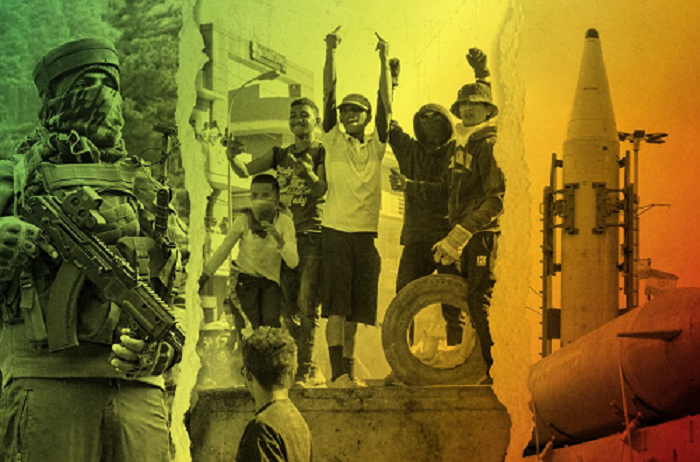
The global economic risks 2026 present do not point to a single catastrophic shock. Instead, they reveal a world drifting into sustained uncertainty as political disruption, technological divergence, and weakening global governance reshape markets and growth prospects.
Rather than a dramatic clash between major powers, the year ahead is defined by fragmentation. Economic systems that once relied on predictability, shared rules, and institutional trust are giving way to transactional politics, contested infrastructure, and rising geopolitical leverage over trade, energy, and resources.
As one global risk analyst puts it, “The danger in 2026 is not collapse. It is the steady erosion of the systems that once absorbed shocks.”
1. The United States as a Source of Economic Risk
The United States has long functioned as the backbone of the global economic order. In 2026, it is increasingly a source of volatility.
Political transformation at home is reshaping economic governance. Institutional checks are weakening, policy is becoming more personalized, and economic tools are being used to reward political loyalty and punish opposition. Even if these efforts ultimately fail, investor confidence and policy predictability have already suffered.
“There will be no return to the old status quo,” one observer notes, warning that uncertainty will outlast any single administration.
2. A Structural Power Shift in Energy and Technology
The defining technologies of the modern economy run on electricity. Electric vehicles, batteries, drones, robotics, and artificial intelligence all depend on control of what analysts call the electric stack.
China has mastered this stack, becoming the world’s first true electrostate. The United States, by contrast, is reinforcing its position as a petrostate. In 2026, this divergence becomes impossible to ignore.
Beijing offers emerging markets affordable, integrated infrastructure. Washington offers legacy energy systems. The economic result is a shift in global influence, as more countries build their industrial futures on Chinese foundations.
3. Hemispheric Intervention and Economic Blowback
Renewed U.S. assertiveness in the Western Hemisphere, particularly in Venezuela, carries economic consequences beyond short-term political wins.
Removing a regime is easier than stabilizing an economy. Currency volatility, capital flight, and disrupted energy markets often follow. Across Latin America, aggressive tactics risk triggering nationalist backlash and encouraging governments to deepen ties with alternative partners.
4. Europe’s Economic Fragility Deepens
France, Germany, and the United Kingdom enter 2026 with weak governments, public discontent, and limited political capital.
These constraints limit Europe’s ability to address slow growth, energy insecurity, and the rising costs of defense. With U.S. support increasingly uncertain, Europe faces the challenge of filling a security vacuum while managing domestic economic strain.
“Paralysis is the best-case scenario,” a European policy expert warns.
5. Russia’s Hybrid War Reaches Markets
While fighting continues in Ukraine, the most dangerous economic risk lies in Russia’s hybrid conflict with NATO.
Cyberattacks, drone incursions, and infrastructure disruption are increasingly met with Western retaliation. This escalation raises the risk of miscalculation, particularly in energy markets, shipping lanes, insurance, and financial systems.
As risk tolerance rises on all sides, the margin for error narrows.
6. The Rise of Transactional State Capitalism
U.S. economic policy is becoming more interventionist and more transactional.
Tariffs, regulatory pressure, subsidies, and selective market access are increasingly deployed to reward alignment and penalize dissent. As traditional tariff tools face limits, governments are relying on deeper forms of market intervention.
This approach distorts competition, undermines efficiency, and sets precedents that future administrations are unlikely to reverse.
7. China’s Deflation Trap Spills Abroad
China’s economy is slipping deeper into deflation, and policymakers appear unwilling to reverse course.
With political control and technological supremacy prioritized over consumption stimulus, Beijing is attempting to export its way out of trouble. Excess capacity is flooding global markets at ultra-low prices.
Trading partners may tolerate this pressure in the short term, but protectionist backlash is inevitable.
8. Artificial Intelligence Turns Extractive
Artificial intelligence remains transformative, but its economic model is deteriorating.
Under pressure to justify high valuations, AI firms are experimenting with opaque, extractive strategies, including embedded advertising and behavioral influence. Unlike social media, AI does not merely capture attention. It shapes decisions.
The near-term risk is not mass unemployment, but declining human judgment, productivity, and trust in information systems.
9. North American Trade Stuck in Limbo
The USMCA will neither collapse nor be renewed. Instead, it staggers forward in a state of uncertainty.
This zombie agreement allows continued pressure on Mexico and Canada while avoiding comprehensive renegotiation. Strategic sectors such as autos, steel, and aluminum face growing protectionism, eroding the predictability that once defined North American trade.
10. Water Becomes an Economic Weapon
Water scarcity is emerging as one of the most dangerous global economic risks.
With treaties suspended and new mega-dams built without binding agreements, rivers are increasingly weaponized. From South Asia to Africa, water stress fuels instability, disrupts agriculture, and accelerates migration.
No single crisis may erupt in 2026. But when the next shock comes, water will amplify it.
Final Takeaway
The defining feature of the global economic risks 2026 is fragmentation.
Growth will slow, volatility will rise, and the tools to manage crisis will weaken. The world is not heading toward a single breaking point. It is drifting into a system where shocks are harder to absorb and cooperation is harder to sustain.
As one analyst concludes, “The weapons are loaded, the guardrails are off, and the system is more fragile than it appears.”