
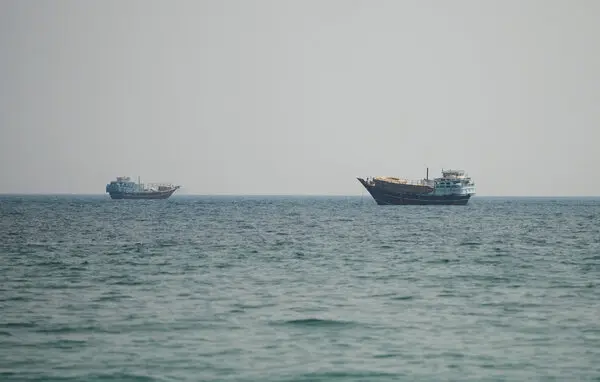
Iran IRGC Hormuz blockade Bab el-Mandeb Red Sea threat 2026 has raised the spectre of simultaneous closure of two of the world's most strategically critical maritime energy corridors, with Iran's Islamic Revolutionary Guard Corps threatening to close all other export corridors that benefit the United States and its allies after shutting the Strait of Hormuz and the U.S. reimposing a naval blockade of Iranian ports, while analysts say Tehran is signalling it may activate its Houthi allies in Yemen to shut the Bab el-Mandeb gateway to the Red Sea, opening a new front against Washington that would simultaneously threaten the Gulf oil artery and the Red Sea shipping lane through which Saudi oil exports and a substantial share of global commerce pass. The IRGC's statement, carried by Iran's IRNA state news agency on Wednesday, declared directly that regional energy exports are either shared by all or denied to all, framing the potential Bab el-Mandeb closure not as an escalation but as the logical symmetrical application of the energy denial logic that the Hormuz closure already expressed, while a senior Houthi official had warned on Monday that the group was prepared to close the Bab el-Mandeb Strait in a move he said could send oil prices soaring to $200 a barrel if Saudi Arabia continued to attack Yemen. The Houthis fired missiles at Saudi Arabia after accusing the kingdom of bombing an airport under their control on Monday, breaking a four-year truce in the conflict between the kingdom and the Iran-aligned group and activating the specific escalation pathway whose progression toward Bab el-Mandeb closure analysts are now watching as the most consequential potential development of the current conflict phase.
"Regional energy exports are either shared by all, or denied to all," the IRGC said in its Wednesday statement.
The political risk assessment of this dual-strait scenario requires recognising that the potential simultaneous closure of Hormuz and Bab el-Mandeb would remove from global markets not the 20 percent of oil and gas that Hormuz alone carries but the combined supply from both the Persian Gulf's production basin and the Red Sea transit route for Gulf Arab state exports, creating the energy market disruption whose $200 barrel price projection from the Houthi official is not simply inflammatory rhetoric but a plausible upper bound for what the complete blockage of both the major Gulf energy export pathways would produce in global supply and price terms.
Oil prices rose on Wednesday after closing up 2 percent to a one-month high on Tuesday, with Brent and West Texas Intermediate both hitting their highest levels since mid-June for the second consecutive session, as markets began pricing the escalating supply disruption risk that the latest attacks and the dual-strait threat create for the energy supply chain whose functionality the global economy requires.
How the IRGC Built Its Dual-Strait Leverage and What the Houthi Alliance Provides
The closure of the Strait of Hormuz that began after the February 28 U.S.-Israeli strikes on Iran has been the single most economically consequential action that any party to any conflict has taken in recent memory, removing from global circulation the waterway through which approximately a fifth of global oil and liquefied natural gas supplies passed daily and whose closure has sustained the elevated energy prices that have driven inflationary pressure across importing economies from East Africa to Europe to the United States. The IRGC's statement that Hormuz would remain closed until the end of America's evils establishes the specifically open-ended and politically defined condition for reopening that makes Hormuz closure duration unpredictable in the way that operationally motivated closures would not be, because the end of America's evils is not a specific negotiable condition but a framing that the IRGC can apply or revoke according to its own political assessment of when the closure has achieved its intended coercive purpose.
The U.S. military's statement that it began a fresh round of strikes to continue degrading Iranian capabilities used to attack commercial shipping in the Strait of Hormuz, combined with its confirmation that Iran had attacked seven commercial ships over the last week resulting in nearly a dozen crew members killed, missing, or injured, establishes the specific operational escalation cycle that has been running since the June ceasefire collapsed. Iran attacks commercial shipping, the U.S. strikes Iranian coastal military targets, Iran retaliates against U.S. bases in Gulf Arab host states, and the cycle repeats in the pattern that BBC security correspondent Frank Gardner had earlier described as having a grim predictability. The latest U.S. strike wave lasting seven hours and hitting dozens of military targets near the Strait of Hormuz and Iranian coastal areas represents the most sustained single-operation strike package of the current re-escalation phase, documenting an American military response whose intensity has increased with each cycle.
The IRGC's claimed attacks on Wednesday on U.S. Fifth Fleet facilities in Bahrain, on what it described as a logistics facility at Mina Abdullah in Kuwait whose fire Kuwait's state news agency confirmed had been brought under control, and on what it described as aircraft hangars at the Azraq air base in Jordan, create the specific multi-country Iranian counter-response pattern that distributes the retaliation geographically across the Gulf Arab host states whose territory the U.S. uses for the operations Iran is targeting. Jordan's air defence intercepting and shooting down three ballistic missiles from Iranian territory early on Wednesday documents the specific defensive success that Jordan's air defence systems achieved but also confirms the strike attempt itself, whose geographic reach from Iranian territory to Jordan represents the longest-range ballistic missile use in the current conflict phase and whose targeting of aircraft hangars suggests Iranian operational interest in degrading the air strike capacity whose bases Jordan hosts.
The Houthi Red Sea Precedent and Why Bab el-Mandeb Is Already Half Closed
The Houthis' demonstrated capacity to choke global commerce through the Bab el-Mandeb during the Gaza war period that began in October 2023 provides the specific operational precedent whose existence makes the current Bab el-Mandeb closure threat credible rather than merely rhetorical, because the group has already deployed the anti-ship missiles, drones, and suicide boats that would be required to make the closure operationally effective against the commercial shipping whose routing through the Red Sea it would target. The Red Sea shipping disruption of 2023 to 2024 drove major shipping lines to reroute around the Cape of Good Hope, adding weeks to journey times and billions of dollars to shipping costs for goods moving between Asia and Europe, documenting the specific economic consequence that Bab el-Mandeb interdiction creates for the global supply chains whose Red Sea routing is now being threatened again under a different geopolitical framing but using the same military capabilities.
The Saudi-Houthi truce's collapse, triggered by the Saudi bombing of an airport under Houthi control that prompted missile retaliation against Saudi Arabia, reopens the bilateral Yemen conflict dimension of the regional crisis that the four-year truce had been managing separately from the Iran-U.S. confrontation in the Gulf. A Houthi movement simultaneously fighting Saudi Arabia and threatening Bab el-Mandeb closure is the specific multi-front operational posture that Iran's regional axis of resistance strategy is designed to create, using partner armed groups to open multiple pressure points against American allies and interests that the U.S. military cannot simultaneously suppress without the strategic overextension that fighting Iran, degrading Houthi capabilities in Yemen, managing Gulf base defence, and protecting commercial shipping in both Hormuz and the Red Sea simultaneously would require. The Houthi official's $200 oil price claim is the specific energy market shock projection that is designed to maximise the political pressure on the Gulf Arab states and Western countries whose economic interests the combined closure would devastate.
Trump's Energy Target Threat, the 20 Percent Shipping Fee Reversal, and What Comes Next
Trump's statement in a Fox News interview with Trey Yingst that he would save the energy targets for last but ultimately would hit them unless Tehran resumed negotiations, combined with the instruction to U.S. negotiators to tell Iranian counterparts they better make a deal, represents the specific deal-or-escalate dual-track pressure whose application the Trump administration has been deploying throughout the conflict and whose credibility the energy target threat is designed to reinforce by establishing the specific next escalatory action that Iranian non-compliance with the negotiation resumption demand would trigger. The energy infrastructure threat is qualitatively different from the coastal military and air defence targets that U.S. strikes have been hitting in the current re-escalation phase, because Iranian energy infrastructure including power plants and oil export facilities represents the country's economic lifeline whose destruction would impose costs on the Iranian civilian population rather than on the IRGC's military capacity that coastal strikes target.
The 20 percent shipping fee on Strait of Hormuz transit that Trump floated on Monday, drew sharp United Nations shipping agency criticism, and then scrapped on Tuesday in favour of seeking investment deals with Gulf states, represents the specific policy reversal that the international reaction's speed and severity produced, because a U.S. presidential announcement of a unilateral toll on international shipping in a strait whose freedom of navigation is protected under the UN Convention on the Law of the Sea would have created the specific legal and diplomatic crisis that American allies and international organisations were not prepared to absorb. The replacement proposal of Gulf state investment deals is sufficiently vague and different in character that it provides little analytical purchase beyond documenting that the shipping fee idea has been abandoned rather than that a coherent alternative has been developed.
The energy market response, with oil rising for the second consecutive session to one-month highs, reflects the market's progressive absorption of the dual-strait threat into its forward price assessment, repricing the probability of supply disruption that extends beyond the current Hormuz situation to the potential Bab el-Mandeb closure whose activation would represent a step-change in the global energy supply emergency that the current conflict has already created. The specific price levels that Brent and WTI have reached, while below the April peaks of the initial Hormuz closure shock, are moving in the direction that continued escalation whose most extreme expression is the dual-strait scenario would drive toward the $200 level that the Houthi official cited, creating the specific energy market pressure whose political consequences in importing country governments and economies provide the additional coercive leverage that Iran's dual-strait threat is designed to activate alongside the direct military and diplomatic pressure of the current strikes exchange.