
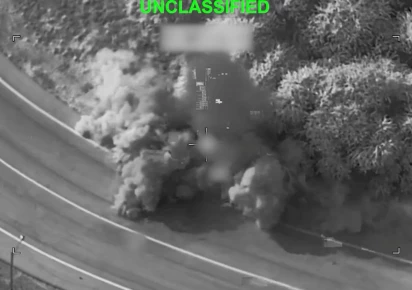
Iran US seventh night strikes Gulf states Hormuz escalation 2026 has entered its most geographically expansive and infrastructurally destructive phase since last week's ceasefire collapse, with Iran launching renewed attacks on U.S. Gulf allies on Saturday after a seventh consecutive night of American strikes on Iranian military sites, while both sides simultaneously targeted shipping in the Strait of Hormuz, oil prices climbed more than 4 percent on Friday to their highest level in more than a month, Kuwait's power generation and water desalination station was hit in an Iranian attack causing damage and a fire, Iran's Revolutionary Guards claimed to have destroyed Bahrain's main artificial intelligence centre with ballistic missiles and drones, and UN Secretary-General Antonio Guterres expressed concern specifically about attacks on civilian infrastructure in Iran and across the region. U.S. Central Command said it concluded its latest round of attacks hitting surveillance sites, military logistics infrastructure, underground weapons storage, and maritime capabilities, marking the first time the command specifically mentioned infrastructure targeting in more than a week of daily strike operations, in a disclosure whose timing following Guterres's civilian infrastructure concern creates the specific accountability juxtaposition that the conflict's international legal dimension increasingly demands attention to.
"More than 50,000 American service members are operating across the Middle East and remain vigilant, lethal, and ready," U.S. Central Command said in a statement describing the seventh night's operations.
Iran's Revolutionary Guards stated that until U.S. aggression comes to an end, it will not be possible to export chemical fertilisers or even a single drop of oil and gas from the region, delivering the most comprehensive energy export denial threat the conflict has yet produced by extending the denial beyond oil to the agricultural input supplies whose interruption would affect food production across the developing countries that rely on Persian Gulf fertiliser exports for the crop yields that their populations depend on for food security. Iranian media reported on Saturday that missiles struck power facilities and desalination pumps in the southern Iranian city of Jask, with a local official saying drinking water had been cut off in villages in the area, while Iranian state television reported three people killed and eight wounded in strikes on coastal Hormozgan Province with two bridges and a road tunnel damaged. Seven people were reported killed in attacks on bridges in the southern port of Bandar Khamir where a train station was also hit, with airports, bridges, and infrastructure struck across multiple Iranian cities including Sirik, Ahvaz, Yazd, and Khorramabad.
Mohsen Rezaei, an adviser to Iran's supreme leader, warned on Friday against U.S. escalation or any attempt to seize Iranian territory, responding directly to Trump's public non-ruling-out of a ground assault on Iran's coast or islands and the threat of broad-based air strikes on Iranian infrastructure that American officials have been communicating as both threat and tactical option.
How the Seventh Day Created the Conflict's Most Dangerous Strategic Moment
The week-long escalation since last week's ceasefire agreement fell apart has produced a daily strike exchange pattern whose cumulative military, economic, and humanitarian consequences now exceed those of any comparable period since the conflict began on February 28, with each successive night's operations adding targets in new geographic and functional categories that progressively expand the conflict's scope from the coastal military facilities that defined the initial strike packages toward the civilian-adjacent infrastructure whose targeting Guterres identified as the specific escalation requiring international concern. The seventh night's specific addition of underground weapons storage to Centcom's stated target list, alongside the Iranian infrastructure damage at Jask's water and power facilities, documents the simultaneous expansion of American targeting depth and Iranian infrastructure suffering that makes Saturday's situation qualitatively different from the conflict's earlier phases in ways that the UN Secretary-General's statement captures at the institutional level.
The oil price rise of more than 4 percent on Friday to the highest level in more than a month reflects the market's progressive reassessment of the probability that the Hormuz closure and the broader Gulf energy supply disruption will extend significantly further than the brief ceasefire period had appeared to promise, with the political pressure that elevated energy prices create for Trump's Republican Party heading into November's congressional elections providing the specific domestic political cost whose accumulation was supposed to incentivise deal-making rather than escalation. The reversal of that incentive logic, in which each successive night of strikes raises rather than reduces energy prices and therefore increases rather than decreases the domestic political cost of the conflict's continuation, creates the political risk for the Trump administration that the oil market's Friday reaction most directly documents.
The shipping dual-track on Saturday, with the U.S. saying it redirected four commercial vessels, disabled one, and boarded another to enforce its naval blockade while Iran's Revolutionary Guards said four vessels violating its rules were stopped from going through the strait with a combined missile and drone operation and Iranian media reported two oil tankers exploded after passing through a mined route south of the strait whose report the U.S. military labelled false, creates the competing factual assertions about what is happening in the Strait of Hormuz whose resolution independent observers at sea cannot provide without the kind of neutral maritime presence that neither side has allowed to function effectively. The tanker explosion and fire reports are among the most consequential disputed facts of the current escalation because they indicate either Iranian mining of shipping routes in international waters, a violation of maritime law whose confirmation would change the legal and political character of the shipping conflict, or Iranian disinformation designed to create fear among shippers without the actual mining activity whose implementation would expose Iran to the international legal accountability that false reports avoid.
Kuwait, Bahrain, Qatar and the Gulf Host State Crisis
Kuwait's confirmation that one of its power generation and water desalination stations had been hit by Iranian attack causing damage, a fire, and disruption of a large number of electricity generation units represents the most consequential strike on Gulf Arab infrastructure since the current escalation cycle began, because attacks on power generation and water desalination facilities in the Gulf states whose populations live in extreme climates where these utilities are not optional services but existential necessities create the specific civilian impact that transforms a military-host-state relationship problem into a humanitarian emergency affecting ordinary Kuwaiti residents who have no involvement in the American military operations whose hosting has made Kuwait a target. The Kuwaiti army's subsequent confirmation it was responding to Iranian drone attacks documents the specific defensive posture that Gulf Arab states are being forced into as Iran expands its Gulf base targeting from U.S. military facilities to the shared infrastructure whose disruption affects both American operations and the host population's daily life.
Iran's Revolutionary Guards' claim to have destroyed Bahrain's main artificial intelligence centre with ballistic missiles and drones represents the specific high-technology infrastructure targeting that adds a new dimension to Iran's Gulf retaliation strategy beyond the fuel storage, military equipment depots, and base facilities that previous rounds targeted. An AI centre is not a conventional military target but a technology infrastructure asset whose destruction serves multiple purposes simultaneously: degrading a Gulf state's technology development capacity, demonstrating Iranian precision strike capability against non-hardened high-value facilities, and signalling the breadth of Iranian retaliation options that extends to civilian technology infrastructure alongside military assets. Saudi Arabia's civil defence issuing early warnings in at least two places, the first in several months, without yet reporting damage, documents the expansion of the threat geography to the kingdom whose energy facilities Iran struck earlier in the war and whose potential re-targeting would represent the most severe economic consequence for the global oil market of any single strike action in the current escalation cycle.
Iran's naval firing of a shore-to-sea cruise missile toward what it described as a hostile U.S. vessel in the northern Indian Ocean, with Iran's army saying the launch caused fear and panic and forced the vessel to move out of range, represents the geographic extension of Iranian strike operations beyond the Gulf and the Strait of Hormuz into the Indian Ocean in a demonstration of naval missile reach whose political communication to both the U.S. and to the international shipping community assessing the security environment for commercial vessel routing is the primary purpose regardless of the specific damage or disruption the launch produced.
Infrastructure Expansion, the UN Warning, and the November Election Clock
Guterres's specific concern about attacks on civilian infrastructure in Iran and across the region arrives as both the U.S. Central Command's first mention of infrastructure targeting after a week of operations and Iranian media's documentation of water, power, and transportation infrastructure damage in multiple Iranian cities create the specific evidentiary record that the UN Secretary-General's statement is responding to. Infrastructure targeting in armed conflict is governed by international humanitarian law's distinction between military objectives and civilian objects, with dual-use infrastructure whose military function is the reason for its targeting being legally permissible if the military advantage anticipated exceeds the civilian harm expected, but with the proportionality assessment being the specific legal judgment whose application to the current strikes Guterres's statement implicitly questions without the direct legal conclusion that UN Secretary-General statements typically avoid making.
The Jask drinking water cut-off following strikes on desalination pumps is the specific civilian harm whose most immediate and visceral expression matches the international law framework's concern about attacks on objects indispensable to the survival of the civilian population, a category that water infrastructure specifically occupies in humanitarian law codification. Whether the Jask desalination pump strikes were legally permissible attacks on military logistics infrastructure that also processes water, as U.S. targeting methodology would characterise them, or legally impermissible attacks on civilian water supply infrastructure, as Iranian media characterises them, is the specific factual and legal dispute whose resolution determines the international accountability assessment that Guterres's concern frames without resolving. The seizing of a vessel off Yemen, raising concern about security at the Red Sea's Bab al-Mandeb choke point, documents the conflict's extension into yet another maritime domain at the moment when the dual-strait scenario whose energy market consequences analysts have been modelling appears to be moving from theoretical to operational.
Trump's threatened broad-based air strikes on Iranian infrastructure and his non-ruling-out of a ground assault on Iran's coast or islands create the specific escalation ladder whose next rungs are publicly defined and whose activation depends on the diplomatic engagement or continued Iranian strait control enforcement that determines which direction the conflict's trajectory moves in the week ahead. U.S. officials' statement that attacks on southern Iran are designed in part to give Trump options documents the specific contingency planning whose existence makes the ground assault and infrastructure strike threats more than rhetorical, requiring Iranian strategic planners and Gulf Arab governments to assess what the options preparation means for the probability that they are exercised and what defensive and diplomatic preparations are proportionate to that probability.