
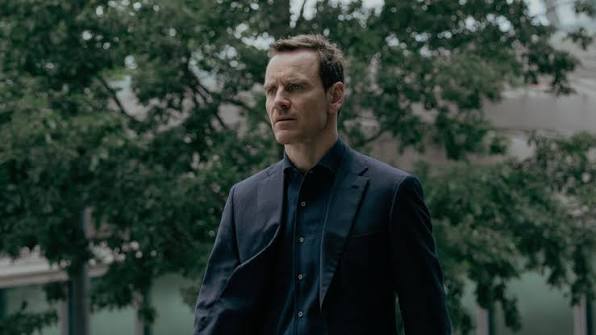
Michael Fassbender believes the central question driving The Agency, what happens when pretending to be someone else becomes your entire life, has taken on new weight as public trust in information itself has eroded. The Paramount+ thriller, now returning for a second season, follows CIA operatives living under deep-cover identities, and Fassbender argues its themes have become more relevant precisely because audiences are navigating a media environment where distinguishing fact from fabrication has grown genuinely difficult.
"The nature of trust has changed, there are a lot of stories and theories in front of people and it's hard to decipher one thing from the next," Fassbender told the BBC. That observation extends beyond the show's fictional world of espionage and deep-cover identities into a broader commentary on how ordinary people now consume news, social media, and online claims, where verifying a single piece of information has become its own deliberate task rather than something audiences can take for granted.
Fassbender plays Martian, a veteran CIA operative whose decades undercover have visibly worn him down, a character arc he says reflects something audiences intuitively recognise. "People are fascinated by the kind of people that go into this line of work and what kind of people come out of it at the end," he said, describing how Martian's idealism eroded over twenty years of sacrifice and moral compromise, a trajectory he believes mirrors how prolonged exposure to a deceptive information environment can wear down anyone's sense of certainty.
How has critical reception of The Agency split over its slow-burn approach to spy drama?
The Agency, based on the acclaimed French drama The Bureau and also starring Richard Gere, distinguishes itself from faster-paced spy thrillers by prioritising psychological tension over action sequences, a choice that divided critics when the first season premiered. Some reviewers praised the show's intelligence and realism, while others found its deliberately measured pace difficult to sustain across a full season.
The New York Times credited the series with giving viewers a genuine sense of what it means to love someone who lies constantly, noting that audiences are never fully certain how much of Martian's vulnerability is authentic versus calculated performance. That ambiguity, baked directly into the show's central relationships, is precisely the quality Fassbender argues sets The Agency apart from more conventional, gadget-driven spy entertainment.
The Guardian took a markedly different view, describing the show as slow and ambling with the urgency of something recently tranquillised, a sharp critique of the same pacing choices other outlets praised. Fassbender has defended that pacing directly, calling the first season's slow burn intentional and grounded in realism. "That's the reality of it, it's not big explosions or set pieces, although there's a bit more of that in season two, it's more about the quiet anxiety and tension because there's a lot at stake," he said.
What do Fassbender and Waterston say about AI's impact on public trust and media consumption?
Katherine Waterston, who plays CIA operations officer Naomi in the series, drew a direct line between the show's themes and the public's current relationship with artificial intelligence and online information. "We are in a quagmire, and even when something feels real, you have to be suspicious of it," she said, describing a media landscape where scepticism has become a necessary default rather than an occasional precaution.
Waterston was notably blunt about her own outlook on AI's broader societal trajectory. "It's a weird time to be alive as everyone is trying to figure these things out," she said. "I don't think AI bodes well for society and I think the worst is yet to come." She argued that the absence of meaningful regulation around the technology stands in sharp contrast to how other consumer products and services are governed. "Everything else we consume is regulated, so why do we have a Wild West when it comes to AI?" she said, adding that AI's benefits do not require universal, unrestricted public access to be realised.
Fassbender shares Waterston's concern about the risks of AI being deployed without adequate safeguards or full understanding of its consequences. "The people developing it don't even know the full potential of it and that's scary," he said, pointing to a gap between the pace of AI deployment and the depth of understanding around its long-term effects on public discourse and trust.
How does Fassbender personally navigate misinformation, and what challenges do the actors face off-screen?
Fassbender offered a candid, personal example of being caught out by online misinformation, an experience his wife, Oscar-winning actress Alicia Vikander, helped correct through basic verification habits. "I'll say to my wife, 'Did you see this thing happen?' and Alicia is great because she'll say, 'Where did this come from?' and then I'm there doing due process and fact-checking," he said, illustrating the kind of active scepticism Waterston described as now necessary for anyone navigating online content.
Despite portraying intelligence operatives skilled in deception and operational secrecy, both actors agreed they would make poor spies themselves. "Terrible," Waterston said, laughing, noting that the entire cast has reached the same conclusion during their research into the role. Fassbender pointed to the personal cost of maintaining a false identity long-term as the central reason, drawing on his research into real-world undercover operatives known as "legends" who informed aspects of his character.
"It's nearly impossible to have a real and balanced relationship," he said of the lifestyle required for deep-cover work, adding that the psychological toll surprised him most during his research. "What surprised me was how much it takes out of a person. Once you've created that legend, you'll never get rid of that personality. You'll lose your own personality in that." For both actors, their own professional challenges, balancing demanding shooting schedules with family life and managing public perceptions of an actor's work ethic, pale in comparison to the sacrifices their characters make on screen.