
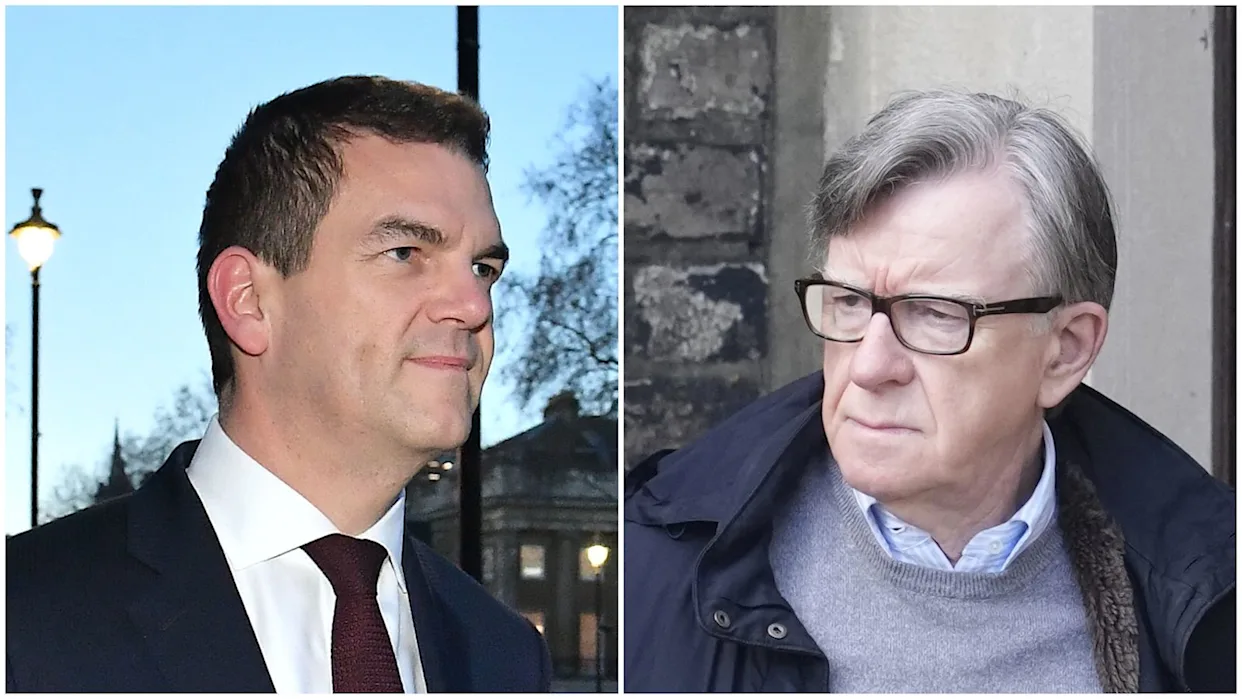
Sir Olly Robbins, the most senior Foreign Office official who was removed from his position following the rapidly escalating controversy surrounding Peter Mandelson's security clearance, is expected to face questions from Members of Parliament on Tuesday as the political fallout from one of the most damaging and constitutionally serious episodes of Sir Keir Starmer's premiership continues to deepen, widen, and draw in an ever-growing cast of political, civil service, and parliamentary figures. Sir Olly will be questioned by the Foreign Affairs Committee over the decision to grant Mandelson a security clearance despite serious concerns raised during the formal vetting process, and critically over whether Downing Street was informed about the significant red flags that the vetting process had identified before the prime minister made repeated public statements to Parliament asserting that due process had been properly followed throughout Mandelson's appointment. The appearance before the committee adds a further and potentially explosive layer of jeopardy to an already extremely difficult political week for the prime minister, one that threatens to become a defining moment of vulnerability for a government that came to power on promises of integrity, transparency, and a clean break from the standards of its predecessor.
The timing of Sir Olly's expected appearance carries particular and deliberate political significance that has not been lost on observers of Westminster procedure. It comes just one day after Starmer himself is due to face questions in the Commons about the Mandelson row, meaning that the prime minister will have to answer questions from opposition MPs about what he knew and when he knew it before Sir Olly has had the opportunity to give his own full account to the Foreign Affairs Committee. That sequencing creates the uncomfortable and politically dangerous possibility that whatever Starmer says in the Commons on Monday could be complicated, contradicted, or contextually reframed by what Sir Olly tells the committee on Tuesday, leaving the prime minister potentially exposed to further and more specific accusations of inconsistency or worse at a moment when his political credibility on this entire issue is already under sustained and serious challenge from multiple opposition parties simultaneously. For a prime minister whose personal brand has been built substantially on his legal background and his reputation for procedural precision, the prospect of having his account of events tested and potentially undermined by a senior civil servant appearing before a parliamentary committee the following day represents a particularly acute form of political exposure.
The Mandelson security clearance affair has evolved with remarkable and damaging speed from what might conceivably have been managed as an embarrassing but containable personnel matter into a full-scale political crisis touching simultaneously on questions of parliamentary accountability, the integrity of the civil service vetting process, the proper flow of sensitive information within government, and whether the prime minister knowingly or unknowingly misled the House of Commons about the circumstances surrounding one of his most high-profile and internationally visible ambassadorial appointments. Mandelson was announced as the government's choice for the Washington ambassador role in December 2024, with the formal developed vetting process beginning the same day as the announcement, a timeline that itself raises questions about whether adequate consideration was given to the vetting requirements before the appointment was publicly committed to. He formally took up the post in February 2025 before being removed last September when further details emerged about his past associations with convicted sex offender Jeffrey Epstein, adding an additional and deeply damaging dimension to an already troubled appointment history that the current controversy has brought back into sharp and uncomfortable focus.
How the Mandelson Vetting Controversy Unfolded and Who Within Government Knew What
The central factual dispute at the absolute heart of this political crisis concerns the timeline of who within the government knew about the concerns flagged during Mandelson's vetting process and when exactly they knew it, a question with profound and potentially career-defining implications for the prime minister's credibility given the specific and unambiguous public statements he made to Parliament asserting that due process had been properly followed in Mandelson's appointment. Understanding how that timeline developed requires understanding how the government's security vetting system is supposed to work and where it appears, in this instance, to have broken down in ways that had serious political consequences. Vetting of government employees and appointees is carried out by a dedicated government agency overseen by the Cabinet Office, which reports back to the hiring departments with formal recommendations on whether security clearances should be granted. BBC News understands that the vetting report in Mandelson's case returned a clear negative verdict on whether a security clearance granting access to sensitive government material should be given, a finding that the report framing as a definitive recommendation against approval rather than an ambiguous or borderline assessment requiring further consideration.
It has emerged that Cabinet Secretary Antonia Romeo found out about Mandelson's vetting failure in late March, a disclosure that is significant and politically damaging because it establishes that knowledge of the problem reached the very highest levels of the permanent civil service establishment weeks before the prime minister has said he was personally informed about the situation. The gap between when the Cabinet Secretary, the most senior civil servant in the entire government, learned of the vetting failure and when the prime minister was finally told has become one of the most contested and consequential elements of the entire affair, raising legitimate and serious questions about how information of such obvious political sensitivity was managed within the government machine and who made decisions about what to tell the prime minister and when. For a government that came to office promising to restore trust in public institutions and to operate with greater transparency than its predecessors, the revelation that the Cabinet Secretary knew about a major vetting failure affecting a senior government appointee weeks before the prime minister was informed is an extraordinarily difficult fact to manage politically.
Sir Keir has responded to these revelations by describing his failure to be informed sooner about Mandelson's vetting failure as staggering, adding with unusual directness and evident anger that not being told when he was simultaneously telling Parliament that due process had been followed was nothing short of unforgivable. These are exceptionally strong words from a sitting prime minister about the conduct and information management practices of his own government machine, and they represent a deliberate and sustained attempt to frame the entire controversy as a systemic failure of process by officials rather than a failure of political judgment, oversight responsibility, or personal honesty by the prime minister himself. Whether that framing ultimately succeeds in protecting Starmer from the most serious political and constitutional consequences of the affair will depend on multiple factors, including what Sir Olly Robbins tells the Foreign Affairs Committee on Tuesday, what further information emerges about the internal government communications surrounding the vetting decision, and how effectively opposition parties are able to maintain pressure on a narrative that the government is clearly working hard to control and redirect.
Sir Olly Robbins's Dismissal and the Serious Fairness Questions It Has Raised Across Whitehall
Sir Olly Robbins had been the most senior civil servant at the Foreign Office for only two weeks when Mandelson was announced as the government's choice for the Washington ambassador role in December 2024, a timing detail that has been cited repeatedly and pointedly by his defenders as context that is directly relevant to any fair assessment of the extent of his personal responsibility for decisions made during and after the vetting process. The brevity of his tenure at the time of the appointment decision means that the institutional knowledge, the relationship networks, and the established information flows that a long-serving permanent secretary would normally have had access to were simply not available to him in the way they would have been to someone who had been in post for months or years rather than days. His removal in these circumstances has generated significant and vocal criticism from within the civil service establishment and from political figures across the spectrum who view the manner of his departure as a troubling precedent for how senior officials are treated when political crises require visible accountability.
His predecessor Lord Simon McDonald has been among the most prominent, credible, and forceful voices defending Sir Olly against what he characterized as an unjust and procedurally deficient dismissal that failed to meet the basic standards of fairness that any employee, let alone a distinguished career civil servant of Sir Olly's seniority and reputation, is entitled to expect. Appearing on BBC Radio 4's Today programme, Lord McDonald stated with considerable directness that Number 10 wanted a scalp and wanted it quickly, a characterization that amounts to a serious and specific accusation that Sir Olly was removed not because a thorough, careful, and fair process determined that he bore meaningful and demonstrable personal responsibility for what went wrong but because the political leadership of the government needed someone to blame publicly and needed to be seen to act decisively in response to the mounting pressure from Parliament, the media, and the opposition. Coming from a former permanent secretary who served in the role between 2015 and 2020 and who understands both the intricacies of the vetting process and the culture and norms of senior civil service leadership at the deepest possible level, these words carry weight that goes well beyond ordinary political commentary.
Lord McDonald elaborated further on his concerns about procedural fairness in Sir Olly's removal, stating that he could see no process, no fairness, and no giving of Sir Olly the opportunity to set out his own case before the decision to remove him was made and communicated, and describing that absence of basic procedural fairness as simply wrong. These are deeply damaging words from a senior establishment figure about the conduct of a prime minister who has built his entire political identity in substantial part on his legal background, his stated commitment to the rule of law, his respect for due process in all its forms, and his promise to restore institutional integrity to a government that he argued had been run without adequate respect for proper procedure under his Conservative predecessors. The profound irony of a prime minister who invoked due process explicitly and repeatedly in his public statements about Mandelson's appointment being accused by a former senior civil servant of failing to apply due process in the removal of the official made responsible for that appointment has not been lost on political commentators, constitutional experts, or the opposition parties who are working methodically to maximize the political damage of the controversy at every available opportunity.
Friends and allies of Sir Olly have also introduced a further and potentially very significant layer of complexity into the factual picture underlying the entire affair, suggesting that Sir Olly may never have actually seen the full and formal recommendation from the vetting agency advising the Foreign Office not to approve Mandelson's security clearance. His allies indicated to the BBC that it was unlikely he was given the complete vetting report with its overall negative verdict and that he may only have been made aware of more specific individual risks that were identified during the process rather than the definitive overall assessment that the vetting agency had concluded should be communicated to the department. This account, if it proves to be accurate and can be substantiated with documentary evidence or testimony from others involved in the information flows around the vetting decision, would substantially and materially reframe the question of what Sir Olly actually knew, what decisions he was in a position to make on the basis of the information available to him, and where within the government system the critical information about the overall vetting outcome was held and who bore the primary responsibility for ensuring it reached the appropriate decision makers at the appropriate time.
Political Fallout, Parliamentary Accountability, and Cross-Party Calls for Resignation and Investigation
The political consequences of the Mandelson security clearance row have extended rapidly and comprehensively beyond the immediate question of who knew what and when, generating resignation calls from multiple opposition parties, formal constitutional challenges, and a broader and more damaging narrative about the trustworthiness and competence of a government that came to office with significant public goodwill and a substantial parliamentary majority but has struggled to translate those advantages into the kind of stable and credible governance that voters expected from it. The speed with which the controversy has generated demands for the most serious available parliamentary accountability mechanisms reflects how seriously the opposition and significant elements of the commentariat are treating the underlying constitutional questions, and it has created a political environment in which Starmer finds himself simultaneously defending his personal integrity, his government's information management practices, and his treatment of a senior civil servant who has influential defenders across the political and institutional establishment.
Liberal Democrat leader Sir Ed Davey has made the most constitutionally serious demand to emerge from the controversy so far, calling formally for an investigation by the Privileges Committee into whether the prime minister intentionally misled Parliament in his statements about due process being followed in Mandelson's appointment. The Privileges Committee investigation demand represents a significant escalation because deliberately misleading the House of Commons is among the most grave charges that can be leveled at a sitting prime minister under the conventions and expectations of the British constitutional system, carrying consequences that in serious cases can extend to demands for resignation and formal findings of contempt of Parliament. Sir Ed's decision to call formally for such an investigation signals that the Liberal Democrats believe the evidence of what occurred is serious enough and the gap between what the prime minister said and what actually happened is significant enough to warrant the most formal available parliamentary scrutiny mechanism rather than simply political attacks in debate and media appearances.
Conservative leader Kemi Badenoch has used the controversy to press the political attack most directly and most aggressively, stating following Sir Olly's departure that the prime minister had no one left to sack and describing his position as untenable in terms that have become a consistent refrain from the Conservative leadership as the week has progressed. While opposition leaders routinely and somewhat ritually call for prime ministerial resignations in circumstances that do not ultimately produce them, the specific framing of Badenoch's attack touches on a real and acute political vulnerability for Starmer, which is that having removed his most senior Foreign Office official in response to the mounting political pressure, he has expended a significant and potentially irreversible political and institutional cost without appearing to have resolved the underlying questions about his own knowledge, judgment, and conduct that are driving the crisis forward. The SNP, Green Party, and Reform UK have all joined the calls for Starmer to resign, creating a broad and ideologically diverse opposition consensus on the appropriate political verdict even as the specific procedural and factual questions at the heart of the affair remain actively contested and far from fully resolved.
Dame Emily Thornberry, who chairs the Foreign Affairs Committee and who has conducted the committee's oversight of Foreign Office matters with considerable persistence and political intelligence, wrote to Sir Olly on Friday formally requesting his appearance before the committee, stating in her letter that the developments of the week had called into question evidence that Sir Olly had previously provided to the committee during earlier hearings. The suggestion that earlier parliamentary testimony may have been inaccurate, whether because Sir Olly himself had incomplete or misleading information at the time he testified or for any other reason, adds yet another layer of constitutional complexity and potential institutional jeopardy to what is already an extraordinarily tangled and fast-moving political situation. BBC News understands that Sir Olly had not formally accepted the committee's invitation at the time of reporting, but friends and associates indicated he was actively preparing to appear on Tuesday, suggesting that whatever account he gives of his knowledge, his decisions, and the information flows around the vetting process will land directly in the middle of the most politically sensitive and consequentially important week the Starmer government has faced since taking office with such apparent promise and such significant public expectations.