
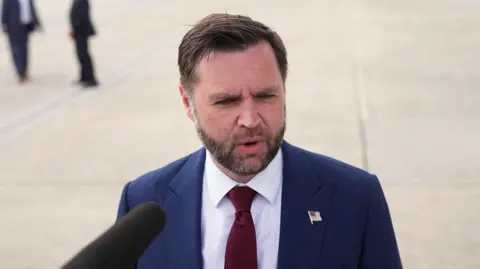
US Vice President JD Vance signalled cautious optimism on Thursday evening, telling reporters in Washington that the US Iran peace are "very close" to finalising a deal to end their three-month war but are "not there yet," with negotiators still working through language disagreements on several core issues. The statement came on a day of sharply conflicting reports, contradictory claims, and mutual accusations of ceasefire violations that illustrated precisely why ending this conflict has defied every prediction of a swift resolution. For the global political community watching from Brussels to Beijing, the question of whether Washington and Tehran can bridge their remaining differences carries consequences that extend far beyond the Persian Gulf and touch the foundations of the post-Cold War international security order.
Earlier in the day, US officials had told the BBC that the two countries had reached a framework for a deal, described as a memorandum of understanding, pending final approval from President Donald Trump and Iran's supreme leadership. Axios, which first reported the tentative agreement, noted that Trump had been briefed on the proposal but had not immediately signed off, and was expected to take a couple of days to consider it. The reported framework would extend the current ceasefire by 60 days, allow unrestricted passage through the Strait of Hormuz, give Iran 30 days to remove mines from the waterway, lift the US naval blockade, and issue sanction waivers enabling Iran to resume selling oil on international markets. Iran's semi-official Tasnim news agency was quick to report the framework had not been finalised or confirmed.
The political complexity behind those five bullet points is immense. Each element of the reported framework touches a nerve in a different part of the global political system. Unrestricted Hormuz passage affects every energy-importing nation on the planet. Sanction waivers affect the geopolitical architecture of economic coercion that Washington has built over three decades. The ceasefire extension forces both sides to confront the nuclear enrichment question that neither has yet resolved. And the 60-day window, while providing breathing room, also creates a new deadline that, if missed, risks a return to full-scale hostilities in a region that cannot absorb another escalation without triggering cascading crises from Riyadh to New Delhi.
Why Three Months of War Have Failed to Produce a Lasting Political Settlement
The war that began on February 28 when the US and Israel launched coordinated strikes on Iran was not without a political prehistory. Tensions over Iran's nuclear enrichment programme had been escalating for years, with successive rounds of diplomacy under the Joint Comprehensive Plan of Action, its collapse, and the gradual expansion of Iran's highly enriched uranium stockpile providing the combustible material that the February strikes ignited. The initial ceasefire reached on April 8 was presented as the beginning of a political resolution process, but it quickly became clear that the ceasefire itself was the easy part. The hard part was constructing a political settlement that addressed every party's red lines simultaneously: Washington's demand that Iran stop enriching uranium and dismantle its existing stockpile, Tehran's demand for full asset release and economic rehabilitation, and the Gulf states' concern that any deal preserve their security architecture.
The nuclear enrichment question has proven the most intractable element of the entire negotiation. The US position, articulated bluntly by Secretary of State Marco Rubio, is that Iran will never have a nuclear weapon. The specific sticking point Vance identified on Thursday was "the question of enrichment," a phrase that covers a vast political and technical landscape. Trump has floated the idea of Iran diluting its enriched uranium stockpile in place or in a third country, a creative formulation that attempts to address US security concerns without requiring Iran to publicly accept full dismantlement, which Tehran has consistently described as a political humiliation it cannot accept. Whether that formulation can be translated into binding legal language that satisfies both Trump's domestic political base and Iran's Supreme Leader Ali Khamenei is the core diplomatic challenge of the moment.
Wednesday's episode involving Iranian state media added another layer of political complexity. Iranian television reported elements of what it described as an unofficial 14-point draft memorandum, including the lifting of the US naval blockade, the withdrawal of US forces from the vicinity of Iran, and the restoration of civilian traffic through the Strait of Hormuz with Iran and Oman jointly managing vessel routing. The White House called the document a "complete fabrication," a response that raised global eyebrows given that the broad outlines of the reported text closely resembled what senior US officials had themselves been describing as a potential framework. The episode reflected the information war running alongside the kinetic one, with both sides managing their domestic political audiences as carefully as they manage their negotiating positions.
What Global Powers Are Watching as the 60-Day Ceasefire Extension Hangs in the Balance
The global political stakes of the current moment cannot be overstated. Trump is facing pressure from multiple directions simultaneously, and the sources of that pressure map almost perfectly onto the international community's interest in the outcome. Gulf state allies including Saudi Arabia, Qatar, and the UAE are pressing for a swift resolution that stabilises energy markets and reduces the risk of the conflict spilling into their territory or affecting their own strategic relationships with both Washington and Tehran. European governments that have been managing the economic fallout of elevated energy prices since February are equally invested in an agreement that reopens the Strait of Hormuz and allows global LNG and oil flows to normalise. Democrats in Congress who opposed the war from the outset are using the prolonged conflict as a political liability, and even some Republicans have raised concerns about the length and cost of the campaign, creating rare bipartisan pressure on a president who has consistently framed the war as a personal foreign policy achievement.
Iran's negotiating position, as it emerges from the fog of conflicting reports, reflects a government under genuine economic duress but with a political establishment deeply divided about how much it can publicly concede. The demand for the full and unconditional release of frozen Iranian assets, articulated explicitly by Iran's National Security Council deputy this week, is non-negotiable for Tehran's hardliners. The insistence that nuclear issues be addressed only in a second round of negotiations after a framework accord is signed reflects Iran's awareness that accepting the nuclear dismantlement condition in the first round would be politically devastating at home. Vance's characterisation of the Iranians as negotiating in "good faith" was a diplomatically significant signal, suggesting that Washington has not concluded that Tehran is simply running down the clock, but the mutual accusations of ceasefire violations exchanged on Thursday, including Iran's IRGC claiming it struck a US base and US Central Command rejecting Iranian claims of shooting down a US aircraft, demonstrated that good faith and restraint are not the same thing.
The 60-day ceasefire extension, if it materialises, will shift the global political conversation from whether a deal is possible to what kind of deal is acceptable. That shift matters enormously for international institutions, regional powers, and the credibility of US-led diplomatic frameworks that have been under sustained stress since the war began. A durable settlement that addresses Hormuz, sanctions, and the nuclear programme in verifiable terms would represent one of the most significant geopolitical achievements of the Trump administration and a genuine reordering of Middle East security architecture. A failed extension followed by resumed hostilities would, by contrast, deepen the international perception that the current US administration cannot translate military leverage into sustainable political outcomes, a conclusion that rivals in Beijing, Moscow, and elsewhere are waiting to draw.