
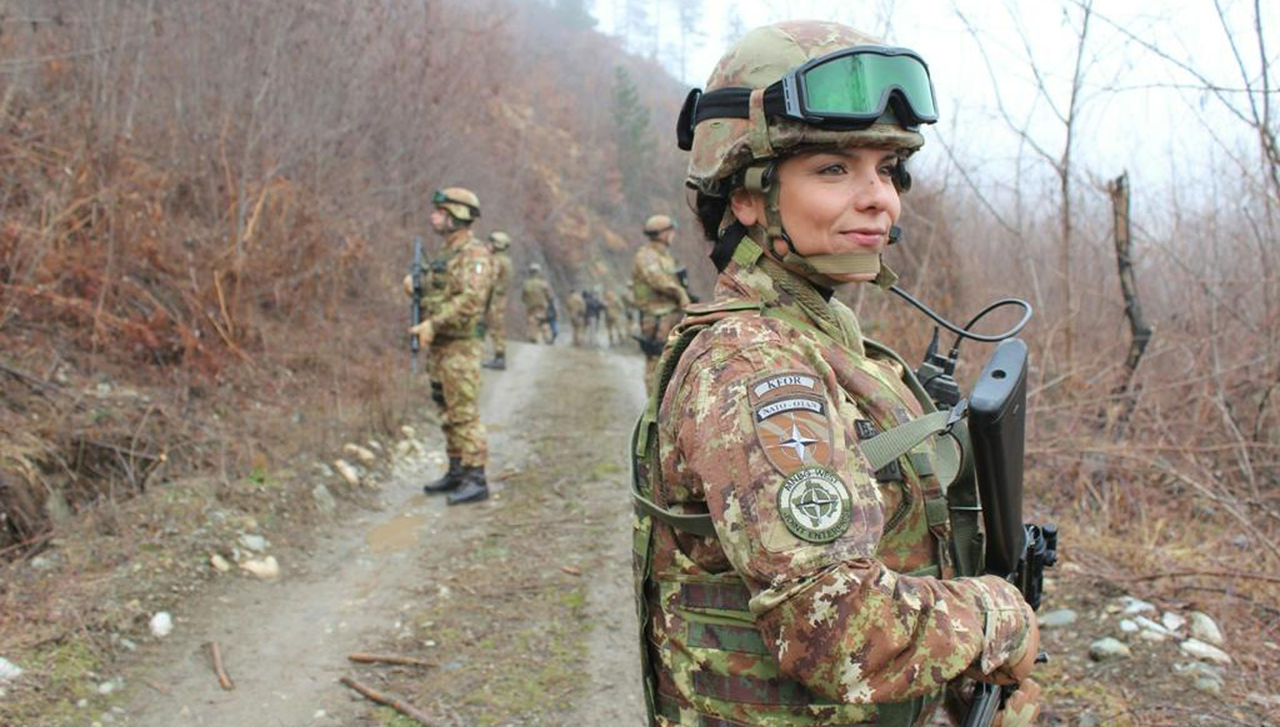
NATO KFOR Kosovo mission reduction security 2026 has been formally announced by the alliance, with Supreme Allied Commander Europe U.S. Air Force General Alexus G. Grynkewich stating that NATO and KFOR are fully committed to safety and security in Kosovo and that the steady security situation and increased capability of Kosovo's own security organisations have created conditions that provide an opportunity to optimise KFOR's size and posture further through calibrated reductions expected to follow national rotational deployment and redeployment cycles between now and next year. The announcement marks a significant milestone in the 27-year history of NATO's Kosovo Force, which has been continuously present since 1999 when it deployed following the NATO air campaign that ended Serbian forces' operations against the Albanian Kosovar population and created the conditions for Kosovo's eventual 2008 declaration of independence, and represents the alliance's most explicit public signal since that deployment that the security situation has matured sufficiently to justify a structural reassessment of the mission's size rather than simply its composition. NATO's specific commitment that the changes will occur gradually and in line with conditions on the ground and could be reversed if needed is the political risk management language that protects the alliance's ability to maintain or restore force levels if the security assessment that drives the reductions proves premature, creating the conditions-based framework that distinguishes a responsible force adjustment from a political withdrawal driven by alliance member resource pressures.
The KFOR mission's longevity, spanning more than a quarter century of continuous presence through multiple changes in Kosovo's political status, the region's evolving relationship with Serbia, and the broader transformation of the Western Balkans' security environment, has made it one of NATO's most enduring and most politically complex peacekeeping commitments, whose reduction carries implications for both the credibility of NATO's presence commitments and the specific political dynamics of Kosovo's relationship with Serbia that KFOR's presence has underpinned throughout. The political risk assessment of the Kosovo force reduction must therefore address simultaneously the security question of whether Kosovo's own security forces have sufficient capacity to manage the threat environment without NATO's current force level, the political question of whether Serbia's assessment of the force reduction will produce a more or less stable bilateral relationship with Kosovo, and the alliance credibility question of whether the gradual and conditions-based framing of the reductions adequately communicates that NATO's commitment to Kosovo's security is not being reduced but is being expressed through a different force posture calibrated to current rather than historical threat levels. Each of these dimensions carries its own political risk whose management requires the careful communication that Grynkewich's statement attempts to provide.
The specific timing of the announcement, arriving in a period when NATO's attention and resources are substantially consumed by the Ukraine conflict's demands for alliance solidarity, capability development, and political management, creates the political risk context in which any NATO force reduction announcement in the Western Balkans will be scrutinised for signals about alliance commitment to the region's security architecture and whether the Kosovo reduction is the beginning of a broader Western Balkans disengagement or a conditions-based adjustment specific to Kosovo's improved security environment. NATO's communication that the changes could be reversed if needed, combined with the gradual and deployment-cycle-aligned implementation approach, is designed to forestall exactly this interpretation by establishing the conditionality framework that makes the reduction responsive to security conditions rather than driven by resource or political considerations that would signal disengagement.
How KFOR Was Established and Why Its 27-Year Presence Has Been Necessary
KFOR's deployment in June 1999, following NATO's 78-day air campaign against the Federal Republic of Yugoslavia that ended Serbian military and police operations in Kosovo and allowed approximately one million Albanian Kosovar refugees to return to their homes, established a security presence that was designed to be temporary in the sense that it would remain until Kosovo's security institutions could assume responsibility for the environment that KFOR created and maintained. The original KFOR deployment at its peak involved approximately 50,000 troops from NATO member states and partner nations, reflecting the scale of the post-conflict security challenge in a territory whose political status was unresolved, whose population had experienced severe violence, and whose Serbian minority communities required protection from the retaliatory violence that the end of the Serbian security operation created risks of. The force's initial mandate, as defined by UN Security Council Resolution 1244, required KFOR to maintain a safe and secure environment, demilitarise the Kosovo Liberation Army, support the work of international civilian authorities, and protect international personnel and institutions, creating the specific multi-dimensional security mission that required a substantial force presence to execute simultaneously.
Kosovo's path from the 1999 deployment through its 2008 declaration of independence, recognised by the United States, European Union members, and more than 100 other countries but not by Serbia, Russia, or China, created the specific geopolitical complexity that has made KFOR's continued presence both operationally justified and politically valuable as a stabilising signal in a relationship whose fundamental territorial dispute remains unresolved. The non-recognition of Kosovo's independence by Serbia has maintained the bilateral tension that KFOR's presence helps to manage, because the alliance's force provides both the physical security guarantee that deters adventurist Serbian military action and the political signal to Belgrade that any attempt to alter Kosovo's de facto independence through force would face immediate and organised military response. The political risk of KFOR force reduction is therefore not only that Kosovo's own security forces may not be able to manage the internal security environment but that Serbia's strategic calculation about the costs and benefits of military pressure on Kosovo changes if the alliance force level signals reduced NATO commitment.
The multiple crises that KFOR has managed since 1999, including the 2004 inter-ethnic violence that required rapid force reinforcement, the 2022 to 2023 period of heightened tensions in northern Kosovo over Serbian community relations and the Kosovo Police's authority in mixed areas, and the recurring confrontations between Kosovo Serb communities and Kosovo government institutions that have tested the mission's conflict prevention capacity, document the specific threat environment whose management has required sustained presence rather than the transition to full Kosovo security force responsibility that the mission's original logic anticipated. The northern Kosovo situation in particular, where Serbian-majority communities have maintained ambiguous relationships with Kosovo's central government and where Serbian state influence has been most directly exercised, remains the most politically sensitive geographic area within Kosovo's territory and the one whose security management the force reduction must most carefully calibrate to avoid creating the perception of a security vacuum that either Serbia or local armed actors could exploit.
Kosovo's Security Force Development and the Capacity Assessment Behind the Reduction
The Kosovo Security Force, which has been developing its capabilities since its 2009 establishment and was transformed into a professional military force in 2018 with the constitutional amendment that established the Kosovo Armed Forces, has been the primary capacity-building project that KFOR has been supporting and whose progress provides the institutional foundation for the force reduction that NATO is now announcing. The transformation from the KSF's original light infantry and crisis response orientation to the broader military capability that the 2018 mandate change envisions has been supported by NATO training, mentoring, and equipment provision across multiple years, with the alliance's assessment of the KSF's readiness and the broader Kosovo Police's capability being the security professional judgement that underlies Grynkewich's statement about Kosovo's security organisations having become more capable.
The specific capability gaps that remain in Kosovo's security forces relative to the full spectrum of threats that KFOR currently covers are not publicly detailed in NATO's announcement, but they shape the specific areas where the calibrated reductions will be most carefully managed and where the reversibility commitment is most likely to be tested. Gaps in heavy military equipment, advanced surveillance and intelligence capabilities, and the interoperability with NATO systems that integrated alliance operations require are the typical capacity limitations of newer security forces whose development has been supported by but not yet fully absorbed the training and equipment that established alliance militaries have accumulated over decades. The conditions-based framework that NATO has established for the reductions implicitly acknowledges these gaps by preserving the option to reverse the force adjustment if the conditions it is based on change in ways that require restoration of the previous force posture.
The Reduction Timeline, Serbia's Response Risk, and Regional Stability Implications
NATO's decision to implement the Kosovo force reductions in alignment with national rotational deployment and redeployment cycles represents the specific implementation methodology that minimises operational disruption while creating the natural reduction mechanism that individual member states' rotation schedules provide. When a national contingent reaches the end of its deployment rotation and the decision is made not to replace it at full strength, the overall KFOR force level declines without the political visibility that a formal withdrawal decision would create, allowing the reduction to proceed without generating the specific geopolitical signal that Serbia and Russia would otherwise use to argue that NATO's commitment to Kosovo's security is weakening. The rotation-aligned implementation is therefore simultaneously an operationally practical and politically astute approach that achieves the force optimisation objective while managing the political risk of the signal that the reduction might otherwise send.
Serbia's political response to the KFOR reduction announcement is the most significant near-term political risk variable that the alliance must monitor, because Belgrade has consistently maintained its claim to Kosovo's territory and has periodically tested the boundaries of what pressure on Kosovo is possible within the political constraints that KFOR's presence and Western diplomatic engagement create. The Serbian government under President Vucic has developed a sophisticated dual-track approach to Kosovo, maintaining official dialogue with Pristina under EU mediation while simultaneously supporting Serbian minority communities in northern Kosovo in ways that create ongoing friction with Kosovo's government and provide the operational context for the crises that KFOR has repeatedly managed. A reduced KFOR force that Serbia interprets as signalling reduced NATO commitment to Kosovo's defence could alter Belgrade's risk calculation in ways that increase pressure on northern Kosovo, making the NATO communication that reductions are conditions-based and reversible critically important for managing the Serbian strategic assessment that the force level adjustment creates.
The European Union's ongoing dialogue facilitation role in the Kosovo-Serbia normalisation process, whose progress has been inconsistent and whose most recent agreements have not been fully implemented by either party, provides the diplomatic framework within which the KFOR force reduction's political risk must be managed alongside the military security assessment. A KFOR reduction that coincides with a period of progress in the EU dialogue process would carry a different political risk profile than one occurring during a period of dialogue breakdown and increased bilateral tension, and NATO's ability to synchronise its force posture adjustment with the broader diplomatic calendar is one of the coordination challenges that the conditions-based approach must navigate. The Western Balkans' integration into Euro-Atlantic institutions remains the strategic objective that KFOR's presence has been supporting, and the force reduction's management of the political risk it creates is itself part of the broader integration project whose success depends on Kosovo's stability being sustainable without a permanent NATO force at current strength.