
What Rutte Actually Said
March 5, 2026
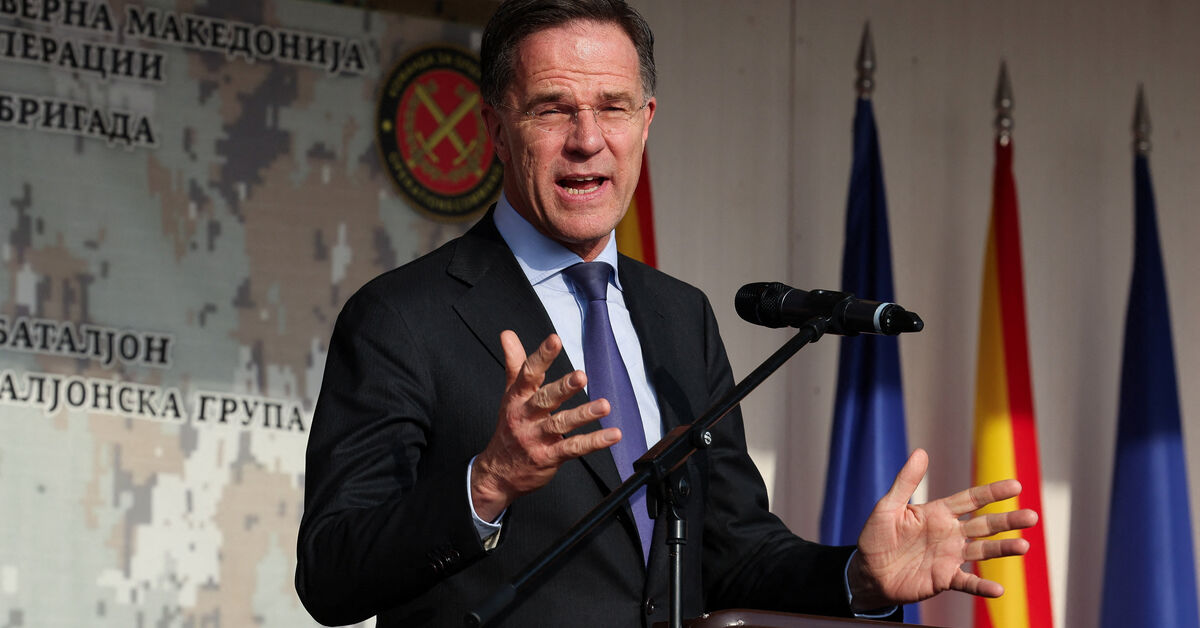
The quote at the heart of this article is verified and accurate. NATO Secretary General Mark Rutte did tell Reuters on Thursday, March 5, 2026, that allies must pursue an "and, and" approach simultaneously enabling U.S. operations in the Middle East while keeping Ukraine supplied in its war with Russia.
This aligns with Rutte's broader public posture: that NATO support for ukraine will continue funneling billions of dollars of military hardware into Ukraine through the PURL initiative, calling it "absolutely vital" and stating "there is simply no alternative."
The statement is notable precisely because of the scale of events that triggered it.
The Crisis That Forced Rutte's Hand — What Happened in Iran
The "situation in Iran" referenced in the quote is one of the most seismic geopolitical events in decades.
On 28 February 2026, Israel and the United States launched coordinated joint attacks on Iranian sites codenamed Operation Roaring Lion by Israel and Operation Epic Fury by the United States targeting key officials, military commanders and facilities, with the stated goal of regime change. The attacks included the assassination of Supreme Leader Ali Khamenei.
The two countries said they aimed to eliminate Iran's nuclear and ballistic missile programme, which they claimed posed a direct threat to U.S. national security interests after diplomatic negotiations in February had collapsed.
Iran's President Masoud Pezeshkian described the killing of Khamenei as a "declaration of open war on Muslims" and said revenge was Iran's "legitimate right and duty." Iran subsequently launched waves of missile and drone attacks across the region, striking U.S. military bases and civilian infrastructure in Bahrain, Iraq, Kuwait, Jordan, Qatar, Saudi Arabia and the UAE.
Early casualty figures stood at over 1,000 dead in Iran, at least 11 in Israel, six U.S. soldiers killed, and nine civilians killed across Gulf states. The death toll was rising rapidly.
Did NATO Participate in the Iran Strikes?
No this is confirmed. Rutte told the BBC explicitly: "No, this is clearly a campaign led by the United States and Israel." He added that Europe as a whole supports U.S. actions, but coordination between NATO as an organization and Washington remains limited to non-combat enabling support.
Rutte clarified that some allies were providing "key enabling support" citing logistics and access, such as the Spanish Patriot system stationed in Turkey but distinguished this from combat participation. He also confirmed that NATO "will defend every inch of its territory" regardless.
Spain, notably, condemned the strikes and banned use of its bases for the operation. Britain did not immediately grant base access, drawing criticism from President Trump.
Why NATO Fears Being Distracted
The concern is not hypothetical. NATO planners and European leaders have openly worried that a prolonged Middle East war could pull U.S. attention, resources and political will away from the Russia-Ukraine theatre.
Rutte had already sounded this alarm in a separate ARD interview, saying: "We must do everything we can to support the Americans, while ensuring that Ukraine is as strong as possible in this fight."
For 2026, Ukraine has forecast military requirements totalling just over $60 billion from donors. Rutte has cited the Czech ammunition initiative and bilateral support packages — from Norway, Canada and Turkey among others as essential pillars that must continue regardless of Middle East developments.
The Iran-Russia-Ukraine Connection Rutte Has Flagged
Rutte has been consistent in framing Iran, North Korea, Russia and China as interconnected actors — noting NATO's concern with Iran specifically "when it comes to the fact that Iran and North Korea and Russia and China are working together."
He has described Iran as an "exporter of chaos" responsible for terrorist attacks and assassination attempts across Europe over decades, including threats against members of the Iranian diaspora in the Netherlands. The weakening of Iran's nuclear and ballistic missile capabilities, he said, is "applauded by many of my colleagues in NATO."
This framing is significant: in Rutte's strategic logic, degrading Iran also indirectly benefits Ukraine, since Iranian drones and missiles have been supplied to Russia throughout the war.
International Reactions — Divided World
UN Secretary-General António Guterres condemned the U.S.-Israeli strikes as having "squandered a chance for diplomacy," describing events as a grave threat to international peace and security and calling on the international community to pull the region "back from the brink."
China condemned the killing of Khamenei as a violation of the UN Charter. Russia described the attack as an "unprovoked act of armed aggression," though its mutual defence pact with Iran does not obligate Moscow to respond militarily. Bottom Line for Ukraine
The core message from Rutte is one of reassurance: the Iran crisis will not become a reason to abandon Kyiv. Whether NATO allies can truly sustain two-front political commitments one to a hot war in the Middle East involving their most important ally, and one to a grinding ground war in Eastern Europe is the defining test of Alliance cohesion in 2026.
The original Reuters quote is confirmed accurate, and the broader strategic picture it references is both real and rapidly evolving.