
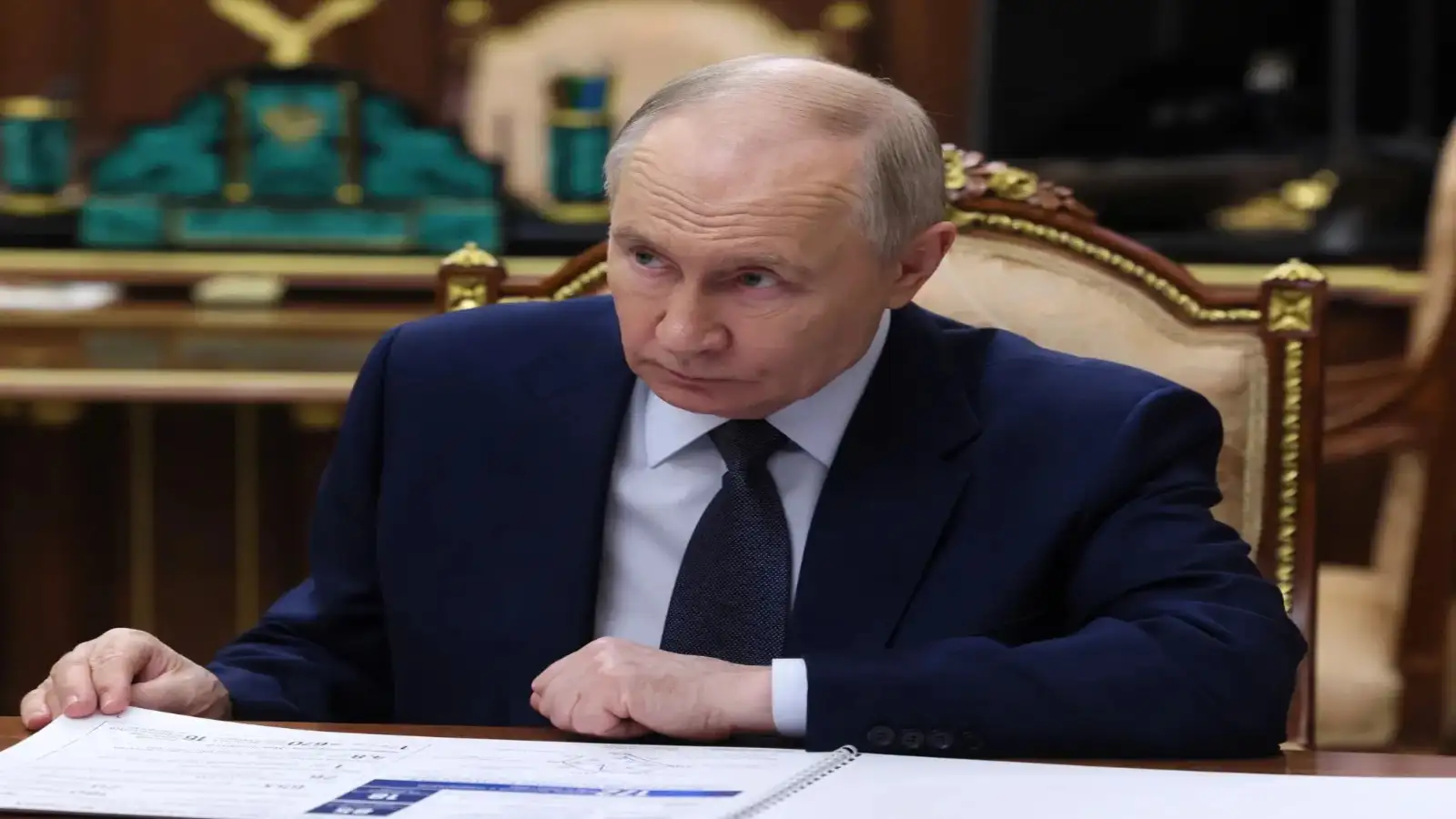
President Vladimir Putin is dismissing calls to negotiate peace with Kyiv and is instead preparing to intensify the conflict now well into its fifth year, three sources close to the Kremlin told Reuters. Two of the sources, speaking on condition of anonymity, said escalation was the more likely path. One of them, a person who meets regularly with the Russian president, described a "high probability" of escalation in the coming months.
Ukraine war recent drone strikes on Russia's oil refineries, ports and storage depots have played a direct role in shaping Putin's calculations. Rather than pushing him toward a settlement, the Ukrainian strikes have strengthened his resolve to keep fighting, according to the sources. The person who meets Putin regularly said Ukraine's recent successes had made the president more angry and more determined to give a tough response.
Putin publicly rebuffed a call by Ukrainian President Volodymyr Zelenskiy in June for a meeting and a ceasefire. Kremlin spokesman Dmitry Peskov said in response to a request for comment: "Russia is ready for a peaceful resolution but has enough capability to act independently and continue the special military operation." A senior Ukrainian official, responding on behalf of Zelenskiy's office, said Kyiv's intelligence reports in recent months reflected that Putin was preparing for further steps in the war rather than for peace, including new operations in Ukraine or a possible attack on another European country.
Russian military experts are openly discussing strikes on NATO bases in the Baltic states, raising the risk of direct confrontation with the alliance
Russian military analysts have increasingly discussed escalation in public forums, including the possibility of striking European targets such as NATO bases in the Baltic countries. Such a step would risk drawing Russia into direct confrontation with the US-led alliance, testing the foundational NATO commitment that an attack on one member nation is treated as an attack on all.
Jack Watling, a defence analyst at the Royal United Services Institute in London, said Russia would not be aiming for open war with NATO but could use isolated attacks to sow divisions within the alliance about how to respond.
"The Russians would not be aiming for a war with NATO. But it could be used to divide NATO over how to respond."
Jack Watling, Royal United Services Institute (RUSI), London
Watling added that heightened tensions with NATO could also give Putin a political justification within Russia for introducing mandatory military conscription, a measure he has been reluctant to impose since the start of the war due to its domestic unpopularity. Some Western military analysts believe a draft of fighting-age men may be necessary for Russia to achieve its goal of capturing the Donbas region.
"Putin needs some kind of victory." A source who meets regularly with the Russian president, speaking to Reuters
A former Russian defence official has outlined a three-phase escalation plan targeting Ukrainian industry, then NATO infrastructure in Europe
Andrei Ilnitsky, a former Russian defence ministry official, published a column in Kommersant newspaper on June 29 that set out an explicit escalation scenario. The first phase, he wrote, could involve the destruction of 30 major industrial sites in Ukraine, including a steel plant and Odesa port. Russia has already caused widespread damage to commercial enterprises, ports and power facilities across Ukraine, with production and exports both severely affected by repeated strikes.
Ilnitsky's second proposed phase involved strikes on NATO bases in the Baltic states and Romania, as well as facilities in the European Union producing long-range drones and missiles for Ukraine. Asked about the column, Kremlin spokesman Peskov told reporters that Russia should strengthen its own security and cannot "close its eyes" to what he described as the militarisation of Europe. His comments did not distance the Kremlin from Ilnitsky's framework.
Speaking to generals last week in televised remarks, Putin himself said Ukraine's strikes on Russian energy infrastructure meant Russia would seek to capture more Ukrainian land along the border, beyond Donbas, as a "security zone." The expansion of stated Russian territorial objectives beyond Donbas represents a significant hardening of position that analysts say reflects the political dynamic inside Russia rather than a change in military strategy.
Fuel shortages, civilian casualties and a falling approval rating are raising the domestic cost of war inside Russia
Repeated Ukrainian strikes on oil refineries, ports and storage depots have caused severe fuel shortages across Russia, bringing the material consequences of the war home to millions of ordinary Russians in a way that earlier phases of the conflict did not. Putin's approval rating remains high by international comparison but recently hit its lowest point since the full-scale invasion began in 2022, according to polling data.
Russia launched two major drone and missile attacks on Ukraine in the last week, including a strike on the capital Kyiv, killing dozens of civilians. Moscow said the assaults had targeted military infrastructure. Ukraine and its Western allies disputed that characterisation. Ukraine's allies have argued there is a momentum shift in the war and some have called for additional economic sanctions to pressure Putin toward ending the conflict.
On the ground in Donbas, Russia's forces have struggled to advance along the 1,200-kilometre front line as Ukrainian drone operations continue to counter Moscow's numerical advantage in troops. Russia has been grinding into the eastern city of Kostiantynivka, one of several towns in Ukraine's "fortress belt," a critical defensive front in the Donetsk region. On July 3, Putin announced that Russian forces had seized Kostiantynivka. Ukraine denied it. A day later, during a phone call with US President Donald Trump, Putin sought to convince him that Russia would take the remaining fifth of the Donetsk region of Donbas that Ukraine still controls. The source who meets Putin regularly told Reuters the president "needs some kind of victory" and considers winning control of the region a matter of principle.