
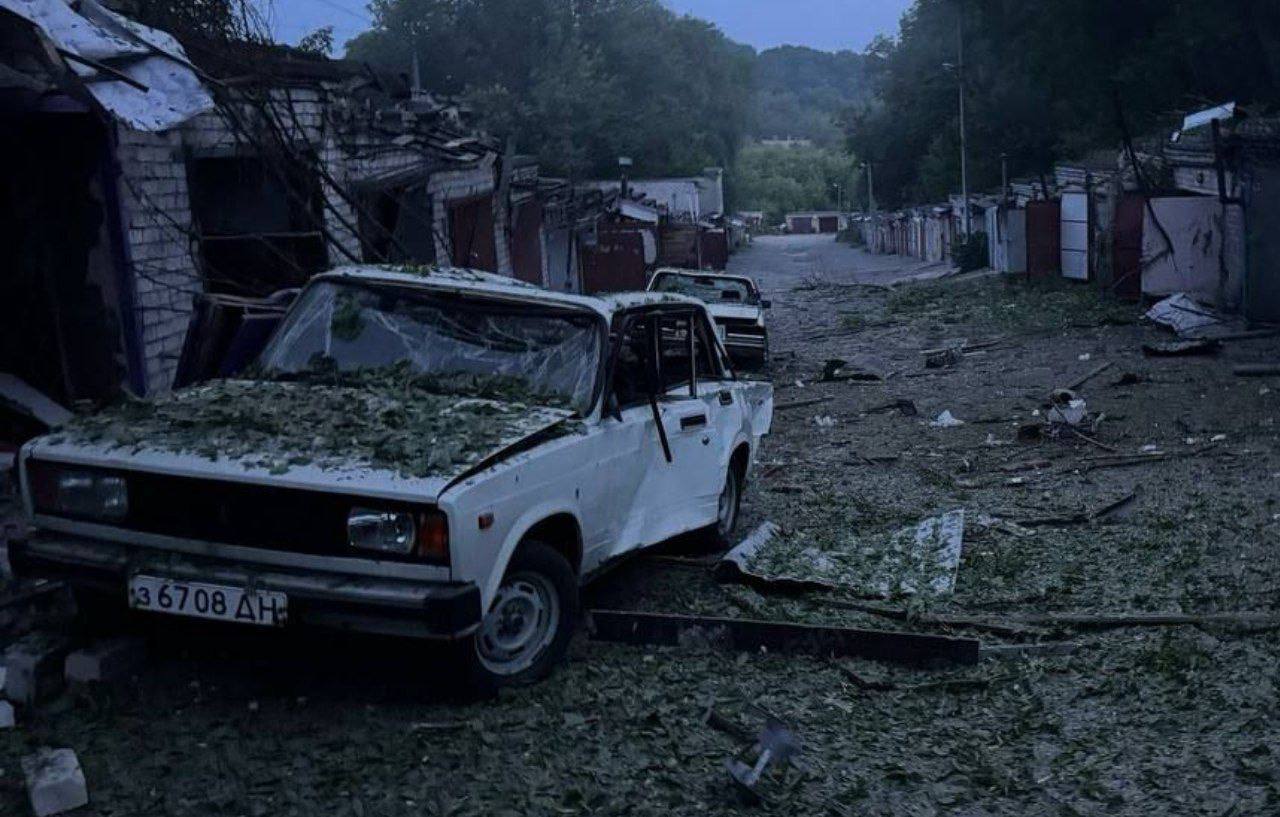
Russia Ukraine attacks Odesa Dnipro overnight May 2026 killed one person and injured more than 30 across multiple Ukrainian cities and regions as Russia launched a coordinated wave of drone strikes, airstrikes, and artillery shelling targeting civilian infrastructure in the south and southeast of the country, with drones striking residential buildings, a school, and a kindergarten in Odesa and missiles hitting the city of Dnipro in attacks whose human cost included children among the injured. Serhiy Lysak, head of the Odesa military administration, reported the attacks in the Black Sea port city via Telegram, confirming that an 11-year-old boy and a 59-year-old man were among those injured when drones struck residential and educational facilities in a city whose strategic importance as Ukraine's primary Black Sea export port makes it a recurring target for Russian attacks designed to disrupt Ukraine's economic lifeline as much as to cause direct military damage. The overnight attacks unfolded across multiple fronts simultaneously, with Dnipro, Zaporizhzhia, and Kherson all reporting casualties from Russian strikes that Ukrainian officials described through their regional Telegram channels as the overnight situation deteriorated.
The Dnipro attack involved missile strikes that injured 18 people, among them a two-year-old girl and a ten-year-old boy, according to regional governor Oleksandr Hanzha. In the southeastern region of Zaporizhzhia, three people were injured following the overnight attacks, regional governor Ivan Fedorov reported. The deadliest strike was in the southern region of Kherson, where attacks killed one person and injured nine, with regional governor Oleksandr Prokudin confirming the casualties on Telegram. The geographic spread of Monday's overnight attacks, spanning Odesa on the Black Sea coast, Dnipro in the southeast, Zaporizhzhia, and Kherson on the Dnipro river, reflects the broad targeting pattern that Russia has maintained throughout the war, seeking to create simultaneous pressure across multiple regions rather than concentrating force on a single front.
The overnight attacks came days after Ukraine launched what officials described as its biggest overnight drone attack on Moscow in more than a year, with at least four people dying over the weekend from that Ukrainian strike, including three in the Moscow region, according to Russian officials. Russia denied the drone attacks were deliberately targeting civilians in its response to the Ukrainian strikes, while Ukrainian officials made the same denial regarding their own operations, with Reuters unable to independently verify the battlefield reports from either side. The escalation cycle in which Ukrainian drone strikes on Russian territory prompt intensified Russian strikes on Ukrainian cities has been one of the defining features of the war's current phase, with both sides using long-range drone capabilities developed and expanded across more than three years of conflict to bring the war's material and psychological costs home to the other side's population centres.
How the Odesa and Dnipro Targeting Fits the War's Pattern
Odesa's status as Ukraine's primary Black Sea port and its most commercially significant maritime hub has made it one of the most strategically valuable and most consistently targeted cities in the Russian campaign against Ukrainian infrastructure, with attacks on the port city serving multiple Russian objectives simultaneously: disrupting Ukraine's export capacity for grain and other commodities, damaging the civilian infrastructure whose reconstruction requires resources that Ukraine needs elsewhere, and maintaining psychological pressure on the civilian population of a city whose distance from the front lines gave it relative safety in the war's early phase. The Black Sea grain initiative, which allowed Ukrainian grain exports through Odesa's port facilities under international supervision before its eventual breakdown, demonstrated both the economic importance of Odesa's maritime infrastructure to Ukraine and the global significance of the city's port capacity to global food security, with any disruption to Odesa's export capability having immediate consequences for grain prices and food availability across multiple continents.
Attacks on educational facilities including schools and kindergartens represent one of the most politically and emotionally charged categories of civilian infrastructure targeting, both because children are the direct victims when strikes occur during school hours and because the destruction of educational buildings deprives communities of the foundational civic infrastructure on which long-term recovery depends. The drone strike on a school and kindergarten in Odesa, occurring in a residential area that suggests the targeting was either imprecise or deliberate in its selection of civilian zones, will add to the documented record of attacks on educational facilities that human rights organisations and Ukrainian authorities have been compiling throughout the war. Both Russia and Ukraine deny deliberately targeting civilians, a standard legal and political position in conflict communications that coexists with the observable pattern of strikes hitting civilian infrastructure with sufficient regularity to suggest that either the precision of the weapons used is insufficient to avoid civilian facilities or the targeting is less discriminating than the official denials imply.
The children injured in Monday's overnight attacks, the two-year-old girl and ten-year-old boy in Dnipro, the eleven-year-old boy in Odesa, are the human faces of a statistical pattern that has accumulated across more than three years of Russian attacks on Ukrainian civilian areas. Ukrainian officials' practice of reporting the ages of child casualties is a deliberate communication strategy that humanises the statistical scale of civilian harm in ways that adult casualty numbers alone cannot achieve, and the specific reporting of a two-year-old among the Dnipro injured is the kind of detail whose emotional impact on international audiences is intended to maintain the political and material support for Ukraine that Western governments have been providing throughout the conflict. The war's human cost as measured in child casualties, displaced families, and destroyed homes is the political currency in which Ukraine's international advocacy has consistently been denominated, and Monday's overnight attack provides new material for that advocacy.
The Moscow Drone Strike and the Escalation Context
Ukraine's biggest overnight drone attack on Moscow in more than a year, which killed at least four people including three in the Moscow region over the weekend, represents the latest episode in Ukraine's long-range drone campaign against Russian territory that has transformed the war's psychological and political character by bringing its consequences to Russian population centres rather than limiting the conflict's costs to the Ukrainian side. Ukraine's development and deployment of long-range drones capable of reaching Moscow and other Russian cities deep behind the front lines has been one of the most significant military innovations of the conflict, requiring no Western-supplied weapons systems and demonstrating Ukrainian industrial and engineering capacity for the kind of asymmetric capability development that has allowed a smaller military to impose costs on a larger adversary across an extended campaign. The Moscow strikes, while causing limited physical damage relative to the scale of Russian attacks on Ukrainian cities, carry disproportionate political significance by demonstrating that the Russian capital is not beyond Ukrainian reach and by maintaining domestic Russian awareness that the war's costs extend beyond the military front.
Russia's interception of overnight drones over southern regions including Rostov and Belgorod, reported by Interfax citing the Russian defence ministry, documents both the scale of Ukrainian drone activity targeting Russian territory and the investment Russia has made in the air defence infrastructure designed to intercept those drones before they reach their intended targets. The Belgorod region, which shares a border with Ukraine's Kharkiv region, has been a consistent target of Ukrainian cross-border strikes throughout the conflict, reflecting the military logic of forcing Russia to maintain significant defensive resources in its border regions rather than directing all available forces toward offensive operations in Ukraine. The simultaneous drone and missile activity in both directions across the front, with Russia attacking Ukrainian cities overnight and Ukraine having struck Moscow over the weekend, captures the current character of a war in which neither side has achieved the decisive military advantage that would force a political settlement but both continue to impose costs on the other in the hope that the accumulation of those costs will eventually shift the balance of political will.
Monday's Casualty Count, Regional Governors' Reports, and What It Means
Monday's overnight attacks across Odesa, Dnipro, Zaporizhzhia, and Kherson represent the kind of multi-front strike pattern that creates simultaneous emergency management demands across multiple Ukrainian regions, stretching the emergency services, medical facilities, and civil defence resources that must respond to attacks in geographically dispersed locations without the ability to concentrate resources at any single site. The military logic of simultaneous multi-region attacks is to prevent Ukraine from effectively prioritising its defensive and emergency response resources, forcing every regional administration to manage its own response without expectation of reinforcement from national or neighbouring regional resources. The regional governors' Telegram communications, each reporting casualties and damages in their specific areas while the national picture remained incomplete, illustrate the decentralised emergency management that this attack pattern requires and that Ukrainian regional administrations have developed into a coordinated system of real-time public communication across three years of managing these situations.
The injury profile from Monday's attacks, with children constituting a significant proportion of the named casualties across multiple regions, will intensify the Ukrainian government's international advocacy communications in the days ahead as official statements, testimonies from local officials, and documentation from emergency responders compile the specific evidence of civilian harm that Ukrainian diplomatic and communications efforts require. The European Commission, member state governments, and international organisations including the United Nations have consistently used documented evidence of civilian casualty patterns in their communications about the war's humanitarian consequences and the requirements for international support for Ukraine's defence and recovery, making the immediate documentation and communication of Monday's casualties a political as well as a humanitarian priority for Ukrainian authorities.
The war's continuation in this phase of mutual drone and missile exchanges across front lines that have changed relatively little over the past year reflects the military stalemate that neither side has been able to break through conventional ground operations, with both parties investing in the long-range strike capabilities that impose costs on the other's territory and civilian infrastructure while the front line positions remain broadly stable. The international diplomatic context, in which the United States is focused on the Iran war and has paused the Ukraine peace mediation effort that was generating limited but visible diplomatic activity earlier in the year, means that Monday's overnight attacks occur in a political environment where the pathway to negotiated settlement is less visible than it was, and where the immediate human costs of the continued fighting must be documented and communicated to an international audience whose attention is divided among multiple simultaneous crises.