
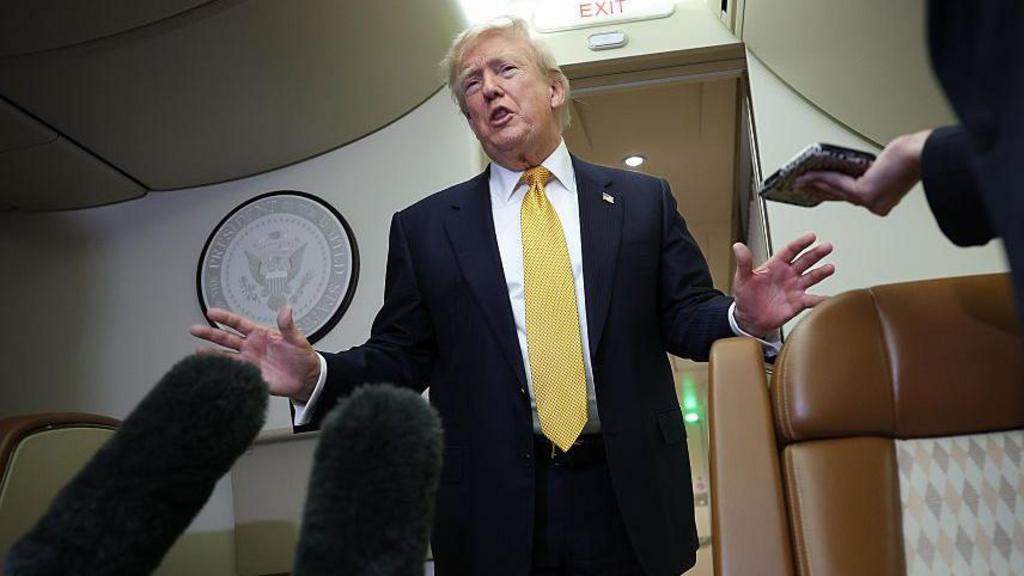
The United States and Iran traded strikes for second consecutive night on Wednesday, with Washington saying it hit 90 targets in the latest wave of attacks bringing the two-night total to 170 targets across all strikes, while Iranian forces launched drone attacks on U.S. military installations in Kuwait, Qatar, and Bahrain in retaliation, as the conflict that produced last month's memorandum of understanding now threatens to unravel the fragile ceasefire framework whose durability the current fighting is testing to its limits. Mohammad Bagher Ghalibaf, Iran's chief negotiator with the United States, delivered the sharpest official Iranian statement of the current escalation cycle, saying America still has not learned that bullying and breaking promises are no longer cost-free, framing the exchange within the specific Iranian political narrative of retaliation as a justified and proportionate response to American aggression rather than an escalatory choice Iran has made independently of American provocation. Donald Trump, speaking from Air Force One after returning to Maryland from the NATO summit in Ankara, said Iran had called a little while ago and that they want to make a deal so badly, a remarkable shift from his statement less than 24 hours earlier that the ceasefire was over and talks were a waste of time, creating the specific diplomatic whiplash that has characterised every phase of this conflict's political management.
The immediate military picture across the Gulf region includes Iranian army statements confirming it targeted a U.S. Patriot missile system in Kuwait, a satellite antenna early warning system in Qatar, and U.S. fuel storage facilities in Bahrain using a large number of various types of attack drones in what Iran described as a continuation of its ongoing attacks on U.S. bases in the region. Bahrain reported explosions in the capital Manama, Kuwait confirmed intercepting missiles and drones, and Qatar issued a security alert, with the geographic spread of Iranian retaliation across three Gulf host nations simultaneously documenting the scale of the Iranian counter-response and the operational burden it creates for U.S. forces managing base protection across multiple country jurisdictions simultaneously. The Gulf Arab states hosting American forces are absorbing Iranian attacks on their territory as a direct consequence of hosting the American military infrastructure that the Iran war requires, creating the specific political pressure on Gulf governments to manage the domestic consequences of attacks on their soil while maintaining the strategic alignment with Washington that their security relationships depend on.
Trump's Air Force One comments that the U.S. has already won militarily and that Iran has very little left contrast sharply with the operational reality of an Iranian force that has survived more than 24,000 airstrikes by combined U.S. and Israeli air power since February 28 and is continuing to launch organised drone attacks on multiple Gulf nation targets simultaneously, suggesting either an optimistic assessment of the damage inflicted or a political communication calibrated to project strength rather than reflect the operational balance the strikes have actually achieved. His simultaneous acknowledgment of uncertainty about Iran's deal worthiness, saying I just do not know if they are worthy of making a deal and do not know if they will honour it, raises the specific question of what the diplomatic pathway forward is if Trump genuinely doubts Iran's capacity to honour any agreement whose negotiation he was describing as nearly complete as recently as last month's memorandum.
How the Memorandum's Unresolved Shipping Question Created This Escalation
The current escalation cycle began when the Islamic Revolutionary Guards Corps attacked three commercial tankers transiting the Strait of Hormuz at the beginning of the week, with U.S. Central Command describing Tuesday's initial strikes as a direct response to those shipping attacks and Wednesday's second wave as the continuation of a proportional military response to Iran's ongoing interference with Hormuz navigation. The IRGC tanker attacks reflect the specific unresolved dispute that the June memorandum of understanding failed to address comprehensively, with Iran having declared it will not return to pre-war Hormuz navigation arrangements and seeking to impose a new paradigm in which ships transiting the strait must pass through checkpoints and be inspected by IRGC officers. This checkpoint demand is the operational expression of Iran's broader assertion that the ceasefire agreement's Hormuz provisions recognise Iranian authority over strait navigation in ways that the U.S., Gulf Arab states, and International Maritime Organisation all characterise as unacceptable interference with freedom of navigation whose guarantee was supposed to be a central commitment of the memorandum.
The memorandum's specific failure to resolve the Hormuz navigation authority dispute created the predictable escalation pathway that BBC security correspondent Frank Gardner's observation about the grim predictability of the current fighting reflects, because the tit-for-tat exchange pattern, IRGC tanker attack, U.S. strikes on Iranian coast, Iranian drone attacks on Gulf bases, repeat, is the direct consequence of having a ceasefire text that ended active hostilities without resolving the underlying dispute about who controls passage through the world's most strategically critical maritime chokepoint. The IRGC's confidence, described as a feeling of invincibility after surviving more than 24,000 airstrikes, provides the specific psychological context for why the Guards are attempting to impose the checkpoint paradigm rather than accepting the pre-war freedom of navigation status quo, because their assessment of the military balance suggests that continued pressure on shipping will eventually produce the legitimisation of Iranian Hormuz authority that Western nations have refused to grant diplomatically.
Eight Iranian soldiers killed in Tuesday's strikes represents the first confirmed Iranian military casualties of the current escalation cycle, with targets clustered around the Strait of Hormuz coastline whose military infrastructure supports both the surveillance and interdiction capabilities that the IRGC has been using against commercial shipping and the anti-ship missile systems whose threat to Hormuz transit has been the primary driver of the elevated oil prices that the conflict has been sustaining. The targeting of coastal military infrastructure rather than civilian or energy facilities reflects the U.S. military's attempt to maintain the proportional response characterisation that international law's laws of armed conflict require while degrading the specific capabilities being used against the shipping that both sides have nominally committed to protecting through the memorandum's navigation provisions. Whether 170 targets across two nights of strikes have actually degraded the IRGC's capacity to conduct further tanker attacks or whether they have primarily destroyed replaceable infrastructure while leaving the force's operational resilience intact is the specific military effectiveness question that the next Iranian action will answer more reliably than any current damage assessment.
Oil Markets' Muted Response and What Traders Are Watching
The oil market's relatively calm response to the current escalation, with Brent crude up approximately 1 percent at $78.80 on Thursday compared to the more than 5 percent jump on Wednesday following the initial U.S. strikes, reflects the specific market assessment that the current fighting represents a familiar escalation-and-negotiation cycle rather than the kind of fundamental conflict expansion that would produce the sustained Hormuz closure whose energy market consequences drove oil to nearly $120 in April. Traders are applying the pattern recognition of a conflict that has now produced multiple similar escalation cycles, each followed by Trump deal signals and partial de-escalation, to the current fighting, discounting the immediate military activity's price impact in favour of the longer view that some form of negotiated Hormuz arrangement remains the most likely eventual outcome because the alternative of indefinite conflict is sufficiently costly to both sides to generate deal-making pressure regardless of the current exchange's intensity. Brent's current $78.80 level, while above recent lows and higher than the conflict's February starting point, being way lower than the April peak accurately represents the market's calibrated uncertainty about whether the current escalation leads to full Hormuz closure redux or to the deal that Trump's Air Force One comments suggest may still be within reach.
The 20 percent of global oil and liquefied natural gas that normally transits Hormuz is the specific supply volume whose disruption or protection determines the energy price trajectory that importing countries' inflation management depends on, making the Hormuz checkpoint dispute not simply a bilateral U.S.-Iran navigation sovereignty argument but a global economic question whose resolution or continued disruption affects consumer prices and monetary policy across every oil-importing economy. Energy traders' close watching of how long the current military exchanges last and what impact they have on shipping through the strait reflects the understanding that the oil price level most relevant to global economic outcomes is not this week's Brent figure but the trajectory that develops based on whether the checkpoint dispute is resolved, deferred, or escalated into a full strait closure that reproduces April's $120 conditions in a market whose producers have been building toward the supply recovery that a durable Hormuz reopening would enable.
Trump's Contradictory Signals, Ghalibaf's Warning, and What the Next 48 Hours Determine
Trump's transition from declaring the ceasefire over and talks a waste of time to saying Iran wants to make a deal so badly within a 24-hour window is the specific diplomatic communication inconsistency whose management the Iranian side's absence of public confirmation of the call reflects, because Iranian political culture requires the careful management of the appearance of negotiating under American military pressure in ways that Trump's public deal demand announcement makes significantly harder for Iranian leaders to execute without appearing to capitulate to coercion. Ghalibaf's bullying and breaking promises statement is the specific Iranian political cover communication that positions any eventual resumption of negotiations as principled engagement after defending Iran's rights rather than responsive yielding to American military pressure, creating the domestic political framing that Iranian leadership requires to return to the table after the current military exchange without looking weak to the domestic audience whose support the government needs during a period of sustained American strike campaigns.
The question of whether Iran genuinely called Trump or whether Trump's Air Force One comments represent the political communication of a president who wants to project deal proximity rather than conflict escalation is the specific information uncertainty whose resolution determines the negotiating situation's actual state versus its public presentation. If Iran did make contact suggesting deal interest, the current military exchange is the familiar signalling and leverage-building phase that precedes a final negotiating push in which both sides demonstrate enough military willingness to impose costs on the other to extract the concessions they need from the settlement. If Trump's deal comments are primarily political communication rather than accurate reporting of an Iranian contact, the gap between the public claim and the diplomatic reality creates the specific credibility problem that a failed deal promise would expose while prolonging the military exchange whose duration neither side's domestic audience finds costless.
The 48 hours following Wednesday's escalation will determine whether the current exchange follows the pattern of previous cycles by producing a de-escalation signal that leads back to negotiating table contacts, or whether the IRGC's checkpoint paradigm demand and the U.S. rejection of that demand represent a fundamental disagreement whose resolution requires either Iranian concession on Hormuz authority or American acceptance of some modified navigation arrangement that neither side has publicly described as acceptable. Each additional day of strikes, counter-strikes, and Gulf base attacks adds to the political cost of returning to negotiations without a visible concession from the other side, making the timeline for the de-escalation signal that Trump's deal comments imply he is seeking shorter rather than longer if the negotiating dynamic that the memorandum's signing created is to be preserved rather than replaced by the full conflict resumption whose energy market and economic consequences the April peak documented.